18 Wheels of Steel: Pedal to the Metal, developed by SCS Software, stands as a landmark title in the trucking simulation genre. Released in 2002, it captivated players with its realistic depiction of long-haul trucking and offered an engaging experience that blended challenging gameplay with a sense of freedom rarely seen in video games at the time. While technological advancements have since propelled the genre forward, Pedal to the Metal retains a nostalgic charm and a dedicated following, proving that some classic gaming experiences stand the test of time. This in-depth look explores the game’s features, impact, and lasting legacy.
Gameplay and Features: Hitting the Road
Pedal to the Metal throws players into the driver’s seat of a variety of heavy-duty trucks, tasking them with navigating sprawling maps, delivering cargo across vast distances, and managing their time and resources effectively. The game emphasized realism, albeit within the limitations of early 2000s technology. Players had to carefully consider fuel consumption, road conditions, and even the weight distribution of their cargo to avoid accidents and meet delivery deadlines.
The core gameplay loop centered around accepting jobs, planning routes, driving to destinations, and unloading cargo. The driving mechanics, while not as sophisticated as modern simulators, provided a satisfying challenge. Players had to master the nuances of handling large vehicles, particularly on winding roads or in challenging weather conditions. The game’s physics engine, while not perfect, successfully captured the feel of driving a heavy truck, making the experience immersive and rewarding.
Beyond the core mechanics, Pedal to the Metal incorporated various features to enhance replayability and immersion. Players could customize their trucks, choosing from a range of models and adding accessories like spoilers, exhaust pipes, and paint jobs. This level of customization allowed players to create unique rigs that reflected their personal style and preferences.
The game also featured a diverse range of cargo, adding variety to the gameplay. From transporting delicate goods requiring careful handling to hauling oversized loads that required careful maneuvering, each delivery presented unique challenges. The varied landscapes and environments further enhanced the experience, offering a dynamic and engaging world to explore. The game’s open-world nature allowed for freedom of exploration, even if the primary focus remained on completing deliveries.
The game’s AI was rudimentary by modern standards, but it added a touch of realism to the experience. Other vehicles on the road behaved unpredictably, forcing players to adapt their driving and maintain a safe following distance. While the AI was not particularly sophisticated, it contributed to the overall feel of sharing the road with other drivers, enhancing the sense of immersion.
Graphics and Sound: A Product of its Time
The game’s graphics, reflecting the technology of its era, were simple but functional. While lacking the photorealistic detail of modern games, the environments and vehicles were well-rendered and conveyed a sense of scale. The game’s focus on functionality over visual fidelity ensured a smooth and consistent gameplay experience, even on lower-end hardware. The game’s textures and models were relatively low-resolution by today’s standards, but they adequately represented the world and vehicles.
The sound design, however, was a significant strength. The engine sounds of the various trucks were realistic and immersive, conveying the power and weight of the vehicles. The ambient sounds of the environment further contributed to the game’s atmosphere, enhancing the feeling of being on the open road.
The Legacy and Impact of 18 Wheels of Steel: Pedal to the Metal
Pedal to the Metal’s significance extends beyond its own merits. It played a pivotal role in establishing the trucking simulation genre as a viable niche within the gaming world. Before its release, there were few games that successfully captured the experience of driving a semi-truck across long distances. Pedal to the Metal successfully filled that void, proving there was a market for such a simulation. The game’s success paved the way for more sophisticated and detailed trucking simulators to follow, pushing the boundaries of realism and gameplay mechanics.
The game’s influence can be seen in subsequent titles from SCS Software and other developers in the genre. Many modern trucking simulators incorporate elements pioneered by Pedal to the Metal, such as realistic cargo handling, detailed truck customization, and open-world environments. While newer games offer superior graphics and more advanced features, the core gameplay loop of Pedal to the Metal remains a blueprint for many modern trucking simulators. Many consider it a foundational title in the genre that helped define and refine its conventions.
Comparison to Modern Trucking Simulators: Evolution of the Genre
Modern trucking simulators, such as American Truck Simulator and Euro Truck Simulator 2, have surpassed Pedal to the Metal in terms of graphics, realism, and overall features. These newer games boast stunning visuals, detailed vehicle models, and vast, meticulously recreated maps. The AI is vastly improved, and the gameplay mechanics are far more sophisticated.
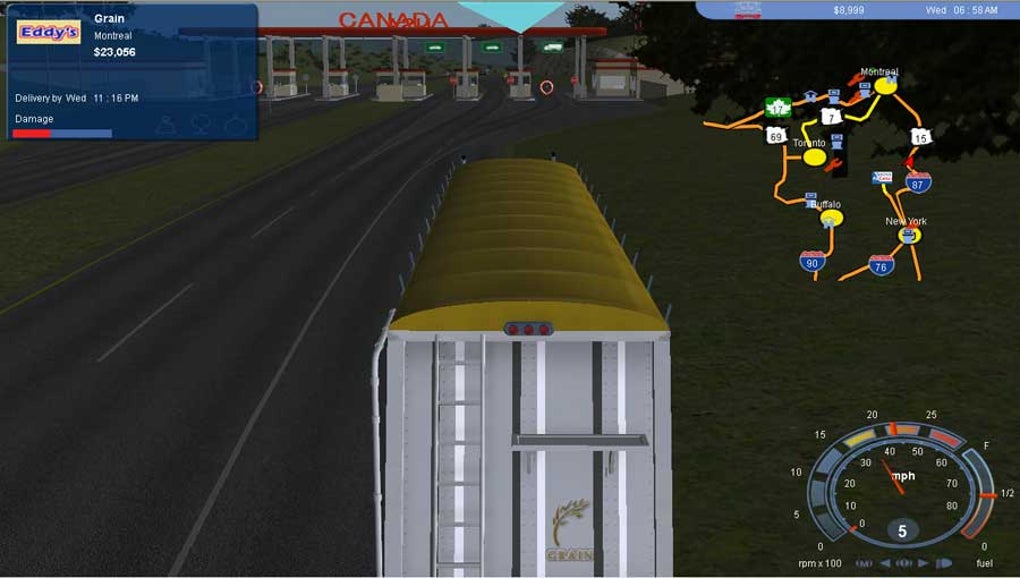
However, Pedal to the Metal holds a special place in the hearts of many gamers due to its pioneering role and nostalgic value. The game’s simplicity and accessibility make it a more approachable entry point for players unfamiliar with the genre. While modern simulators offer a higher level of realism and complexity, Pedal to the Metal’s straightforward gameplay loop and engaging core mechanics remain enjoyable. It’s not about the graphical fidelity; it’s about the fundamental satisfaction of conquering long hauls and the feeling of accomplishment in delivering the goods on time.
Availability and Accessibility: A Classic Still Accessible
While no longer actively supported by its developers, 18 Wheels of Steel: Pedal to the Metal remains accessible to players. The game can be obtained through various digital distribution platforms, including online marketplaces that sell older PC games. Its relatively low system requirements ensure compatibility with a wide range of computers, making it accessible to players who may not have the latest high-end gaming hardware. The game’s enduring popularity is a testament to its quality and appeal, proving that a well-designed game can transcend its technological limitations. The ease of access for players who want to experience this historical title keeps its relevance alive, bridging the gap between past and present gaming generations.
The enduring appeal of 18 Wheels of Steel: Pedal to the Metal is a testament to the power of a solid game design. While the technology may have aged, the core gameplay loop remains enjoyable and provides a taste of the genre’s history. It served as a foundational title for the genre, and its legacy continues to influence trucking simulators today. The sense of freedom and accomplishment remains compelling, even in the context of more modern and advanced simulations. For those seeking a nostalgic trip down memory lane or a simpler approach to the trucking simulation genre, 18 Wheels of Steel: Pedal to the Metal continues to offer an enjoyable and rewarding experience.
File Information
- License: “Trial version”
- Latest update: “August 7, 2011”
- Platform: “Windows”
- OS: “Windows XP”
- Language: “English”
- Downloads: “80.8K”
- Size: “96.76 MB”