
Learning to drive is a pivotal rite of passage for many, marking a significant step towards independence and mobility. However, the journey to obtaining a driver’s license is often fraught with anxiety, a steep learning curve, and the pressure of a practical driving test. In this context, simulation software like 3D Driving-School emerges as a valuable educational tool, offering aspiring drivers a safe and controlled environment to practice, make mistakes, and build confidence before ever hitting actual roads.
3D Driving-School is a comprehensive education and training program specifically designed for individuals preparing for their driving test. Its core purpose is to confront users with a wide array of day-to-day driving situations, helping them acclimate to the complexities and nuances of life on the road. The program serves as a crucial preparatory resource, aiming to alleviate the nervousness associated with the driving test by providing ample opportunity for pre-test practice. This article delves into the various facets of 3D Driving-School, exploring its features, benefits, user experience, and its place within the broader landscape of driving education.
Mastering the Road: Features and Functionality

At the heart of 3D Driving-School lies its commitment to providing a robust and realistic simulation experience. The program is meticulously crafted to replicate common driving scenarios, allowing users to develop essential skills and reflexes without the real-world risks. From navigating busy intersections to handling adverse weather conditions, 3D Driving-School offers a diverse palette of learning opportunities.
Realistic Driving Simulations
The program’s most compelling feature is its ability to simulate real-world driving scenarios. Aspiring drivers can immerse themselves in a virtual environment where they encounter situations that are directly relevant to everyday driving and, crucially, to the driving test itself. This includes practicing fundamental maneuvers such as turning corners, understanding and applying right-of-way rules, responding correctly to traffic lights, and diligently checking mirrors – actions that are second nature to experienced drivers but present significant challenges to beginners.
The level of detail in these simulations extends beyond basic maneuvers. 3D Driving-School understands that no two road trips are identical, and driving conditions are constantly in flux. To address this, its simulations can be extensively customized to reflect a wide range of different situations. For instance, users are given the option to alter the amount of traffic present on the roads. This allows for practice in both quiet, low-stress environments, ideal for absolute beginners, and bustling, high-traffic conditions that demand quicker decision-making and heightened awareness. This progressive difficulty ensures that learners can gradually build their skills and confidence.
Beyond traffic density, the program incorporates environmental variables that significantly impact driving. Users can add simulated rain, which immediately introduces impaired visibility and the added slipperiness that comes with wet roads. The consequences of such conditions – increased braking distances, reduced grip, and the need for more cautious handling – are accurately simulated, providing invaluable experience. Furthermore, snowy conditions and nighttime options are included, capturing an even wider spectrum of different driving challenges. Driving in snow requires gentle acceleration, careful braking, and an understanding of reduced traction, while nighttime driving necessitates diligent use of headlights, awareness of glare, and adaptation to limited visibility. By offering these diverse conditions, 3D Driving-School ensures that learners are exposed to, and can practice adapting to, circumstances that might otherwise only be encountered on real roads, often unexpectedly. This comprehensive approach to simulation goes a long way in preparing drivers not just for their test, but for a lifetime of safe driving.
Customizable Learning Experience
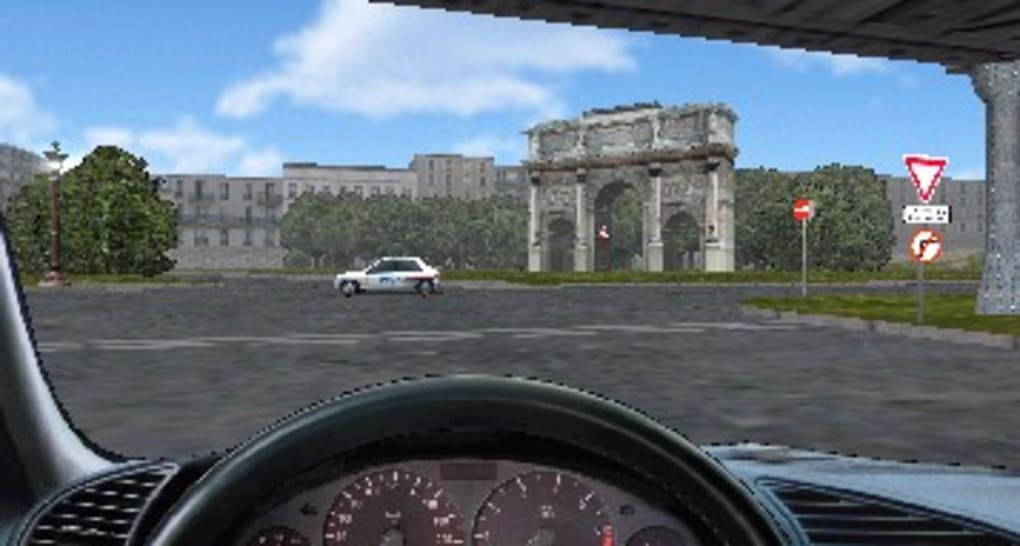
Flexibility in learning is a cornerstone of effective educational tools, and 3D Driving-School excels in offering a highly customizable experience tailored to individual preferences and learning styles. One of the primary customization options revolves around the driving perspective. Learners can choose between a third-person view, which provides a broader overview of the vehicle and its immediate surroundings, and a first-person view, which replicates the driver’s perspective from within the car. Each view offers distinct advantages. The third-person perspective can be particularly useful for beginners who are still grasping the spatial relationship between their vehicle and other objects, helping them understand turns and parking maneuvers more intuitively. Conversely, the first-person view offers a more immersive and realistic experience, training the driver to rely on mirrors, peripheral vision, and the actual dashboard view, which is crucial for the driving test and real-world driving. The ability to switch between these views allows users to select whichever feels most appropriate and beneficial for their current stage of learning.
Beyond camera angles, the program’s environmental customizability significantly enhances the learning experience. As mentioned, the ability to alter traffic density, introducing everything from deserted roads to gridlocked urban arteries, allows for targeted practice. A new driver might start on quiet roads to master basic vehicle control and road rules, then gradually increase traffic to practice defensive driving, lane changes, and navigating complex intersections. The inclusion of various weather conditions—rain, snow, and night driving—moves beyond theoretical knowledge. It forces the learner to actively engage with the challenges these conditions present. Practicing in rain teaches the importance of reducing speed, increasing following distances, and understanding hydroplaning. Snowy conditions emphasize smooth inputs, gentle steering, and emergency braking on slick surfaces. Night driving highlights the proper use of headlights, managing glare, and being aware of reduced visibility for pedestrians and obstacles. This hands-on, simulated experience builds critical judgment skills and the ability to react appropriately to diverse environmental challenges, skills that are difficult to acquire safely outside of a controlled simulation. By allowing learners to design their practice sessions, focusing on specific weaknesses or preparing for unique conditions, 3D Driving-School provides a truly adaptive and effective training ground.
Foundational Driving Skills
The primary objective of 3D Driving-School is to instill and reinforce foundational driving skills, transforming theoretical knowledge into practical application. The program breaks down the complex act of driving into manageable, repeatable scenarios, allowing learners to focus on specific techniques until they become second nature.
Central to these foundational skills is vehicle control. The simulator provides an environment where users can practice steering, acceleration, and braking without fear of real-world consequences. Mastering smooth steering for turns, understanding the delicate balance of throttle control for gentle acceleration, and practicing progressive braking techniques are all critical elements that the program facilitates. For instance, learners can repeatedly attempt turning corners, gradually improving their steering input, speed management, and lane positioning. This iterative practice is vital for developing muscle memory and precision.
Understanding traffic laws and right-of-way is another cornerstone. The simulation places the driver in various intersection scenarios, demanding correct interpretation of traffic signals, stop signs, and yield signs. Crucially, it emphasizes the concept of “giving way to other traffic,” which is a frequent point of failure in real driving tests. By encountering these situations repeatedly, learners internalize the rules, making correct decisions more instinctive. This includes scenarios involving pedestrian crossings, roundabouts, and merging onto highways, all of which require a clear understanding of who has priority.
Furthermore, situational awareness is rigorously trained through tasks like checking mirrors. The program encourages and, in some cases, might even prompt the driver to check their rearview and side mirrors before changing lanes, turning, or braking. This seemingly simple action is fundamental to safe driving, ensuring the driver is aware of their surroundings and potential hazards. Repeatedly engaging in mirror checks helps build a habitual practice that translates directly to safer real-world driving.
The ability to stop effectively and safely at traffic lights and stop signs is also a core focus. This involves judging braking distances, coming to a complete stop at the correct line, and being aware of following vehicles. Through varied speeds and traffic conditions, learners can refine their stopping techniques, ensuring they are prepared for abrupt stops or gradual deceleration as needed.
By focusing on these foundational elements – vehicle control, adherence to traffic laws, situational awareness through mirror checks, and effective stopping – 3D Driving-School systematically prepares individuals for the demands of the road. It transforms abstract rules into concrete actions, building a solid base upon which more advanced driving skills can be developed.
The Benefits for Aspiring Drivers
The journey to becoming a licensed driver is often punctuated by moments of apprehension and uncertainty. 3D Driving-School offers a unique set of benefits that directly address these challenges, providing a supportive and effective bridge between theoretical knowledge and practical application.
Overcoming Pre-Test Nerves
One of the most significant advantages of using 3D Driving-School is its capacity to help aspiring drivers overcome pre-test nerves. The driving test is, for many, a highly stressful event. The pressure to perform flawlessly, the fear of making mistakes, and the anxiety of being evaluated can often lead to errors that wouldn’t occur under normal circumstances. The simulator acts as a powerful antidote to this anxiety by providing an unlimited, consequence-free practice environment.
By repeatedly encountering and successfully navigating various driving scenarios within the program, learners build familiarity and confidence. Each successful turn, correct decision at an intersection, or proper mirror check reinforces positive habits and reduces the unknown elements of driving. This repeated exposure desensitizes the individual to the stressful aspects of driving, making the actual road less intimidating. When a learner has already “driven” through hundreds of different situations, including those with heavy traffic, rain, or at night, the real-world equivalent feels less daunting.
The ability to make mistakes in a virtual setting without any danger or financial cost is crucial. Learners can experiment with different approaches, understand the consequences of incorrect actions (like missing a signal or forgetting to check mirrors), and correct them immediately. This iterative process of trial and error is a highly effective learning mechanism that significantly reduces the fear of failure, transforming mistakes into learning opportunities rather than sources of discouragement. Consequently, when the actual driving test approaches, individuals who have extensively used 3D Driving-School often feel more prepared, self-assured, and less susceptible to performance anxiety, increasing their chances of success.
Practical Application Beyond Theory
Driving education typically begins with theoretical knowledge, encompassing road rules, signs, and basic vehicle mechanics. While crucial, this theoretical understanding often falls short in preparing individuals for the dynamic and unpredictable nature of real-world driving. 3D Driving-School bridges this gap by providing a platform for the practical application of theoretical concepts, transforming abstract rules into actionable behaviors.
A common challenge for new drivers is translating a textbook understanding of, for example, a four-way stop into the actual timing and decision-making required in a real intersection. The simulator allows learners to engage with these scenarios directly. They learn not just what the rule is, but how to apply it in motion, considering the speed of other vehicles, pedestrian movements, and their own vehicle’s position. This hands-on practice makes the rules concrete and helps develop an intuitive understanding that is difficult to achieve solely through reading or classroom instruction.
Furthermore, the program goes beyond simple rule adherence to cultivate judgment and anticipation, critical skills that define a safe driver. Learners are exposed to situations that require more than just following a sign – they must anticipate other drivers’ actions, react to sudden changes, and make quick, informed decisions. For instance, practicing in varying traffic conditions teaches the importance of maintaining safe following distances, anticipating brake lights, and planning lane changes well in advance. These are not explicitly taught as “rules” but are developed through practical experience.
By offering a dynamic environment where theoretical knowledge is constantly put to the test, 3D Driving-School helps learners develop a holistic understanding of driving. It moves beyond rote memorization of rules to foster genuine comprehension and the ability to apply those rules flexibly and intelligently in complex, real-time situations. This practical application significantly enhances a driver’s readiness for both the driving test and the broader challenges of independent driving.
Adaptability to Diverse Conditions
One of the standout benefits of 3D Driving-School is its emphasis on preparing drivers for a wide array of diverse road and environmental conditions. Real-world driving is rarely static; it involves adapting to changes in weather, time of day, and traffic flow. The simulator’s customizable options directly address this need, ensuring that learners develop the versatility required for safe driving in any scenario.
The ability to simulate various weather conditions—rain, snow, and clear skies—is invaluable. Driving in the rain, for example, introduces reduced visibility, slick roads, and the risk of hydroplaning. Practicing in this setting within the simulator allows learners to understand the necessity of slowing down, increasing following distances, and using wipers and headlights appropriately. They can experience the sensation of reduced traction and learn how to make gentle inputs to avoid skidding, all without the real-world dangers. Similarly, simulating snowy conditions prepares drivers for the unique challenges of black ice, reduced braking ability, and the need for extremely smooth steering and acceleration. This kind of experiential learning is extremely difficult, if not impossible, to achieve safely and repeatedly in actual driving lessons.
Nighttime driving, another crucial element, presents its own set of challenges, including glare from oncoming headlights, reduced depth perception, and the increased presence of nocturnal animals or poorly visible pedestrians. The simulator allows learners to practice using high and low beams correctly, understanding how to adjust their vision, and navigating in environments with limited ambient light. This prepares them for a significant portion of their future driving experience, as a considerable amount of driving often occurs after dark.
Furthermore, the option to alter traffic density, from deserted country roads to congested city streets, is critical for developing adaptability. Driving on quiet roads helps beginners focus on basic vehicle control, while navigating heavy traffic sharpens skills in defensive driving, lane discipline, merging, and reacting to unpredictable actions of other drivers. This spectrum of traffic conditions ensures that a learner isn’t just prepared for ideal scenarios but is also equipped to handle the stresses and demands of peak-hour urban driving.
By systematically exposing learners to these diverse conditions, 3D Driving-School cultivates a highly adaptive and resilient driver. It instills the understanding that driving is not a uniform activity but requires constant adjustment and heightened awareness depending on the prevailing circumstances. This comprehensive preparation builds confidence and competence, ensuring that aspiring drivers are ready to face whatever the road throws at them.
User Experience and Technical Aspects
Understanding the user experience and the technical underpinnings of 3D Driving-School is crucial for appreciating its effectiveness and identifying areas for improvement. This section examines how users interact with the program, its technical specifications, and the feedback from the community.
Interface and Perspectives
The user interface of 3D Driving-School is designed to be intuitive, allowing learners to focus on the driving experience rather than struggling with complex controls. The primary interaction is, naturally, through virtual steering, acceleration, and braking, typically mapped to a keyboard, joystick, or steering wheel peripheral for a more immersive experience. The clarity of the dashboard instrumentation and road signs within the simulation is paramount for effective learning.
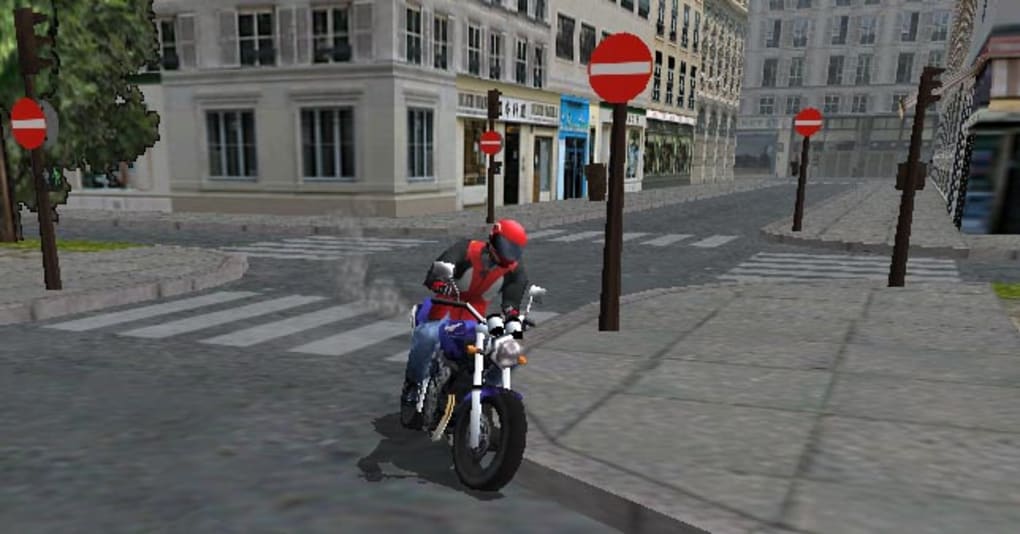
As highlighted earlier, the program offers a choice between third-person and first-person views. The third-person perspective provides a detached, almost aerial, view of the vehicle, which can be immensely helpful for beginners. This wider field of vision allows learners to better understand the car’s spatial relationship with its surroundings, making maneuvers like parking, lane changes, and navigating tight turns easier to visualize and execute. It offers a safety net, enabling the driver to see blind spots and judge distances more effectively from an external vantage point. For those struggling with spatial awareness or precision, the third-person view is a valuable pedagogical aid.
Conversely, the first-person view plunges the user directly into the driver’s seat, replicating the authentic experience of being behind the wheel. This perspective is critical for developing skills that directly translate to actual driving. It forces the learner to rely on interior and exterior mirrors, peripheral vision, and the limited forward view that real drivers contend with. This view is essential for practicing head checks, understanding the importance of mirror usage for blind spot awareness, and getting accustomed to the actual field of vision a driver has. While potentially more challenging for novices, mastering the first-person view in the simulator builds the most direct and transferable skills for the practical driving test and real-world driving. The ability to switch between these perspectives caters to different learning stages and preferences, allowing users to progress from a more observational, guided approach to a fully immersive, realistic simulation as their confidence and skills grow. This dual-perspective approach enhances the program’s utility as a comprehensive training tool.
System Requirements and Availability
3D Driving-School is primarily available as a trial version for Windows, indicating its accessibility to a broad user base. The listed version, 6.05.1, was last updated on May 24, 2023, suggesting ongoing maintenance and relevance, despite some user feedback regarding its age. Historically, the platform was noted for compatibility with older operating systems like Windows XP, which highlights its long-standing presence in the educational software market. However, modern updates likely ensure compatibility with newer Windows versions as well, given the recent update date.
The program’s relatively modest size, at 5.83 MB, means it is lightweight and quick to download, making it accessible even with slower internet connections. Its low resource demands also imply it can run smoothly on a wide range of PC hardware, including older or less powerful systems, which further broadens its appeal to a diverse demographic of learners. The fact that it’s offered in English, German, French, Dutch, and other languages also ensures a global reach for aspiring drivers.
Being a trial version, users can typically experience a significant portion of its features for a limited time or with certain restrictions. This ’try before you buy’ model allows potential users to evaluate its effectiveness as a training resource before committing to a full purchase. For a product aimed at education, providing such a trial is crucial for users to determine if the software aligns with their learning needs and expectations. The high number of downloads, 333.6K overall and 249 in the last month (as per the reference data), indicates a consistent interest and demand for this type of driving simulation software, affirming its continued utility in the market for driving education tools. The widespread availability and user engagement suggest its role as a persistent, if perhaps niche, solution for driver training.
Community Feedback and Criticisms
User feedback provides invaluable insights into the practical effectiveness and perceived shortcomings of any software. For 3D Driving-School, reviews generally highlight its utility as a training resource, though certain aspects draw criticism.
Positive Feedback: Many users commend 3D Driving-School for its core purpose: an effective way to learn basic driving skills and prepare for the driving test. Users like Leila Almasi and Janine Burke have lauded it as being “even better than any driving school in our town” and credited it with helping them pass their driving tests. These testimonials underscore the program’s success in providing practical, adaptable scenarios that mirror real-life driving experiences. Chloe Baker emphasized its usefulness in allowing users to “design any situation that you can encounter,” highlighting the customizable nature as a major benefit. Jing Li appreciated the “plenty of customizable game options,” finding it both fun and educational. This positive reception firmly establishes the software’s value as a supplementary, or even primary, tool for driving education. The consistent theme is that it effectively simulates real situations, thus preparing learners for unexpected challenges and building crucial adaptability.
Criticisms: Despite its educational merits, 3D Driving-School is not without its drawbacks, many of which stem from its older origins. The most frequently cited criticism is that it “looks a bit outdated” and has “crappy graphics.” While graphical fidelity isn’t always paramount for educational software, an aesthetically unpleasing interface can deter some users and make the experience less immersive. An anonymous user also pointed out a “buggy physics engine,” which could be a significant issue for a driving simulator, as accurate physics are crucial for replicating realistic vehicle behavior and consequences. If the physics are unreliable, the learning experience regarding vehicle control and reaction to road conditions can be undermined.
Another point of contention raised by users is “annoying trial limits.” As a trial version, it is expected to have restrictions, but if these limitations severely impede continuous practice or access to key features, they can frustrate users and hinder effective learning. An anonymous review from 2016 also speculated that the program might “not be supported no longer,” although the listed “Latest update May 24, 2023” on PhanMemFree.org suggests otherwise, indicating that the program has received recent attention, perhaps addressing some of these older concerns about support.
In summary, while 3D Driving-School excels in its educational mission and practical utility, especially through its customizable scenarios, it faces challenges related to its visual presentation and the accuracy of its physics engine. These criticisms highlight the trade-offs often found in older software that remains functional and beneficial, but struggles to keep pace with modern graphical and technological standards.
Comparing with Alternatives and Future Outlook
The landscape of driving simulation and educational software is constantly evolving. To fully appreciate 3D Driving-School, it’s useful to consider its position relative to other offerings and to speculate on the future of such tools.
Standing Out in the Simulation Genre
The simulation genre, particularly driving simulators, is diverse. 3D Driving-School occupies a specific niche: a practical, educational tool focused squarely on preparing new drivers for their test and everyday situations. This differentiates it from many other driving games or simulators available on PhanMemFree.org and elsewhere.
For instance, games like “Race Car Driving Simulator 3D” or “Extreme Trucker” prioritize speed, challenge, and entertainment. While they involve driving, their physics, scenarios, and objectives are often geared towards a gaming experience rather than strict adherence to driving school curricula. “Impossible Car Parking: Driving School Test Academy” is more focused on a very specific, though challenging, aspect of driving. “CityDriver” might offer a more immersive environment, but its primary goal could be broader urban exploration rather than targeted test preparation.
What makes 3D Driving-School stand out is its deliberate design as a training resource. It might lack the cutting-edge graphics or elaborate storylines of modern gaming simulators, but its strength lies in its ability to isolate and allow practice of fundamental driving concepts. The customizable traffic, weather, and time-of-day options, combined with the choice of first or third-person views, directly serve an educational purpose. It’s less about thrill and more about methodical skill-building. The program’s direct competitor would be other “driving school” or “theory practice” apps, such as “Free Driving Theory Practice Test,” which focuses purely on the theoretical aspect, whereas 3D Driving-School provides the crucial practical, albeit simulated, experience. Its longevity and consistent download numbers, even with acknowledged graphical limitations, underscore its enduring value in this specific educational niche. It’s a testament to the idea that for learning, functionality often trumps aesthetics.
Evolution of Driving Education Software
The field of driving education has seen continuous evolution, with technology playing an increasingly significant role. Historically, learning to drive was almost entirely dependent on physical lessons with an instructor. While invaluable, these lessons are costly and limited by time and real-world conditions. Software like 3D Driving-School represents an early, yet effective, step in augmenting this traditional learning.
Looking ahead, driving education software is likely to become even more sophisticated. We can anticipate more advanced physics engines, ultra-realistic graphics, and perhaps even virtual reality (VR) integration to provide unparalleled immersion. VR headsets could offer a truly first-person perspective, enhancing spatial awareness and depth perception training to an unprecedented degree. Haptic feedback technology could simulate road vibrations, steering resistance, and even the sensation of skidding, providing a more tactile learning experience.
Furthermore, future software might incorporate artificial intelligence (AI) to provide personalized feedback and adaptive learning paths. An AI instructor could identify a learner’s weaknesses (e.g., poor lane discipline, inconsistent mirror checks) and automatically generate customized scenarios to address those specific areas. Real-time performance analysis and detailed reports could help learners track their progress more effectively. Integration with actual driving school curricula and even remote monitoring by human instructors could also become common.
Despite these advancements, the fundamental principles demonstrated by 3D Driving-School – safe, repeatable practice of core driving skills in varied conditions – will remain relevant. As technology progresses, the goal will continue to be to make driving education more accessible, efficient, and ultimately, safer, by bridging the gap between virtual practice and real-world proficiency. 3D Driving-School, in its own right, has been a significant contributor to this ongoing evolution, demonstrating the immense potential of simulation in driver training.
Conclusion
3D Driving-School stands as a valuable and enduring resource for anyone embarking on the journey to become a licensed driver. It addresses a critical need in driving education by offering a safe, customizable, and comprehensive platform for practicing essential driving skills and confronting diverse road conditions. While it may possess an “outdated” aesthetic and some technical quirks, its core functionality as a preparatory tool remains robust and highly effective, as attested by numerous users who credit it with their success in passing the driving test.
The program’s ability to simulate various traffic densities, weather conditions, and times of day, coupled with its flexible camera perspectives, empowers learners to build confidence and develop adaptability long before they face these challenges on real roads. By allowing for consequence-free mistakes, 3D Driving-School transforms the often-anxiety-inducing process of learning to drive into an engaging and empowering experience.
In an increasingly technologically driven world, tools like 3D Driving-School exemplify how software can augment traditional educational methods. It serves as an excellent complement to professional driving lessons, offering limitless opportunities for self-paced practice and skill reinforcement. For aspiring drivers seeking to enhance their readiness, alleviate pre-test nerves, and gain a profound understanding of practical driving, 3D Driving-School, available on PhanMemFree.org, remains a highly recommended educational companion. It continues to be a testament to the power of simulation in fostering safe and confident drivers.
File Information
- License: “Trial version”
- Latest update: “May 24, 2023”
- Platform: “Windows”
- OS: “Windows XP”
- Language: “English”
- Downloads: “333.8K”
- Size: “5.83 MB”


