The Seven Wonders of the Ancient World represent a pinnacle of human achievement in antiquity, showcasing the remarkable engineering, artistic, and architectural prowess of diverse civilizations. These marvels, selected over centuries based on their exceptional scale, beauty, and cultural significance, captivated the imaginations of people across the ancient world and continue to fascinate us today. While many have succumbed to the ravages of time and natural disasters, their legacy lives on through historical accounts, archaeological discoveries, and the enduring power of their stories. This exploration delves into the individual wonders, examining their construction, significance, and lasting impact on history and culture.
The Great Pyramid of Giza: A Monument to Eternity
Dominating the Giza plateau in Egypt, the Great Pyramid of Giza stands as a testament to the ingenuity and organizational power of the ancient Egyptians. Constructed during the Fourth Dynasty (c. 2580-2560 BCE) under the reign of Pharaoh Khufu, this colossal structure served as his tomb. Its sheer scale is breathtaking: originally standing at a height of 481 feet (147 meters), it remained the tallest man-made structure in the world for over 3,800 years.
The pyramid’s construction involved an astonishing feat of engineering and logistical management. Millions of blocks of limestone, some weighing up to 80 tons, were precisely cut, transported, and meticulously placed. The precision involved in the alignment of the pyramid with the cardinal directions and the accuracy of its angles continue to amaze modern engineers. While the exact methods used by the ancient Egyptians remain a subject of debate and ongoing research, the sheer scale of the project showcases an exceptional level of centralized planning and manpower.
Beyond its impressive engineering, the Great Pyramid served as a powerful symbol of the Pharaoh’s divine authority and the enduring nature of the Egyptian kingdom. The elaborate internal chambers and passages, intricately designed to protect the Pharaoh’s remains and possessions, reflect the deeply held beliefs about the afterlife and the Pharaoh’s role as intermediary between the gods and the people. The pyramid’s enduring presence continues to inspire awe and fascination, serving as a powerful symbol of ancient Egyptian civilization.
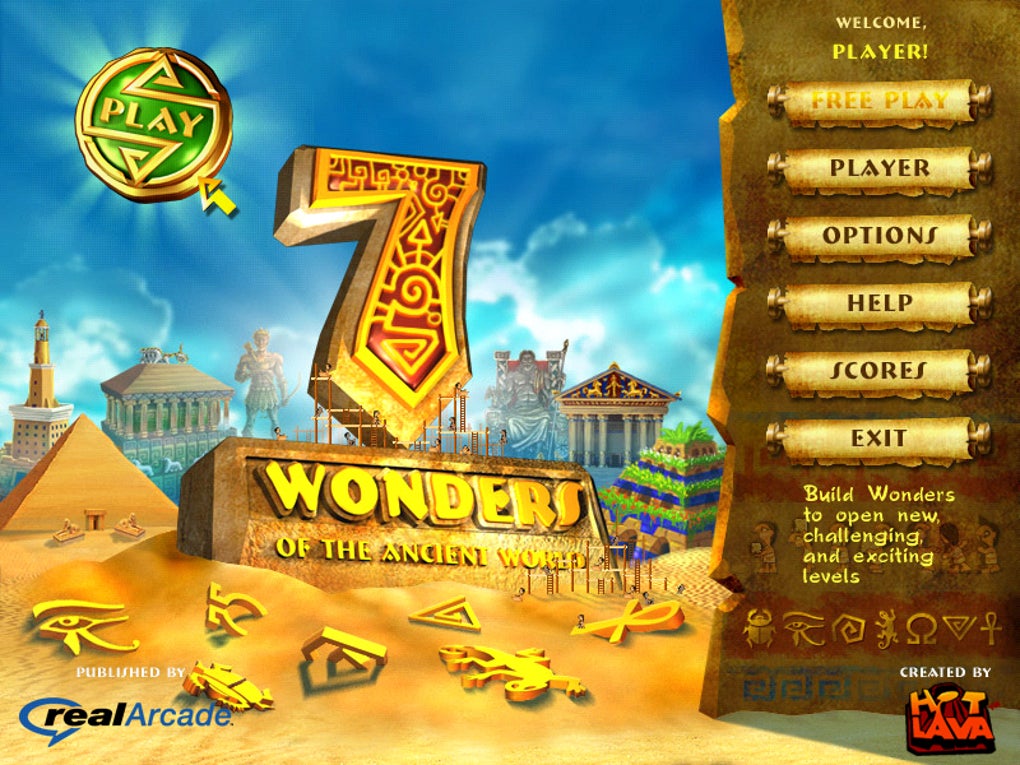
The Hanging Gardens of Babylon: A Verdant Oasis in the Desert
The Hanging Gardens of Babylon, often cited as one of the most enigmatic wonders of the ancient world, are shrouded in mystery. While their existence is debated by some historians due to a lack of definitive archaeological evidence supporting the scale described in ancient accounts, their legendary status remains firmly entrenched.
Ancient texts depict a breathtaking oasis of lush greenery, tiered gardens cascading down the walls of the city of Babylon. Their purpose remains a subject of speculation, with some suggesting they were built as a royal retreat, while others propose they served as a demonstration of the Babylonian empire’s power and ingenuity. Images depict flowing streams, diverse plants, and elaborate walkways, creating an idyllic contrast to the surrounding desert landscape.
The legendary nature of the Hanging Gardens further adds to their allure. Their precise location, design, and construction methods are unknown, leading to numerous theories and interpretations. While archaeological excavations in Babylon have not yielded concrete evidence confirming their existence as described in ancient texts, their legendary status continues to inspire artistic representations and fuel the imagination. The very uncertainty surrounding their reality contributes to their captivating and enduring legacy.
The Statue of Zeus at Olympia: A Colossus of Divinity
Located within the sacred sanctuary of Olympia in ancient Greece, the Statue of Zeus was a colossal masterpiece of sculpture. Created by the renowned sculptor Phidias in the 5th century BCE, it depicted the king of the gods enthroned in majesty. The statue, constructed primarily from ivory plates and gold panels, reached an estimated height of 41 feet (12.5 meters).
Phidias, known for his mastery of artistic detail and technical skill, used a combination of materials and techniques to create an awe-inspiring representation of Zeus. The ivory plates formed the figure’s body, while gold panels covered the robes and other decorative elements. The eyes were believed to be crafted from precious stones, enhancing the statue’s lifelike quality. Ancient accounts detail intricate carvings and embellishments, including the god’s throne, which was adorned with ebony, ivory, gold, and precious stones.
The Statue of Zeus was not merely a work of art; it served as a central symbol of religious devotion and the power of the Olympian gods. Pilgrims from across the Greek world flocked to Olympia to witness its magnificence, reinforcing the sanctuary’s status as a major religious center. Its destruction in a fire in the 5th century CE marked a significant loss to art and culture, leaving behind only descriptions and artistic interpretations to testify to its glory.
The Temple of Artemis at Ephesus: A Sacred Abode of the Goddess
Situated in Ephesus, an ancient Greek city in present-day Turkey, the Temple of Artemis was dedicated to the Greek goddess of the hunt, wilderness, wild animals, childbirth, and nature. Known for its grand scale and exquisite artistry, the temple underwent several phases of construction over centuries, with each iteration surpassing its predecessor in magnificence.
The temple’s most celebrated iteration, constructed in the 4th century BCE, was a breathtaking structure designed by the architect Chersiphron. It boasted 127 massive columns, each standing approximately 60 feet (18 meters) tall, supporting a vast roof. The temple was renowned for its intricate sculptural decorations, representing diverse mythological scenes and embodying the artistic mastery of the period. It served as a focal point for religious rituals and celebrations, attracting pilgrims and worshippers from across the ancient world.
The Temple of Artemis’s history was marked by both destruction and rebuilding. It was tragically destroyed by arson in 356 BCE, a deliberate act that shocked the ancient world. However, the temple was subsequently rebuilt, even grander than before, under the patronage of Alexander the Great. Despite its later destruction, the temple’s grandeur and artistic legacy remain a testament to the devotion to Artemis and the artistic achievements of the ancient world.
The Mausoleum at Halicarnassus: A Monumental Tomb
The Mausoleum at Halicarnassus, located in the ancient city of Halicarnassus (present-day Bodrum, Turkey), was an elaborate tomb constructed in the 4th century BCE for Mausolus, a satrap in the Persian Empire, and his sister-wife Artemisia II of Caria. It was renowned for its immense scale and exquisite architecture, showcasing a blend of Greek and Persian artistic styles.
The Mausoleum was a collaborative effort involving several renowned Greek architects and sculptors of the time. Its design incorporated a multi-tiered structure, featuring a base, a stepped platform, and an upper structure adorned with intricate sculptures and decorative elements. The structure incorporated a combination of different architectural orders, a blend of Doric, Ionic, and Corinthian styles, reflecting the influence of both Greek and Persian artistic traditions.
The Mausoleum’s reputation as a wonder was based not only on its size but also on the remarkable artistic quality of the sculptures that adorned it. Renowned sculptors were commissioned to create elaborate friezes and statues, depicting mythological scenes and historical events, highlighting the artistry and grandeur of the era. The sheer scale and artistic detail of the Mausoleum solidified its position as a significant wonder of the ancient world, a testament to human creativity and the enduring power of commemoration. The term “mausoleum” itself has since become synonymous with a grand and imposing tomb.
The Colossus of Rhodes: A Bronze Giant
The Colossus of Rhodes was a massive bronze statue of the Greek sun god Helios, erected in the ancient city of Rhodes on the island of the same name. Constructed in the 3rd century BCE, it stood an estimated 108 feet (33 meters) tall, making it one of the tallest statues of antiquity. The statue’s creation involved a remarkable feat of engineering, given the scale and materials involved.
The statue was constructed using a technique involving a metal framework covered with bronze plates. The details of its construction remain somewhat unclear, with theories about how such a massive structure could be raised and supported. Ancient accounts suggest the statue’s pose was standing, with the legs possibly straddling the entrance to the harbor.
The Colossus of Rhodes symbolized the power and prosperity of Rhodes, a major maritime power of its time. Its image was a source of civic pride and inspired awe across the Mediterranean world. Unfortunately, the Colossus suffered a catastrophic collapse in an earthquake only 56 years after its construction, lying in ruins for centuries before its bronze components were ultimately salvaged and melted down. Though its physical form is lost, its legend persists, embodying the ambitions and accomplishments of ancient Greek engineering and artistic achievements.
The Lighthouse of Alexandria: A Beacon in the Mediterranean
The Lighthouse of Alexandria, constructed in the 3rd century BCE on the island of Pharos, served as a crucial navigational aid for ships entering the harbor of Alexandria in Egypt. Its remarkable height and innovative design solidified its position as a wonder of the ancient world. Estimates suggest the lighthouse stood between 330 and 390 feet (100 and 120 meters) tall, making it one of the tallest man-made structures of its time.
The structure was a marvel of engineering, utilizing a series of tiers to reach its impressive height. The base was constructed of large blocks of stone, while the upper tiers incorporated innovative design features to withstand the effects of wind and sea. The top featured a massive fire fueled by wood or other materials, providing a visible beacon for sailors from great distances. Mirrors or polished metal surfaces were likely used to amplify the light’s intensity.
The Lighthouse of Alexandria represented not only a feat of engineering but also a symbol of Egypt’s maritime power and influence. It served as a testament to the ingenuity and technical prowess of its designers and builders, guiding countless vessels into the bustling port of Alexandria for centuries. The eventual destruction of the lighthouse, by earthquakes over several centuries, and the use of its materials in subsequent construction projects, leave us with only historical descriptions and artwork to provide an impression of its grandeur and significance. Its legacy, however, lives on as a symbol of human ingenuity and the importance of navigational technology in shaping the ancient world.
File Information
- License: “Full”
- Latest update: “July 21, 2025”
- Platform: “Windows”
- OS: “Windows 11”
- Downloads: “3.3K”