
The year 2005 marked a significant milestone for fans of real-time strategy (RTS) games, as the legendary Age of Empires series made its highly anticipated return with Age of Empires III. Five years after the critically acclaimed expansion, The Conquerors, had enriched Age of Empires II, the third main installment emerged, picking up the historical narrative precisely where its predecessor left off: at the dawn of the European colonization of the New World. This epochal setting, characterized by grand discoveries, fierce conflicts, and the clash of cultures, provided a rich tapestry for players to immerse themselves in, offering a strategic depth that both honored the series’ legacy and introduced groundbreaking innovations.
From the very first moments, Age of Empires III plunges players into the familiar yet refined core gameplay loop that has defined the franchise for years. The fundamental tenets of resource gathering – meticulously collecting wood, mining for precious mineral ore, securing a steady supply of gold, and cultivating vast amounts of food – remain paramount. However, this iteration was not content with merely replicating past successes. Instead, it sought to elevate the genre, introducing what many critics and players hailed as one of the most sophisticated and intuitive resource management systems ever witnessed in an RTS title. This meticulous attention to economic balance and logistical planning forms the bedrock of every empire’s rise, demanding players to constantly adapt their strategies to sustain their burgeoning colonies and fuel their military aspirations across the vast and untamed landscapes of the New World.
A New World of Strategic Conquest
Age of Empires III did not merely offer a new coat of paint; it reimagined the very foundation of strategic gameplay within the franchise. The game’s premise revolves around the player leading one of eight European civilizations – Spanish, British, French, Portuguese, Dutch, Russian, German, or Ottoman – through three historical periods: the Discovery Age, the Colonial Age, and the Imperial Age. Each civilization boasts unique units, technologies, and Home City cards, ensuring a high degree of replayability and strategic diversity. The narrative is often driven by a captivating single-player campaign that follows the fictional Black family through several generations, tying their destiny to pivotal moments in the colonization of the Americas. This storytelling approach, blending personal narratives with grand historical events, added an emotional depth not always found in traditional RTS games, making the player’s journey feel more personal and impactful.
The core objective remains the establishment and expansion of an empire, requiring players to build towns, research technologies, train armies, and ultimately, defeat rival civilizations. The challenge lies in balancing economic growth with military might. Early game focuses heavily on exploration and resource acquisition, dispatching explorers to uncover new territories, hunt animals for food, and establish trade routes. As the game progresses, the complexity escalates, requiring careful management of a growing population, specialization of villagers for different tasks, and the strategic placement of buildings to maximize efficiency and defense. The game’s maps are dynamically generated, ensuring that no two playthroughs are exactly alike, and offering varied terrains that influence strategic decisions, from dense forests for wood gathering to open plains ideal for cavalry maneuvers.

Beyond the traditional resource gathering, Age of Empires III introduced a groundbreaking “Home City” system, which served as a persistent element across multiple games and campaigns. This innovative mechanic allowed players to customize their home city, unlocking various “shipments” that could be called upon during a match. These shipments ranged from additional resources, military units, and economic upgrades to unique technologies and even settlers, providing a crucial strategic layer. As players gained experience points (XP) in battle or through economic prosperity, they could level up their Home City, unlocking more powerful and diverse cards. This system effectively merged elements of role-playing and strategic planning, giving players a sense of long-term progression and personalizing their chosen civilization beyond standard tech trees. The Home City became a strategic anchor, offering a lifeline and tactical advantage that could turn the tide of a battle, or accelerate an economy, adding a refreshing dimension to the familiar RTS formula.
Evolved Combat and Advancement Systems
One of the most significant areas Age of Empires III aimed to revolutionize was the military aspect, specifically addressing the large-scale confrontations between diverse armies. The developers understood that while resource management was crucial, the thrill of an RTS often culminated in epic battles. To this end, Age of Empires III introduced a series of enhancements designed to foster greater specialization among troops and encourage more dynamic combat strategies. For instance, the game features a sophisticated counter-unit system, where certain units are highly effective against others, mirroring historical military doctrines. Cavalry, while formidable, would find itself vulnerable against disciplined infantry formations equipped with pikes, while ranged units like musketeers or crossbowmen could quickly decimate an enemy’s cavalry charge if positioned correctly. This rock-paper-scissors dynamic mandated players to not only field large armies but to compose them thoughtfully, anticipating enemy compositions and deploying appropriate counters. The strategic depth of combat was further amplified by terrain advantages, unit formations, and the impact of powerful artillery units capable of devastating enemy fortifications and troop concentrations.
Beyond mere unit counters, the game’s combat felt more visceral and impactful thanks to the new graphics engine (which we’ll delve into shortly) that allowed for detailed animations, ragdoll physics, and impressive destruction effects. Buildings would collapse realistically, units would react visibly to being hit, and cannon fire would leave craters in the landscape, providing immediate visual feedback on the chaos of battle.
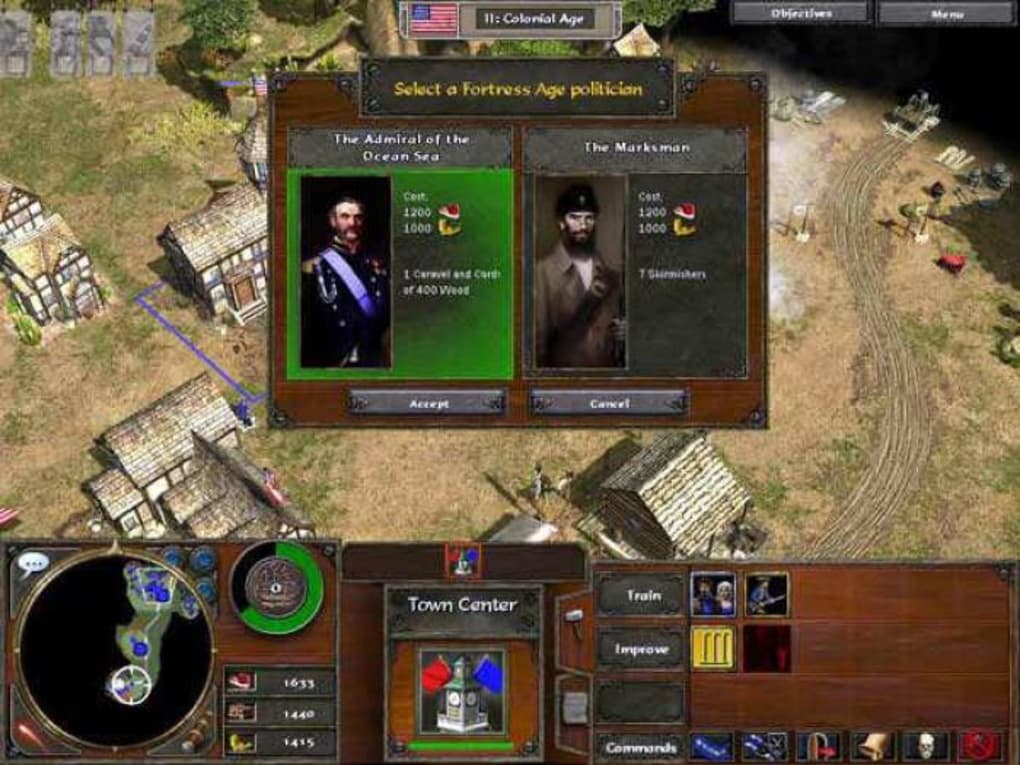
Perhaps the most radical departure from previous Age of Empires titles came in its approach to technological advancement and progression. Unlike earlier installments where simply advancing through historical ages granted access to new tools and research automatically, Age of Empires III introduced a more organic, experience-driven system. In this new paradigm, progression is less about a linear tech tree and more about accumulating “experience” – both through combat and economic activities. This experience isn’t just a numerical value; it’s a currency that allows players to acquire new units, unlock potent economic advantages, and gain access to special elements that significantly strengthen their chosen faction.
This innovative system, tied intrinsically to the Home City mechanics, means that players actively “research” by choosing which shipments to call in, effectively customizing their faction’s strengths on the fly. Do you need more infantry to push an offensive? Call in a military shipment. Is your economy struggling? Request resource crates or settler wagons. This dynamic decision-making replaced the more passive age-up benefits, requiring players to be more proactive and adaptable. Furthermore, each civilization received unique “Discovery Age” bonuses and distinct Home City cards that allowed for highly specialized strategies from the outset. For example, the British could leverage their unique ‘Manor House’ which also trained a settler, providing a consistent economic boost, while the Spanish could call in shipments faster, giving them an early military edge. This layered approach to progression meant that victories often hinged not just on raw numbers, but on the intelligent application of accumulated experience and the astute deployment of Home City advantages, enriching the strategic landscape considerably.
The online multiplayer system, a cornerstone of any competitive RTS, also received significant improvements. While the specifics aren’t detailed in the provided snippet, the mention of an “improved online gameplay system” as a pro suggests enhancements to matchmaking, stability, or features that made competitive play more accessible and enjoyable. This was crucial for fostering a thriving community and extending the game’s longevity beyond its single-player offerings.
Immersive Graphics and Unprecedented Detail
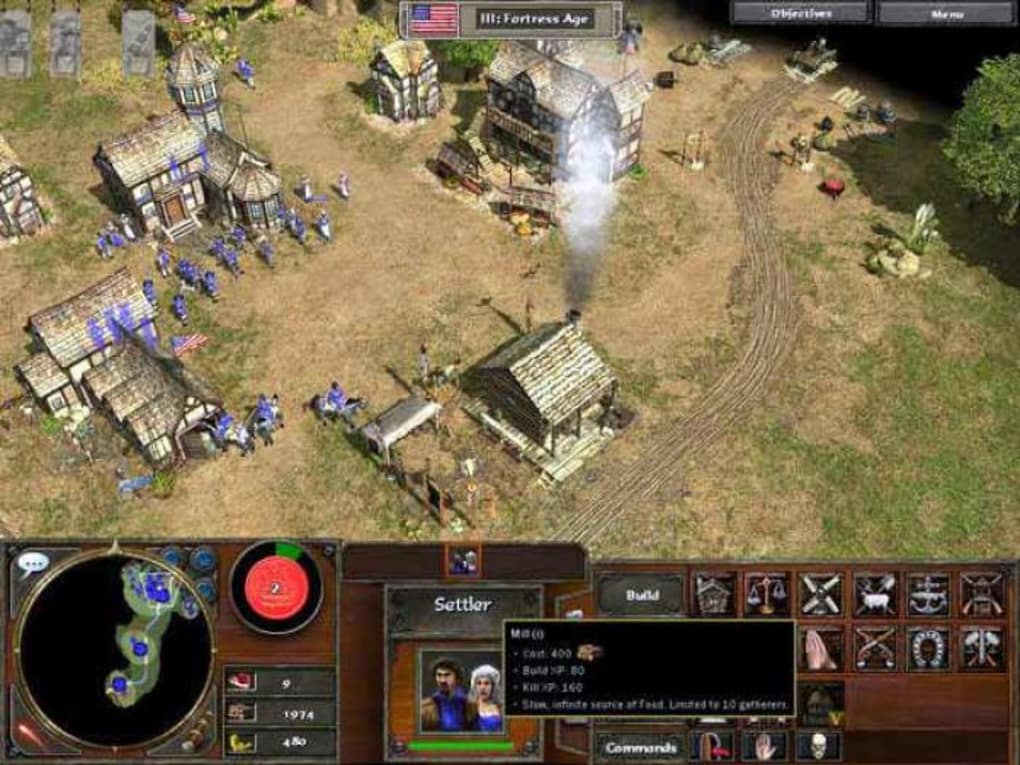
A true standout feature of Age of Empires III upon its release was its cutting-edge 3D graphics engine. This wasn’t merely an incremental upgrade; it represented a monumental leap forward in visual fidelity for the franchise and the RTS genre as a whole. The developers leveraged this new engine to craft a world brimming with an extraordinary level of detail, transforming battlefields and settlements into vibrant, living environments. Players could zoom in and observe their burgeoning civilizations with an unprecedented degree of clarity and realism.
The graphical prowess was evident in numerous small but impactful touches that collectively created a deeply immersive experience. One could clearly discern the faint trails of smoke gracefully ascending from the chimneys of town buildings, indicating the bustling activity within. The water surfaces, a frequent canvas in the game’s naval engagements, showcased stunning reflections, mirroring the movements of entire fleets and the changing skies above with remarkable accuracy. Even the most minute details, such as the dynamic shadows cast by individual units and the main character as they traversed the varied landscapes, contributed to a sense of depth and realism that had been largely unattainable in previous RTS titles. This attention to detail extended to unit models, which were highly refined and distinguishable, making it easier to manage armies and appreciate the distinct aesthetic of each civilization’s military and architecture. The world of Age of Empires III was not just a playground for strategic decisions; it was a beautifully rendered spectacle, inviting players to pause and appreciate the artistry behind its creation.
User reviews from platforms like PhanMemFree echoed this sentiment, with many players singling out the graphics as a major highlight. Anonymous users lauded how “the graphics adapt to your graphics card, excellent, very very good,” emphasizing the game’s scalability while still delivering a stunning visual experience. Another user described it as “simply spectacular,” praising the graphics, along with addiction and sound, as making the game exceptional. The visual quality was often cited as a key factor in the game’s ability to re-engage players who had stepped away from the series, offering a fresh, modern aesthetic that stood out amongst its contemporaries. The enhanced visuals weren’t just for show; they contributed to a clearer battlefield, allowing for better tactical awareness and making the entire gameplay experience more engaging and visually rewarding.
The Legacy and Player Experience
Upon its debut, Age of Empires III landed with considerable fanfare and, judging by user reviews, largely met the high expectations set by its predecessors. The consensus among players who shared their opinions on PhanMemFree was overwhelmingly positive, highlighting a game that not only retained the beloved elements of the franchise but also pushed the envelope with significant innovations. Many users expressed a profound sense of satisfaction, noting that the game successfully captivated them, even those who had temporarily drifted away from the series after Age of Mythology or had tried other contemporary RTS titles like Empire Earth.
One anonymous reviewer, reflecting on their experience, described Age of Empires III as “simply spectacular.” This user, who confessed to having stopped playing the Age of Empires series for a while and found other games lacking, passionately stated that “if you like Age of Empires, you can’t miss buying it.” They praised “the graphics, the addiction, the sound…everything,” unable to find a single flaw other than the desire for the full version. This sentiment of immediate immersion and enduring appeal was a recurring theme. Another player championed its “best achievements in design and content,” confidently asserting that it “much better than the well-known Empire Earth, it surpasses it not only in graphic quality but also in its content and ease of functions.” Such comparisons cemented Age of Empires III’s position as a top-tier contender in the competitive RTS landscape of its time.
The educational aspect, often subtly woven into the fabric of Age of Empires games, was also recognized. One reviewer noted its merit as an “educational game reflected in the history of the late Middle Ages (AoE2) very very good!” (though mistakenly referring to AoE2’s period, the educational value was clearly appreciated in AoE3’s historical context too). The campaigns were lauded as “excellent,” offering “game methods to win” that were both challenging and rewarding.
While the trial version initially available might have presented minor inconveniences – such as being primarily in English, leading to a user comment clarifying that “very few demos come out in our language, but rest assured that the original game will be completely translated into Castilian” – these were generally seen as temporary hurdles, not reflections of the final product’s quality. A single report of a technical issue, a user encountering a missing ‘d3d9.dll’ file during installation, highlights the typical minor glitches that can sometimes accompany new software releases, but these were isolated incidents rather than widespread complaints. The overall sentiment was one of excitement and anticipation for the full release, underscoring the demo’s success in building hype. Even a small bug mentioned, where “healers walk horizontally,” was accepted with the understanding that “I suppose it will be fixed with the final version.”
The game’s ability to rekindle the passion for the RTS genre was vividly captured by a user who declared it “simply unique. Impressive, great, unique.” This player, who still enjoyed Age of Empires II online, expressed confidence that Age of Empires III had returned “to teach those flatulent companies who is the best and that in a long time they will not dethrone.” This speaks volumes about the game’s perceived excellence and its potential to set new benchmarks in the genre. The enthusiasm was palpable, with many players expressing an eager desire for the complete version, ready to fully immerse themselves in its expansive world and intricate strategic depth. The immediate and overwhelmingly positive feedback firmly established Age of Empires III as a worthy successor, a game that not only lived up to the legendary name but also charted a new course for the series with its innovative features and stunning presentation.
Technical Specifications and Release Information
For those eager to experience the strategic depth and visual splendor of Age of Empires III, the game was initially made available as a trial version. This allowed prospective players to get a taste of the New World conquest before committing to the full purchase. The trial version, as detailed on PhanMemFree, received its last update on October 20, 2005, positioning its release firmly in the mid-2000s, a golden era for real-time strategy games.
The game was developed primarily for the Windows operating system, specifically targeting Windows XP users, which was the dominant OS at the time. Its compatibility and performance on this platform were a key focus for its developer, Microsoft, ensuring a broad audience could access and enjoy the game. The download size for the trial version was a manageable 447.49 MB, making it relatively accessible even for internet connections of that era.
While the provided trial download from PhanMemFree was primarily in Spanish (V03.9(13539)), the full game and other regional trials were available in a wider array of languages. Available languages for different versions included German, English, and French, catering to a global audience. This multilingual support ensured that players worldwide could fully engage with the historical narrative and strategic nuances without language barriers.
In terms of its reach, Age of Empires III garnered significant attention. Data from PhanMemFree showed impressive download figures, with 4.3 million total downloads recorded and 1.4 thousand downloads in the last month of reporting. These numbers underscore the immense popularity and widespread interest the game generated upon its release, solidifying its status as a major title in the strategy genre.
Key Features and Improvements at a Glance:
- Pros:
- Highly Improved 3D Graphics Engine: Offering unprecedented detail and immersion.
- Greater Specialization of Military Units: Enhancing tactical combat and requiring strategic army composition.
- New Experience and Research System: An innovative, dynamic progression tied to the Home City.
- Improved Online Gameplay System: Fostering a more engaging and stable multiplayer experience.
- Cons:
- Nothing Notable: A testament to the game’s polished state at release, with user reviews largely concurring that there were no significant drawbacks. Minor issues such as demo language or specific installation problems were seen as peripheral to the overall high quality of the game.
The comprehensive package of stunning visuals, refined gameplay mechanics, and innovative systems ensured that Age of Empires III was not just another sequel but a significant evolution for the venerable franchise. It successfully carved out its own niche, offering a fresh perspective on the Age of Empires experience while honoring the strategic depth that fans had come to expect. Its release was a pivotal moment, marking a new era of strategic conquest for players worldwide, eagerly embarking on their journey to forge empires in the New World.


