
In the fast-paced digital world, where efficiency is paramount and time is a precious commodity, users often find themselves ensnared in cycles of monotonous, repetitive tasks. Whether it’s clicking through countless web pages, inputting data, or performing a series of identical keystrokes, these digital chores can drain productivity, induce fatigue, and detract from more creative and strategic endeavors. This is precisely where the concept of intelligent automation steps in, offering a much-needed reprieve. Among the various tools designed to tackle this challenge, AI Robot emerges as a notable solution, specifically crafted for Windows environments. It promises not just to automate, but to empower users by liberating them from the tyranny of digital repetition, allowing them to redirect their energy towards more meaningful activities.
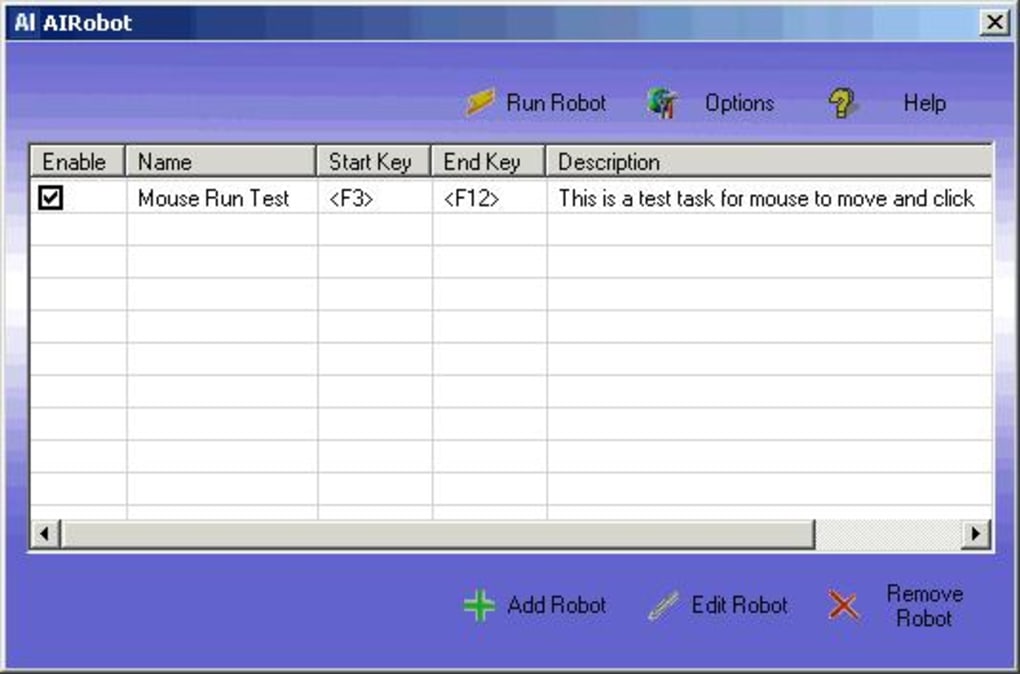
AI Robot, originally gaining traction as a trial version program, has carved out a niche within the extensive category of software utilities, specifically under the crucial subcategory of automation tools. Its core appeal lies in its straightforward approach to complex automation, making it accessible even to those without extensive technical expertise. For years, it has served as a reliable assistant for individuals and small businesses looking to optimize their workflow, proving that even simple automation can yield significant gains in productivity and user satisfaction. The software’s enduring presence and continued downloads, even years after its initial release, attest to its fundamental utility and the persistent demand for effective task automation.
Understanding AI Robot: Your Personal Automation Assistant
At its heart, AI Robot is an intuitive piece of software designed with a singular, powerful purpose: to automate repetitive computer tasks. It acts as a digital proxy for the user, capable of mimicking a wide range of human interactions with a computer’s interface. Imagine having a tireless assistant that can perform thousands of mouse clicks, perfectly timed keystrokes, and navigate complex digital environments, all without complaint or error. That’s the essence of what AI Robot brings to the table, transforming tedious manual processes into streamlined, automated routines.
Its placement within the “Software utilities” category signifies its role as a tool that enhances the overall functionality and usability of a computer system. More specifically, its “Automation” subcategory highlights its specialization in creating self-executing sequences of operations. This classification is crucial because it distinguishes AI Robot from general-purpose software, positioning it as a dedicated solution for a very specific and widespread problem: the drudgery of digital repetition.
What Exactly Does AI Robot Do?
In practical terms, AI Robot automates almost any repetitive task that involves human input through a mouse or keyboard. This includes a comprehensive range of actions, from simple clicks to complex sequences of key presses and text inputs. It doesn’t rely on artificial intelligence in the modern, machine-learning sense, but rather on a sophisticated macro-recording and playback system that allows it to execute predefined actions with incredible precision and speed. The “AI” in its name likely refers to its ability to intelligently mimic human-like interaction, making it seem as if a digital entity is performing the tasks.
The software’s operational principle is based on recording user actions or allowing users to program sequences of actions directly. Once a “robot” (an automation script) is created, AI Robot can faithfully reproduce these actions on demand. This includes automating right-clicking, left-clicking, and even clicking on multiple, specific areas of the screen. Furthermore, it excels at automating input keystrokes, whether it’s a single character, a combination of keys, or an entire block of text. This capability makes it an invaluable tool for scenarios where consistent and rapid input is required, far exceeding the speed and endurance of human interaction.
The Core Philosophy of Repetitive Task Automation
The need for repetitive task automation stems from several fundamental challenges in our digital lives. Firstly, human beings are prone to errors when performing the same action repeatedly. Fatigue sets in, attention wanes, and mistakes become inevitable. Automation eliminates this human element of fallibility, ensuring consistent and flawless execution of tasks, every single time. Secondly, time is a finite resource. Every minute spent on a repetitive, low-value task is a minute lost that could have been dedicated to more strategic thinking, problem-solving, or creative work. By offloading these tasks to a digital assistant like AI Robot, users can reclaim significant portions of their day, boosting overall productivity and job satisfaction.
Moreover, the psychological toll of monotonous work should not be underestimated. The feeling of being stuck in a loop of identical actions can lead to boredom, frustration, and burnout. Automation provides an escape route, freeing individuals from the mental burden of these tasks and allowing them to engage with their work in a more stimulating and rewarding manner. AI Robot embodies this philosophy by offering an accessible means to achieve such liberation, enabling users to focus on what truly requires their unique human intelligence and creativity.
Unleashing Productivity: Key Features and Diverse Applications
AI Robot’s utility is derived from its robust set of features, which collectively enable a wide array of automation possibilities. Its strength lies not just in performing actions, but in doing so with speed, accuracy, and unwavering consistency. These capabilities open doors to enhanced productivity across various domains, from personal computing to professional workflows.
Precision Clicking and Rapid Keystroke Emulation
One of AI Robot’s standout features is its unparalleled ability to automate mouse clicks with extreme precision and speed. Users can program it to execute single clicks, double clicks, right clicks, and even click on multiple designated areas of the screen. This level of control is crucial for navigating complex user interfaces, interacting with specific elements in applications, or performing actions that require spatial accuracy. What truly sets it apart, however, is its incredible speed. AI Robot can click as fast as 100 times a second, a feat utterly impossible for any human. This hyperspeed capability is particularly beneficial in scenarios where rapid interaction is a critical advantage, providing an edge that manual operation simply cannot match.
Complementing its clicking prowess, AI Robot also offers comprehensive keystroke automation. It can simulate individual key presses, combinations of modifier keys (like Ctrl, Alt, Shift) with other keys, and even type entire blocks of text. This feature is invaluable for automating data entry, filling out forms, executing command-line instructions, or triggering specific functions within software applications. The ability to input text automatically ensures that information is entered consistently and without typographical errors, further enhancing the reliability of automated processes. The combination of precise mouse control and rapid keystroke emulation makes AI Robot a versatile tool for interacting with virtually any software environment.
Beyond Gaming: Real-World Scenarios and Practical Use Cases
While the raw speed of AI Robot might initially conjure images of competitive gaming or automated botting in online worlds, its practical applications extend far beyond mere entertainment. The reference content itself hints at diverse uses, and a deeper exploration reveals how invaluable this tool can be in various professional and personal contexts:
- Online Games and Simulations: The most obvious application, as hinted in the original description, involves online slot machine games, bingo, or any game that requires constant clicking or repetitive actions to achieve goals. For players seeking to maximize their presence or perform tedious in-game farming, AI Robot offers an automated solution. This can extend to any scenario where continuous, mindless interaction is part of the game design, allowing players to progress without constant manual oversight.
- Web Browsing and Data Scraping: For tasks involving web pages, AI Robot is incredibly useful. It can be set to automatically refresh webpages at specified intervals, ensuring access to the most current information. It can also navigate through websites by automatically clicking on links, performing actions like downloading files, submitting forms, or gathering data from multiple pages. This makes it a rudimentary but effective tool for certain forms of web scraping or content monitoring, especially on sites that don’t offer APIs.
- Automated Presentations: The mention of automating PowerPoint presentations highlights its utility in professional settings. Instead of manually advancing slides, a “robot” can be configured to progress through a presentation at a fixed pace or in response to specific triggers, ensuring a smooth and hands-free delivery. This can be particularly useful for unattended displays or self-running kiosks.
- Webcam Management: While not explicitly detailed, automating webcams could involve tasks like periodically taking snapshots, switching between camera views, or initiating recordings based on time or specific UI triggers. This hints at applications in surveillance, time-lapse photography, or automated content creation.
- Data Entry and Form Filling: One of the most tedious office tasks, data entry, can be significantly streamlined. If you repeatedly enter similar information into different fields or applications, AI Robot can be programmed to fill out forms automatically, fetching data from one source and inputting it into another. This drastically reduces manual effort and the potential for human error.
- Software Testing and Quality Assurance: Developers and QA testers often need to perform repetitive actions to test software functionalities, stress-test applications, or reproduce bugs. AI Robot can meticulously execute these test scripts, providing consistent and repeatable results, thus saving considerable time and effort in the testing phase.
- System Maintenance and Utilities: Tasks like routinely cleaning temporary files, initiating backups, or running system diagnostics often involve navigating menus and clicking through prompts. AI Robot can automate these maintenance routines, ensuring that your system remains optimized without constant manual intervention.
The sheer breadth of these applications underscores AI Robot’s versatility. It’s not just a clicker; it’s a configurable agent capable of enhancing efficiency across a diverse spectrum of digital interactions, making it a valuable asset for anyone seeking to minimize manual effort and maximize their digital productivity.
Getting Started: Simplicity in Design and Operation
One of the most appealing aspects of AI Robot, and a significant contributor to its enduring popularity, is its user-friendly design. Despite its powerful automation capabilities, the software is engineered for simplicity, ensuring that users can quickly grasp its functionalities and begin creating their own automation routines without a steep learning curve. This ease of use is critical for any utility tool aiming for broad adoption, and AI Robot delivers on this promise by streamlining the process of script creation and execution.
The core philosophy behind its interface is to empower users to create “robots” (automation scripts) with minimal fuss. The journey from identifying a repetitive task to having AI Robot execute it autonomously is designed to be as intuitive as possible, emphasizing immediate practical application over complex programming paradigms.
Crafting Your First Automation Script
The process of creating a robot with AI Robot is described as straightforward, relying on “easy to use robot creating tools.” While the specifics of these tools are not exhaustively detailed in the reference, common approaches in such software include:
- Recording Mode: This typically involves a “record” button that captures all mouse movements, clicks, and keyboard inputs made by the user. Once the task is completed, the recording is stopped, and AI Robot generates a script that can replay these actions. This method is incredibly intuitive as it requires no coding or scripting knowledge—users simply perform the task as they normally would, and the software learns.
- Point-and-Click Interface: For more precise control, AI Robot likely offers a visual editor where users can define specific click coordinates, drag-and-drop actions, or input keystrokes by selecting them from a menu. This allows for fine-tuning scripts and ensuring that actions are executed exactly where and when intended, independent of the user’s live performance.
- Predefined Actions and Delays: Users can usually insert predefined actions like waiting for a certain amount of time, checking for a specific pixel color on the screen, or launching an application. These elements allow for more dynamic and robust automation scripts that can adapt to minor variations in the digital environment.
The emphasis on “easy to use robot creating tools” suggests that AI Robot successfully distills complex automation logic into an accessible format, making it viable for a wide range of users, from casual PC users to those with more advanced automation needs.
Setting Up for Continuous Efficiency
Once a robot has been created, getting AI Robot to perform its duties is equally simple. The software typically provides clear options to “run robot” or activate it using a “start hot key.” This means that after a brief setup, the user can initiate a complex automation sequence with a single click or keyboard shortcut, transforming a multi-step, time-consuming task into an instant, hands-free operation.
A key advantage highlighted in the description is the ability to set the robot to run as many times as desired, or even to run continuously until manually stopped. This feature is crucial for tasks that require ongoing attention, such as constantly refreshing a webpage for updates, maintaining activity in an online application, or performing data collection over extended periods. The “set it and forget it” nature of AI Robot means that it will loyally execute its programmed tasks “without any extra attention from you,” freeing the user to focus on other priorities.
This continuous operation capability, combined with the ease of script creation, fundamentally redefines the user’s relationship with repetitive digital work. Instead of being chained to the screen performing mind-numbing tasks, individuals can delegate these responsibilities to AI Robot, secure in the knowledge that they will be executed precisely and efficiently in the background. This makes AI Robot not just a tool for automation, but a genuine productivity enhancer that prioritizes user convenience and efficiency.
Technical Footprint and Legacy: A Look Under the Hood
Beyond its operational capabilities and user interface, understanding the technical specifications and historical context of AI Robot provides further insight into its design philosophy and enduring appeal. Its modest resource requirements, consistent development, and impressive download statistics underscore its position as a reliable and accessible automation solution.
System Requirements and Compatibility
AI Robot is noted for its lightweight design, requiring “less storage space than many software in the category Software utilities.” With a reported size of just 2.34 MB, it is an incredibly compact application, meaning it consumes minimal disk space and system resources. This efficiency is a significant advantage, as it ensures that AI Robot can run smoothly even on older or less powerful Windows machines without causing slowdowns or conflicts with other software.
Regarding operating system compatibility, the software was initially available for “users with the operating system Windows 95 and previous versions.” However, later updates broadened its reach, with PhanMemFree.org indicating compatibility with “Windows 2000” and potentially subsequent versions (though the original text specifies “Windows 95 and previous versions” from 2006, and “Windows 2000” from 2019, suggesting ongoing support or at least a confirmed compatibility for a significant period). This wide-ranging, albeit classic, Windows compatibility highlights its accessibility to a broad user base, including those still operating on older systems or within specific legacy environments. The software is exclusively available in English, which streamlines its interface and documentation but naturally limits its direct global reach to English-speaking users.
Evolution and Download Impact
AI Robot’s journey, as detailed by its release and update history, paints a picture of a tool with sustained relevance. The software was added to the PhanMemFree.org catalog in 2005. Its initial reported downloads reached 14,980, with 190 installations in a single week shortly after its inclusion. This demonstrates immediate popularity and a clear demand for its automation capabilities. The earliest version mentioned is 2.0, with an update on 9/1/2006.
However, the information provided also includes a later update date of March 12, 2019, along with more recent download figures: 27.8K total downloads and 78 downloads in the last month. This apparent discrepancy in dates and figures can be interpreted as a continuous presence on platforms like PhanMemFree.org, with different data points collected at various times. The fact that it continues to be downloaded and used years after its initial release and early updates speaks volumes about its enduring utility and the developer, Newdigitalsoft’s, commitment to maintaining it, or at least its stable performance across different Windows iterations. The ongoing download activity, even in the late 2010s, indicates that AI Robot successfully addressed a persistent need for simple, effective automation that many users still sought, proving its legacy in the utilities landscape. Its heavy usage in countries like Indonesia, the United States, and Vietnam further underscores its global, albeit concentrated, impact.
Navigating the Automation Landscape: AI Robot and its Peers
The market for automation software is diverse, ranging from simple auto-clickers to highly complex macro recorders and sophisticated robotic process automation (RPA) suites. AI Robot sits comfortably within the accessible end of this spectrum, providing robust functionality without overwhelming users with unnecessary complexity. Understanding its position relative to other tools helps in appreciating its unique value proposition.
Distinguishing Features from Other Auto-Clickers and Macro Tools
The reference content lists several alternative applications, including “AutoClick Robot,” “Clicker,” “Macro Express,” “Robot A.I Maker,” and “Advanced Mouse Auto Clicker.” These tools vary in their scope and complexity. Basic auto-clickers often only offer repetitive clicking at a fixed interval or specific location. More advanced macro recorders, like Macro Express, provide extensive scripting capabilities, allowing users to build highly intricate automation workflows that can include conditional logic, loops, and integration with other applications.
AI Robot strikes a balance. While it provides more functionality than a bare-bones auto-clicker (with its ability to automate keystrokes, text input, and clicking multiple areas), it generally remains simpler and more focused than a full-fledged macro programming suite. Its “easy to use robot creating tools” suggest a strong emphasis on user accessibility, perhaps through a more visual or record-and-playback interface, rather than requiring users to write lines of code. This makes it an ideal choice for users who need significant automation power for common tasks but don’t require the steep learning curve or advanced features of enterprise-level RPA solutions. It occupies a sweet spot, offering substantial automation capabilities without overcomplicating the user experience.
Why Choose AI Robot?
For many users, AI Robot represents an optimal choice for several compelling reasons:
- Simplicity and Ease of Use: Its straightforward interface and “easy to use robot creating tools” make it approachable for beginners and efficient for experienced users. The ability to quickly create and run automation scripts without extensive technical knowledge is a significant advantage.
- Efficiency and Speed: With the capability to perform clicks up to 100 times a second, AI Robot offers a level of speed and precision that is unmatched by manual human input. This translates directly into significant time savings for repetitive tasks.
- Low System Footprint: Its small file size and minimal resource consumption mean it runs smoothly in the background without impacting system performance, even on older Windows machines.
- Broad Practical Applications: From gaming to web browsing, data entry, and presentations, its versatility ensures it can tackle a wide array of repetitive digital chores, making it a valuable utility for diverse user needs.
- Reliable and Stable: Its sustained presence and download history on platforms like PhanMemFree.org suggest a stable and reliable performance over many years, indicating a trustworthy tool for automation.
In conclusion, AI Robot stands as a testament to the power of intelligent automation, even in its simpler forms. It effectively addresses the universal challenge of digital monotony, offering a user-friendly, efficient, and reliable solution for Windows users. By enabling the automation of repetitive mouse clicks and keystrokes, AI Robot empowers individuals to reclaim their time, reduce errors, and focus on more engaging and productive activities, solidifying its place as a valuable assistant in the modern digital toolkit. Its enduring relevance on platforms like PhanMemFree.org highlights the continuous demand for accessible tools that simplify and streamline our interactions with technology.
File Information
- License: “Trial version”
- Version: “2.0”
- Latest update: “March 12, 2019”
- Platform: “Windows”
- OS: “Windows 2000”
- Language: “English”
- Downloads: “27.9K”
- Size: “2.34 MB”


