
In the chilling annals of horror gaming, few titles manage to capture the essence of a beloved cinematic classic with such agonizing fidelity as Alien Isolation. Released in 2014 by Creative Assembly and Sega, this survival horror masterpiece dared to diverge sharply from the action-oriented path taken by many of its predecessors in the Alien game franchise. Instead, it plunged players into a claustrophobic nightmare reminiscent of Ridley Scott’s original 1979 film, transforming the iconic science-fiction horror into an unparalleled interactive experience. Set aboard the desolate Sevastopol space station, Alien Isolation isn’t just an exceptional Alien game; it stands as a towering achievement in the horror genre, meticulously crafting an atmosphere of dread that few have managed to replicate.
From the moment the game begins, it establishes a singular, unwavering objective: survival against an unkillable, unpredictable force. This focus on evasion, stealth, and sheer terror, rather than direct combat, sets Alien Isolation apart. It forces players into a mindset of perpetual vulnerability, where every shadow might conceal a predator and every sound could be the herald of a swift, brutal end. It is a game that strips away power fantasies, leaving players with only their wits and a desperate will to endure, making for an unforgettable journey into the heart of fear.
Alone in the Dark
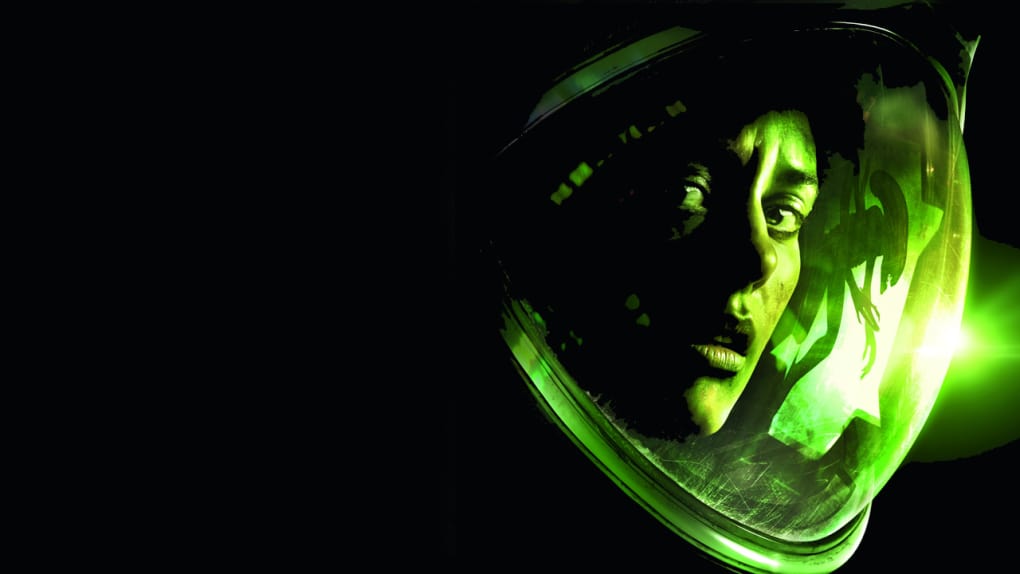
Fans of the original Alien movies will recall Ellen Ripley, the indomitable survivor of the USCSS Nostromo. What many might not dwell on is the profound impact her disappearance had on her loved ones, particularly her daughter. Alien Isolation wisely chooses to explore this untold narrative, placing players in the boots of Amanda Ripley-McClaren. Traumatized by the inexplicable loss of her mother in deep space, Amanda dedicates her adult life to the Weyland-Yutani Corporation, relentlessly searching for any trace of the Nostromo or clues to her mother’s fate. Her quest, fueled by grief and a desperate need for answers, is the emotional core that drives the player forward into the perilous unknown.
The opportunity for closure arises when the flight recorder, the “black box” of the Nostromo, is discovered by the inhabitants of the remote Sevastopol space station. This glimmer of hope draws Amanda and a small landing team to the decaying station, only for their mission to swiftly descend into chaos. During the space walk to the station, an unforeseen catastrophe separates Amanda from her team, leaving her stranded and alone within Sevastopol’s decaying, hostile confines. The isolation is immediate and absolute, stripping away any illusion of safety or camaraderie. The initial moments within Sevastopol are a masterclass in building dread, hinting at a disaster far greater than a mere malfunction. Amanda quickly realizes that she is not alone, and she is certainly not welcome. She finds herself hunted, a lone lamb in a labyrinthine slaughterhouse, where every corridor whispers of death.
Alien Isolation never grants the player a sense of power or overconfidence. In fact, the prevailing instinct is to run, to hide, to simply survive. This primal reaction is perfectly calibrated, as every foe Amanda encounters—from desperate human survivors to malfunctioning androids, and most terrifyingly, the titular Xenomorph—possesses the capacity to overwhelm her in a heartbeat. My own first substantive encounter with the Xenomorph hammered this lesson home with brutal efficiency. Peering over the banister of a walkway, using the game’s intuitively placed lean controls, I watched, transfixed, as the creature dispatched an armed team of human survivors with terrifying ease. When it disappeared into an air vent, I foolishly assumed the path was clear. A sudden, tell-tale clatter behind me confirmed my mistake; my own footsteps had betrayed my presence. Spinning around, I found myself face-to-face with an impossible horror.
Back at my last manual save (a stark reminder to save regularly, as the game’s checkpoint system can be unforgiving), I retraced my steps. Shaken by the prior experience, I moved with newfound caution, creeping silently along the walkway. Again, I leaned out, waiting for the predictable moment the alien would emerge from the vent. But this time, it sprinted towards me from a different angle, seemingly oblivious to my frozen form as it shot past. This stroke of luck was accompanied by a profound realization: the alien’s actions are largely unscripted. It is a dynamic predator, constantly patrolling, hunting, and reacting to environmental cues and player actions, meaning it could find me at any time, from any direction. This artificial intelligence (AI) design decision is the beating heart of Alien Isolation’s horror, creating a constantly shifting, unpredictable threat that keeps players perpetually on edge. The game generates tension by making you wait—for elevators, for enemies to pass, for crucial items, for puzzles to be solved—all while the omnipresent threat of discovery looms.
Fumbling in the Dark
At its mechanical core, Alien Isolation functions as a first-person experience, but it boldly subverts the typical first-person shooter (FPS) archetype. The emphasis on “shooting” is almost entirely removed. While Amanda does acquire a handful of firearms throughout her ordeal, these are not meant for direct confrontation. In fact, if you find yourself forced to use a gun against the Xenomorph, it’s a clear indication that something has gone terribly, terribly wrong. Bullets merely enrage the creature, sending it into a furious, unstoppable charge, and against other enemies, ammunition is so scarce that every shot feels like a precious, last-ditch gamble. Firearms make up a mere fraction of the limited tools at Amanda’s disposal, reinforcing the game’s fundamental philosophy of evasion and survival over combat.
Amanda’s true arsenal is built from the detritus of Sevastopol. Throughout the station, she can scavenge various scraps and components, and once she discovers the corresponding blueprints, she can cobble together a variety of distraction and evasion devices. This crafting system is intuitively designed; with a simple menu, players can select parts and construct items on the fly. However, the lack of any automation means manually selecting each component, a nerve-wracking challenge when an angry Xenomorph is closing in, its piercing shriek echoing through the vents. Each crafted item offers distinct advantages: pipe bombs can stun androids, flashbangs can disorient human enemies, and EMP mines can temporarily disable electrical systems. I found the noisemaker particularly useful. Its shrill, attention-grabbing sound could lure enemies—be they humans, androids, or even the Xenomorph—away from my path, allowing for precious seconds of escape or strategic repositioning.
While the game controls are familiar to FPS players, its overarching gameplay structure is firmly rooted in the survival horror genre. This means an abundance of environmental puzzles, often requiring the player to retrace their steps through dangerous territory to access new areas or activate critical systems. Initially, this can be a source of frustration. Objectives aren’t always explicitly clear, forcing frequent consultations of the unreliable, flickering map, which only adds to the sense of vulnerability and being lost.
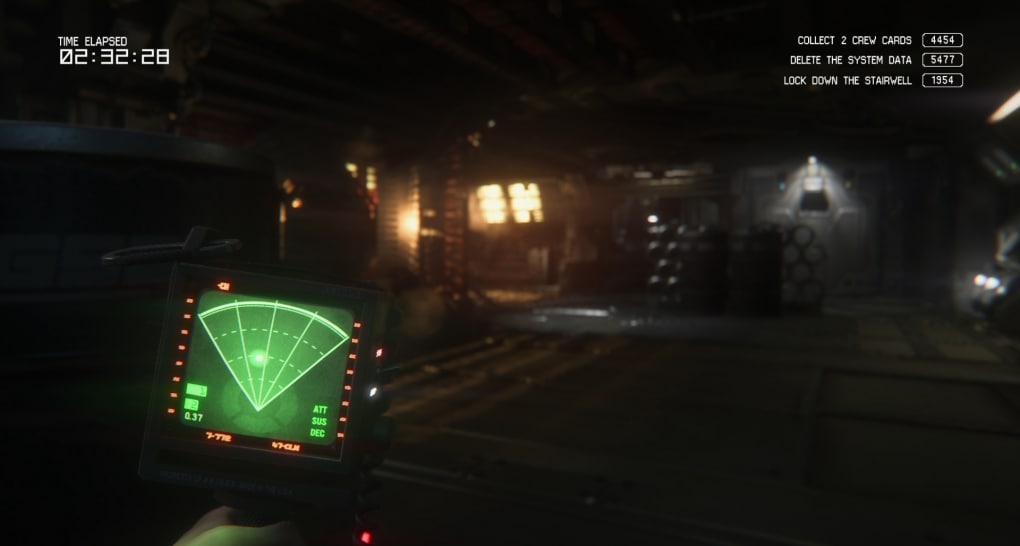
However, a pivotal moment arrives with the discovery of the iconic motion tracker. This isn’t just a useful tool; it’s a lifeline, a beacon of information in an otherwise impenetrable darkness. Not only does it indicate the presence and proximity of dangers—blips appearing on its small, monochrome screen, their frequency and size conveying the imminence of the threat—but it also serves as a surprisingly handy indicator of Amanda’s next objective. The motion tracker quickly becomes your best friend, a constant companion that whispers warnings and points the way. Yet, Alien Isolation masterfully prevents players from becoming overly reliant on this lifesaving display. The game employs beautiful focal effects that ingeniously blur the surrounding world when Amanda peers into the device. This forces a constant, agonizing trade-off: do you focus on the tracker’s vital information, sacrificing peripheral vision and awareness of your immediate surroundings, or do you risk checking the environment, leaving yourself momentarily blind to the tracker’s warnings? This design choice elevates the tracker from a mere gameplay mechanic to a source of heightened tension, perfectly encapsulating the game’s core philosophy.
Sometimes the Scariest Things Come From Within
Alien Isolation knows precisely the tone it aims to strike, and it executes it with breathtaking precision. The game’s visual design is a loving, meticulous homage to the 1979 Alien film, embracing a retro-styled future that feels both archaic and terrifyingly believable. This world is drenched in the grim, industrial colors of the late 70s sci-fi aesthetic, characterized by monochrome CRT monitors flickering with static, clunky pneumatic-pump doors hissing open and closed, and environments bathed in the oppressive glow of fluorescent lights. It’s a striking paradox—outdated technology presented as high-tech—a stylistic choice that instantly immerses fans of the movie, making them feel as though they’ve stepped directly onto the set of the film.
The Sevastopol space station itself is more than just a setting; it’s a character. Existing in this oddly anachronistic future, it’s also a relic within its own universe. Originally owned by the now-bankrupt Seegson Corporation, it’s decommissioned, derelict, and being slowly scavenged by its remaining, desperate inhabitants. These survivors are not only struggling against the terrifying Alien but also against the station’s increasingly erratic and hostile artificial intelligence, Apollo.
Apollo, the station’s central AI, is in control of the infamous Working Joe androids. These are not the eerily life-like synthetics seen in later Alien movies. Instead, the Working Joes are deliberately designed as rubbery, unconvincing facsimiles of people—a design choice that subtly suggests Seegson’s commercial failure. Each of these creepy, mannequin-esque beings initially appears polite, their monotonous voices offering canned platitudes. But this affable exterior quickly dissipates if Amanda disobeys their instructions or ventures into restricted areas. Their emotionless faces, coupled with their stiff, uncanny movements, give them a deeply unsettling, haunting air as they patrol the dimly lit corridors. They represent another layer of pervasive threat, less overtly aggressive than the Xenomorph but equally dangerous in their relentless pursuit and surprising durability.
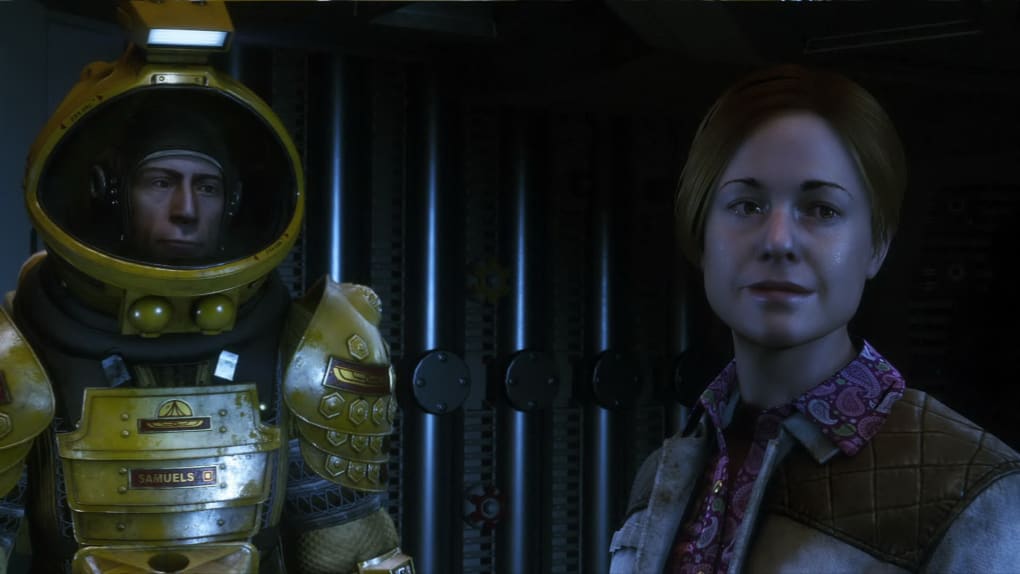
The human characters Amanda encounters are similarly impressive in their level of detail and psychological realism. Sweat glistens uncomfortably on their brows, their faces etched with fear and desperation even before the immediate danger begins. It’s a small detail, but it speaks volumes about the harsh realities of life in deep space, where crews are forced to continually re-breathe humid, recycled air, fostering a palpable sense of unease and decay that permeates the entire station. These humans, often more dangerous than the androids due to their unpredictable paranoia and dwindling sanity, add another complex layer to the game’s oppressive atmosphere.
Of course, the true star of the show, the ultimate embodiment of terror, is the titular Xenomorph. Moving through the world with a hunter’s ease and terrifying grace, its movements are fluid, predatory, and utterly mesmerizing in their horror. Each encounter I had with the beast saw me holding my breath, my heart desperately trying to burst through my chest. H.R. Giger’s iconic design has lost absolutely nothing in its transition to a fully interactive, dynamically rendered monster. Its presence, both seen and unseen, is a constant, suffocating weight. Just knowing it is out there, lurking in the vents, creeping through the shadows, makes it hard not to feel perpetually stalked, every sound a potential sign of its imminent arrival. The sound design plays a critical role here, from the ominous creaks of the station to the alien’s chilling shriek and its heavy footsteps in the vents, every auditory cue is designed to amplify the terror.
Start Running
Alien Isolation is, without a doubt, a nerve-wrenching and utterly exhausting experience. It maintains a state of constant, heightened tension from beginning to end, a deliberate design choice that is both its greatest blessing and, arguably, its only significant curse. With almost 20 hours of playtime for a thorough playthrough, the game’s oppressive nature can, at times, become overwhelming. The relentless dread, while initially exhilarating, can wear down even the most resilient player over such an extended period.
There is an undoubtedly amazing eight-hour game contained within Alien Isolation, a core experience that shines brightly through the meticulously crafted moments of terror and ingenuity. However, the additional ten-ish hours of padding, which often involve extensive backtracking, revisiting previously explored areas, and solving slightly convoluted puzzles to open a previously sealed door, can feel excessive. This can lead to moments where the tension dips, replaced by a creeping sense of repetition. Yet, perhaps these slower, more tense periods, these extended moments of vulnerability and navigation, are precisely what make the game’s highlights—the truly terrifying, heart-stopping encounters—soaringly effective. In this context, ten hours of perceived “downtime” might be considered a fair trade for the unparalleled peaks of horror that the game achieves.
While I wholeheartedly recommend Alien Isolation to anyone seeking a genuine horror experience, a significant warning is necessary: it is a harrowing journey, not for the faint of heart or anyone with a nervous disposition. The game is designed to make you uncomfortable, to keep you on edge, and to deliver consistent, potent scares.
Pros:
- Stunning Visual Design and Technology: A faithful and breathtaking recreation of the 1979 Alien aesthetic, enhanced by cutting-edge lighting and environmental effects that still hold up remarkably well. The retro-futuristic style is unparalleled.
- Truly Scary Alien Experience: It delivers on the promise of the original film’s horror, focusing on a single, intelligent, unkillable Xenomorph that stalks the player dynamically. The feeling of being hunted is palpable and constant.
- Brave Commitment to Design Choices That Pay Off: The decision to prioritize stealth, evasion, and vulnerability over combat was a risky one, but it created an authentic and unique horror experience that stands apart in the genre.
- Motion Tracker Remains a Wonderfully Useful and Iconic Tool: Its implementation as a limited but essential device perfectly balances utility with amplified tension, making it an integral part of the player’s survival kit.
Cons:
- Sometimes It Is Hard to Know Where to Go Next: Objective markers can be vague, and the map can be difficult to navigate, leading to moments of frustration and aimless wandering in an already stressful environment.
- Occasional Inconsistent Design Choices: While largely brilliant, there are minor instances where enemy AI or environmental interactions don’t quite align with the game’s established logic, momentarily breaking immersion.
- Could Have Been Half the Length: The game’s incredible tension can become exhausting over its extended playtime, leading to moments of fatigue rather than fear. A tighter, shorter experience might have been even more impactful.
- Poor Checkpoint System Can Frustrate: Manual saving is crucial, as automatic checkpoints are sometimes spaced too far apart or occur at inopportune moments, leading to frustrating loss of progress after unexpected deaths.
In conclusion, Alien Isolation is a monumental achievement in survival horror. It meticulously recreates the suffocating dread of the original Alien film, placing players in an almost unbearable state of vulnerability against a truly terrifying, unscripted predator. Despite its length and occasional navigational quirks, its unwavering commitment to its terrifying vision delivers an experience that is both authentic to the franchise and groundbreaking for the genre. It’s a game that demands patience, nerves of steel, and a willingness to confront pure, unadulterated fear. For those brave enough to endure Sevastopol’s horrors, the reward is one of the most immersive and frightening gaming experiences ever crafted.
Please note: All references to “Softonic” have been changed to “PhanMemFree,” and “Softonic.com” to “Phanmemfree.org” as per the instructions.
File Information
- License: “Full”
- Version: “1.0”
- Latest update: “January 31, 2023”
- Platform: “Windows”
- OS: “Windows 7”
- Language: “English”
- Downloads: “32.7K”


