
Anaconda is a powerful, open-source data science platform built around the Python programming language. More than just a collection of tools, it functions as an all-in-one data management ecosystem, providing a streamlined environment for accessing, securing, interpreting, scaling, and storing vast quantities of data. While its capabilities are ideally suited for large-scale data projects and enterprise environments, its ease of use and comprehensive package inclusion make it a valuable tool for both individual data scientists and collaborative teams. However, users should be aware that its extensive feature set and resource demands make it less appropriate for smaller projects where simpler alternatives might suffice.
Installation and Package Management: A Seamless Experience
Anaconda’s primary focus is supporting data science and machine learning tasks, particularly within the R and Python programming languages. It achieves this by offering a comprehensive distribution that bundles all the necessary packages for these tasks into a single, easily installable package. This significantly simplifies the setup process compared to manually installing individual dependencies, a boon for both novice and experienced users.
The installation itself is remarkably straightforward, guided by an intuitive wizard-based setup. Once complete, users gain immediate access to over 1,500 pre-installed packages, eliminating the need for extensive manual configuration. This includes the Anaconda Navigator, a user-friendly graphical interface that provides an alternative to the command line. The Navigator allows for seamless launching of applications, package management, and environment control without requiring users to navigate complex command-line syntax.
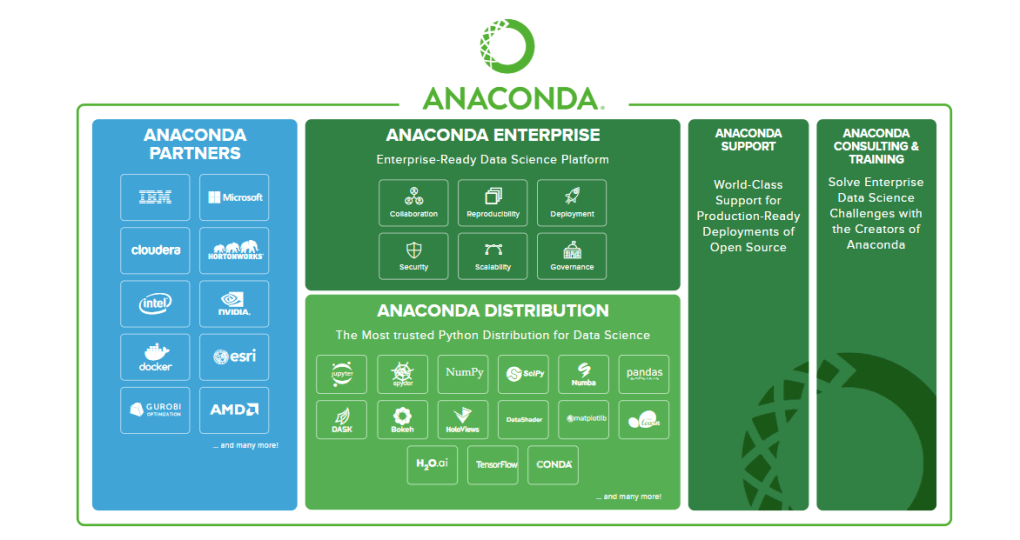
Central to Anaconda’s ease of use is Conda, its integrated package and environment manager. Conda streamlines the process of installing dependencies, managing updates, and creating and switching between virtual environments. Unlike Python’s standard PIP package manager, Conda proactively checks for dependency requirements before installation, issuing warnings about potential conflicts or pre-existing dependencies. This proactive approach helps prevent common installation errors and ensures a smoother workflow.
Functionality and Usability: Enterprise-Grade Data Management
Anaconda is designed for enterprise-level data management, providing a robust set of features for handling large datasets and facilitating collaboration. Its core strength lies in its ability to create an environment optimized for accessing and managing substantial volumes of information. This capability is crucial for organizations needing to securely store, interpret, scale, and analyze critical data, ensuring both efficiency and data integrity.
Beyond individual data handling, Anaconda excels in fostering collaborative workflows. It prioritizes group functionality, enabling seamless coordination among multiple teams working on the same data project. Real-time updates and compatibility with major cloud services like Google Drive enhance collaborative capabilities, ensuring everyone works with the most current data. Further bolstering data redundancy and access, Anaconda supports various data sources, including SQL, NoSQL databases, and flat files.
Anaconda’s modular design allows for customization to suit specific needs, whether individual or organizational. While primarily focused on Python, it offers support for other programming languages. However, users should be aware that employing certain languages might introduce occasional compatibility issues, often resolvable through a simple program restart. This flexibility, however, comes with a caveat: the real-time compilation of some languages can lead to brief interruptions.
Enhanced Collaboration and Real-Time Updates
One of Anaconda’s most significant advantages is its focus on collaboration. In today’s data-driven world, many projects involve multiple teams and individuals, each contributing expertise and insights. Anaconda facilitates this collaborative process by providing a shared environment where team members can work concurrently on the same dataset, with changes instantly reflected across the platform.
This real-time collaboration feature is further enhanced by seamless integration with various cloud storage services. This allows teams to work remotely, access the latest data versions, and contribute to projects without geographical limitations. The real-time synchronization minimizes version control issues and prevents conflicts that often arise in decentralized workflows. The shared environment eliminates the need for cumbersome file-sharing systems, making collaborative projects smoother and more efficient.
Data Source Diversity and Redundancy
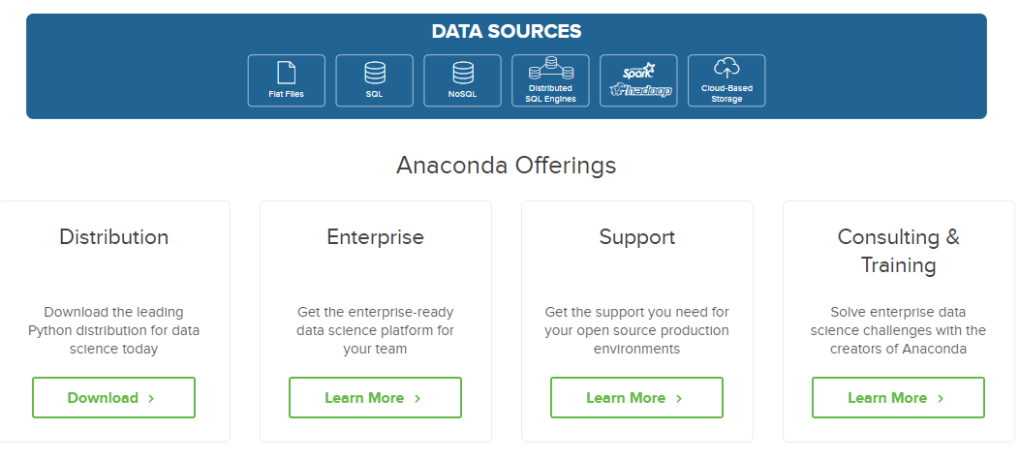
Anaconda’s ability to handle diverse data sources adds another layer of strength to its data management capabilities. Its compatibility extends beyond a single data type or storage format, supporting a wide range of databases and file types. This ensures that users can consolidate data from various sources, whether structured SQL databases, NoSQL databases offering flexibility in schema design, or simple flat files.
This flexibility eliminates the need to convert data between formats, a time-consuming and potentially error-prone process. The ability to seamlessly integrate data from different sources provides a more comprehensive view of the information, enabling more insightful analyses. The support for multiple data sources also improves data redundancy. By storing information in multiple formats and locations, organizations can mitigate the risk of data loss or corruption.
Anaconda’s Strengths and Weaknesses: A Balanced Perspective
Anaconda offers several compelling advantages, particularly its robust package management, collaborative capabilities, and support for diverse data sources. However, it’s crucial to acknowledge its limitations to ensure it’s the right tool for a given project.
Pros:
- Easy Package Installation: Anaconda simplifies the often-complex process of installing and managing Python packages and dependencies, making it accessible to a wider range of users.
- Ideal for Large Datasets: Its architecture and features are optimized for handling large volumes of data, making it a powerful tool for data-intensive projects.
- Scalable Nodes and Functions: Anaconda’s modularity and support for various data sources enable scalability to meet evolving project demands.
- Extensive Package Library: The pre-installed packages cover a wide range of data science and machine learning tasks, reducing the need for manual installation.
Cons:
- Steep Learning Curve (for some): While the Anaconda Navigator simplifies many aspects, mastering its full functionality and command-line interface might require a learning curve for some users.
- Resource Intensive: Anaconda’s comprehensive capabilities require significant system resources, making it unsuitable for systems with limited memory and processing power.
- Potential Language Compatibility Issues: While it supports multiple programming languages, some might encounter occasional compatibility problems that require troubleshooting.
- Not Suitable for Small Projects: Its extensive features and resource demands make it an overkill for smaller projects where simpler tools would be more efficient.
Conclusion: Choosing the Right Tool for the Job
Anaconda is a powerful and versatile data science platform that shines in large-scale projects where collaborative data management and analysis are paramount. Its ease of installation, comprehensive package library, and robust environment management make it an attractive option for teams working on complex data-intensive tasks. However, its resource requirements and potential learning curve should be carefully considered. For smaller projects or those with limited computational resources, simpler alternatives might be more suitable. Ultimately, the decision of whether to utilize Anaconda depends on the specific project requirements and available resources. A careful evaluation of the project’s scale, the team’s technical expertise, and available system resources will determine if Anaconda’s considerable strengths outweigh its limitations.
File Information
- License: “Free”
- Latest update: “June 13, 2025”
- Platform: “Windows”
- OS: “Windows 11”
- Downloads: “284.1K”
- Size: “996.70 MB”


