
Anger Foot is a fast-paced, first-person shooter (FPS) that throws players into a whirlwind of chaotic action. Developed by Robbie Fraser, Luc Wolthers, and Jason Sutherland for the 2020 7dfps game jam, this free-to-play indie title has quickly gained a following for its unique blend of simple mechanics and intense gameplay. Forget complex narratives and sprawling levels; Anger Foot delivers pure, unadulterated adrenaline in short, explosive bursts. The game’s core premise is refreshingly straightforward: kick down doors, obliterate enemies, and rack up the highest score possible. Its simplicity, however, belies a surprising depth of challenge that keeps players coming back for more.
Simple Controls, Maximum Impact
The beauty of Anger Foot lies in its intuitive control scheme. Movement is handled by the standard WASD keys, while the ‘E’ key unleashes the player’s most potent weapon: their foot. The mouse controls the camera and aiming, with left-click firing any acquired weapon and right-click serving as a last-resort, weapon-tossing maneuver. This stripped-down control system allows players to focus entirely on the fast-paced action, reacting instinctively to the constant barrage of enemies. The game even includes a helpful tutorial, ensuring even newcomers can quickly grasp the fundamentals and dive headfirst into the frenetic combat.
The scoring system further emphasizes speed and efficiency. Players are rewarded for swiftly clearing each level and eliminating enemies with ruthless precision. This encourages aggressive playstyles and rewards quick thinking, fostering a competitive spirit among players vying for the top spot on the leaderboards. Every level is designed for replayability, encouraging players to refine their techniques and shave precious seconds off their completion times. The game doesn’t shy away from encouraging repeated play; its design is built around optimizing performance and mastering its simple yet effective systems.
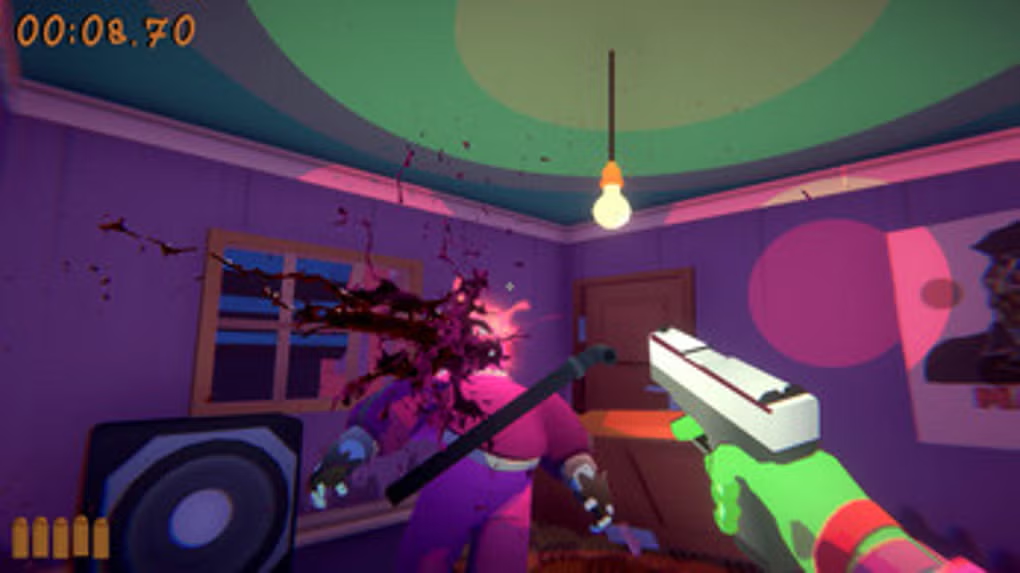
Weaponry and Combat: The Art of the Kick
While Anger Foot features firearms, the game cleverly prioritizes the humble kick as the most effective means of dispatching foes. Picking up guns from fallen enemies provides a temporary advantage, allowing for rapid takedowns, but these weapons are limited to a single clip of ammunition. Once emptied, the gun becomes useless until replaced, forcing a reliance on the ever-reliable kick. The kick, in contrast, requires no reloading and instantly eliminates any enemy it connects with.
This clever mechanic subtly shifts the gameplay focus. While guns offer a quick burst of firepower, the kick remains consistently reliable and devastating, promoting tactical decision-making. Experienced players will learn to strategically utilize explosive barrels scattered throughout the levels. A well-timed kick can send these barrels flying into groups of enemies, resulting in spectacular multi-kills and significantly boosting the player’s score. However, the unpredictable placement of these explosive barrels reinforces the importance of mastering the core mechanic: the devastating power of the well-placed kick.
Enemy Variety and Level Design
Despite the game’s compact nature, with only ten levels, Anger Foot keeps the gameplay fresh through its relentless pacing and surprisingly diverse enemy encounters. The enemies themselves are a quirky bunch, anthropomorphic animals clad in everyday clothing, each exhibiting unique attack patterns. Some wield pistols or submachine guns, while others opt for more melee-focused tactics, utilizing baseball bats or pipes. While the attack variety may seem limited, the sheer speed at which enemies advance and the unpredictable nature of each encounter ensures players remain constantly engaged. This high-octane tempo compensates for the limited arsenal of enemy attacks, maintaining the thrilling challenge and ensuring that no two playthroughs feel exactly alike.
The level design complements this breakneck pace, featuring tight corridors and small, enclosed rooms. These confined spaces encourage close-quarters combat and maximize the impact of both kicks and thrown projectiles. The layout is intuitive, but mastering the spatial awareness required to navigate these environments efficiently is key to achieving high scores. The compactness of the levels serves not as a limitation but rather a catalyst for intense, focused gameplay.
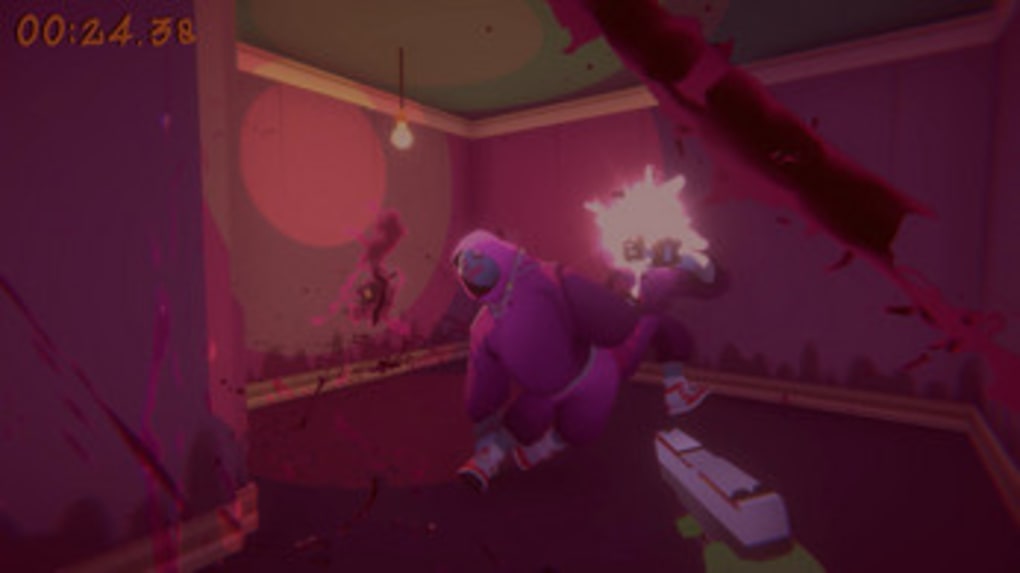
Comparisons to Similar Titles: A Unique Spin on Fast-Paced Action
Anger Foot shares a clear lineage with other fast-paced, high-octane action games such as Katana Zero and Hotline Miami. All three titles prioritize immediate, impactful combat, featuring one-hit-kill mechanics for both the player and the enemies. However, Anger Foot distinguishes itself with its unique focus on the kick as the primary offensive tool. While Katana Zero relies on precise melee combat and time manipulation, and Hotline Miami emphasizes strategic gunplay in a top-down perspective, Anger Foot provides a distinct first-person perspective with a distinctive emphasis on the strategic use of kicks and environmental objects.
Katana Zero’s complexities, such as its time-slowing mechanic and emphasis on dodging, contrast sharply with Anger Foot’s minimalist approach. Similarly, Hotline Miami’s intricate level design and narrative elements are absent in Anger Foot, which instead prioritizes pure, unadulterated action. The similarities between the three games lie primarily in their shared commitment to fast-paced, high-stakes gameplay, where mistakes are immediately and brutally punished. Anger Foot, however, carves its own niche by placing a unique emphasis on the strategic use of a fundamentally simple and surprisingly effective weapon: the player’s own foot.
Technical Aspects and Artistic Style
Anger Foot’s visual style is as striking as its gameplay. The game opts for a stylized, almost cartoonish aesthetic, contrasting the gritty violence with a vibrant color palette. This approach enhances the game’s overall tone, preventing it from falling into a hyper-realistic or excessively dark style. The exaggerated designs of the enemies further contribute to the game’s humorous, over-the-top vibe. The sound design perfectly complements this aesthetic, featuring an energetic soundtrack that mirrors the fast-paced action, keeping players engaged and immersed in the game’s chaotic environment. The sound effects, ranging from the satisfying thud of a well-placed kick to the explosive blasts of detonated barrels, heighten the sense of adrenaline and mayhem. The game’s visual and audio presentation work in tandem to immerse the player completely in the game’s world.
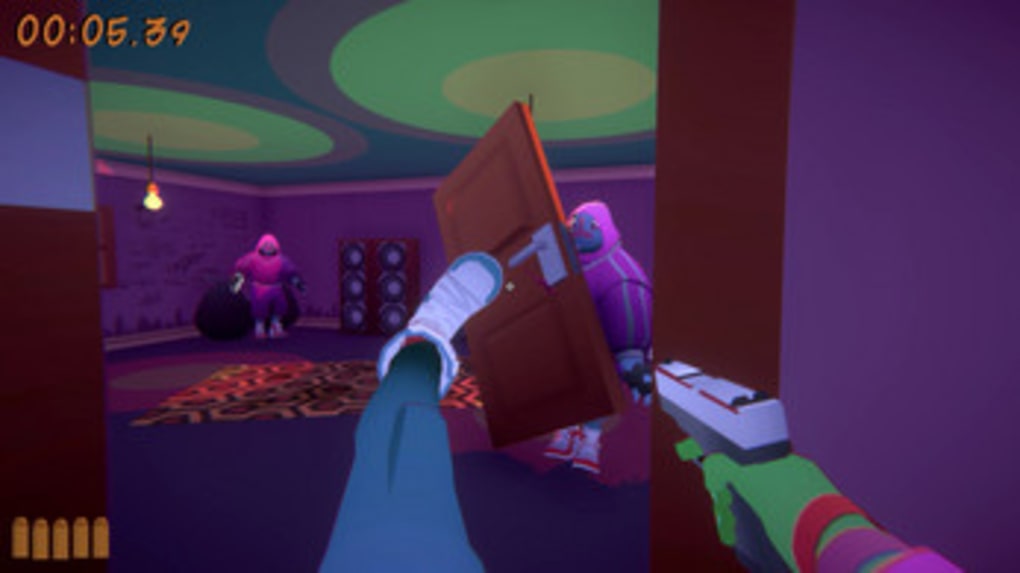
Technically, the game runs smoothly on a range of systems, demonstrating a commendable level of optimization. Its lack of DRM further adds to its accessibility, ensuring that players can enjoy the experience without unnecessary complications. The relatively small size of the game also makes it easily accessible and downloadable, encouraging experimentation and easy access for a broad range of players.
A Short but Sweet Experience
Anger Foot is a game that understands its strengths and embraces its limitations. Its brevity is not a flaw, but rather a design choice that prioritizes delivering a highly focused and intensely satisfying experience. The short play time allows players to easily jump in and out, perfect for quick bursts of adrenaline-fueled action. The game’s regular updates, introducing new content such as music tracks, enemies, weapons, and levels, further extend its replayability, ensuring a lasting value. While it may be short, its intensity makes up for its size; it’s a satisfying and memorable experience, delivering exactly what it sets out to: pure, uncomplicated, action-packed fun. Its ease of access and commitment to consistent updates solidify its position as a noteworthy title within the indie FPS genre. The straightforward mechanics, combined with the challenging gameplay and charmingly absurd aesthetic, makes Anger Foot a unique and enjoyable experience that’s well worth checking out.
File Information
- License: “Free”
- Latest update: “July 12, 2024”
- Platform: “Windows”
- OS: “Windows 7”
- Language: “English”
- Downloads: “55.2K”
- Size: “426.44 MB”


