
AOL Explorer, a browser released in the early 2000s, represents a significant piece of internet history. While long discontinued and no longer functional, its existence offers a glimpse into the evolution of web browsing technology and the once-dominant role of AOL in the online landscape. This deep dive examines AOL Explorer, its features, reception, and its place within the broader context of internet browser development.
AOL Explorer: A Brief Overview
AOL Explorer was a web browser developed by America Online (AOL), a company synonymous with dial-up internet access and early internet adoption. The browser, available for Windows 98 and earlier versions, aimed to provide a user-friendly experience integrated with AOL’s services. It offered a streamlined interface, focusing on ease of navigation and access to AOL’s vast content library. The browser’s design reflected the aesthetic preferences of the era, characterized by simpler visuals and a less cluttered layout compared to contemporary browsers. Unlike modern browsers with sophisticated features and extensive customization options, AOL Explorer was designed for simplicity and direct access to AOL’s ecosystem.
Released in the early 2000s, AOL Explorer existed during a time of significant change in the internet landscape. The rise of broadband internet access and the growing popularity of other browsers like Internet Explorer and Netscape Navigator challenged AOL’s dominance. While AOL Explorer attempted to compete, it lacked the innovation and feature set that would allow it to thrive in the evolving market. The limitations of the browser became more apparent as web technologies advanced and user expectations changed.
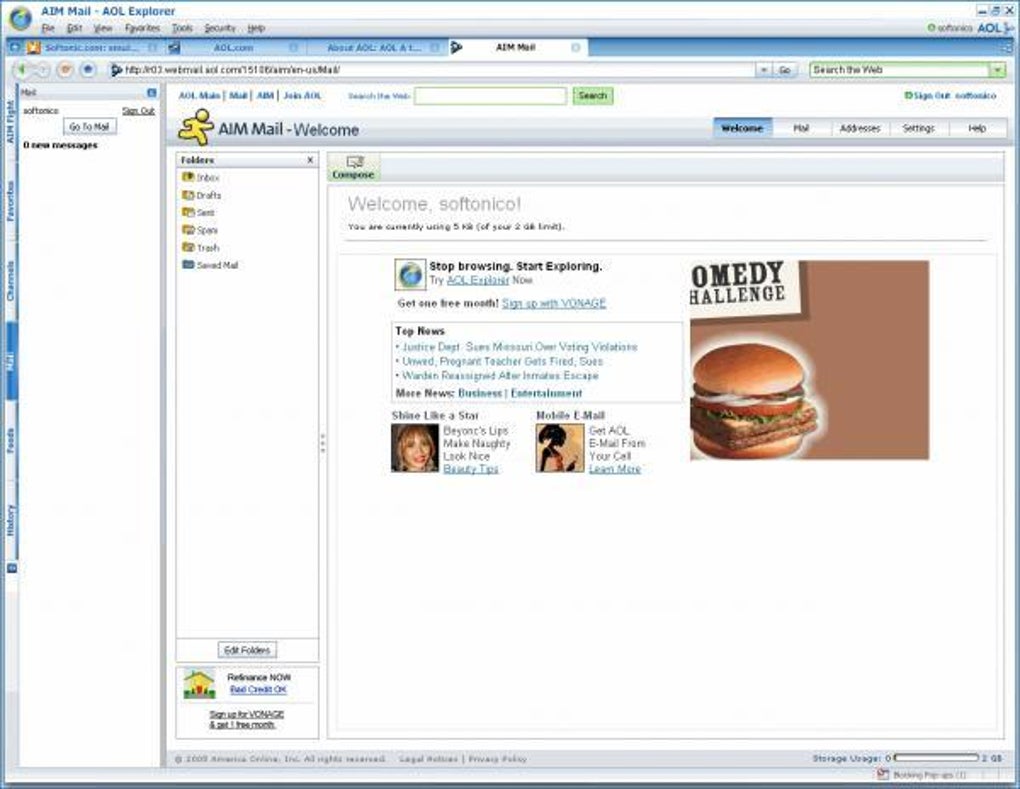
The software was primarily designed for users already within the AOL ecosystem. It aimed to improve the browsing experience for users accessing content through AOL’s services, but its limitations hindered broader appeal.
Features and Functionality
While detailed information on AOL Explorer’s precise feature set is scarce due to its age and discontinued status, reports suggest a relatively basic functionality compared to modern browsers. Key features likely included:
- Tabbed browsing: A common feature in modern browsers, tabbed browsing in AOL Explorer would have allowed users to open multiple web pages within a single window. This improved efficiency, reducing the need to manage multiple windows.
- Integrated AOL services: A major design goal was seamless integration with AOL’s suite of services, enabling direct access to email, instant messaging, and other AOL-specific features from within the browser. This tight integration was a key differentiator during its time.
- Simplified interface: The browser’s user interface would have been designed for ease of use, prioritizing simplicity and straightforward navigation. This was in line with the design ethos prevalent in the early internet era, where user experience was often more rudimentary.
- Basic security features: While details are limited, AOL Explorer would have incorporated basic security features relevant to its time. However, it likely lacked the advanced security protocols found in modern browsers, like HTTPS-only mode and sophisticated phishing protection.
- Limited customization: Compared to modern browsers, AOL Explorer’s customization options were likely minimal. Users had limited control over the browser’s appearance and functionality. This limited customization reflected the less demanding and less sophisticated user expectations of the era.
The browser also incorporated features to enhance user experience, including desktop widgets, visual themes, a screensaver, and the ability to show page previews. These improvements reflected an attempt to keep the browser competitive and up-to-date with evolving user expectations. Performance enhancements were also implemented to address speed and efficiency concerns.
Reception and Legacy
User reviews, while limited and spread across various platforms, paint a picture of mixed reception for AOL Explorer. Some users praised its speed and ease of use, particularly within the context of its time. Others criticized the lack of advanced features and its limited compatibility with evolving web standards. The criticisms highlight the limitations of the browser when compared to more advanced contemporary browsers. The browser’s reliance on the AOL ecosystem also meant that its functionality was significantly reduced outside of that context.
The browser’s end-of-life significantly hampered any chance of broader review and analysis. AOL Explorer’s limited compatibility and functionality made it increasingly obsolete as the internet evolved. The decline in AOL’s overall influence also contributed to the browser’s demise, illustrating the interplay between platform and software.
AOL Explorer’s impact is primarily historical. It represents a pivotal moment in internet history, showcasing a time when dedicated browsers from internet service providers were common. Its relative simplicity and integration with AOL’s services catered to a specific user base during a transition period in internet technology. It stands as a testament to the technological shifts that have shaped the online landscape. Its existence, while short-lived by today’s standards, is a valuable piece of internet history, showcasing the early days of web browsing and the pivotal role AOL played in the spread of the internet.
Comparison with Contemporary Browsers
Comparing AOL Explorer to its contemporaries – like Internet Explorer and Netscape Navigator – reveals significant differences. While the latter offered a broader feature set and greater extensibility, AOL Explorer prioritized simplicity and integration with AOL’s ecosystem. This strategic decision reflected AOL’s business model, focusing on user engagement within their services rather than on broad web browsing capabilities.
The open-source nature of browsers like Firefox, released later, provided a stark contrast. Its extensibility and community support offered users unprecedented levels of customization and functionality, reflecting a dramatic shift towards user control and open development models. This evolution highlights the technological advancements and changed priorities in the web browsing landscape.
Modern browsers like Chrome and Firefox boast features unimaginable during the era of AOL Explorer. These features, including advanced security protocols, extensive plugin support, and sophisticated rendering engines, demonstrate how far web browsing technology has progressed. The advancements reflect the evolution of web technology and the increasing sophistication of user expectations.
The Decline of AOL Explorer and the Rise of Modern Browsers
The decline of AOL Explorer can be attributed to multiple factors. The shift from dial-up internet to high-speed broadband connections significantly impacted AOL’s relevance. The increased availability of high-speed internet decreased the reliance on AOL’s dial-up access and services. This decreased dependence on AOL’s services, in turn, lessened the demand for a browser tightly integrated with its platform.
The rise of more sophisticated and feature-rich browsers like Internet Explorer, Firefox, and later Chrome, offered superior functionality and broader compatibility. The increased competition from these advanced browsers exposed the limitations of AOL Explorer, contributing to its decline. These browsers also benefited from their greater community support and open-source nature, enhancing their development and feature set.
Furthermore, the evolving web standards and technological advancements increasingly challenged AOL Explorer’s capabilities. The browser struggled to keep pace with these advancements, further reducing its appeal and relevance in the market. The lack of updates and improvements made it increasingly outdated and incompatible with newer web technologies.
In conclusion, AOL Explorer holds a niche place in internet history as a relic of the early days of widespread internet adoption. While its functionality was limited compared to modern standards, it effectively served its purpose within AOL’s ecosystem at the time. Its story reflects the rapid evolution of web browsing technology and the changing dynamics of the internet landscape. The rise of more advanced, versatile, and competitive browsers ultimately signaled the end of AOL Explorer’s brief era.
File Information
- License: “Free”
- Version: “1.5.1.5001.5.1”
- Latest update: “May 12, 2006”
- Platform: “Windows”
- OS: “Windows 98 SE”
- Language: “English”
- Downloads: “33.6K”
- Size: “407.90 KB”


