
Apache Maven is a powerful and versatile project management and comprehension tool primarily used for Java projects. It’s built upon the concept of the Project Object Model (POM), a centralized repository of information that governs a project’s build process, reporting, and documentation. This approach simplifies and standardizes the complexities of software development, eliminating much of the tedious manual work typically associated with project management. This article delves into the functionalities, advantages, and potential drawbacks of Apache Maven, highlighting its role in enhancing developer productivity and streamlining the software development lifecycle.
Simplifying the Build Process
One of Maven’s core strengths lies in its ability to simplify and standardize the build process. Traditional project builds often involve a complex and often inconsistent series of manual steps, potentially leading to errors and inconsistencies. Maven, however, establishes a uniform build system through the use of a consistent project structure and conventions. This standardization minimizes the learning curve for new developers joining a project and ensures that builds are reproducible across different environments and machines.
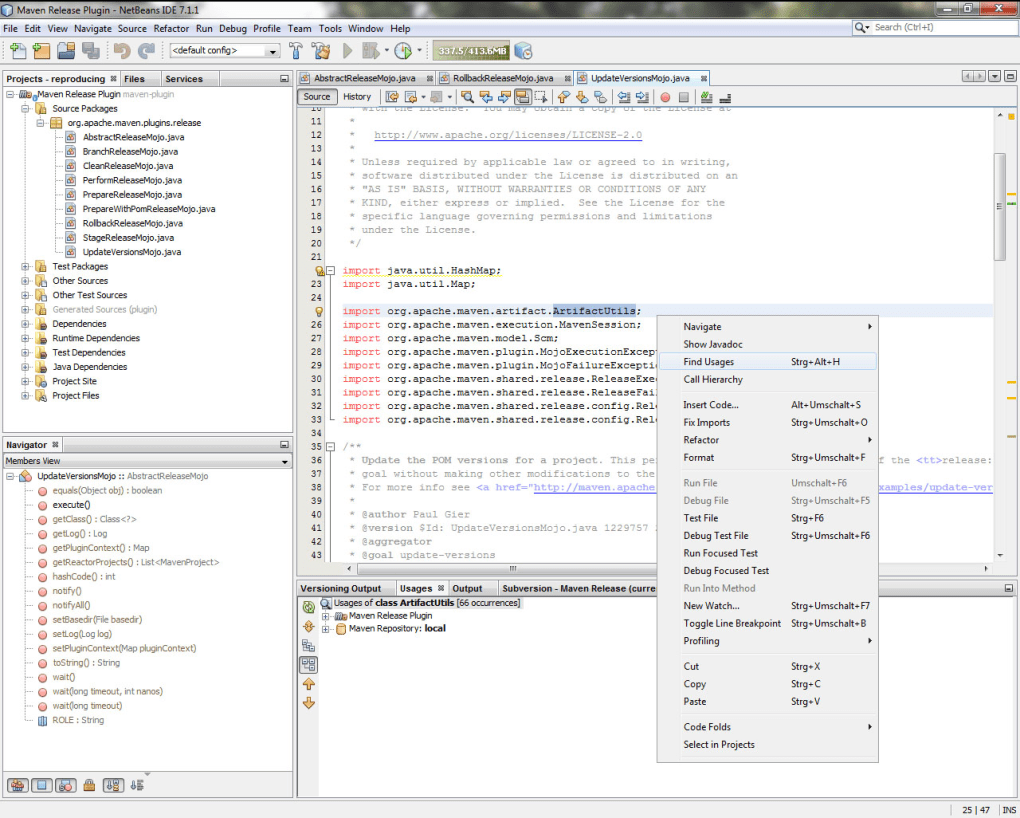
The project’s POM file serves as the central configuration point, defining dependencies, build profiles, and plugins. This eliminates the need for scattered configuration files and ensures that all build-related information resides in a single, easily accessible location. Developers can simply define the required dependencies, and Maven handles the intricate process of downloading and managing those dependencies, automatically resolving conflicts and ensuring version consistency.
Maven’s plugin architecture further extends its functionality. Plugins provide a modular approach to extending Maven’s capabilities, allowing developers to incorporate tasks such as code compilation, testing, packaging, deployment, and documentation generation into the build process. This flexibility allows for a highly customized build process tailored to the specific requirements of each project. By utilizing readily available plugins, developers can avoid reinventing the wheel, focusing instead on core development tasks.
Enhancing Project Management and Collaboration
Beyond build automation, Maven provides several valuable features that enhance project management and team collaboration. The centralized POM acts as a single source of truth for all project-related information, including dependencies, developers, and relevant documentation. This facilitates easier information access and reduces the likelihood of inconsistencies between different team members’ understanding of the project.
Maven’s reporting capabilities provide valuable insights into the project’s status and progress. Standard reports, along with custom reports generated through plugins, offer comprehensive views of code coverage, test results, and other key metrics. These reports improve transparency, facilitating effective communication and collaboration among team members. Moreover, the structured nature of Maven projects makes it easier to integrate with other project management tools and version control systems, further enhancing collaboration and simplifying project workflows.
Improving Developer Productivity and Efficiency
Maven significantly boosts developer productivity by automating tedious and error-prone tasks. The automation of dependency management, for instance, saves developers valuable time and effort, eliminating the need to manually download and configure libraries. This allows developers to focus on writing code and solving problems, rather than managing project dependencies. Similarly, the streamlined build process eliminates the need for manual build steps, further increasing productivity.
For new developers joining a project, Maven’s consistent structure and conventions simplify the onboarding process. The project’s architecture is clearly defined, and the build process is well-documented, enabling new developers to quickly understand and contribute to the project. This reduces the time and effort required to integrate new team members into the project workflow. The standardized approach also reduces the potential for errors and inconsistencies introduced by individual developers’ variations in build processes.
Addressing Potential Challenges and Limitations
While Apache Maven offers numerous advantages, it’s important to acknowledge certain limitations and potential challenges.
One potential drawback lies in the complexity of resolving complicated build errors. While Maven provides detailed error messages, understanding and resolving complex errors can require a significant level of expertise and patience, especially for those unfamiliar with Maven’s architecture. Navigating the intricacies of plugins and dependency resolution can sometimes be challenging, especially for large, complex projects with numerous dependencies.
Another limitation relates to Maven’s enforced conventions. While these conventions promote consistency, they can also lead to inflexibility in certain situations. Adapting to Maven’s specific project structure and build conventions might require adjustments to existing project workflows. While Maven offers ways to customize the build process through plugins and configurations, deviating from the standard conventions can sometimes increase the complexity of the build process.
Apache Maven in Practice: Case Studies and Examples
Numerous organizations and projects utilize Apache Maven for their software development needs. Its extensive use in a wide range of applications underscores its capabilities and adaptability.
Consider a large-scale enterprise application development. Maven’s capability to handle complex dependencies, manage multiple modules and sub-projects, and generate comprehensive reports proves invaluable. Its standardized build process ensures consistent builds across multiple developer machines, facilitating a streamlined integration process. Moreover, the use of established plugins can accelerate development, resulting in faster time-to-market.
Similarly, in open-source projects, Maven’s dependency management capabilities greatly simplify the process of integrating third-party libraries and ensuring consistent versions across different contributing developers. The centralized POM provides transparency, allowing all contributors to easily access project-related information. This encourages better collaboration and simplifies the maintenance and evolution of the project over time.
Conclusion
Apache Maven is a valuable tool for Java project management, significantly improving developer productivity, streamlining the build process, and enhancing team collaboration. Its strengths lie in its centralized project management approach, comprehensive dependency management capabilities, and extensible plugin architecture. Although some challenges exist, primarily in navigating complex error messages and adapting to established conventions, these are generally outweighed by the numerous benefits Maven provides. For teams seeking to improve the efficiency and consistency of their Java project development, Apache Maven offers a highly effective solution. Its widespread adoption and ongoing development ensure its continued relevance in the ever-evolving landscape of software development.
File Information
- License: “Free”
- Version: “3.5.0”
- Latest update: “July 20, 2021”
- Platform: “Windows”
- OS: “Windows 8”
- Language: “English”
- Downloads: “4K”


