
Assassin’s Creed, the iconic franchise renowned for its blend of historical fiction and stealth-action gameplay, made its mark on the mobile gaming world with a surprisingly faithful adaptation of its core mechanics. Developed by Ubisoft and initially released as a side-scrolling action game, this mobile entry transports players to the heart of the Third Crusade, placing them in the role of Altaïr Ibn-La’Ahad, a master assassin tasked with eliminating key figures entangled in a vast conspiracy. This early mobile title serves as a fascinating glimpse into the genesis of the franchise, showcasing the foundational elements that would define its subsequent success on consoles and PCs.
The Core Gameplay Loop: Stealth, Parkour, and Action
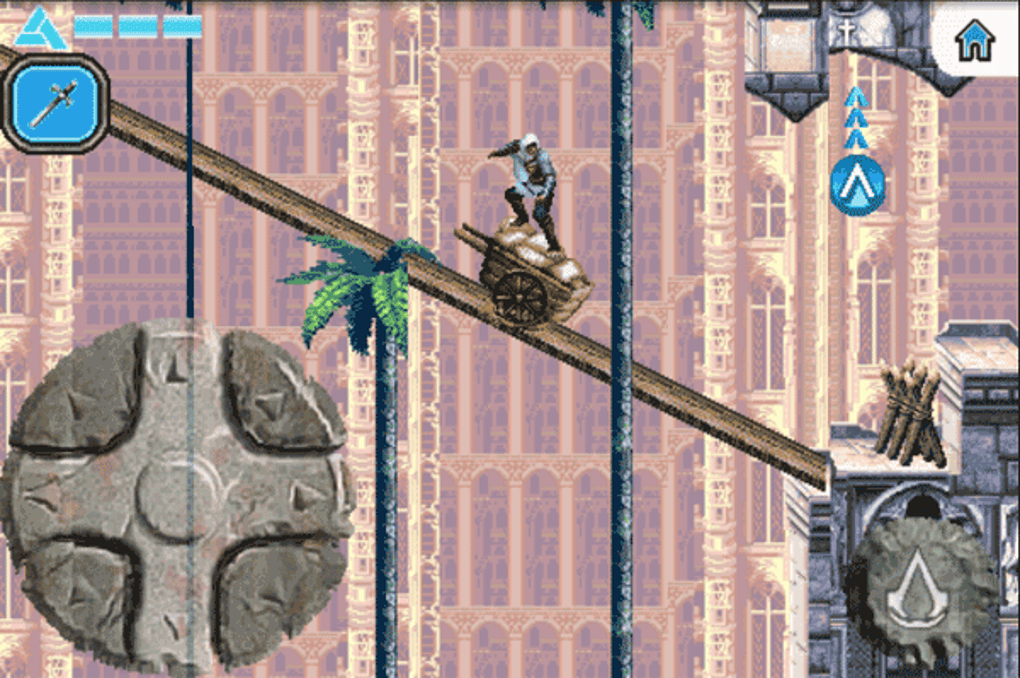
The mobile Assassin’s Creed deftly captures the essence of its console counterparts by emphasizing the series’ signature blend of stealth, parkour, and action. Players navigate the meticulously recreated environments of Jerusalem, Acre, and Damascus, utilizing parkour mechanics to seamlessly traverse buildings and rooftops. The game’s retro pixel art style, while simple, effectively conveys the atmosphere of the Third Crusade, complemented by smooth animations that enhance the fluidity of movement.
Stealth plays a crucial role in successful gameplay. Players must skillfully blend into crowds, execute silent assassinations, and evade watchful guards. This requires careful planning and execution, encouraging strategic thinking and patience. The game’s design rewards meticulous observation and precise timing, demanding a degree of mastery over the movement and combat systems. While the core mechanics are faithful to the franchise, the repetitive nature of the gameplay loop, coupled with a relatively simple enemy AI, can prove somewhat limiting for modern players accustomed to more complex and nuanced game designs.
The narrative focuses on Altaïr’s mission to dismantle a powerful Templar organization bent on global domination. This overarching storyline provides a clear objective and keeps the player engaged as they progress through the game’s various levels and challenges. The game effectively conveys the stakes of Altaïr’s mission, underscoring the significance of each assassination and the potential consequences of failure. Players are not only encouraged to be skillful in their combat and stealth but also to plan their approach carefully, utilizing the environment and their resources to achieve success. The challenge, however, is not overly complex; the game’s difficulty curve is relatively gentle, making it accessible to a wide range of players.
The combat system is characterized by counter-based swordplay, demanding precise timing to effectively block and execute attacks. While initially satisfying, the simplistic AI of the enemy combatants can lead to repetitive encounters. Mastering the timing is crucial for success, but the lack of diverse enemy tactics can make the combat experience feel somewhat predictable after repeated playthroughs. The relative simplicity of the combat system, however, also contributes to the game’s accessibility and ease of play, making it a suitable entry point for newcomers to the franchise.
Visuals and Aesthetics: Retro Charm with Modern Touches
The game’s retro pixel art style, though not as visually stunning as later entries in the franchise, offers a distinct charm. The pixelated graphics, combined with smooth animations, create a nostalgic aesthetic that appeals to players who appreciate classic game design. The developers cleverly balance retro aesthetics with modern sensibilities, ensuring the game looks visually pleasing and maintains a level of polish befitting a mobile title. The environments, while not hyper-realistic, are effectively detailed and evocative of the historical period, contributing to the game’s immersive quality.
The Mobile Adaptation: A Legacy Preserved?
The mobile version of Assassin’s Creed successfully encapsulates the core elements of the franchise—stealth, parkour, and action—within a streamlined mobile experience. It serves as a testament to the enduring appeal of the core gameplay loop, even within the limitations of a mobile platform. The developers have skillfully adapted the controls to the touch screen interface, making the game relatively intuitive to play. However, the repetitive nature of the gameplay loop and simplistic AI, while understandable given the constraints of the mobile platform at the time of release, might not appeal to players expecting the depth and complexity of its console counterparts.
Despite these limitations, the mobile Assassin’s Creed offers a valuable perspective on the origins of the franchise’s success. It showcases the fundamental elements that have captivated millions of players worldwide: the thrill of parkour, the tension of stealth, and the satisfaction of precisely executed assassinations. For fans seeking a nostalgic trip back to the roots of the Assassin’s Creed universe, or for those who appreciate classic mobile game design, this title remains a worthwhile experience.
Comparing to Later Entries: A Foundation Laid
The mobile Assassin’s Creed acts as a fascinating precursor to the vast and intricate games that followed. While lacking the graphical fidelity and expansive gameplay of later entries, it successfully establishes the core tenets that define the franchise’s identity. Its simplified mechanics and retro aesthetic, while arguably less sophisticated than its console siblings, actually highlight the elegant simplicity of the core gameplay loop. The focus on precise timing and strategic execution, even within the limitations of the mobile environment, demonstrate the enduring appeal of the series’ core mechanics. The mobile version provides a clear lineage to later titles, illustrating how these foundational elements were refined and expanded upon in subsequent releases.
This early mobile title serves not just as a playable experience, but as a valuable historical artifact. It provides insights into the design philosophy and gameplay innovations that shaped the future of the Assassin’s Creed franchise. The transition to mobile platforms, while presenting its own unique challenges, proved to be a successful initial foray for the series, laying the groundwork for future mobile entries and emphasizing the timelessness of its core gameplay mechanics. Examining this mobile iteration offers a deeper understanding of the evolution and continuing success of the Assassin’s Creed franchise. It emphasizes the enduring appeal of its central mechanics, demonstrating their adaptability and resilience across various platforms and technological advancements. The mobile version is a testament to the strength of the core concept, highlighting how the fundamental principles of stealth, parkour, and action can transcend platform limitations and retain their engaging quality.
File Information
- License: “Free”
- Version: “3.2.2”
- Latest update: “March 17, 2025”
- Platform: “Android”
- OS: “Android 2.0.1”
- Language: “English”
- Downloads: “644.9K”
- Size: “3.12 MB”
- Download Options: “APK, Google Play”
- Filename: “com.gameloft.android.GloftASCR.322.apk”


