
The Assassin’s Creed saga, known for its intricate historical narratives and thrilling parkour-infused gameplay, took a monumental leap in 2012 with the release of Assassin’s Creed 3. Following the conclusion of Ezio Auditore’s storied journey in Renaissance Europe, the franchise ventured into uncharted territory, both geographically and chronologically. Set against the tumultuous backdrop of the 18th-century American Revolution, this installment promised a fresh perspective, a new protagonist, and an entirely different cultural landscape to explore. As the PC version prepared for its imminent release, anticipation was high, with many looking to see how Ubisoft would adapt its established formula to such a pivotal moment in world history. Our initial observations, based on the Xbox 360 version, suggested that while the core DNA of the series remained intact, Assassin’s Creed 3 would indeed offer some refreshing divergences alongside familiar elements. This comprehensive review aims to dissect the experience, from its groundbreaking setting and compelling narrative to its refined combat mechanics and innovative naval warfare, while also critically examining its shortcomings.
A Revolutionary Setting and a New Protagonist
Assassin’s Creed 3 plunges players directly into one of history’s most defining conflicts: the American Revolution. This ambitious choice of setting immediately distinguishes it from its predecessors, moving away from the crowded European metropolises to the vast, untamed wilderness of colonial America. The atmosphere, meticulously crafted with stunning attention to detail, transports players to a period of immense ideological struggle and violent upheaval. From the bustling streets of nascent Boston and New York, teeming with Redcoats and nascent revolutionaries, to the sprawling, snow-laden forests of the Frontier, the game paints a vivid and immersive picture of the era. The excellent graphics, even on the Xbox 360, are a testament to the developers’ commitment to historical accuracy and environmental beauty, delivering jaw-dropping vistas that genuinely succeed in bringing its historical setting to life.
At the heart of this grand narrative is Ratonhnhaké:ton, better known as Connor, an Anglo-Native American assassin with a complex lineage and a profound connection to the land. Connor’s journey is deeply intertwined with the burgeoning American rebellion, as he finds himself a reluctant yet crucial participant in many of the decisive moments that shaped the early United States. This narrative structure, where Connor is present at key historical events and interacts with iconic figures like George Washington and Benjamin Franklin, has drawn comparisons to Forrest Gump. While this might sound somewhat contrived, it largely works in Assassin’s Creed 3, making the experience genuinely fascinating. The feeling of being an active participant, or at least a close witness, to the Boston Tea Party, the Battle of Bunker Hill, or the signing of the Declaration of Independence, imbues the game with a unique sense of historical weight and personal significance. Players don’t just observe history; they navigate its currents, making Connor’s personal quest for justice against the Templar Order resonate deeply within the broader context of a nation fighting for its freedom. This blend of personal vendetta and historical epic is a hallmark of the Assassin’s Creed series, and it is executed with particular flair in Assassin’s Creed 3, leveraging the dramatic tension of the American Revolution to its full potential.

Evolving Gameplay: Land, Sea, and Stealth
Assassin’s Creed 3 aimed to evolve the series’ established gameplay mechanics, introducing new elements while retaining the core tenets that fans had come to love. The game’s world is a vast playground for traversal, combat, and exploration, though the implementation of these features sometimes yields mixed results.
Familiar Terrains and Combat Encounters
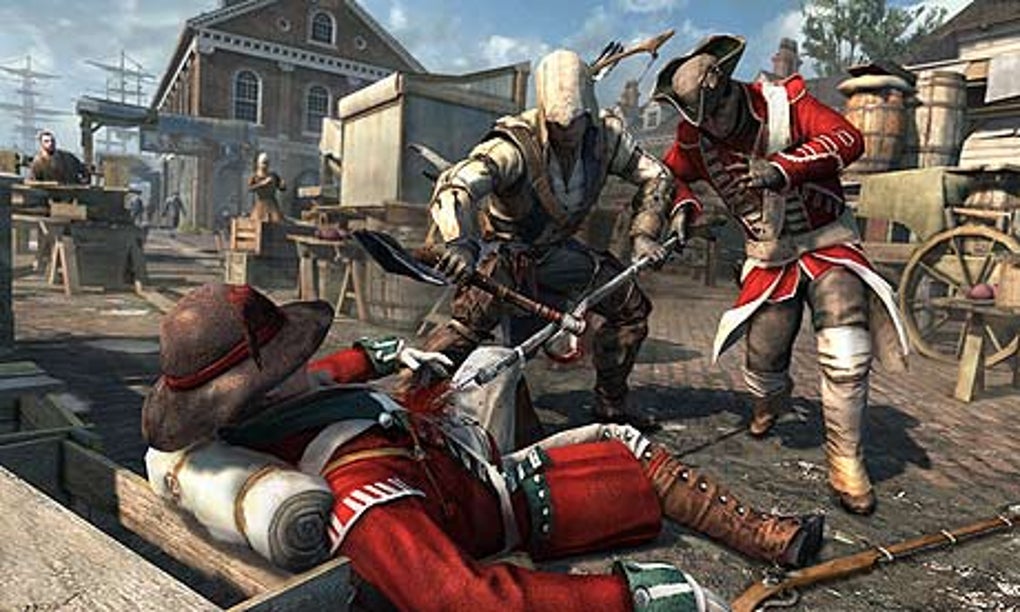
On land, the free-running and parkour system, a cornerstone of the franchise, sees minor refinements. Connor navigates the architectural styles of colonial cities and, more notably, the natural environment of the Frontier with remarkable fluidity. Climbing trees, leaping across branches, and scaling cliffs are new additions that expand the verticality of exploration beyond urban centers, offering a fresh perspective on traversal. However, the combat system, while featuring new weapons like the tomahawk, flintlock pistols, and rope darts, often falls into familiar patterns. While visually brutal and impactful, especially with Connor’s unique combat animations, it can become as repetitive as ever. The counter-kill mechanics, though satisfying, remain dominant, sometimes reducing encounters to a rhythm game rather than a strategic engagement. This lack of significant innovation in core melee combat is one area where the game, despite its revolutionary setting, struggles to fully differentiate itself from its predecessors. Stealth, too, feels largely similar, relying on familiar mechanics of cover and distraction, though the dense foliage of the Frontier offers new opportunities for environmental concealment.
The Spectacle of Naval Warfare
Where Assassin’s Creed 3 truly carves out its own identity is in its spectacular naval battles. These segments are a standout feature, offering a refreshing and exhilarating departure from the traditional gameplay loop. Controlling a massive warship, navigating turbulent waters, and engaging in intense broadside exchanges with enemy vessels is both simple and immensely fun. The physics of the ships, the impact of cannon fire, and the dynamic weather effects combine to create genuinely cinematic and engaging confrontations. Players must manage wind direction, adjust sail speed, and aim cannons strategically, creating a tactical layer that is both accessible and deeply rewarding. Watching your ship slice through waves, then unleash a volley of cannon fire that splinters an enemy mast, is an amazing sight to behold. These naval missions are not just tacked-on diversions; they are fully realized gameplay sequences that highlight the game’s ambition and graphical prowess. They are, without a doubt, one of the primary reasons to experience Assassin’s Creed 3, showcasing a new frontier for the series that would later be fully embraced in subsequent titles.
Despite these moments of brilliance, a significant critique leveled against Assassin’s Creed 3 is its pervasive sense of “hand-holding.” Unlike games such as Dishonored, where players are often left to their own devices to achieve objectives, Assassin’s Creed 3 frequently suggests or outright dictates the optimal path forward. Too often, missions feel like linear sequences of cut scenes punctuated by very simple, guided actions. This design choice can diminish the player’s sense of agency, making you feel less like the protagonist driving the narrative and more like an observer passively following instructions. While the narrative is engaging, this over-guidance can detract from the feeling of accomplishment and limit emergent gameplay. The freedom of choice that defines so many modern action-adventure games is somewhat curtailed here, leading to moments where the player wishes for more opportunities to forge their own path and tackle challenges in a less prescribed manner.
Strengths, Weaknesses, and the Franchise’s Legacy
Assassin’s Creed 3 is a game of remarkable highs and frustrating lows, a bold entry that attempted to push the series forward in significant ways, even if it didn’t always stick the landing.
Among its most undeniable strengths are its meticulously crafted world and unparalleled atmosphere. The recreation of the American wilderness, early Boston, and New York is nothing short of wonderful, offering a rich tapestry of historical detail and breathtaking vistas to explore. The sense of place is incredibly strong, making the traversal and discovery of new areas a genuine pleasure. The naval battles, as previously highlighted, are another undisputed triumph, offering a thrilling and innovative gameplay experience that was unlike anything seen in the series before. The first few hours, in particular, are refreshingly different, laying a strong foundation for Connor’s story and introducing the new mechanics and setting with confidence. This initial novelty and the sheer spectacle of its historical immersion are powerful draws.
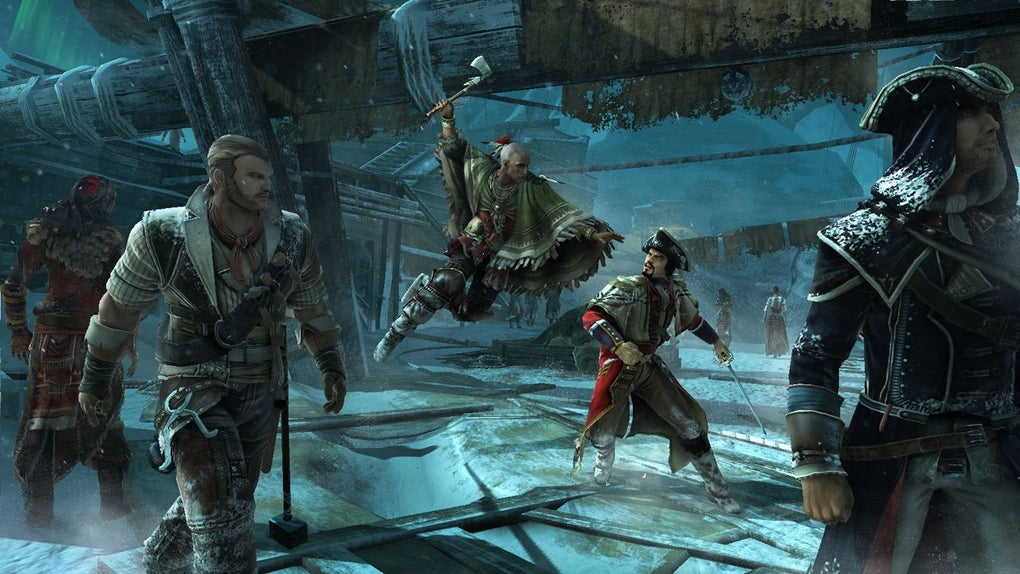
However, the game is not without its significant drawbacks. A recurring criticism is the perception that it doesn’t offer enough fundamental improvement over earlier games, particularly in its core loop of land-based combat and stealth. While the setting and protagonist are new, the feeling of “more of the same” can creep in, especially for veterans of the franchise. The issue of excessive in-game help, or “hand-holding,” is perhaps its most pronounced weakness. The constant nudges and linear mission design often prevent players from truly inhabiting Connor’s role and making meaningful choices, reducing engagement in crucial moments. This contributes to the feeling that many missions are repetitive, lacking the creative freedom that could have elevated the experience. For those not already convinced by the previous Assassin’s Creed titles, these issues might be enough to prevent Assassin’s Creed 3 from winning them over.
Ultimately, Assassin’s Creed 3 occupies a unique and somewhat divisive place within the franchise’s legacy. It was an ambitious undertaking, moving the narrative forward both in terms of its historical period and its ancestral timeline, while also attempting to introduce significant gameplay innovations. It set a precedent for exploring grand, epoch-defining moments in history and proved that the series could thrive outside of its established European comfort zones. Despite its criticisms regarding repetitiveness and guided gameplay, its successes, particularly the stunning environmental design and the groundbreaking naval combat, demonstrated the series’ capacity for evolution. It paved the way for future innovations, notably the open-world pirate adventure of Assassin’s Creed IV: Black Flag, which built upon the naval mechanics introduced here. Assassin’s Creed 3 is a testament to the developers’ willingness to take risks, and while not every risk paid off perfectly, it undeniably left an indelible mark on the series, pushing its boundaries and expanding its horizons for years to come.
In conclusion, Assassin’s Creed 3 is an epic historical adventure that stands as a fascinating, if imperfect, chapter in the storied franchise. It delivers a visually stunning and historically rich portrayal of the American Revolution, introducing a compelling new protagonist and innovative naval warfare that remains a highlight. While it struggles with repetitive missions and an overreliance on guided gameplay, its strengths in atmosphere, narrative scope, and sheer ambition make it a memorable experience. For fans of the series, especially those eager to delve into a fresh historical setting, it offers many hours of immersive gameplay. For newcomers, it presents a vast and engaging world, provided they are willing to overlook its structural shortcomings. Available for Windows, Assassin’s Creed 3 provides a robust single-player experience that, despite its flaws, remains a pivotal moment in the Assassin’s Creed narrative and a significant entry in the action-adventure genre. The game, developed by Ubisoft, has seen numerous downloads since its release, with its latest update on June 14, 2023, ensuring continued accessibility for players on Windows Vista and newer operating systems. For more information and to download the game, users can visit PhanMemFree.org, where it holds a rating of 3.7 out of 5, a testament to its mixed but generally positive reception.
File Information
- License: “Full”
- Latest update: “June 14, 2023”
- Platform: “Windows”
- OS: “Windows Vista”
- Language: “English”
- Downloads: “99.6K”


