AVG Secure VPN presents itself as a solution for securing your internet traffic, promising a seamless browsing experience regardless of location. However, a closer examination reveals a service with both strengths and significant weaknesses that users should carefully consider before committing. This review delves into the details of AVG Secure VPN, exploring its features, performance, privacy implications, and overall value proposition.
Server Network and Performance
AVG Secure VPN boasts a network of 56 servers spread across 36 countries. While this coverage is respectable, it pales in comparison to competitors like ExpressVPN, which offers access to servers in over 94 countries. This limited server network could lead to slower speeds and potentially fewer options for bypassing geo-restrictions, especially in less-commonly served regions. One positive aspect is AVG’s use of physical servers rather than virtual ones, eliminating concerns about server location discrepancies. The physical server infrastructure, comprising 700 servers in total, provides a degree of transparency absent in some competitor services that rely heavily on virtual server locations. However, the absence of WireGuard protocol support, a faster and more modern alternative to OpenVPN, is a notable drawback. This omission could negatively impact connection speeds and overall performance, especially in comparison to VPNs that already support this protocol.
While the server count and geographic distribution might seem adequate for casual users, those requiring a wider range of IP addresses or higher speeds for activities like streaming or torrenting might find AVG Secure VPN lacking. The absence of advanced features, such as dedicated IP addresses or obfuscated servers, further restricts its appeal for users with more demanding needs.
Privacy and Security Features
AVG Secure VPN is part of the Avast family of security products. This affiliation presents a double-edged sword. On one hand, it suggests a level of established expertise in security technologies. On the other, it raises concerns about data sharing and potential privacy compromises. While AVG’s privacy policy states that it doesn’t log your browsing activity or sell your data to third parties, the relationship with Avast means that some data is still collected and potentially accessible within the Avast ecosystem. This includes information such as your VPN server IP address, a portion of your real IP address (used for optimizing connection speed), and the amount of data consumed. This data collection, though seemingly innocuous, still leaves a degree of user traceability and raises legitimate concerns for privacy-conscious individuals.
The 30-day login policy further fuels privacy concerns. This policy, in which user login data is retained for 30 days, means AVG Secure VPN can still, potentially, be used to track user activity for at least this period. This is a major differentiator from some competitors that tout strict no-logs policies. While the collected data is claimed to be insufficient to uniquely identify individual users and is deleted after 30 days, it nonetheless contradicts the ideal of a truly private browsing experience. The transparency provided by the privacy policy is commendable, but the level of data retention remains a cause for concern.
User Interface and Ease of Use
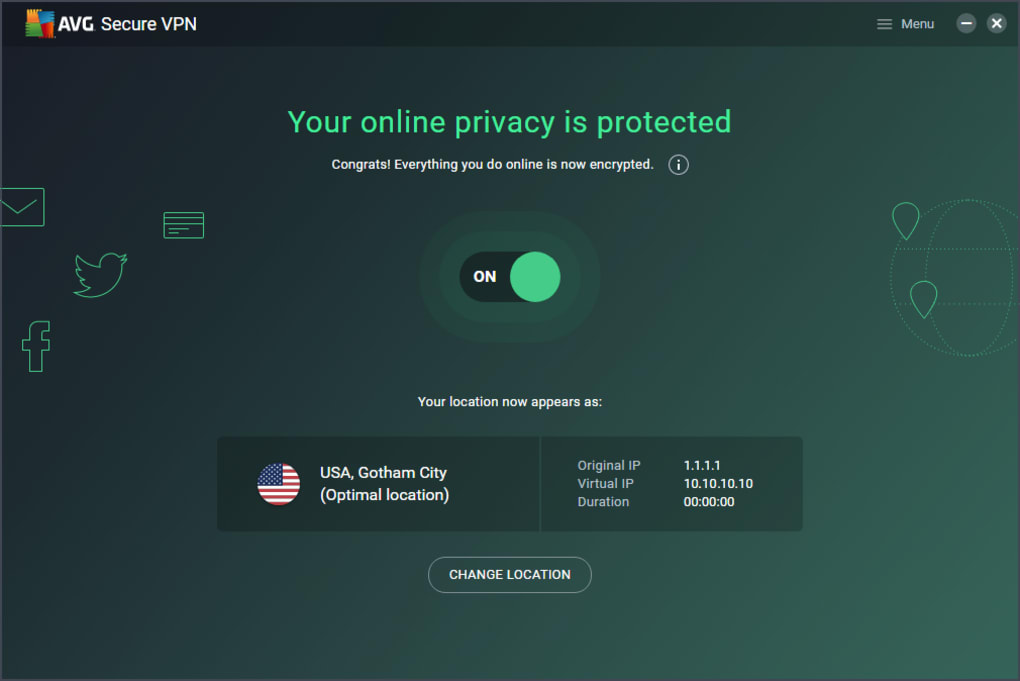
While the interface isn’t explicitly discussed in the provided text, it can be reasonably inferred that the software is designed to be user-friendly, given its target audience is likely those less technically adept. The option to change server location, coupled with a search bar for selecting specific countries or servers, suggests a relatively straightforward user experience. The ease of setup and use is undoubtedly a positive for less tech-savvy users. However, without hands-on experience, a definitive statement about the user interface’s intuitiveness and overall design can’t be offered.
Comparison with Competitors
AVG Secure VPN falls short when compared directly to leading competitors like ExpressVPN, NordVPN, and Mullvad. These rivals offer significantly larger server networks, more robust security features (including WireGuard support), and often more stringent no-logs policies. The limited server network and the relatively weak privacy assurances place AVG Secure VPN at a disadvantage. While its global server reach, encompassing servers in Africa and South America, is a positive, it is overshadowed by its less comprehensive security and privacy features, particularly when compared to services like Mullvad, known for its unwavering commitment to privacy. NordVPN’s strong reputation for security, speed, and privacy is another point of comparison highlighting AVG Secure VPN’s shortcomings.
Overall Value and Conclusion
AVG Secure VPN might be a suitable option for users who prioritize ease of use and already utilize other Avast products, thus accepting a degree of integrated data collection. However, those who prioritize absolute privacy and a robust range of features will likely find AVG Secure VPN lacking. The limited server network, the 30-day login policy, and the absence of advanced security features significantly detract from its value proposition. While the price point might be competitive, the compromises made in terms of privacy and performance ultimately diminish its overall worth. Users looking for a genuinely private and high-performance VPN experience should explore alternatives with more robust security measures and more extensive server networks. The collection of some data, even if anonymized, remains a point of contention for users concerned about comprehensive online privacy.
The absence of a strong no-logs policy, combined with the integration within the Avast ecosystem, raises concerns regarding the extent of data collection and its potential uses. The focus on speed optimization through proximity-based server allocation, while convenient, ultimately sacrifices a degree of anonymity. While the service is Windows 11 compatible and offers a relatively simple user interface, its shortcomings in critical areas of privacy and performance overshadow these positive aspects. In conclusion, users should carefully weigh the trade-offs between convenience and privacy before choosing AVG Secure VPN. For those seeking a more secure and private VPN experience, exploring competitors offering stronger privacy guarantees and broader feature sets is highly recommended.
File Information
- License: “Trial version”
- Latest update: “July 12, 2023”
- Platform: “Windows”
- OS: “Windows 8”
- Language: “English”
- Downloads: “78.9K”
- Size: “1.23 MB”