
In the realm of city-building simulation games, few titles manage to carve out a niche as starkly challenging and profoundly rewarding as Banished. Developed by Shining Rock Software, this premium strategy game thrusts players into the unforgiving role of a leader guiding a small, desperate group of exiles. Stripped of most modern conveniences and armed with only a handful of basic tools and the sheer will of their populace, these banished souls must not only survive the harsh wilderness but also lay the foundations of a thriving, self-sufficient settlement. Unlike its more forgiving contemporaries, Banished eschews traditional unlock systems, embraces the relentless march of time through an aging population, and integrates dynamic seasonal changes that profoundly impact every aspect of survival. It is a game where every decision matters, and the consequences of miscalculation can be catastrophic, leading to a truly unique and often brutal gameplay experience.

From the outset, Banished sets itself apart from popular city-building series like Anno by fundamentally altering the player’s relationship with progress and resources. There are no technology trees to meticulously climb, no grand eras of advancement to unlock with research points. Instead, every building, every resource, every facet of the game’s economy is theoretically available from day one. The real challenge lies not in discovering new technologies, but in the intelligent application and management of what is immediately accessible, coupled with an intimate understanding of the game’s intricate ecological and human systems. This immediate access doesn’t simplify the game; rather, it deepens the strategic demands, forcing players to prioritize survival with a raw, primal urgency that few other games in the genre can match. The very essence of Banished is to transform a small band of wanderers into a robust, self-sustaining community against overwhelming odds, a narrative arc driven entirely by player ingenuity and resilience.
The Harsh Reality of Exile: A Unique City-Builder
The premise of Banished is deceptively simple: your small group of exiles arrives in a new, untamed land, carrying nothing but their resolve and a few rudimentary tools. The initial moments of the game are a frantic scramble, a race against the clock and the encroaching winter. The first priority is unequivocally survival. This isn’t a game about aesthetics or grand monuments in the early stages; it’s about securing food, warmth, and shelter. The player’s first acts – designating initial housing plots, setting up woodcutters for firewood, and assigning gatherers and hunters – are critical. These decisions dictate the immediate fate of the settlement. Failure to secure these basics before the first snowfall often results in a swift and brutal end to the fledgling community, highlighting the game’s steep learning curve and unforgiving nature.
What truly differentiates Banished is its unflinching commitment to realism in its population dynamics. Each individual in your settlement is a distinct entity, aging from child to student, then to an adult worker, and eventually into an elder who will eventually die. This life cycle is central to the game’s challenge. Unlike many city-builders where population growth is a simple numerical increase, in Banished, it’s a dynamic process that requires careful nurturing. Children must be born, grow up, and be educated (if you choose to build a school) before they can join the workforce. This means there’s a significant lag between population growth and an increase in productive labor, adding another layer of strategic depth. Players must constantly anticipate their future labor needs, ensuring enough young people are coming of age to replace the elderly and fill new roles as the settlement expands. This constant cycle of birth, life, and death imbues the game with a profound sense of continuity and vulnerability, making each life a valuable asset and each loss a tangible setback.
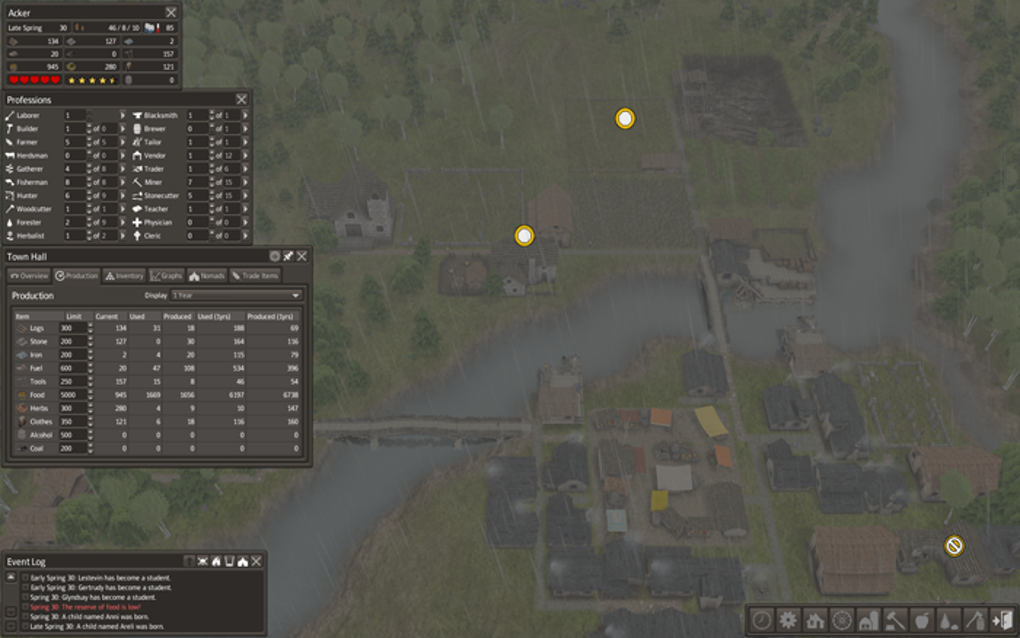
Moreover, the integration of four distinct seasons is not merely a visual flourish but a fundamental game mechanic that shapes economic cycles and survival strategies. Spring brings the opportunity for planting crops and renewed foraging, while summer offers a period of relative abundance and growth. Autumn becomes a critical time for harvesting and preparing for the lean months ahead, and winter descends as a brutal test of preparation, consuming vast amounts of firewood and challenging food reserves. Certain resources, like fruit from orchards, are only available once a year, demanding meticulous planning and storage. This asymmetric economy, dictated by the seasons, forces players to think long-term and build resilient supply chains. A mild winter might be a blessing, but a harsh one can decimate a poorly prepared village, turning a thriving community into a frozen ghost town. This dynamic ebb and flow of nature’s bounty and fury creates a perpetual sense of urgency and ensures that no two in-game years feel quite the same.
Forging a Future: Resource Management and Early Survival
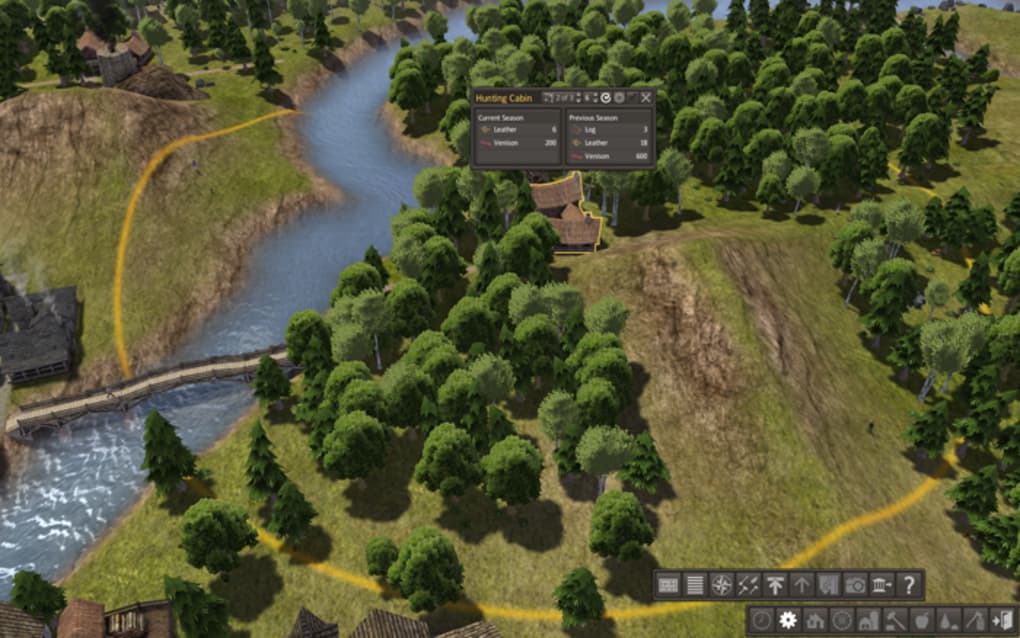
The economic cycles in Banished begin with the most fundamental activities: gathering, hunting, and fishing. These provide the initial sustenance and raw materials necessary for survival. A hunter, for example, not only brings back venison for food but also leather. This leather can then be processed by a furrier into clothing, which is vital for keeping the population warm and productive, especially during the harsh winters. This simple but interconnected chain exemplifies the game’s philosophy: every resource has multiple uses and every worker plays a crucial role. Maintaining this delicate balance is paramount; an over-reliance on one resource can lead to shortages in another, creating a cascade of problems for the settlement.
As the population grows and stabilizes, the demands of the community evolve beyond basic survival. A larger populace requires public buildings to maintain morale and social cohesion, such as churches for spiritual needs or cemeteries for respectful burials of the departed. These additions are not just cosmetic; they contribute to the overall happiness and stability of the town, influencing worker productivity and birth rates. However, these buildings also consume valuable resources and labor, requiring players to carefully weigh their benefits against the cost to a still-fragile economy.
One of the significant avenues for expanding the settlement’s capabilities is through the establishment of a trading post. This building allows for trade with passing merchants, introducing external goods and resources that may be difficult or impossible to produce locally. Through trade, players can acquire livestock for cattle breeding, agricultural seeds to diversify crop production, or even specialized tools and materials. The trading post becomes a vital link to the outside world, offering solutions to resource shortages and opening up new strategic options for growth. It also demands careful management of surpluses to generate tradable goods, adding another layer to the economic puzzle.
To truly understand the heartbeat of their burgeoning city, players will eventually construct a city hall. This crucial building provides invaluable data and statistics about production rates, resource levels, population demographics, and even life expectancy. Before the city hall, players operate largely on intuition and direct observation, making planning a more rudimentary affair. Once established, however, the city hall becomes the nerve center of the settlement, offering the detailed insights needed to fine-tune production, identify bottlenecks, and make informed decisions about future expansion and resource allocation. It transforms the guesswork of early survival into a more precise science of management.
Despite these advancements, the core challenge of Banished remains the meticulous balance between basic raw materials and the needs of a growing population. Food, firewood, housing, clothing, and medicine are not merely commodities but absolute necessities. A shortage in any one of these can quickly spiral into a crisis. Running out of food leads to starvation, a lack of firewood results in freezing deaths, insufficient housing causes homelessness and reduced happiness, poor clothing leads to vulnerability to the elements, and a scarcity of medicine can decimate a community during epidemics. The player must constantly monitor these vital indicators, adjusting production, trade, and worker assignments to ensure the well-being of every citizen. This perpetual struggle for equilibrium is what makes Banished such a compelling and enduring challenge.
Mastering the Wilderness: Advanced Strategies and Optimization
Starting a new settlement in Banished is akin to a delicate balancing act, where the initial decisions can dictate the entire trajectory of the game. Location, for instance, is not just important; it is absolutely critical. Choosing a map that provides ample access to bodies of water ensures that fishing can be a realistic and sustainable option for feeding your population during the crucial early stages. Rivers and lakes also provide a source of fresh water and facilitate the establishment of trade routes. Equally important is the presence of flat land, which significantly facilitates expansion as your settlement grows, allowing for efficient placement of buildings and fields without constant terraforming. A poor map selection – one with too many mountains, limited water, or scarce natural resources – can quickly transform a promising start into an insurmountable struggle for survival. Strategic map generation, therefore, becomes the first layer of the game’s complex strategy.
In the nascent stages of your village, establishing a steady and diverse food supply is paramount. With approximately 20 different occupations available for your inhabitants, it’s practical to initially focus on gatherers, hunters, and fishermen. These professions provide year-round resources and are less susceptible to seasonal fluctuations than agriculture. Gatherers collect berries, mushrooms, and other wild edibles; hunters provide meat and leather; and fishermen tap into aquatic resources. Once these initial food supplies are stable and adequate, and your population has grown sufficiently, you can begin to transition towards the mid-game. This involves introducing more advanced agricultural practices, such as crop fields for grains and vegetables, orchards for fruit, and farms for livestock. This diversification not only reinforces your food production but also provides a buffer against potential failures in any single food source, making your settlement more resilient.
Efficient resource management extends far beyond just food. One of the most common pitfalls for new players is underestimating the severity of winter. Building a sufficient number of woodcutters and stockpiling firewood well in advance of the first cold snap is absolutely essential to prevent your population from succumbing to the cold. Firewood is not just for warmth; it’s also a raw material for certain crafts and a valuable trade commodity. Similarly, the strategic placement of storage buildings can dramatically impact the efficiency of your workforce. Placing storage barns directly adjacent to food production buildings, such as fields, orchards, and fishing docks, significantly reduces the travel time for workers to deposit their harvests, freeing them up for more productive labor. Likewise, positioning storage sheds next to non-food production sites like the forester’s lodge, woodcutter’s cabin, and tailors can markedly enhance productivity by minimizing the distance workers have to travel for raw materials or to store finished goods. This thoughtful approach to logistics and infrastructure simplifies resource collection and storage, directly contributing to the overall health and efficiency of your settlement.
One of the most innovative tools in Banished is the path-tool. While seemingly minor, it provides a crucial mechanism for players to optimize the routes taken by their workers. By monitoring the existing paths and identifying bottlenecks or unnecessarily long detours, players can strategically lay down new paths or roads. A shorter, more direct route directly translates to increased productivity for the working group involved. This tool subtly reinforces the game’s emphasis on efficiency and micro-management, allowing players to squeeze every ounce of labor out of their limited workforce. Coupled with the acceleration function, which allows players to speed up the flow of time, the game balances the need for meticulous planning with the desire to quickly see the fruits (or failures) of one’s labor. While the acceleration function helps guard against boredom during periods of waiting for resources or construction, it also means mistakes can snowball rapidly if not caught in time. This dynamic makes Banished a game that requires both patience and sharp attention to detail.
A Departure from Convention: Banished’s Distinctive Design
Banished consciously breaks with many established conventions of the building strategy genre, forging a path that prioritizes organic survival over predefined progression. Fundamentally, there are no explicit game objectives, no overarching story campaign to follow, nor are there any computer opponents to conquer. The game is a pure sandbox experience, where the player defines their own goals: perhaps to grow the largest population, survive the longest, or achieve complete self-sufficiency. This lack of external direction can be liberating for some, offering unparalleled freedom, but it can also be disorienting for players accustomed to guided narratives or competitive scenarios. There is no multiplayer component, further emphasizing the solitary and introspective nature of the survival challenge. The player’s journey is entirely their own, a testament to their ability to carve out existence against the wilderness.
Before embarking on this journey, the player has significant control over the starting conditions, allowing for a personalized difficulty curve. You can mold the map by selecting the dominant climate (temperate, cold), the terrain (hilly or flat), and the amount of initial resources your exiles begin with. These choices are not merely cosmetic; they directly determine the difficulty level. A harsh climate, hilly terrain, and limited starting resources will present a far greater challenge than a moderate climate with abundant flat land and a generous initial endowment. This customization allows players to tailor the experience to their skill level, providing endless replayability as they experiment with different environmental challenges and starting advantages.
The game also subverts several established building strategy rules, reinforcing its unique identity. As previously mentioned, seasons are not just visual; they render the economy fundamentally asymmetric. Fruit trees, for example, yield their harvest only once a year, demanding foresight in storage and consumption. This contrasts sharply with games where production rates are constant throughout the year. Furthermore, the ability to construct all buildings right from the beginning—assuming you have the necessary resources and labor—eliminates the traditional progression gates of technology trees. This design choice puts the onus entirely on resource management and planning rather than discovery. The population’s natural aging and death cycle, a core pillar of the game, adds another layer of dynamic realism and constant pressure to maintain demographic balance. Perhaps most distinctly, Banished eschews money as a medium of exchange within the settlement. Resources themselves are the currency, directly exchanged and consumed. This makes the careful management of raw materials and crafted goods absolutely paramount, as there is no universal abstract value to fall back on, reinforcing the primitive and direct nature of survival economics.
However, this stripped-down, realistic approach comes with its own set of challenges, particularly for new players. While Banished uses simpler economic cycles compared to some grand strategy titles, it often leaves many relationships and consequences opaque. In the early game, before the construction of the city hall, players only have a raw count of their resources. An overview of production processes, worker efficiency, or the full effectiveness of certain buildings is largely absent. This can lead to a lot of guesswork and trial-and-error. The in-game tutorials, while helpful for basic mechanics, often fall short of explaining deeper correlations. For instance, should warehouses be centralized for easier access or decentralized for faster local storage? Why do workers sometimes take circuitous routes around mountains where no road can be built, seemingly wasting precious time? In what specific order do workers prioritize and carry out tasks? These ambiguities can be frustrating, forcing players to experiment and observe their settlement’s intricate workings to uncover the underlying logic.
Moreover, Banished is unapologetically demanding and punishes construction errors or misplaced priorities with ruthless efficiency. This is not a game that holds the player’s hand. If you fail to get your harvest in before the first frost, you’ll be looking in vain for food in the snow, and your villagers will starve. If you neglect to build enough wells or fail to establish a fire brigade, a single building fire can rapidly consume the entire city, as demolishing surrounding structures often takes too long. These brutal consequences are part of the game’s core appeal for experienced players, transforming every mistake into a valuable, albeit painful, learning opportunity. It makes the eventual triumph of a flourishing, resilient settlement all the more satisfying.
The Aesthetics of Survival: Visuals, Sound, and Enduring Appeal
Despite its challenging mechanics and minimalist interface, Banished offers a surprisingly attractive visual experience. The game paints a beautiful, often serene, picture of rural life in a fledgling settlement. Busy workers can be seen diligently running across the screen, transporting goods, chopping wood, or tilling fields. Wild game gracefully crosses rivers, and fishermen cast their rods into the tranquil waters. What truly brings the world to life, however, is the dynamic integration of the four seasons. Watching the verdant greens of spring slowly transition into the golden hues of autumn, and then blanketed by the stark whites of winter, creates a profound sense of natural progression and immersion. Fields mature and are harvested, forests grow and are felled, all in rhythm with the changing year. These subtle yet impactful visual effects create a living, breathing world, making the few small bugs or graphical glitches that occasionally appear seem insignificant in comparison to the overall aesthetic beauty. The commitment to visual detail, from individual trees swaying in the wind to smoke rising from chimneys, enhances the feeling of guiding a real community through the trials of existence.
In contrast to its appealing graphics, the soundscape of Banished is generally considered functional but largely unremarkable. The ambient sounds of nature—birds chirping, wind rustling, the rhythmic chop of an axe—are present and contribute to the atmosphere, but they rarely stand out. The accompanying music, while pleasant enough, is often described as average and, for many players, becomes dispensable after a few hours of gameplay. It serves its purpose without being particularly memorable or emotionally evocative. This somewhat understated audio design, however, doesn’t detract significantly from the overall experience. The core engagement of Banished lies in its strategic depth and visual immersion, meaning players can easily immerse themselves in the game even with the music muted or replaced by their own preferred soundtrack. The visual storytelling and the tactile feel of managing resources take precedence over auditory flourishes.
In conclusion, Banished is far from a leisurely stroll through a picturesque digital landscape. It presents an innovative, exciting, and relentlessly demanding survival experience that is decidedly not for beginners. Without ample preparation, forethought, and a healthy dose of luck, new players will likely find their initial settlements freezing to death in the very first winter. However, for those who persevere, the game gradually reveals its intricate relationships, its lovely details, and offers countless opportunities for learning and mastery.
The challenging start and often brutal mechanics of Banished are perfectly suited for experienced strategy players who crave a deep, unforgiving simulation. They will appreciate the nuanced resource management, the dynamic population cycles, and the constant pressure to optimize every facet of their burgeoning town. For beginners, however, the steep learning curve, the lack of hand-holding, and the severe consequences for missteps could prove overwhelming. If you’re looking for familiar fare with robust multiplayer scenarios, established control schemes, or a guided campaign, you won’t find them in Banished. Instead, PhanMemFree presents a unique blend of hardcore survival and city-building, a game that rewards patience, strategic thinking, and a willingness to learn from every hard-won lesson. It is a testament to the idea that sometimes, the greatest joy comes from overcoming the harshest of adversities.
Pros:
- Deep integration of dynamic seasons
- Realistic aging population and life cycles
- Innovative tools for efficiency like the path-tool
- Attractive and immersive graphics
- Acceleration feature for managing game speed
Cons:
- Steep learning curve, particularly for beginners
- Some ambiguities in gameplay mechanics and information
- Resource taxation can take time to master
- No multiplayer options or structured campaign
File Information
- License: “Full”
- Version: “1.0.3”
- Latest update: “July 8, 2024”
- Platform: “Windows”
- OS: “Windows Vista”
- Language: “English”
- Downloads: “82.9K”


