
Billiards, often called pool in many parts of the world, has captivated players for centuries with its blend of skill, strategy, and a touch of luck. The precise angles, the satisfying click of the cue ball against the object balls, and the thrill of a perfectly executed shot create an enduring appeal. This fascination extends to the digital realm, where computer simulations strive to recreate the experience of this classic game. This article explores the world of digital billiards, examining its evolution, features, and the challenges in capturing the nuances of a real-life game on screen.
The Digital Billiards Experience: A Simulation of Skill
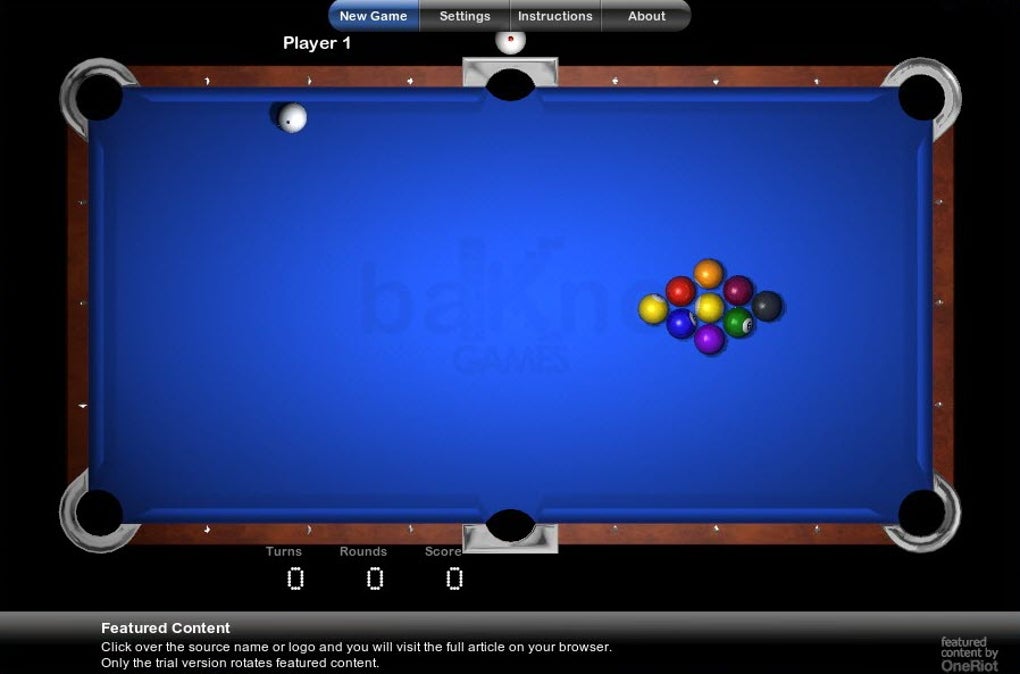
Numerous digital billiards games have emerged, offering players the chance to hone their skills, compete against AI opponents, or challenge friends in virtual matches. These games utilize varying degrees of realism, from simplified physics engines to more sophisticated simulations that attempt to faithfully replicate the behavior of balls on a real table. A key component of any successful digital billiards game is the accurate representation of ball physics. Factors such as ball speed, spin (English, sidespin, and massey), friction, and collisions must be carefully modeled to create a believable and responsive gameplay experience. This includes considering factors like the type of table felt, the weight and material of the balls, and even the environmental conditions (although many games simplify this for playability). The more sophisticated games achieve a high degree of accuracy, allowing for strategic shots and nuanced gameplay that closely mirrors the real-world game.
One common feature in many digital billiards games is the inclusion of various game modes. Beyond the standard 8-ball, players often find options like 9-ball, straight pool, 3-ball, and even snooker, providing a diverse range of challenges and strategic complexities. These modes cater to different skill levels and preferences, allowing players to explore various aspects of the game. Many digital billiards games also offer a variety of customizable options. Players might choose from different table colors and designs, allowing for a personalized gaming experience. The ability to adjust camera angles provides different perspectives on the game, enhancing both the visual appeal and the player’s ability to strategically assess shots. Some games even incorporate advanced features like adjustable cue stick properties and the ability to fine-tune ball spin.
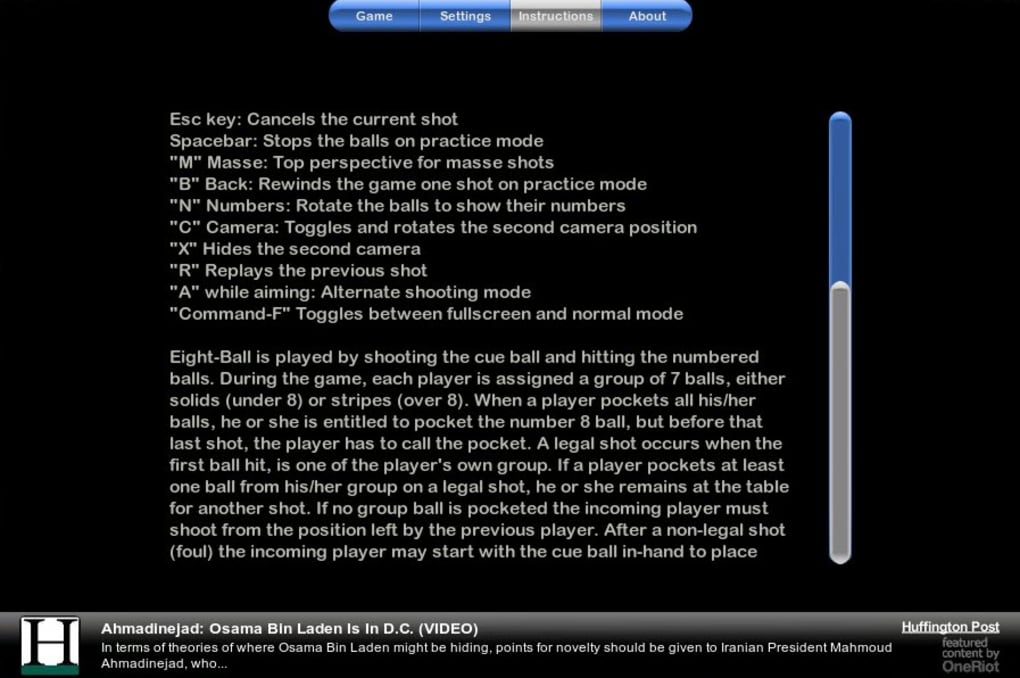
However, translating the tactile experience of handling a cue stick and feeling the weight of the balls onto a digital interface presents significant challenges. The precise control required for accurate shots in real billiards is difficult to perfectly replicate with a mouse or keyboard, and even with specialized controllers, the level of finesse often falls short. This difference between the digital and physical versions can be a significant factor influencing the appeal of a game.
Beyond the Basics: Features and Enhancements
While the core gameplay loop of digital billiards involves striking balls to pot them, successful games often incorporate extra features to enhance the player experience. These features can range from simple additions like digital scorekeeping and customizable table aesthetics to more complex elements like multiplayer modes, online leaderboards, and even tutorial systems to guide new players. The multiplayer aspect, for instance, allows players to challenge each other across the internet or on a local network, creating a more dynamic and competitive gaming environment. Leaderboards add an element of competition, inspiring players to improve their skills and climb the rankings. Well-designed tutorial systems can ease new players into the game, teaching them the rules, basic shot techniques, and strategic considerations.
Furthermore, graphics play a pivotal role in the overall appeal of a digital billiards game. High-resolution textures, realistic lighting effects, and detailed modeling of the balls, table, and surroundings all contribute to a more immersive and visually satisfying experience. The smooth animation of the balls’ movement is also crucial; jerky or unnatural movements can detract from the game’s realism. Audio is another critical factor, with the satisfying click of balls colliding, the gentle thud of balls dropping into pockets, and even ambient sounds contributing to an authentic atmosphere.
The Challenges of Realistic Simulation
Creating a truly realistic digital billiards game presents numerous technological hurdles. Accurately simulating the complex physics involved in ball collisions, spin, and friction requires advanced algorithms and considerable processing power. Slight inaccuracies in these simulations can lead to unpredictable gameplay, frustrating experienced players who expect a high degree of precision. The implementation of cue stick control also presents difficulties; the nuances of applying different amounts of force, spin, and aiming precisely are difficult to perfectly replicate within a digital environment. Even advanced input methods, like specialized controllers, cannot fully capture the tactile feedback and dexterity involved in handling a cue stick.
Moreover, replicating the strategic depth of billiards is a challenge. The game requires an understanding of angles, spin, and ball behavior, as well as the ability to plan multiple shots ahead. A well-designed digital billiards game needs to capture this strategic element effectively, allowing players to experience the mental chess match that is integral to the game. This requires careful balancing of the game’s difficulty, incorporating challenges that are rewarding yet not overly frustrating.
The Evolution of Digital Billiards
The evolution of digital billiards games mirrors the progress in gaming technology. Early versions featured simplistic graphics, rudimentary physics, and limited gameplay options. As processing power and game development techniques advanced, so did the realism and sophistication of digital billiards simulations. Modern games often boast high-fidelity visuals, accurate physics engines, and a variety of game modes and features that enhance player engagement. The introduction of online multiplayer capabilities has also significantly transformed the digital billiards experience, allowing players to compete with and against others across geographical boundaries. This interconnectedness has spurred the development of competitive scenes and online communities dedicated to digital billiards.
Conclusion: A Continuing Evolution
Digital billiards has come a long way from its humble beginnings, transitioning from simple arcade-style games to sophisticated simulations that attempt to replicate the intricacies of the real-world game. While perfectly replicating the tactile experience of real billiards remains a significant technological challenge, advancements in game development continue to push the boundaries of realism and immersion. The future of digital billiards likely holds even more realistic physics engines, improved control mechanisms, and an even greater variety of game modes and features, ensuring its continued appeal to both casual and seasoned players. The quest for the perfect digital billiards simulation is an ongoing one, striving to capture the essence of this classic game within the digital landscape.
File Information
- License: “Trial version”
- Version: “9.0”
- Latest update: “October 28, 2015”
- Platform: “Windows”
- OS: “Windows Vista”
- Language: “English”
- Downloads: “165.1K”
- Size: “58.43 MB”


