
“Blank Dream” stands as a haunting testament to the power of indie game development, a freeware horror-exploration title that plunges players into a deeply unsettling narrative. Developed by Kanawo using the accessible RPG Maker VX Ace engine, this game for Windows carves out a niche in psychological horror, challenging players to confront difficult themes through its immersive storytelling and eerie atmosphere. It introduces players to Mishiro Usui, a protagonist thrust into a mysterious and desolate “Mirror World” following a tragic event, a purgatorial realm suspended between heaven and hell. The player’s quest unfolds as they meticulously search for and shatter mirrors, each holding a fragmented piece of Mishiro’s past and the key to her ultimate fate. “Blank Dream” is more than just a game; it’s an experience designed to linger, provoking thought long after the credits roll, a quintessential example of how compelling narratives can emerge from modest development tools.
The landscape of RPG Maker games, often characterized by their pixel art aesthetics and accessible development, has frequently been underestimated. Yet, titles like “Blank Dream” unequivocally demonstrate the engine’s capacity for creating profound, emotionally resonant, and genuinely terrifying experiences. Unlike blockbuster productions, these games often thrive on narrative ingenuity, atmospheric design, and a direct connection between creator and audience, aspects that “Blank Dream” leverages to its full extent. It’s a chilling reminder that true horror isn’t always about hyper-realistic graphics or jump scares, but about the insidious creep of dread and the profound exploration of the human psyche.
Unveiling the Mirror World: The Narrative and Thematic Depth of Blank Dream
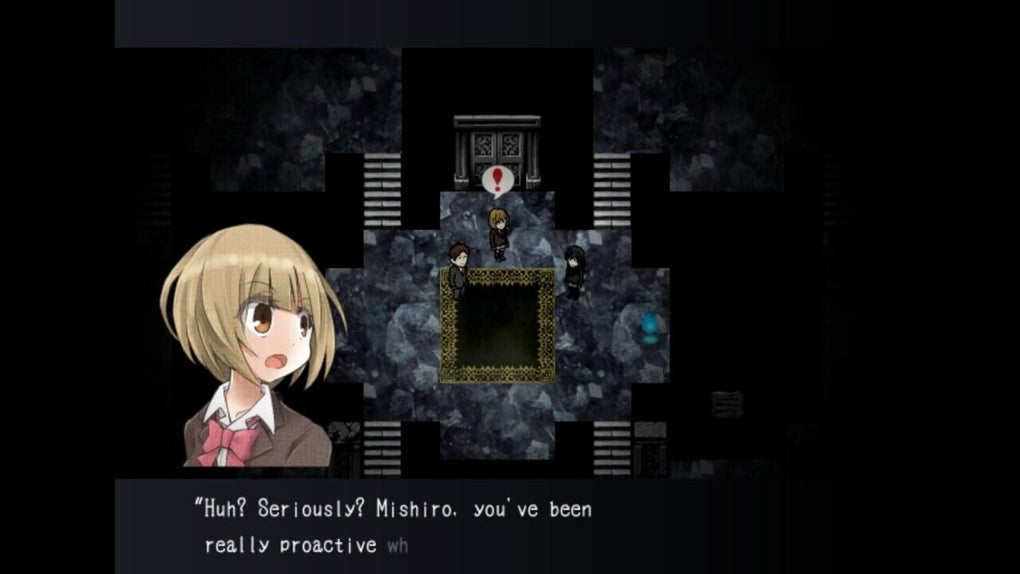
The narrative core of “Blank Dream” is its most compelling element, drawing players into Mishiro Usui’s fragmented reality with an almost magnetic pull. Following a catastrophic event—implied to be an act of suicide—Mishiro awakens in the Mirror World, a stark and desolate realm that serves as a metaphorical and literal reflection of her inner turmoil. This liminal space is not merely a setting but a character in itself, constantly reminding Mishiro and the player of the gravity of her situation and the dark path that led her there. The game excels at weaving a deeply personal story that resonates with themes of loss, regret, and the desperate search for understanding amidst profound emotional pain.
At the heart of “Blank Dream’s” gameplay is the grim task of locating and shattering mirrors. These aren’t just objects; they are conduits to Mishiro’s past, fragments of memory, and glimpses into the events that shaped her tragic fate. Each broken mirror reveals a piece of the puzzle, gradually reconstructing Mishiro’s fractured history and confronting her with the raw realities she sought to escape. This mechanic brilliantly intertwines with the psychological narrative, making every discovery a step deeper into her consciousness, forcing both character and player to face uncomfortable truths. The act of shattering the mirrors becomes a symbolic act of breaking through denial, facing trauma, and piecing together a shattered self.
A central, undeniably sensitive theme that “Blank Dream” tackles with striking boldness is suicide. The game explores despair, the desperation that can lead to such a final act, and the psychological aftermath. It approaches this subject not with sensationalism, but with a thoughtful, if unsettling, narrative lens, aiming to provoke empathy and reflection rather than shock. This makes “Blank Dream” a profoundly thought-provoking experience, placing it firmly within the category of Narrative Games For Windows and Story Games For Windows. It uses the interactive medium to delve into the complexities of mental health, trauma, and the quest for resolution, establishing itself as a significant RPG For Windows that prioritizes emotional impact over traditional combat or power progression.
The game’s atmosphere is meticulously crafted, largely through its effective visual and sound design. While utilizing the humble pixel art style inherent to RPG Maker, “Blank Dream” demonstrates how simplicity can be incredibly potent for horror. The sparse, monochromatic environments, punctuated by unsettling splashes of color or distorted imagery, create a sense of bleakness and isolation. This aesthetic leaves much to the player’s imagination, often making what isn’t explicitly shown far more terrifying. Complementing the visuals is a chilling soundscape – ambient whispers, unsettling musical motifs, distorted noises, and sudden, piercing audio cues that collectively build an almost unbearable tension. These elements work in concert to immerse the player in Mishiro’s horrifying reality, enhancing the exploration and puzzle-solving aspects.
Gameplay primarily revolves around horror-exploration and puzzle-solving. Players must navigate dimly lit corridors, solve environmental puzzles, and engage in dialogue that gradually unravels the story. The puzzles are often integrated into the narrative, requiring logical deduction related to Mishiro’s memories or the strange rules of the Mirror World. There are no direct combat mechanics; instead, survival hinges on stealth, evasion, and quick thinking, further emphasizing the vulnerability of the protagonist. This balance between narrative progression, environmental interaction, and puzzle difficulty ensures a consistently engaging, albeit nerve-wracking, experience.
Given its heavy themes, it is imperative to include a content advisory for “Blank Dream.” The game’s explicit focus on suicide and psychological trauma means it is not suitable for all players. Individuals sensitive to such topics or those experiencing emotional distress should exercise caution and consider their well-being before embarking on this unsettling journey. The game is designed to be unsettling and emotionally challenging, rather than providing casual entertainment.
Beyond the Game: Exploring the Broader Digital Landscape of Software and Utilities
“Blank Dream,” as a single, niche title, exists within a vast and intricate digital ecosystem. Its availability, discovery, and the user’s experience with it are intrinsically linked to broader categories of software and utilities found on platforms like PhanMemFree.org. Understanding these connections helps contextualize not just this game but the entire digital landscape we navigate daily.
The Ecosystem of Digital Games and Their Categories
“Blank Dream” finds its primary home in the Games category, specifically within Role Playing due to its character-driven narrative and progression, and Adventure given its focus on exploration and discovery. Its puzzle elements also place it partially in the Puzzle sub-category. PhanMemFree.org, a comprehensive software portal, curates an extensive range of game types to cater to diverse user preferences. From Action and Arcade titles to Board and Card games, or even more specialized genres like Casino, Educational, Family, Music, Racing, Simulation, Sports, Strategy, Trivia, Utilities, and Word games, the platform ensures that every gamer can find something to match their interests. These detailed classifications are crucial for users navigating a crowded digital marketplace, allowing them to quickly identify games that align with their preferred styles of play.
Crucially, “Blank Dream” also represents a significant aspect of game development: the power of accessible Development Kits. The fact that such a profound and impactful game could be created using RPG Maker VX Ace highlights how tools like this democratize game development. They empower individual creators, often referred to as indie developers like Kanawo, to bring their unique visions to life without the need for massive budgets, extensive teams, or deep programming expertise. This links directly to the broader Development & IT sector, demonstrating how streamlined development environments foster innovation and allow for the creation of unique narrative experiences that might never emerge from larger, more commercial studios. Many high-quality freeware and independent titles owe their existence to such platforms, enriching the gaming landscape with diverse perspectives and experimental gameplay.
Ensuring Digital Integrity: Security and Safe Downloads
Downloading any software, particularly freeware like “Blank Dream,” necessitates a keen awareness of Security & Privacy. Platforms like PhanMemFree.org play a critical role in mitigating risks by providing essential information such as a Security Status for downloads. For “Blank Dream,” a user can see that it has been vetted, providing a layer of assurance. However, this doesn’t negate the need for personal digital vigilance. Robust Antivirus software, active Firewalls, and diligent Password Management practices are non-negotiable for anyone regularly downloading files from the internet. These tools form the frontline defense against malware, phishing attempts, and other cyber threats.
Download Managers can further enhance the download experience, sometimes offering additional security checks, allowing for paused and resumed downloads, or optimizing download speeds. When installing any executable file, it’s always prudent to review permissions and be cautious of bundled software. Moreover, for games with sensitive content like “Blank Dream,” features like Access Control or parental guidance tools become important considerations for families, ensuring that content is consumed by appropriate audiences. PhanMemFree.org’s commitment to presenting transparent information about software, including its security status, is invaluable in guiding users towards safer digital practices.
The Art and Engineering Behind Digital Entertainment: Multimedia and Development
The immersive qualities of “Blank Dream” are largely attributable to its meticulous Multimedia design. The game’s Audio components – from its haunting soundtrack to subtle ambient noises and unexpected sound effects – are critical in building tension and conveying emotion. Similarly, the Graphic & Design elements, while pixelated, are carefully crafted to evoke a specific mood and atmosphere, using color palettes and character sprites to maximum effect for a horror experience. These aspects are not just add-ons; they are integral to the storytelling and player immersion.
Beyond the game itself, the world of Video and Streaming Videos plays a huge role in how games like “Blank Dream” are discovered and consumed. Game trailers, gameplay recordings, and live streams on platforms like YouTube or Twitch allow players to preview titles, share experiences, and engage with a wider community. For horror games in particular, watching others react to scares and puzzles is a popular form of entertainment.
Underpinning all these user-facing experiences is the crucial work of Development & IT. Even a seemingly simple RPG Maker game relies on fundamental principles of Programming Languages, structured design, and diligent testing. While RPG Maker abstracts much of the direct coding, the logic, event scripting, and asset management reflect core development practices. The entire digital landscape, from operating systems to complex applications, is built on these foundational technologies, making the Development & IT category the unseen backbone of our modern computing experience.
The PhanMemFree.org Experience: Discovering and Managing Your Digital Toolkit
PhanMemFree.org serves as a vital gateway to this extensive digital world, offering a comprehensive platform for discovering, downloading, and managing a vast array of software. It’s more than just a repository; it’s a curated hub designed to connect users with the tools and entertainment they need, including niche titles like “Blank Dream.”
The platform’s strength lies in its diverse catalog, extending far beyond Games. Users can explore categories such as AI (covering everything from AI Audio and AI Chat to AI Coding, AI Education, AI Image Generator & Editor, AI Productivity, AI Video Generator & Editor, and AI Writing Assistant), Browsers (including Add-Ons & Tools and Web Browsers), and extensive Security & Privacy solutions (Access Control, Ad Blockers, Anti-Spam & Anti-Spy, Antivirus, Encryption, Firewalls, Keyloggers, Password Management, VPN). This breadth ensures that whether a user is looking for a horror game or a critical business application, PhanMemFree.org is a potential starting point.
The Productivity section alone is incredibly robust, featuring tools for Accounting, Agenda & Calendars, Banking & ATM, Calculators & Converters, Document Management, E-Mail Clients, Finance, Office Suites, Personal Finance Management, Project Management, and Remote PC. Similarly, Internet & Network tools (Download Managers, File Sharing & Peer To Peer, Search & Lookup Tools, Wifi), Multimedia applications (Audio, Burning, Graphic & Design, Movies & TV, Music & Radio, Photography, Streaming Videos, Video), and Development & IT resources (Backup & Cloud Storage, Database, Development Kits, FTP Clients, IDEs/Source Editors, Manual & Tutorials, Networking, Programming Languages, Remote Control, Servers, Web Development) highlight the platform’s comprehensive scope.
Furthermore, categories like Education & Reference (Books, Catalogs, Dictionaries, E-Readers, Geography, Languages & Translation, Magazines & Newspapers, Medicine, Science, Teaching & Training), Lifestyle (Fashion & Style, Food & Drink, Grocery Lists, Health & Fitness, Hobbies, Medical, Product Reviews & Comparison, Shopping, Sports, Ticketing Service, Weather, Workout), Personalization (Cursors & Fonts, Ringtones & Sounds, Screen Lockers, Screen Savers, Themes, Wallpaper), Social & Communication (Blog, Chat & Instant Messaging, Photo & Video Sharing, Social Networking), Travel & Navigation (Maps & GPS, Public Transportation, Trip Management), and general Utilities & Tools (Bar Code Scanning, Clocks & Alarms, Data Recovery, File Compression, File Managers, Keyboards, Measurement, Printer & Fax, Screen Capture) underscore PhanMemFree.org’s role as a holistic digital toolkit provider.
For “Blank Dream,” PhanMemFree.org provides transparent and crucial information: License: Full Version 1.05, Latest update: March 27, 2025, Platform: Windows OS Windows 11, Downloads: 95, Last month’s downloads: 28, Size: 95.80 MB, Developer: Kanawo. Such detailed App specs empower users to make informed decisions about compatibility, recency, and popularity. The platform also features “Best Products” lists (e.g., Best VPN, Best Antivirus, Best Image Editors, Best Free To Play Games, Best PC Games) and guides for users looking to Change OS (Windows, Android, Mac, iPhone, PWA, Web Apps), further cementing its value as a discovery and management resource. The multilingual support, spanning numerous languages from English to Japanese, Spanish, German, French, and Chinese, ensures its accessibility to a truly global audience, reinforcing its position as a universal bridge between software creators and consumers.
In conclusion, “Blank Dream” stands as a powerful example of narrative-driven horror, proving that emotional depth and psychological impact can emerge from modest origins like the RPG Maker engine. Its exploration of sensitive themes, combined with atmospheric design, creates a memorable and challenging experience for players. Crucially, the journey of discovering, downloading, and interacting with such a title is facilitated by comprehensive platforms like PhanMemFree.org. These platforms not only make niche games like “Blank Dream” accessible but also provide the broader digital ecosystem of security, utility, and information necessary for navigating the ever-expanding world of software, connecting creators with users across a diverse range of needs and preferences.
File Information
- License: “Full”
- Version: “1.05”
- Latest update: “March 27, 2025”
- Platform: “Windows”
- OS: “Windows 11”
- Downloads: “112”
- Size: “95.80 MB”


![[Bober Bros] It's Just a Prank: A Deep Dive into Slavic Horror](https://phanmemfree.org/images/download-bober-bros-its-just-a-prank.webp?v=d9ff4a202efcd5d76f66579716b3686a)


