
Blio was a noteworthy ebook reader application that aimed to provide a seamless experience for managing, purchasing, and reading digital books. This review delves into its features, strengths, and weaknesses based on user feedback and available information. While Blio is no longer actively developed or supported, understanding its functionality offers valuable insight into the evolution of ebook reading software.
Blio’s Core Functionality: Reading and Management
Blio’s primary function was as an ebook reader, offering a user-friendly interface designed for comfortable reading on Windows computers. The application supported various ebook formats, allowing users to manage and read their digital libraries with ease. Users could navigate their books, adjust text size and font, and even highlight passages and add notes for later reference. Beyond the basic reading functionality, Blio included advanced features such as a built-in dictionary and thesaurus, allowing for quick lookups of unfamiliar words and phrases directly within the application. This integration proved convenient for readers wanting to enhance their understanding without disrupting their reading flow.
The application’s design emphasized a visually appealing experience. The page-turning animations, mentioned in user reviews, provided a visually engaging simulation of turning physical pages, contributing to a more immersive reading experience. This attention to aesthetics set Blio apart from more functional, less visually-oriented ebook readers.
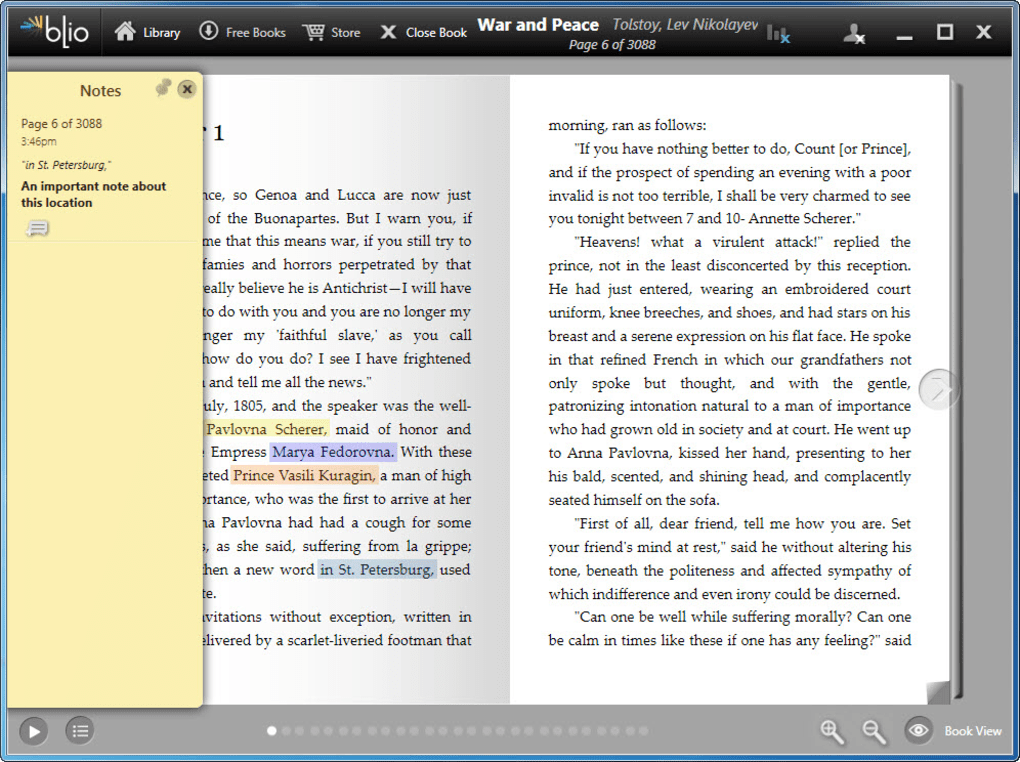
Beyond its ebook reading capabilities, Blio incorporated a substantial online bookstore, allowing users to browse and purchase new titles directly within the application. This integration streamlines the process of acquiring new reading material, removing the need for users to navigate to external websites. However, this functionality was geographically limited, with purchases primarily restricted to the United States, Canada, and Mexico, a significant limitation for global users. The availability of hundreds of free classic ebooks partially compensated for this restriction. This inclusion provided access to well-known works from authors such as Conan Doyle, Tolstoy, Dumas, Wilde, and Dickens, offering a valuable resource for users interested in classic literature.
Blio’s Integrated Bookstore and Content Library
A key differentiating feature of Blio was its integrated online bookstore, offering a curated selection of ebooks for purchase. This convenience allowed users to browse and acquire new titles without leaving the application, simplifying the process of expanding their digital library. The integration of a direct purchasing system within the reader is a feature often sought after by users, eliminating the need for separate apps or website visits. However, the limited geographical reach for purchases was a significant drawback, significantly restricting the user base who could fully utilize this functionality.
The availability of a substantial library of free classic ebooks proved to be a valuable aspect of Blio. This collection provided access to literary masterpieces at no cost, offering a compelling incentive for users to try the application and explore classic literature. While this may not have appealed to all users seeking the latest contemporary titles, the free classic literature filled a gap for those looking for accessible versions of renowned works. The quality and breadth of this collection likely impacted the adoption and positive reviews Blio received.
Blio’s Technical Aspects and System Requirements
Blio was a Windows-only application, limiting its accessibility to users of other operating systems such as macOS, Linux, iOS, and Android. This exclusivity represented a significant barrier to a larger audience. The lack of cross-platform compatibility, highlighted as a significant drawback, prevented users from accessing their library across multiple devices. For users with multiple devices, this limited portability was a clear limitation. The development team’s failure to create compatible clients for other platforms notably hindered Blio’s potential to grow its user base significantly.
Furthermore, some users reported that Blio was resource-intensive, demanding significant system resources, which could impact performance on older or lower-powered computers. This higher system requirement potentially excluded some users with less powerful systems from effectively running the application. This aspect highlights a critical issue for software design: balancing feature richness with the performance requirements necessary to operate on a wider range of devices. The demand for more processing power from the system could have negatively influenced the user experience for some and possibly contributed to negative reviews.
User Experiences and Reviews: A Mixed Bag
User reviews revealed a mixed bag of experiences. While many praised Blio’s visually appealing design and user-friendly interface, some reported instability and difficulties importing ebooks. The positive reviews often focused on the application’s aesthetic qualities, the ease of navigation, and the ability to add notes and annotations. The intuitive design and the ability to manage ebooks effectively within the application were also highlighted in several positive reviews.
Negative feedback, however, frequently highlighted problems with ebook importing, program instability, and the limited availability of the online bookstore. The reported instability suggested potential bugs or compatibility issues, and the geographic limitations of the bookstore obviously restricted the application’s market reach. Furthermore, the lack of an import functionality for ebooks could have limited the application’s functionality and appeal to users with extensive pre-existing digital libraries.
Blio’s Legacy and Lessons Learned
While Blio is no longer actively supported, its development offers valuable lessons in software design and the ebook reader market. The application’s success in aspects like user interface and design elements highlights the importance of a visually appealing and user-friendly interface. However, the limitations in platform compatibility, resource consumption, and geographic restrictions of the integrated store ultimately hampered its broader adoption. The absence of support for other popular operating systems and the instability reported by several users likely prevented Blio from reaching a larger audience.
The experience with Blio emphasizes the need for developers to prioritize cross-platform compatibility in the modern software landscape. The lack of this crucial element significantly restricts access to the application, limiting its potential reach. A comprehensive strategy encompassing effective user feedback mechanisms and timely updates are essential to respond to user needs and address reported bugs or stability issues.
The limitations of Blio highlight the importance of considering global markets and providing accessible features to a wider audience. The restriction of the bookstore to a limited geographic area is an important reminder of the need for global considerations in software development. By analyzing the strengths and weaknesses of Blio, developers can gain valuable insights into building a more robust and appealing ebook reading solution. Future projects can learn from the lessons provided by Blio’s experiences to avoid similar pitfalls and provide a more comprehensive and universally accessible service.
File Information
- License: “Free”
- Latest update: “January 22, 2024”
- Platform: “Windows”
- OS: “Windows 8”
- Language: “English”
- Downloads: “45.7K”
- Size: “59.88 MB”


