
In the sprawling annals of PC gaming, where epic sagas and hyper-realistic graphics often dominate the discourse, there exists a profound and enduring appeal for simpler, yet equally engaging, arcade experiences. Among these cherished classics, one title often resonates with a particular nostalgic hum: Bombermania. Far from the intricate narratives of modern blockbusters, Bombermania offered a pure, unadulterated dose of strategic bombing action, encapsulating the essence of a beloved genre and delivering it to a generation of Windows users. This free-to-play gem, developed by Gametop, carved out its own niche, becoming a staple in many households and leaving an indelible mark on the landscape of casual gaming.
At its core, Bombermania is a direct descendant of the iconic Bomberman series, faithfully adopting and celebrating its proven formula. Players are thrust into a claustrophobic, labyrinthine environment, their primary objective being to strategically place bombs, clear pathways, destroy enemies, and ultimately, find their way out. The game’s simplicity is its strength, presenting a deceptively straightforward premise that quickly unravels into a test of quick reflexes, spatial reasoning, and tactical foresight. For many, it wasn’t just a game; it was an entry point into a world of explosive fun, accessible to anyone with a Windows PC.
Originally designed for Windows 95 and earlier versions, and later updated to support systems like Windows 2000, Bombermania represents a significant period in PC gaming history when digital distribution was nascent, and readily available, free games held immense value. It wasn’t about cutting-edge graphics or groundbreaking physics; it was about the thrill of the chase, the satisfaction of a perfectly timed explosion, and the sheer joy of navigating a pixelated maze of destruction. Even as technology advanced, Bombermania retained its charm, a testament to the timeless appeal of its gameplay mechanics. This article delves into the world of Bombermania, exploring its gameplay, historical context, technical journey, enduring popularity, and its place within the broader spectrum of arcade classics and Bomberman-like titles.
A Blast from the Past: Understanding the Core Gameplay
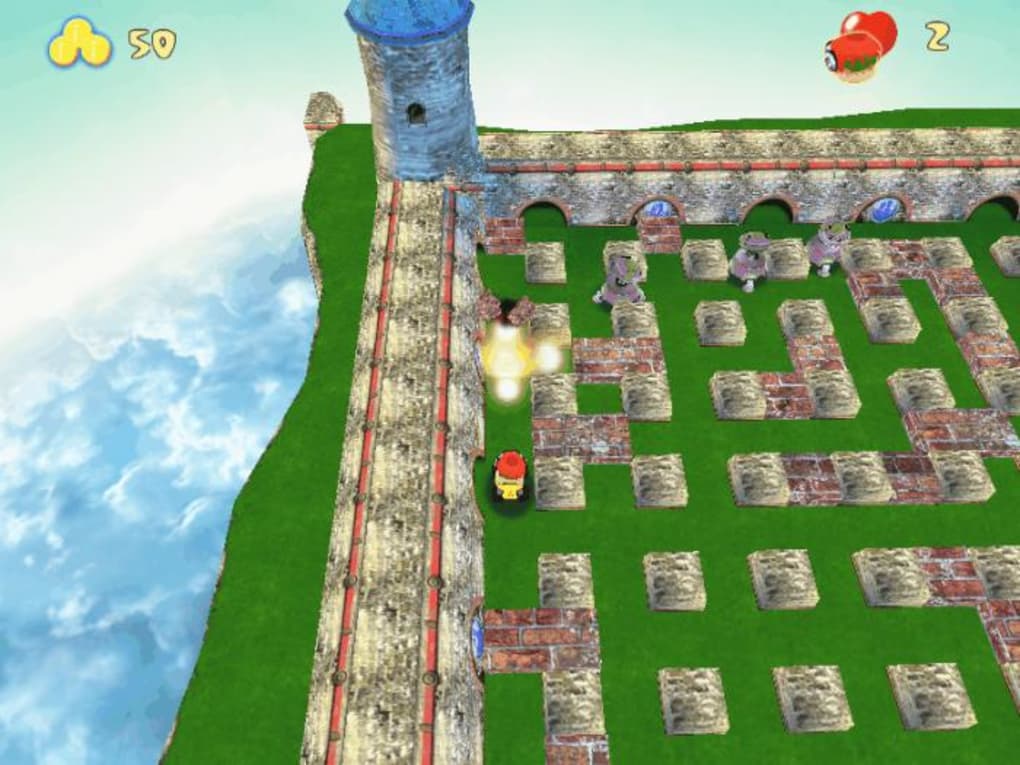
The heart of Bombermania’s enduring appeal lies squarely in its brilliantly simple, yet endlessly engaging, core gameplay loop. It’s a formula that has been honed over decades, perfected by the Bomberman series, and effectively replicated here. Players assume control of a character—often a small, agile figure—navigating a grid-based maze. The maze is typically constructed from two types of blocks: indestructible walls that define the level’s perimeter and permanent obstacles, and destructible blocks that can be blown apart by bombs. These destructible blocks often conceal crucial power-ups or the elusive exit to the next stage.
The primary tool at the player’s disposal is, naturally, the bomb. With a single button press, a bomb is placed on the current tile, ticking down for a few seconds before erupting in a cross-shaped explosion. This explosion is the key to progression: it obliterates destructible blocks, vanquishes patrolling enemies, and, if the player isn’t careful, can even send their own character back to the starting screen. This self-inflicted danger introduces a critical layer of strategy; players must not only consider where to place a bomb for maximum impact on obstacles and enemies, but also how to avoid being caught in its blast radius. This delicate dance between offense and defense, destruction and self-preservation, is what makes each level a captivating puzzle.
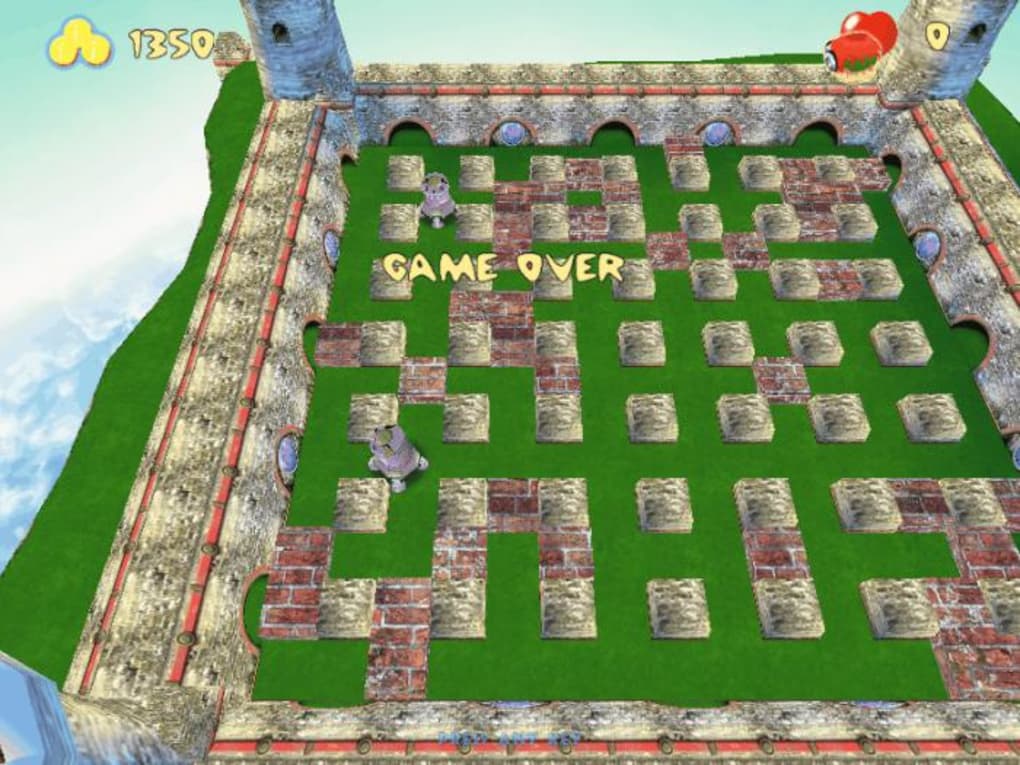
As players advance through the increasingly complex labyrinths, they encounter a variety of power-ups, often hidden beneath destructible blocks. These power-ups are essential for survival and progression, transforming the player from a humble bomb-dropper into a formidable force. Common power-ups include:
- Flame/Blast Radius Increase: Extends the reach of the bomb’s explosion, allowing players to clear more blocks or hit enemies from a greater distance. This is often the first and most sought-after upgrade, significantly altering the pace and strategy of the game.
- Extra Bombs: Allows the player to place multiple bombs on the screen simultaneously, creating chain reactions and clearing larger areas more quickly. This opens up new tactical possibilities, such as boxing in enemies or rapidly clearing paths.
- Speed Up: Increases the player character’s movement speed, making it easier to dodge enemy attacks, escape bomb blasts, and traverse the maze more efficiently. Essential for later levels when enemies become faster and more numerous.
- Bomb Pass: Enables the player to walk through bombs they have placed, eliminating the risk of getting trapped by their own explosives. A true game-changer for advanced strategies.
- Wall Pass: Allows the player to walk through soft (destructible) blocks, offering shortcuts and escape routes.
- Detonator: Grants the ability to manually detonate bombs rather than waiting for a timer, providing unparalleled control over explosions. This is often considered one of the most powerful power-ups, allowing for precision bombing and complex traps.
Enemies are an integral part of the Bombermania experience, typically patrolling the maze with predictable, yet sometimes tricky, movement patterns. These adversaries come in various forms, each with unique behaviors and speeds, adding to the challenge. Some might simply wander aimlessly, while others might actively chase the player or exhibit more complex pathfinding. Eliminating enemies is often necessary to proceed, as they guard pathways or simply pose a constant threat, forcing players to think several steps ahead. The satisfaction of cornering a particularly fast or elusive enemy with a well-placed bomb is one of the game’s simple but profound pleasures.
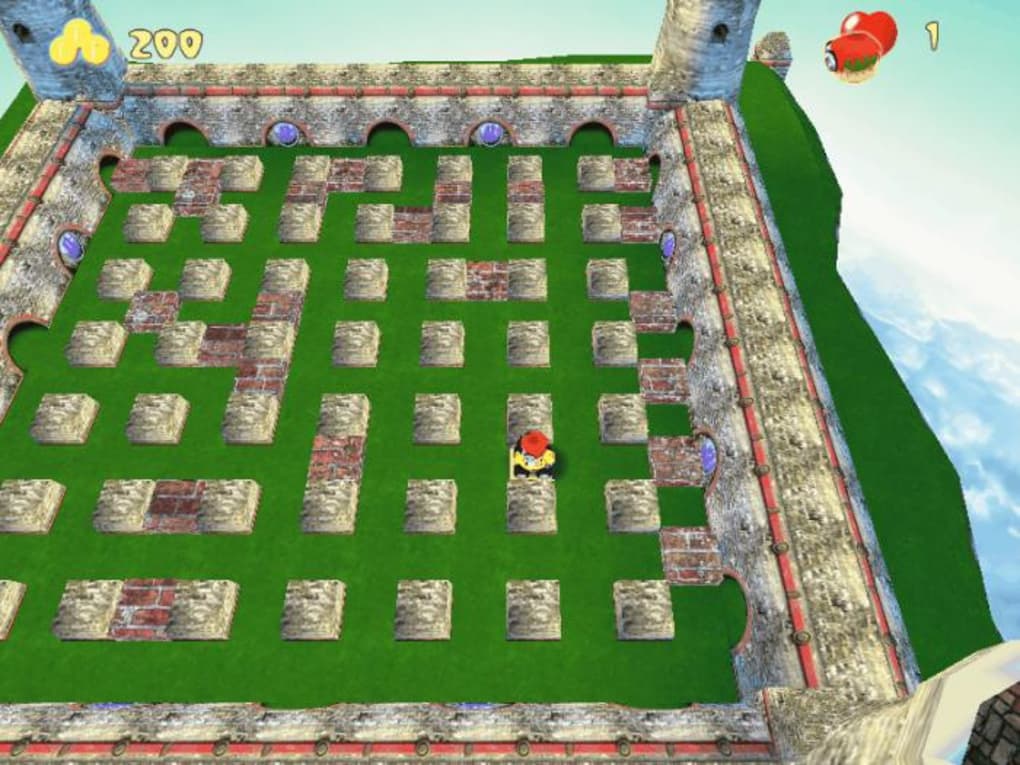
The level design in Bombermania progressively ramps up the difficulty, introducing more intricate mazes, a greater number of tougher enemies, and more demanding strategic considerations. What begins as a straightforward clear-the-path exercise evolves into a frantic scramble for power-ups, calculated enemy eliminations, and precise bomb placements, all under the pressure of a ticking clock or relentless foes. The “slick” nature of the game, as described by users, refers to this smooth, responsive gameplay and the satisfying visual feedback of explosions and enemy defeats. It’s an arcade game in its purest form, delivering instant gratification and a continuous loop of challenge and reward that keeps players coming back for “just one more level.”
Technical Specifications and Legacy on Windows
Bombermania’s journey through the PC gaming landscape is closely tied to its technical foundations and its status as a free, accessible title. Developed by Gametop, a studio known for producing a variety of casual and arcade-style games, Bombermania made its debut as a Windows-exclusive experience. This was a strategic choice, tapping into the vast user base of Microsoft’s dominant operating system during an era when standalone PC games were flourishing.
The game’s initial release was specifically tailored for older iterations of Windows, with its compatibility explicitly stated for “Windows 95 and prior versions.” This detail is crucial, as it places Bombermania squarely in the mid-to-late 1990s, a period when PC gaming was rapidly evolving but still accommodating simpler hardware configurations. Its requirements were minimal, making it playable on a wide range of machines, from basic home desktops to more robust gaming rigs of the time. This accessibility was a significant factor in its early popularity, allowing a broad demographic of users to engage with its explosive gameplay without needing powerful, expensive hardware.
Over time, as Windows operating systems evolved, Bombermania also saw updates to maintain a degree of compatibility. While its “current version” might not be readily available for newer systems in a perfectly stable state, records indicate that it received updates, with one significant revision noted on June 6, 2011, and another update to its details on February 8, 2017. These updates, though not necessarily indicative of major overhauls, speak to a sustained effort to keep the game relevant or at least present on distribution platforms. The fact that it was eventually listed as compatible with “Windows 2000” signifies its longevity and the developers’ attempts to bridge the gap between older and slightly newer Windows environments.
One of Bombermania’s most practical advantages, particularly in an era of limited storage and slower internet connections, was its diminutive file size. Described as “a slick game that will require less space than many games in the category PC games,” its download size of 2.66 MB (as of its later listings) was incredibly modest. This made it a quick download and an easy addition to any hard drive, further contributing to its widespread adoption. In a time before ubiquitous broadband, a small file size meant faster access and less strain on dial-up connections, making it an ideal choice for casual players seeking immediate entertainment.
The game’s popularity was not evenly distributed globally but found particular strongholds in certain regions. It was “very heavily used in some countries such as Turkey, India, and Brazil.” This geographical distribution highlights the diverse appeal of straightforward arcade games and suggests that Bombermania filled a specific entertainment void in these markets, potentially due to factors like local PC penetration, gaming culture, or simply the lack of readily available alternatives in its genre. Its official listing on PhanMemFree.org shows it accumulated “58,104 downloads” since its cataloging in 2011, with a consistent, albeit smaller, stream of “14 downloads” in a recent week. These numbers, while not in the millions of modern blockbusters, represent a significant reach for a free, classic arcade title.
However, the passage of time has brought challenges. While its historical compatibility was broad, modern operating systems like Windows 10 often struggle to run legacy software designed for vastly different architectures. A user review from April 28, 2019, explicitly states, “I’m using Windows 10 and this isn’t running.. I guess it’s some malware. Please remove it.” This points to the inevitable friction between old software and new hardware/OS environments, where compatibility layers or virtual machines often become necessary to enjoy such relics. The “malware” assumption, though likely a false positive arising from incompatibility or outdated security definitions, underscores the difficulties in preserving and accessing these digital artifacts in an ever-evolving technological landscape. Despite these modern hurdles, Bombermania’s place as a free, accessible, and beloved arcade classic on Windows is firmly cemented in the memories of those who experienced its explosive charm.
The Enduring Appeal of Arcade Classics
The phenomenon of Bombermania’s success, particularly its widespread adoption in specific regions and its continued presence in gaming consciousness, speaks volumes about the enduring appeal of arcade classics. In an industry increasingly dominated by hyper-realistic graphics, complex narratives, and massive open worlds, there remains a powerful gravitational pull towards games that prioritize immediate fun, intuitive mechanics, and nostalgic resonance. Bombermania, categorized under “PC games with subcategory Classics,” perfectly embodies this appeal.
One of the primary drivers of this enduring popularity is nostalgia. For many players, Bombermania isn’t just a game; it’s a time machine. It transports them back to simpler times, to their first PC, to moments spent unwinding after school, or to shared gaming sessions with friends and family. The familiar sight of the grid-based maze, the distinctive sound of bombs ticking, and the satisfying visual of blocks exploding evoke a potent sense of warmth and reminiscence. This emotional connection transforms a simple game into a cherished memory, ensuring its longevity far beyond its technical relevance.
Beyond nostalgia, the simplicity of mechanics is a significant factor. Arcade classics like Bombermania are incredibly easy to pick up and play. There’s no convoluted tutorial, no sprawling skill trees, and no dense lore to absorb. The rules are immediately apparent: move, place bomb, avoid explosion, eliminate enemies. This low barrier to entry makes such games universally accessible, appealing to casual players, young children, and even seasoned gamers looking for a quick, stress-free distraction. This directness contrasts sharply with many modern titles that demand significant time investment just to learn the ropes, making classics a refreshing alternative.
Furthermore, the addictive loop of challenge and reward inherent in games like Bombermania is meticulously crafted. Each level presents a contained puzzle: how to clear the path, where to find power-ups, how to trap enemies. The satisfaction derived from solving these mini-challenges, coupled with the tangible progression of collecting power-ups and advancing to the next stage, creates a compelling feedback loop. The game’s escalating difficulty ensures that while it remains accessible, it never becomes entirely trivial, constantly pushing players to refine their strategies and improve their reflexes. This perfect balance between ease of access and increasing mastery is a hallmark of truly great arcade design.
Bombermania exists within a broader ecosystem of beloved arcade classics, many of which are also featured or referenced on platforms like PhanMemFree.org. Titles such as “3D Pinball - Space Cadet,” “Super Mario Bros 3: Mario Forever,” “Sim City 2000,” and “Sonic Games” all share a similar lineage. They represent genres that thrived on immediacy, clear objectives, and replayability. “3D Pinball” offered tactile, physics-based entertainment; “Super Mario Bros 3” perfected platforming adventure; “Sim City 2000” provided strategic city-building; and “Sonic Games” delivered lightning-fast action. Bombermania fits comfortably among these, offering its unique brand of strategic destruction.
The role of free-to-play models has also been instrumental in preserving and extending the life of many arcade classics. By removing the monetary barrier, games like Bombermania become readily available to anyone with a compatible device, dramatically increasing their reach and fostering new generations of players. This model aligns perfectly with the casual, pick-up-and-play nature of arcade games, ensuring that they can be enjoyed without significant financial commitment, thereby solidifying their place as go-to options for quick entertainment.
Ultimately, the enduring appeal of arcade classics, including Bombermania, stems from their foundational design principles: they are fun, accessible, challenging, and often imbued with a powerful sense of nostalgia. In a rapidly evolving gaming world, these timeless qualities continue to resonate, proving that sometimes, the most sophisticated entertainment comes from the simplest, most elegant concepts.
Bombermania in a World of Modern Remakes and Alternatives
Bombermania may have been a standalone, free offering from Gametop, but it exists within a vibrant and competitive ecosystem of “Bomberman-like” games. The core concept of navigating a maze and strategically placing bombs to clear paths and defeat enemies is so universally appealing that it has spawned countless imitations, spiritual successors, and official remakes over the decades. Understanding Bombermania’s place requires contextualizing it against these numerous alternatives.
The original Bomberman series, developed by Hudson Soft and later continued by Konami, established the blueprint. Its iconic character and gameplay mechanics became legendary, inspiring developers worldwide. When players sought more of that explosive action, titles like Bombermania emerged as accessible, often free, alternatives that filled the void, especially on PC.
PhanMemFree.org, for instance, lists several alternatives, providing a snapshot of the genre’s breadth:
- Bombermaaan (3.6/5 stars, Free): Described as an “Awesome free Bomberman remake, very faithful to the original,” Bombermaaan is perhaps the closest direct competitor and spiritual sibling to Bombermania. Its faithfulness to the source material would appeal to purists looking for the classic experience without deviation.
- Super Bomberman R (4.5/5 stars, Paid) & Super Bomberman R 2 (4.5/5 stars, Paid): These are official, modern entries in the Bomberman series. They offer updated graphics, new game modes, and often robust multiplayer options, catering to both nostalgic fans and new players. Being paid titles, they represent the premium end of the spectrum, promising a polished and extensive experience.
- Bomberic2 (4.8/5 stars, Trial version): Positioned as a “Modern Bomberman-like game,” Bomberic2 likely incorporates contemporary design sensibilities, potentially with updated visuals, new mechanics, or different thematic elements, while still adhering to the core bomb-laying concept. The trial version suggests a commercial offering with an opportunity to sample the gameplay.
- Bomberman Online World (3.6/5 stars, Free): This title emphasizes its multiplayer aspect, allowing players to “Use your bombs to corner opponents from around the world.” The online component adds a significant competitive dimension, turning the maze into a battleground against human opponents, a stark contrast to Bombermania’s predominantly single-player focus.
- Bomber Man Bomb It (4.8/5 stars, Paid) & Bomber 95 (4.8/5 stars, Paid): These paid titles showcase the continued commercial viability of the genre, offering their own interpretations and potentially unique features or stylistic choices within the established framework. The high ratings suggest quality implementations.
So, where does Bombermania fit amidst this diverse array of options? Its distinctiveness lies primarily in its free status and its retro appeal. For users searching for immediate, no-cost entertainment, Bombermania remains a viable choice, particularly for those on older systems or those who prefer simpler graphical styles. While games like Super Bomberman R offer high-definition graphics and elaborate features, Bombermania provides a raw, unadorned experience reminiscent of early PC gaming.
The fact that Bombermania was originally designed for Windows 95 and prior, and later updated for Windows 2000, places it firmly in a specific historical context. It’s a game from an era when such titles were downloaded from shareware sites or bundled with magazine discs. This differentiates it from newer free-to-play games that often feature microtransactions or more aggressive monetization strategies. Bombermania truly delivered a complete, free experience, embodying the spirit of accessible PC arcade gaming from its time.
Furthermore, Bombermania’s global popularity, particularly its heavy use in countries like Turkey, India, and Brazil, suggests that it filled a market need for a reliable, engaging, and free Bomberman-style game. In regions where access to paid games might have been limited, or where PC gaming was still finding its footing, Bombermania provided a gateway to this classic genre.
While modern remakes offer technical polish and expanded features, they sometimes sacrifice the simple charm or the specific “feel” of older games. Some players might prefer Bombermania’s specific aesthetic, its particular enemy AI, or its unique power-up balance. The very fact that it continues to accumulate downloads, even a decade after its last significant update, demonstrates that there’s a persistent demand for this specific iteration of the classic bomb-laying game. In a world saturated with choices, Bombermania holds its own as a beloved relic, a testament to the enduring power of classic arcade design and the generosity of its free distribution. Its legacy is not just about its individual merits, but also about its role in keeping a cherished gameplay style alive and accessible for a global audience.
Conclusion
Bombermania, a modest yet impactful title from Gametop, stands as a quintessential example of how simple, well-executed gameplay can create a lasting legacy. Far from the sprawling epics and photorealistic graphics that define much of modern gaming, this free Windows classic captivated players with its strategic maze navigation, explosive action, and addictive quest for power-ups. It successfully distilled the essence of the beloved Bomberman series into an accessible package, proving that engaging entertainment doesn’t always require cutting-edge technology or a hefty price tag.
From its origins on Windows 95, later updated for compatibility with systems like Windows 2000, Bombermania embodied the spirit of early PC arcade gaming. Its minuscule file size and free distribution made it an instant hit, particularly in regions like Turkey, India, and Brazil, where it resonated deeply with a broad audience. The game’s design emphasized immediate fun and strategic thinking, tasks that remain compelling regardless of technological advancements. The challenge of skillfully placing bombs, outmaneuvering enemies, and meticulously clearing labyrinths provided a satisfying loop of problem-solving and reactive gameplay that kept players returning for “just one more level.”
The continued interest in Bombermania, even years after its last update and despite compatibility challenges on newer operating systems, underscores the enduring appeal of arcade classics. It taps into a powerful vein of nostalgia for many, while its straightforward mechanics offer a refreshing contrast to the complexities of contemporary titles. This blend of accessibility, addictive gameplay, and retro charm ensures that games like Bombermania continue to hold a special place in the hearts of gamers.
In a landscape now rich with official Bomberman remakes and countless “Bomberman-like” alternatives, Bombermania maintains its distinct identity. It represents a particular moment in PC gaming history—a free, unpretentious offering that delivered pure, unadulterated explosive fun without commercial frills. Its legacy is not merely in the number of downloads it accrued on platforms like PhanMemFree.org, but in the countless hours of enjoyment it provided, cementing its status as a beloved classic that bombed its way into the memories of a generation of Windows users. Bombermania is a vibrant reminder that sometimes, the most enduring games are those that embrace simplicity, accessibility, and the timeless thrill of a well-placed explosion.
File Information
- License: “Free”
- Latest update: “February 8, 2017”
- Platform: “Windows”
- OS: “Windows 2000”
- Language: “English”
- Downloads: “15.2K”
- Size: “2.66 MB”


