
Brick Hill emerges from the digital landscape as an engaging online sandbox game that once captivated players with its unique blend of creativity and community interaction. Designed for Windows, this title invited users into a vibrant voxel-style 3D environment, offering an expansive digital canvas where imagination was the only limit. At its core, Brick Hill provided a platform for intricate construction, social engagement, and a dynamic economy fueled by virtual currencies. Though its journey saw an eventual discontinuation, its legacy as a creative hub for builders and socializers remains a testament to the power of user-generated content and collaborative play within the simulation genre.
Unleashing Creativity in a Voxel-Style Universe
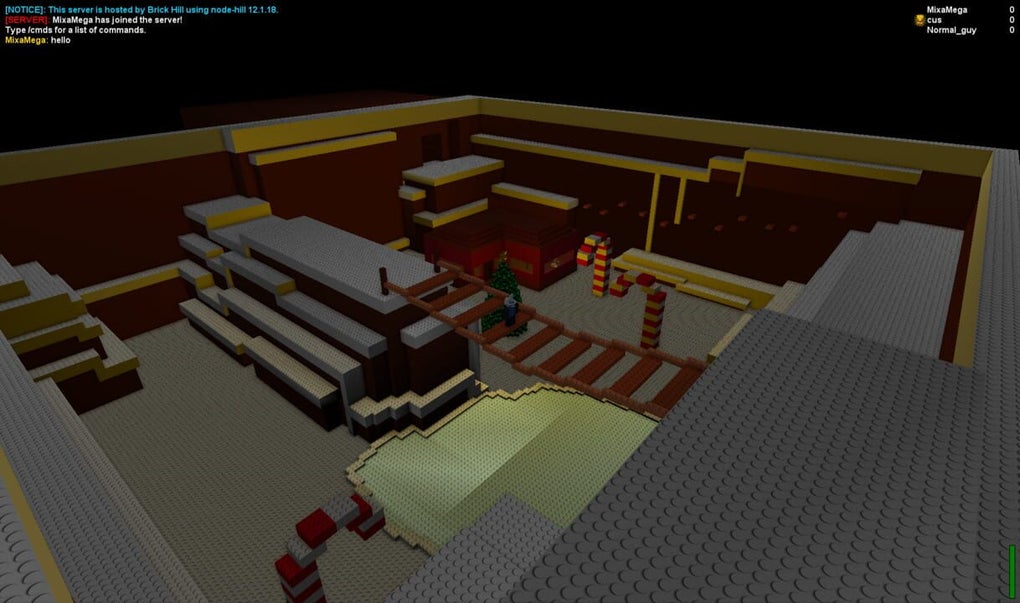
At the heart of Brick Hill’s appeal was its profound emphasis on creative freedom. The game’s voxel-style 3D environment served as the perfect backdrop for players to manifest their wildest ideas, allowing for the construction of anything from simple houses to sprawling, complex cities and imaginative contraptions. This block-based approach, reminiscent of classic building toys, offered an intuitive yet deep system for creation that appealed to a wide demographic, from casual builders to dedicated architects.
The Core Gameplay Loop: Build, Imagine, Create
The primary activity within Brick Hill revolved around the act of building. Players were given access to a vast array of virtual bricks, each varying in shape, size, and color, which could be meticulously placed to form any desired structure or object. This process was not merely about assembling pre-defined components; it was about leveraging a robust set of tools to sculpt, paint, and design, brick by brick. The inherent simplicity of the voxel art style belied the complexity of the creations it could facilitate. Users could construct highly detailed models, design custom environments, or even build functional game elements within their plots, thereby crafting entirely new experiences for themselves and others. This hands-on, constructive gameplay fostered a deep sense of ownership and accomplishment, as every pixelated masterpiece was a direct reflection of a player’s vision and effort. The freedom to experiment with various architectural styles, structural mechanics, and aesthetic choices meant that no two creations were ever truly alike, promoting a diverse and continuously evolving in-game world.
A Canvas of Virtual Items and Currencies
Integral to Brick Hill’s creative ecosystem was its vibrant virtual economy. Players had the ability to purchase virtual items using virtual currencies, which served as the lifeblood of customization and progression within the game. These items ranged from cosmetic enhancements for player avatars – allowing for extensive personalization and expression – to unique building materials, tools, and even custom scripts that could alter gameplay dynamics. The availability of diverse virtual goods meant that players could constantly refresh their creative toolkit, acquiring new resources to push the boundaries of their designs.
Virtual currencies were typically earned through in-game activities, participation in community events, or purchased with real money, creating a layered economic system that incentivized engagement. This system not only supported the game’s development but also empowered players to tailor their experience precisely to their liking. Want to build a futuristic space station? Acquire specialized metallic bricks. Dreaming of a fantastical realm? Purchase shimmering, ethereal blocks. The virtual marketplace was a direct enabler of player creativity, providing the means to acquire the specific components needed to bring any imaginative concept to life, ensuring that players always had new avenues to explore and new goals to pursue within their expansive sandbox.
Fostering Community: Interaction, Collaboration, and Communication
Beyond its robust building mechanics, Brick Hill cultivated a strong sense of community, transforming individual creative endeavors into shared experiences. The game was designed with social interaction at its core, enabling players to connect, collaborate, and compete in ways that enriched the overall gameplay experience. This collaborative spirit was evident in every facet of the game, from its multiplayer servers to its support for user-generated content and its dedicated in-site forum.
Multiplayer Realms: Social Dynamics and Competition
The multiplayer servers were the beating heart of Brick Hill’s social scene. These servers provided dynamic environments where users could interact with each other in real-time, transcending the solitary nature that building games can sometimes possess. Players could explore each other’s creations, offering feedback, inspiration, or even a helping hand on ambitious projects. This direct interaction fostered friendships and rivalries, turning the game into a vibrant social platform. Collaboration was a significant aspect, with players often teaming up to tackle large-scale construction projects that would be daunting for a single individual. Imagine an entire group working together to erect a colossal castle, each player contributing their unique building style and expertise.
But it wasn’t all about cooperation; the multiplayer aspect also introduced elements of friendly competition. Players could showcase their most impressive builds in public spaces, vying for recognition and admiration from their peers. Some servers might have even hosted mini-games or challenges developed by users, where players could test their skills against one another in various scenarios built entirely within the Brick Hill engine. This mix of collaborative building and competitive interaction ensured that the multiplayer realms were always alive with activity, offering diverse experiences for every player, whether they sought to cooperate on a grand vision or simply socialize and make new friends. The ability to visit and directly engage within worlds crafted by others dramatically expanded the game’s scope, making every login a potentially new adventure.
The Power of User-Generated Content
User-Generated Content (UGC) was arguably the cornerstone of Brick Hill’s longevity and appeal. The platform was meticulously designed to support and celebrate the creativity of its community, transforming players from mere consumers into active creators. Every brick-built structure, every customized avatar item, and every unique game world crafted by a player became a piece of UGC, contributing to an ever-expanding universe of digital assets. This model ensured a continuous influx of fresh and diverse content, preventing the game from ever feeling stagnant. Players weren’t limited to what the developers provided; they were empowered to create their own fashion lines for avatars, design intricate furniture sets for their virtual homes, or even develop entirely new gameplay scenarios within their allocated spaces.
The beauty of UGC lay in its democratic nature. Any player with an idea and the dedication to build it could contribute, making the game world a true reflection of its diverse player base. This collaborative ethos meant that creativity truly knew no bounds; if one player could imagine it, another might be able to build it, or at least be inspired to build something similar. The sheer volume and variety of user-made creations fostered a dynamic ecosystem where players constantly discovered new things, learned from each other’s techniques, and found endless inspiration for their own projects. This system not only kept the game fresh but also instilled a deep sense of community ownership and pride, as the players themselves were actively shaping the very world they inhabited.
Bridging Players Through In-Game Forums
For those seeking to connect beyond direct in-game interactions, Brick Hill provided an invaluable resource: its in-site forum. This digital hub served as a vital communication channel, fostering a more structured and extensive form of community engagement. The forum was a place where players could share ideas, discuss various topics related to the game, seek assistance from more experienced builders, and even organize collaborative projects. It acted as a central nervous system for the community, allowing information, inspiration, and support to flow freely.
New players could visit the forums to ask for building tips, troubleshooting advice, or simply to understand the nuances of the game’s economy. Veteran players often used it to showcase their latest creations, gather feedback, or announce new multiplayer events they were hosting. The forum also provided a critical platform for community governance and feedback, allowing players to suggest new features, report bugs, or discuss the direction of the game with both peers and potentially even developers. This dedicated space for discussion transformed individual experiences into a collective narrative, strengthening bonds between players and cementing Brick Hill’s identity as a truly community-driven platform. It was a testament to the idea that a game is not just its code and assets, but also the vibrant interactions and relationships it facilitates among its players.
The Journey of Brick Hill: Evolution and Discontinuation
Like many online games, Brick Hill experienced a journey marked by evolution, community growth, and eventually, a cessation of services. Its life cycle, while providing a rich creative outlet for many, also highlights the inherent challenges and impermanence often associated with online gaming platforms. Understanding its technical underpinnings and the reasons for its discontinuation provides a fuller picture of its impact and legacy.
Platform and Technical Specifications
Brick Hill was primarily designed as an online sandbox game for Windows, with its listed availability including Windows 11. This focus on a popular desktop operating system ensured a wide accessibility for a significant player base. The game’s version, V04.4(8), indicates a history of development and updates, suggesting ongoing efforts by the developer, brick-hill, to refine and expand the game experience. The listed “Latest update: March 10, 2025” for a discontinued game is a peculiar detail, likely a placeholder or an anomaly in the data provided by the original source on PhanMemFree.org, rather than an indication of future activity. Typically, a game that has ceased operations would not have a future update date.
The game’s simulation-style experience, particularly its voxel-based 3D environment, implies a client-server architecture where player actions (like placing bricks) are processed and synchronized across multiplayer instances. The relatively low “Downloads: 20” indicated on PhanMemFree for this specific entry (V04.4(8) as a paid download that is no longer available) suggests that this particular listing might represent a specific iteration or a late-stage access point, rather than the cumulative total downloads over its entire lifespan. Such figures are often contextual to specific distribution channels or phases of a game’s availability. Despite these specific metrics, the core technical framework aimed to provide a stable and creative environment for its user base on the Windows platform.
The Inevitable Sunset: Why the Download Ceased
A significant detail regarding Brick Hill is the clear statement that “This download is no longer available. This could be due to the program being discontinued, having a security issue or for some other reason.” This announcement, prominently displayed on PhanMemFree.org, marks the end of an era for the game. While the exact reason remains open to speculation based on the information provided, the common factors for the discontinuation of online games often include:
- Developer Resources and Sustainability: Maintaining an online game, especially one supporting user-generated content and multiplayer servers, requires significant financial and technical resources. If the player base dwindles, or if the game doesn’t meet revenue targets (especially if it was a paid title or relied on in-game purchases), developers might find it unsustainable to continue operations.
- Security Issues: The mention of “having a security issue” is a direct possibility. Online platforms are constantly targeted by malicious actors. If critical vulnerabilities are discovered and cannot be effectively patched, or if the cost of securing the platform becomes prohibitive, discontinuing service might be a responsible course of action to protect users’ data and systems.
- Technological Obsolescence: Game engines, server infrastructure, and client-side compatibility need continuous updates. Over time, maintaining older technologies can become difficult and costly, especially as new operating systems (like Windows 11, which was mentioned as supported) and hardware emerge.
- Developer Focus Shift: The developers might have decided to pivot to new projects, or the core team behind Brick Hill may have moved on, leaving no one to maintain or update the game.
- Legal or Licensing Challenges: Although less common, disputes over intellectual property, licensing agreements, or regulatory changes could force a game’s closure.
Regardless of the specific cause, the cessation of the download and service meant that a vibrant creative outlet was lost to its community. Such closures are always poignant for dedicated players who have invested time, creativity, and sometimes money into a virtual world. It serves as a stark reminder of the ephemeral nature of online digital experiences and the challenges faced by independent developers in sustaining such platforms.
The Enduring Legacy of a Creative Sandbox
Even with its discontinuation, Brick Hill leaves behind a legacy as a notable entry in the sandbox genre, particularly for its commitment to user-driven creation and community engagement. Its impact, though perhaps not as globally widespread as some giants in the field, was deeply felt by its dedicated player base. The game exemplified the potential of voxel-based environments to foster boundless creativity and showcased how virtual spaces could become fertile grounds for social interaction and collaborative projects.
Brick Hill contributed to the rich tapestry of simulation games by prioritizing a player-first approach to content generation. By enabling users to design, build, and share their creations, it empowered a community of digital artisans. The emphasis on virtual currencies and item acquisition also highlighted a common, yet effective, model for sustaining an online game while providing players with endless avenues for personalizing their experience and expressing their individuality.
The stories of unique builds, the friendships forged on multiplayer servers, and the vibrant discussions held in its forums are the true markers of its success. For many, Brick Hill was more than just a game; it was a platform for self-expression, a digital playground, and a social hub. Its eventual closure underscores the dynamic and often transient nature of online gaming, reminding us that even the most engaging virtual worlds can have an expiry date. However, the principles that defined Brick Hill—unleashed creativity, strong community bonds, and the power of player-generated content—continue to resonate within the broader gaming landscape, influencing new titles and inspiring developers to build platforms where imagination knows no bounds. The memory of Brick Hill serves as a nostalgic reminder of a unique digital space where players were truly the architects of their own adventures.
File Information
- License: “Full”
- Latest update: “March 10, 2025”
- Platform: “Windows”
- OS: “Windows 11”
- Downloads: “20”


