
Brothers in Arms 3: Sons of War presents a compelling, albeit somewhat flawed, foray into mobile World War II combat. This third-person shooter, while boasting impressive visuals and intuitive controls for a touchscreen device, ultimately falls short of its full potential due to its aggressive free-to-play mechanics and somewhat repetitive gameplay. The game successfully captures the intensity of wartime skirmishes, but its limitations become increasingly apparent during extended play sessions.
Engaging but Linear Gameplay
The core gameplay loop of Brothers in Arms 3 revolves around navigating linear levels, utilizing cover to advance and eliminate enemy forces. The player progresses through a series of environments, from claustrophobic corridors to open battlefields, consistently engaging in shootouts. While the constant movement keeps the action fresh, the fundamentally linear design can lead to a feeling of repetitiveness. The lack of significant branching paths or strategic options restricts player agency, creating a more passive experience than many players might expect from a war game.
The game’s structure is predominantly characterized by a “run-and-gun” style. Players sprint from one piece of cover to the next, engaging in firefights as they advance. This mechanic, while effective in maintaining a fast pace, limits tactical depth. Attempts to retreat or deviate from the prescribed path often feel unnatural, with the game’s camera perspective and level design actively guiding the player forward.
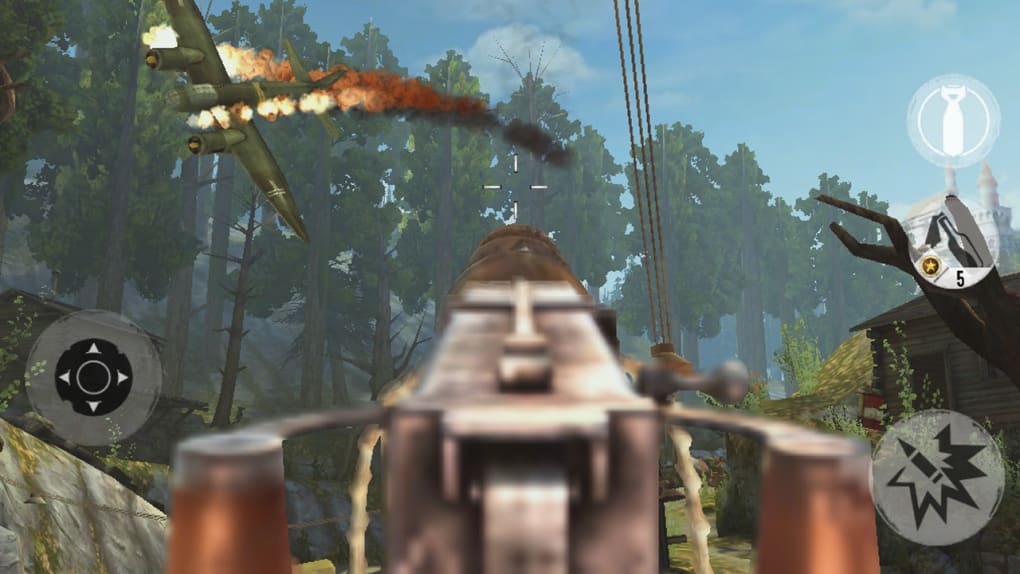
Raid missions offer a slight variation to this formula. Although many retain the linear structure of the campaign levels, some force the player to hold a defensive position, repelling waves of enemies from multiple angles. This introduces a degree of strategic maneuvering, demanding players to reposition themselves to maintain cover and effectively target opponents approaching from different flanks. However, this variation remains limited, and the underlying linear progression persists.
The Impact of Free-to-Play Mechanics
Brothers in Arms 3 employs a free-to-play model that significantly impacts the gameplay experience. The game restricts the player’s ability to engage in missions using an “energy” system, with each mission costing a certain amount of energy. This energy regenerates slowly over time, but players can also purchase additional energy using in-app purchases. While this system didn’t significantly hinder shorter play sessions, it significantly impacted the enjoyment of longer gaming periods.
Further exacerbating the free-to-play aspects are limitations on weaponry and upgrades. Players will find themselves needing specific ammunition types, such as rockets, or needing to upgrade under-leveled weapons to progress. While initial upgrades are readily available through normal gameplay, the acquisition of further upgrades frequently necessitates either grinding through repetitive levels or resorting to in-app purchases. This creates a frustrating cycle of gameplay that detracts from the overall experience. The pressure to spend money to continue progression undermines the otherwise engaging core mechanics.
Intuitive Controls and Effective Cover System
Despite its limitations, Brothers in Arms 3 deserves credit for its successful adaptation of shooter controls to the touchscreen interface. The left side of the screen handles movement, while the right controls aiming and firing. The placement of the player’s finger on the right side of the screen determines the firing mode; a tap allows for automatic fire while aiming, whereas a hold allows for precise, aimed shots. This dual system enhances the strategic depth of the game, allowing players to adapt their firing style according to the situation.
The game’s cover system is another notable success. When the player approaches cover, their soldier automatically takes cover, reducing the risk of damage from enemy fire. This feature provides moments of strategic breathing room, allowing players to carefully plan their next move and accurately target enemies without exposing themselves to unnecessary risks. The inclusion of this strategic element contrasts favorably with the more frantic, continuous shooting experienced in other mobile shooters, introducing a thoughtful layer to the otherwise action-packed gameplay.
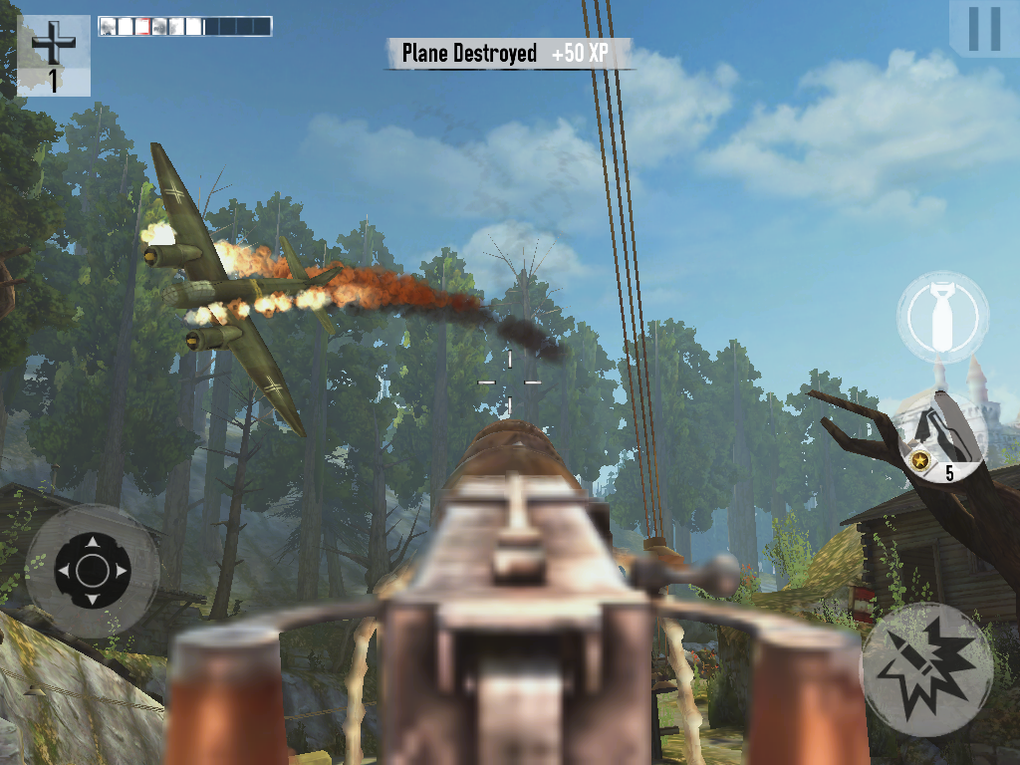
The game also seamlessly integrates special weaponry and context-sensitive actions through a system of on-screen icons. Weapons are conveniently displayed above the primary fire button, while other action icons appear above the relevant areas on the screen. This intuitive interface enhances the fluidity of the gameplay, particularly during intense firefights.
Visuals and Level Design
Brothers in Arms 3’s visuals present a mixed bag. Each level is well-designed and detailed, consistently changing scenery to keep the visuals fresh and engaging. The transition from villages to towns, forests to castles, maintains visual diversity and prevents the experience from becoming monotonous. However, a certain lack of “grit” detracts from the overall realism. The visuals, while clean and detailed, often lack the expected grime and realism one would anticipate from a World War II setting. The environments feel overly polished, lacking the textured realism and visual dirt that would enhance immersion.
This clean aesthetic, however, might be a necessary trade-off for mobile optimization. The frequent changes in location provide a constant stream of visually varied experiences that suit the bite-sized nature of the levels. While this might be appreciated during short bursts of gameplay, this constant shifting could prove less appealing during longer play sessions, when the game’s lack of visual texture might become more noticeable. This ultimately suggests the game is more enjoyable for shorter play sessions.
Conclusion: A Polished but Flawed Experience
Brothers in Arms 3: Sons of War offers a polished mobile shooter experience, characterized by its fluid controls, effective cover system, and visually diverse environments. The short, action-packed levels maintain a consistently high pace and prevent the game from becoming repetitive. However, the aggressive free-to-play implementation, particularly the energy system and the frequent need for in-app purchases, significantly detract from the overall enjoyment. The linear level design, while efficient for shorter sessions, lacks depth and strategic options, leading to a repetitive experience during extended gameplay. Ultimately, Brothers in Arms 3 is a fun, engaging game for short bursts of play; however, those seeking a deeper, more strategic experience might find its free-to-play mechanics and limited gameplay options frustrating. The polished presentation and intuitive controls are strong points, but the inherent limitations of the free-to-play model overshadow its potential.
File Information
- License: “Free”
- Version: “1.5.5a”
- Latest update: “March 23, 2024”
- Platform: “Android”
- OS: “Android 13.0”
- Language: “English”
- Downloads: “108.1K”
- Download Options: “Google Play”


