
Bubble.io has emerged as a prominent player in the no-code revolution, offering a powerful platform for building and deploying web applications without the need for traditional coding skills. This review delves into the functionalities, advantages, limitations, and overall user experience of Bubble.io, providing a comprehensive assessment of its capabilities and suitability for various user needs.
Ease of Use and Design Features
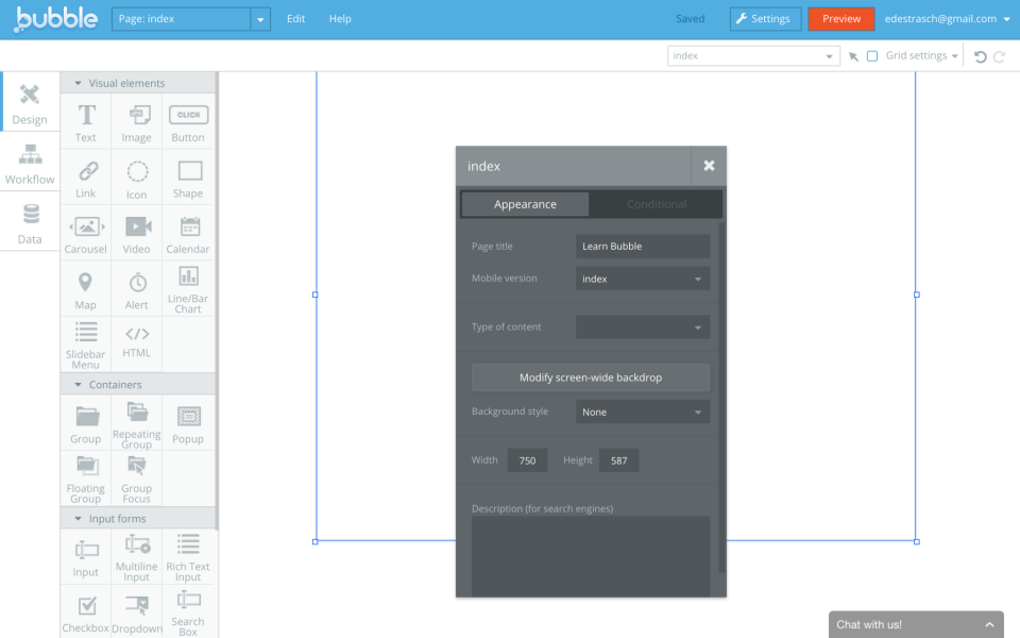
Bubble.io distinguishes itself through its intuitive, drag-and-drop interface. This visual development environment significantly lowers the barrier to entry for aspiring developers, enabling individuals with minimal or no coding experience to create functional web applications. The platform’s element tree provides a wide array of pre-built components, including text fields, images, videos, maps, and interactive elements. Users can seamlessly integrate these elements into their designs, customizing their appearance and behavior through a straightforward point-and-click process. This ease of use extends to the creation of complex interactions and workflows, allowing users to define data relationships, establish connections to external services, and manage user authentication without writing a single line of code.
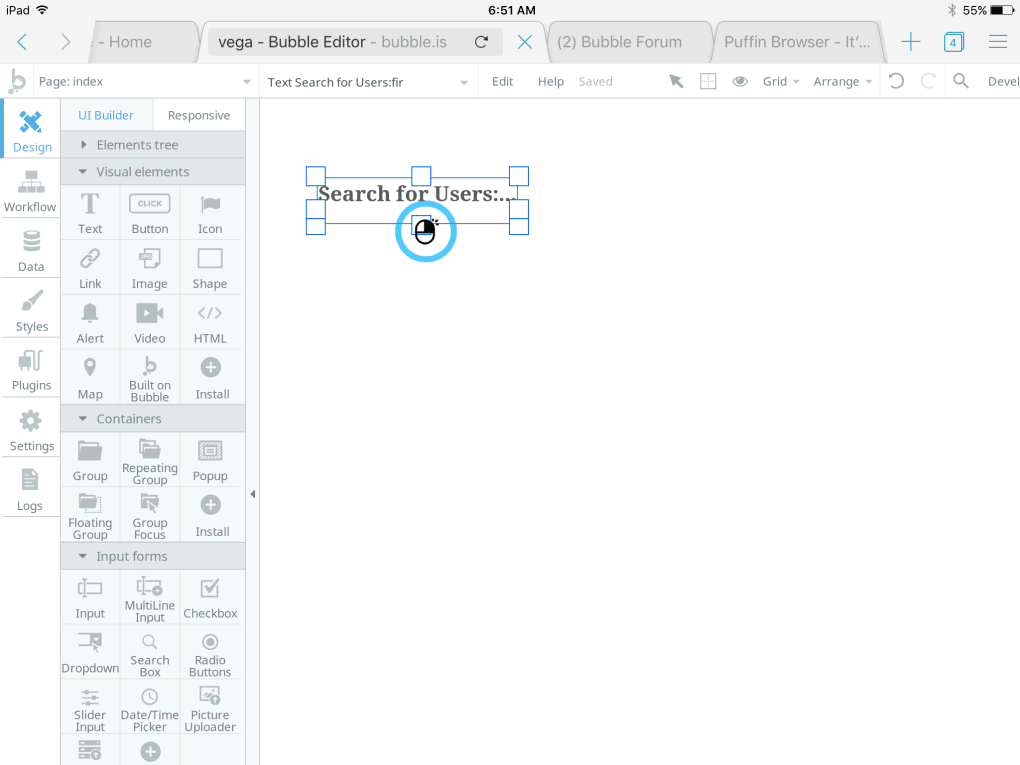
The platform’s design freedom is a significant advantage. Unlike many website builders that restrict customization to pre-defined templates, Bubble.io empowers users to create fully customized layouts and interfaces. This flexibility allows for the development of unique and original web applications, catering to specific design preferences and brand requirements. The mobile-responsive design capabilities ensure that applications adapt seamlessly across various devices and screen sizes, providing an optimal user experience across desktops, tablets, and smartphones. This contrasts sharply with traditional web development, where separate coding for different screen sizes is often required.
Bubble.io’s comprehensive design capabilities also extend to the management of user-generated content. The platform facilitates the integration of data from diverse sources, including popular services like Google, Facebook, and Stripe. This functionality enables the creation of dynamic and interactive applications capable of handling large amounts of user-generated data effectively. Moreover, Bubble.io allows for the creation of multi-user applications, supporting collaborative functionalities and complex user interactions.
Functionality and Capabilities
Beyond its ease of use and design features, Bubble.io boasts a robust set of functionalities that cater to diverse application development needs. The platform supports the integration of JavaScript plugins, extending its capabilities and allowing users to incorporate custom functionalities or integrate with third-party services that are not directly supported by the platform. This extensibility provides a level of customization that surpasses many other no-code platforms, allowing developers to bridge the gap between no-code simplicity and the power of custom-coded solutions.
Bubble.io takes care of deployment and hosting, eliminating the complexities associated with managing web servers and ensuring that applications are always accessible and available. The platform scales automatically, handling increased traffic and data storage without requiring manual intervention from the user. This scalability is a critical advantage, particularly for applications experiencing rapid growth, allowing them to handle increasing user bases and data volumes without performance degradation. Furthermore, security is paramount, with free, automatic SSL certificates ensuring secure connections and protecting user data.
One significant advantage of Bubble.io is its ability to handle various application types. While often used for simple websites and MVPs (Minimum Viable Products), the platform’s robust feature set enables the development of complex, data-driven applications. This flexibility extends to business applications, internal tools, and customer-facing platforms, showcasing the versatility of Bubble.io in handling a wide range of project requirements.
Limitations and Considerations
While Bubble.io offers significant advantages, it’s essential to acknowledge its limitations. Applications built using Bubble.io are often reported to be slower than those developed using traditional coding methods. This performance limitation can be attributed to the platform’s inherent architecture and the overhead associated with its visual development environment. While the platform strives for optimization, complex applications might experience performance bottlenecks that could impact the user experience.
Another key limitation is the user’s limited control over the underlying code. While users can customize the application’s functionality extensively, they lack direct access to the source code. This lack of direct code control can restrict advanced customization options or troubleshooting efforts in specific scenarios. While this limitation reduces development complexity for beginners, it can hinder experienced developers accustomed to fine-grained code manipulation.
Furthermore, Bubble.io does not currently support the development of native mobile applications. While applications built on the platform are mobile-responsive, they run within a web browser, not as native iOS or Android applications. This limitation might restrict the performance and capabilities of applications requiring access to device-specific functionalities. This distinction is important for users seeking optimal mobile performance or access to device features unavailable through a web browser.
Comparison with Alternative Platforms
Bubble.io competes with numerous other no-code and low-code platforms, each offering its own strengths and weaknesses. Platforms like Webflow focus heavily on website design and aesthetics, offering a streamlined process for creating visually appealing websites but with potentially fewer functionalities for complex applications. Other platforms, such as Softr, provide integration with specific data sources or services, while some specialize in creating specific application types, such as e-commerce platforms or membership sites.
The choice of platform depends significantly on the project requirements and the developer’s skill set. Bubble.io shines in its versatility and powerful feature set, providing a strong foundation for a diverse range of applications. However, platforms that emphasize visual design or specialize in specific application types might be more suitable for simpler projects or specific needs. The decision-making process should involve a careful evaluation of each platform’s capabilities, limitations, and overall suitability for the intended application.
Conclusion
Bubble.io presents a compelling alternative to traditional web development, offering a powerful yet accessible platform for building web applications. Its intuitive drag-and-drop interface, coupled with a comprehensive set of features and functionalities, empowers individuals with minimal coding experience to develop functional and visually appealing web applications. However, potential users should be aware of its limitations, including performance considerations and the lack of direct code control. The platform’s suitability depends largely on the project scope and the user’s technical expertise. For those seeking a balance between ease of use and extensive functionalities, Bubble.io remains a strong contender in the no-code development landscape. Ultimately, the decision to utilize Bubble.io hinges on a careful weighing of its advantages and disadvantages against the specific needs and constraints of the project.
File Information
- License: “Free”
- Version: “1.0”
- Latest update: “July 15, 2022”
- Platform: “Windows”
- OS: “Windows 10”
- Language: “English”
- Downloads: “6.4K”


