
In the rapidly evolving landscape of music production, digital audio workstations (DAWs) have become indispensable tools for both aspiring and seasoned musicians. Among the pantheon of powerful DAWs, Cakewalk SONAR has carved out a distinct and respected niche. Designed to bridge the gap between creative inspiration and professional-grade sonic realization, SONAR offers an extensive suite of features that empower users to compose, record, mix, and master music with unparalleled control and fidelity. Whether you’re an amateur experimenting with new sounds or a professional aiming for a chart-topping production, SONAR presents an ecosystem ripe with possibilities, constantly evolving to meet the demands of modern music creation.
The Evolution of Music Production with Cakewalk SONAR
The journey of music production has transformed dramatically, moving from analogue studios with racks of expensive hardware to the digital realm where a single computer can house an entire virtual studio. Cakewalk, a company with a rich history in music software development, has been at the forefront of this revolution, consistently pushing the boundaries of what’s possible within a DAW. SONAR, their flagship product, embodies this spirit of innovation, providing a comprehensive environment that adapts to diverse musical styles and production workflows.
At its core, a digital audio workstation like SONAR serves as the central hub for all music-related activities on a computer. It allows users to record audio from microphones or instruments, sequence MIDI data for virtual instruments, arrange musical parts, apply a vast array of effects, and ultimately mix and master tracks into a polished final product. SONAR’s appeal lies in its ability to offer this extensive functionality in a package that, while deep and complex, is also logically structured for those willing to dedicate the time to master it.
The accessibility model for SONAR is also designed with flexibility in mind. Rather than a prohibitive upfront cost, Cakewalk SONAR has offered various levels of membership and subscription options, making it more attainable for a wider audience. This subscription model ensures that users always have access to the most current version of the software, receiving ongoing updates and upgrades that introduce new features, improve performance, and maintain compatibility with the latest operating systems and hardware. This continuous development cycle is a significant advantage, preventing the software from becoming outdated and ensuring that your creative toolkit is always at its peak.
Diving Deep into SONAR’s Serious Capabilities
Cakewalk SONAR is not a casual music application you can pick up and master in an afternoon. It is unequivocally “serious software,” built for individuals who are committed to delving into the intricacies of music production. This commitment is rewarded with a depth of functionality that rivals any other professional DAW on the market. The interface itself is a testament to its professional aspirations, meticulously designed to emulate the familiar and tactile experience of an analogue recording console. Users are greeted with a visual array of virtual faders, switches, and classic swinging needle displays, all contributing to an intuitive yet powerful control surface that feels both modern and rooted in traditional studio aesthetics. This blend of old and new helps veteran engineers feel at home, while providing a clear, understandable visual language for newcomers.
A Universe of Sound: Virtual Instruments and Effects
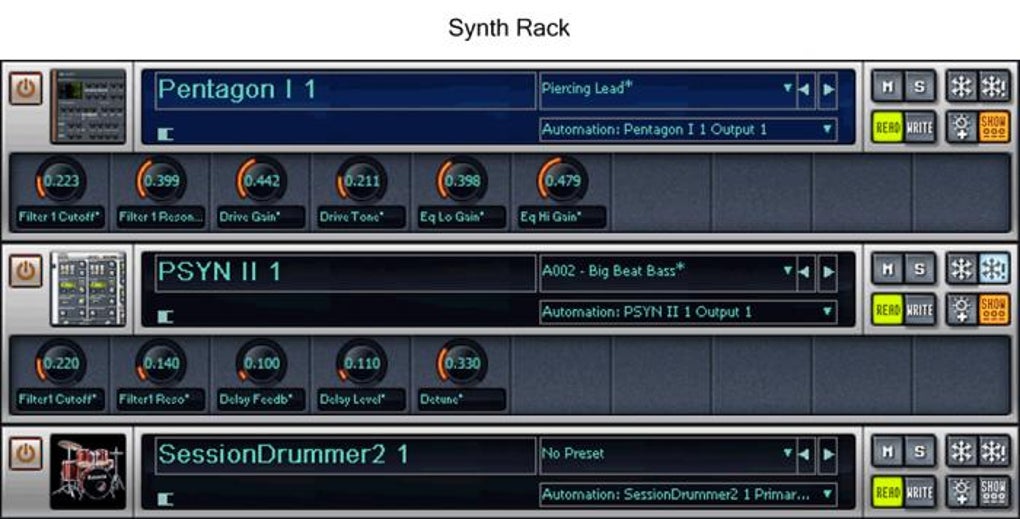
One of SONAR’s most compelling features is its extensive library of virtual instruments. These aren’t just simple presets; they are sophisticated software emulations of real-world instruments and innovative synthesizers that enable users to construct entire musical compositions from the ground up. Imagine having access to a full orchestra, a vintage synth collection, a powerful drum machine, and a versatile sampler, all within your computer. SONAR provides this, allowing for limitless creative expression without the need for expensive external hardware. From lush pads and aggressive bass lines to intricate drum patterns and realistic piano melodies, the virtual instruments in SONAR provide the foundational elements for any musical genre.
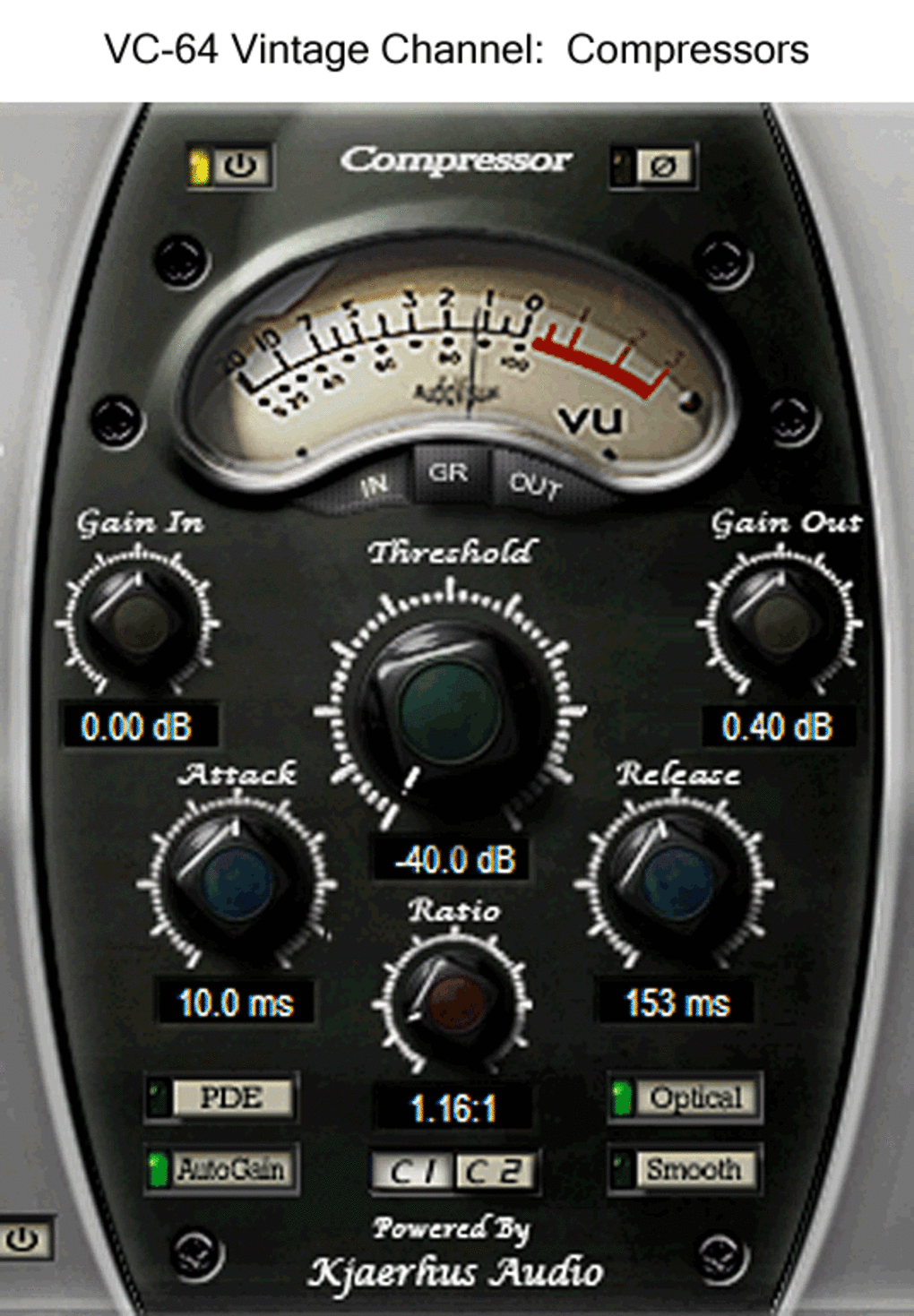
Complementing this rich array of instruments is a comprehensive range of effects. These digital signal processors are crucial for shaping and transforming the raw sounds of instruments and vocals, adding depth, space, and character to a mix. SONAR offers everything from fundamental tools like equalizers (EQs) and compressors that shape frequency and dynamics, to time-based effects such as reverbs and delays that create atmospheric spaces, and modulation effects like chorus and flanger that add movement and texture. Each effect typically comes with a wealth of customizable parameters, giving musicians total control over the sonic landscape of their productions. This allows for meticulous sound design, enabling artists to craft unique sonic identities for their tracks.
Total Control Over the Production Workflow
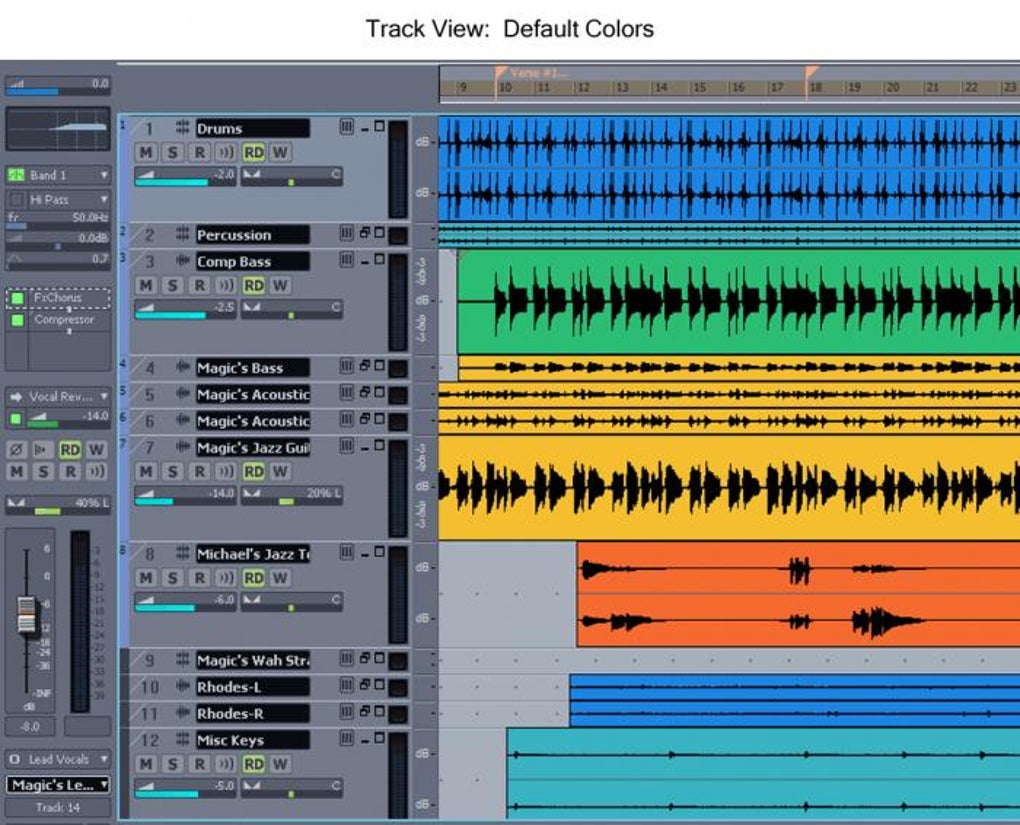
Cakewalk SONAR prides itself on offering musicians “total control over the recording, mixing, and production of their music.” This assertion is backed by a robust feature set that covers every stage of the audio production pipeline:
- Recording: SONAR offers state-of-the-art multi-track recording capabilities for both audio and MIDI. Musicians can capture performances from microphones, line inputs, or MIDI controllers with pristine clarity. Advanced features like low-latency monitoring ensure a smooth recording experience, while punch-in/punch-out recording and loop recording simplify the process of capturing perfect takes. The ability to record multiple tracks simultaneously, each with its own input and settings, makes it ideal for capturing live band sessions or complex instrumental arrangements.
- Editing and Arranging: Once recorded, SONAR provides powerful tools for editing and arranging. Audio clips can be precisely trimmed, stretched, quantized, and manipulated, while MIDI data can be edited note by note in a piano roll editor, allowing for detailed adjustments to timing, velocity, and expression. The intuitive timeline allows users to easily arrange clips, create song structures, and experiment with different musical ideas, seamlessly transitioning from composing to arranging.
- Mixing: The mixing stage is where individual tracks are balanced and blended into a cohesive whole. SONAR’s virtual mixer is equipped with a professional-grade channel strip for every track, offering EQ, compression, gates, and sends for auxiliary effects. Flexible routing options allow for complex signal flows, sub-mixing, and bus processing. Crucially, SONAR features comprehensive automation capabilities, allowing users to draw in changes to volume, pan, effects parameters, and more over time, adding dynamic movement and polish to their mixes.
- Mastering: The final stage of production, mastering, involves optimizing the mixed track for playback across various systems. SONAR includes tools suitable for this critical phase, such as mastering EQs, multi-band compressors, and limiters. These tools help achieve competitive loudness, improve overall clarity, and ensure the music translates well to different listening environments, delivering a professional-grade final product.
The continuous development and update cycle, especially for subscribers, mean that SONAR is not a static piece of software. It consistently evolves, incorporating user feedback, new technological advancements, and compatibility improvements. This commitment ensures that users always have access to a cutting-edge music production platform.
Key Features and Technological Advantages
Cakewalk SONAR’s reputation as a serious music production tool is cemented by its suite of advanced features and underlying technological prowess. These elements combine to deliver a powerful, flexible, and high-fidelity experience for its users.
The Power of the 64-bit Mix Engine
One of the standout technological achievements highlighted in SONAR is its “64-bit double precision mix engine.” This is not merely a technical specification; it has profound implications for the audio quality and dynamic range of your productions. In simple terms, a 64-bit engine processes audio with significantly more precision than older 32-bit systems. This increased precision translates into greater headroom, meaning you can push your mixes further without introducing digital clipping or unwanted distortion. It also results in a lower noise floor, clearer transients, and a more accurate representation of your audio, especially during complex signal processing and summation of multiple tracks. For serious audio engineers and producers, this means a pristine sonic foundation that preserves the integrity of their music, allowing for mixes with exceptional clarity and depth.
Active Controller Technology (ACT)
Modern music production often involves a tactile workflow, with musicians preferring physical faders, knobs, and pads over mouse clicks. SONAR addresses this with its groundbreaking “Active Controller Technology (ACT).” ACT fundamentally “changes the way you work with instruments forever” by providing intelligent, automatic mapping of hardware controllers to software parameters. Instead of manually assigning every knob and fader, ACT dynamically maps your controller to whatever parameter is currently in focus, whether it’s a virtual instrument’s cutoff frequency, an effect’s wet/dry mix, or a track’s volume. This seamless integration allows for hands-on control and immediate feedback, dramatically enhancing workflow efficiency and encouraging more expressive, performance-oriented interactions with the software. It bridges the gap between the physical and virtual studio, making the creative process more fluid and intuitive.
AudioSnap: Perfect Timing, Every Time
Achieving tight, professional-sounding rhythm can be one of the biggest challenges in music production, especially when dealing with live recordings. SONAR’s “AudioSnap feature set” is designed to “tighten up your entire band” by offering powerful audio timing and tempo manipulation capabilities. AudioSnap can detect the individual transients and beats within an audio recording and allow users to non-destructively quantize, shift, and adjust the timing of these elements. This means you can correct sloppy takes, align multiple instruments to a grid, or even change the tempo of an entire song without re-recording. For drummers, guitarists, and vocalists, AudioSnap is an invaluable tool for ensuring that every performance sits perfectly in the groove, delivering a polished and professional sound.
VC-64 Vintage Channel: Adding Character and Warmth
Beyond its robust core functionality, SONAR also offers specialized tools designed to impart specific sonic characteristics. The “VC-64 Vintage Channel” is an example of this, providing users with a professional-grade channel strip emulation that infuses recordings with the desirable warmth, punch, and character often associated with classic analogue hardware. Such emulations are critical for producers who want to move beyond sterile digital perfection and add a touch of sonic personality to their tracks. The VC-64, with its carefully modeled compression, EQ, and saturation stages, allows users to sculpt sounds with a vintage flavour, enhancing the overall richness and presence of their mixes.
Unparalleled Compatibility and Versatility
SONAR’s “excellent compatibility” ensures that it integrates seamlessly into almost any studio setup. It supports a wide range of audio interfaces, MIDI controllers, and third-party plugins (VST, VST3, DX), allowing users to leverage their existing hardware and software investments. This open-ended approach means that SONAR can serve as the central hub for a vast ecosystem of creative tools.
Furthermore, its “versatility across different musical styles” is a key strength. Whether you’re producing electronic dance music, composing orchestral scores, mixing rock anthems, engineering hip-hop beats, or crafting intricate soundscapes for film, SONAR provides the necessary tools. Its adaptable interface, diverse instrument library, and comprehensive effects arsenal make it suitable for a multitude of genres and creative pursuits, truly making it a DAW for all seasons.
Is Cakewalk SONAR the Right DAW for You?
When considering a major investment in music production software, it’s essential to weigh the benefits against any potential drawbacks. For those contemplating Cakewalk SONAR, the primary considerations revolve around its complexity and your commitment to learning a powerful, professional-grade tool.
The Learning Curve: A Double-Edged Sword
One of the frequently cited “cons” of Cakewalk SONAR is its complexity. The initial impression is that it is “Very complex - useful for serious musicians only.” While this statement holds a degree of truth, it’s more accurately described as having a steep learning curve. SONAR’s immense depth and breadth of features mean that it requires a significant time investment to truly master. For casual users who want to quickly lay down simple ideas, it might feel overwhelming. However, for those who are “serious musicians” – whether professional or dedicated hobbyists – this complexity is not a barrier but an invitation to explore a universe of possibilities.
The commitment required to learn SONAR is akin to learning a musical instrument; it takes practice, patience, and persistence. Fortunately, there are ample resources available, including official documentation, community forums, and numerous online tutorials, to guide users through its intricacies. The reward for this investment is access to a comprehensive and powerful toolset that allows for virtually limitless creative expression and professional-grade output.
A Comprehensive Package for the Dedicated
For those willing to embrace its learning curve, Cakewalk SONAR undeniably offers “a comprehensive package of features and capabilities.” Its versatility and expansive range of instruments and functions make it “well worth investigating.” Let’s summarize the key advantages and considerations:
Pros:
- Powerful 64-bit Mix Engine: Delivers pristine audio quality, exceptional dynamic range, and superior processing precision, ensuring your mixes sound professional and clear.
- Excellent Compatibility: Supports a wide array of hardware (audio interfaces, MIDI controllers) and software (VST, VST3, DX plugins), integrating seamlessly into existing studio setups.
- Versatile Across Different Musical Styles: Its rich feature set caters to virtually any musical genre, from electronic and rock to orchestral and hip-hop, making it a flexible choice for diverse producers.
- Extensive Suite of Instruments and Effects: Provides a vast library of virtual instruments and a comprehensive range of high-quality audio effects for sound design, mixing, and mastering.
- Advanced Workflow Tools: Features like Active Controller Technology (ACT) and AudioSnap significantly enhance workflow efficiency, provide tactile control, and ensure precise timing.
- Continuous Updates and Upgrades: A subscription model ensures users always have the latest version, benefiting from new features, performance improvements, and ongoing support.
- Total Control: Offers granular control over every aspect of recording, editing, mixing, and production.
Cons:
- Steep Learning Curve: Its extensive feature set can be daunting for absolute beginners, requiring a dedicated effort to learn and master.
- Time Investment Required: To fully harness its power, users must commit significant time to understanding its various functionalities and workflows.
- Subscription Model: While offering continuous updates, the ongoing subscription cost might not appeal to all users who prefer a one-time perpetual license.
Who is Cakewalk SONAR For?
Cakewalk SONAR is ideally suited for:
- Professional Producers and Engineers: Its advanced features, 64-bit engine, and comprehensive toolset meet the rigorous demands of professional audio production.
- Serious Hobbyists and Aspiring Professionals: Individuals deeply passionate about music production who are willing to invest the time to learn a powerful DAW will find SONAR incredibly rewarding.
- Composers and Sound Designers: The vast array of virtual instruments and effects, combined with robust MIDI capabilities, make it an excellent choice for creating intricate musical scores and soundscapes.
Ultimately, Cakewalk SONAR stands as a testament to sophisticated music production software. It’s a platform designed to take you from initial inspiration to a polished masterpiece, providing the professional tools and an inspiring canvas that adapts to your unique style of music creation. For musicians seeking a powerful, versatile, and constantly evolving digital audio workstation, SONAR remains a compelling choice that promises to elevate their music-producing skills. Its depth may demand patience, but its capabilities offer boundless creative potential, making it a worthy centerpiece for any serious music studio.
File Information
- License: “Trial version”
- Latest update: “April 10, 2025”
- Platform: “Windows”
- OS: “Windows 98 SE”
- Language: “English”
- Downloads: “264.7K”
- Size: “354.62 MB”


