
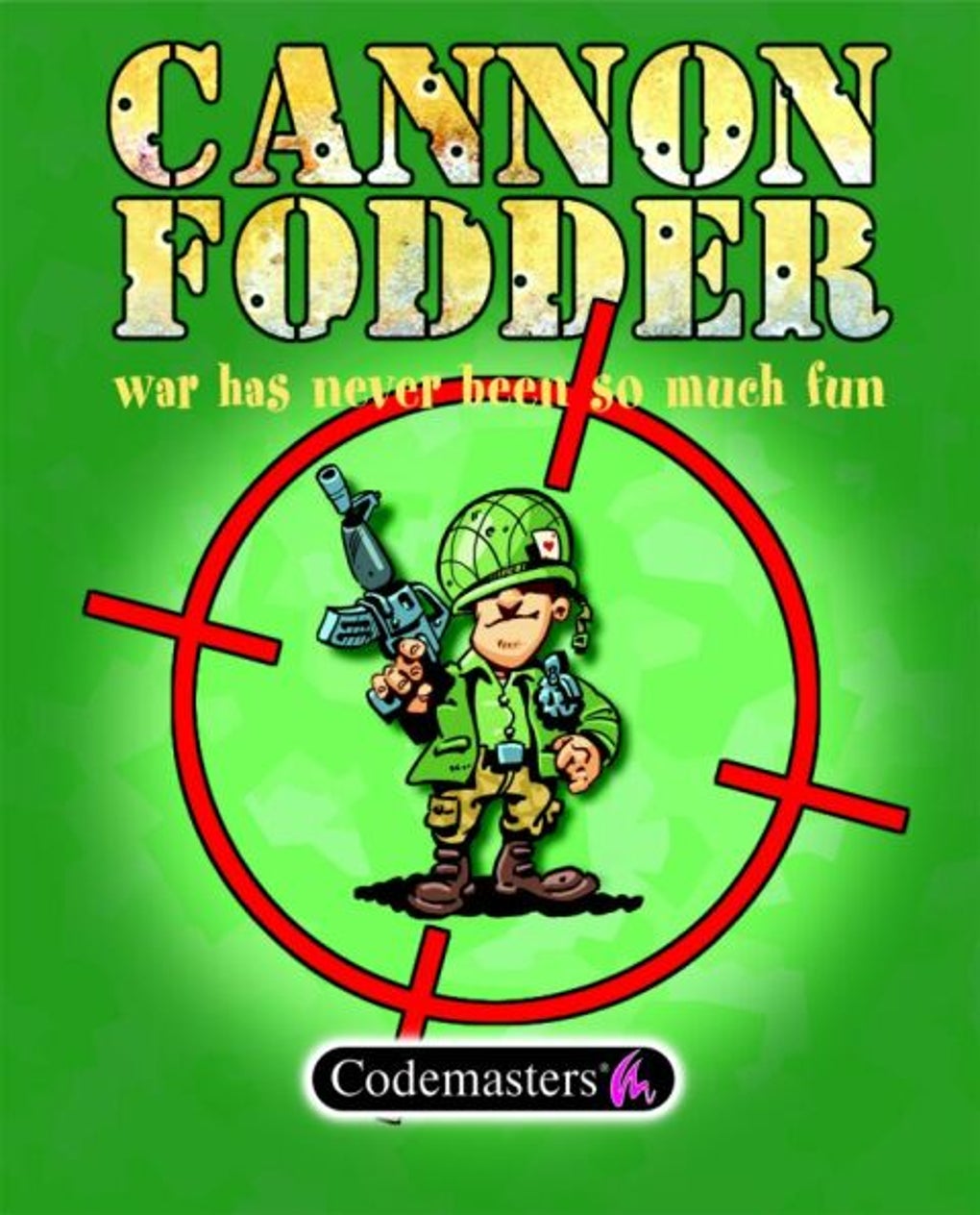
In the vast and ever-evolving landscape of video games, certain titles transcend their initial release to etch themselves into the annals of gaming history as true classics. One such gem is “Cannon Fodder,” a game that, despite its seemingly simple premise, captivated players with its darkly humorous take on war, ingenious level design, and surprisingly deep strategic layers. Released by Codemasters in 1993, this real-time strategy (RTS) title wasn’t just another game; it was a poignant, often satirical commentary on the expendability of soldiers, wrapped in an addictive, top-down arcade-style package.
At its core, “Cannon Fodder” challenged players to lead a small, ever-dwindling squad of “little men” through perilous, enemy-infested landscapes. The name itself, “Cannon Fodder,” hints at the game’s central, stark reality: soldiers are often sacrificed for the greater objective, and individual lives, while cherished by the player, are ultimately statistics in the brutal calculus of war. Yet, through its engaging gameplay and memorable characters, it managed to foster a unique connection between the player and their pixelated troops, making every loss a tangible setback and every survivor a hard-won victory. This blend of accessibility, challenge, and understated profundity ensured “Cannon Fodder” secured its place as a beloved, multi-platform classic, remembered fondly by generations of gamers.
The Genesis of a Cult Classic: More Than Just “Cannon Fodder”
When “Cannon Fodder” first burst onto the scene in the early 1990s, it defied easy categorization. While it shared elements with burgeoning real-time strategy games, its distinctive top-down perspective, direct control, and darkly satirical tone set it apart. Developed by Sensible Software and published by Codemasters, the game quickly garnered critical acclaim for its innovative approach and engaging gameplay, cementing its status as a cult classic that continues to resonate with players decades later.
A Simple Premise, Profound Strategy
The core premise of “Cannon Fodder” is disarmingly straightforward: players command a group of small, intrepid soldiers, aptly referred to as “little men,” across a variety of diverse and dangerous environments. The objective is equally direct – seek out and eliminate other “little men” (the enemy) using an array of firearms and explosives. What begins as a seemingly simple run-and-gun affair quickly evolves into a masterclass in tactical decision-making.
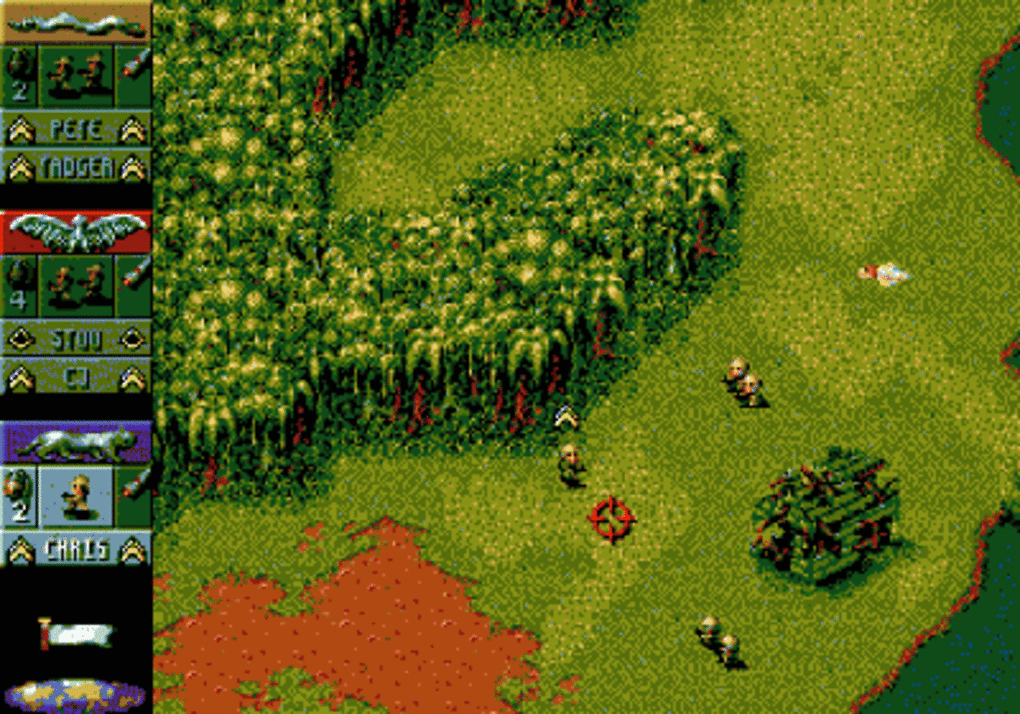
Players typically start with a small squad, guiding them with intuitive mouse controls. Left-clicking moves the soldiers, while right-clicking fires their weapons. Grenades and rockets, when available, add another layer of explosive strategy. However, the simplicity of the controls belies the complexity of the challenges. Each mission presents unique terrain, enemy placements, and objectives, forcing players to think strategically about positioning, target prioritization, and resource management. Traversing dense jungles, icy tundras, or arid deserts, soldiers must navigate minefields, avoid booby traps, and contend with enemy infantry, vehicles, and turrets.
The game’s genius lies in making every single soldier count. Unlike many RTS games where units are mass-produced and expendable, “Cannon Fodder” imbues each of your “little men” with a sense of identity, albeit a temporary one. They are not merely anonymous drones; they are individuals, and their survival is paramount. This creates a compelling dynamic where careful planning and execution are rewarded, while reckless abandon often leads to tragic consequences for your squad. The profound strategy emerges from this simple loop: assess, execute, adapt, and protect your limited resources – your soldiers.
The Distinctive Charm of Ingenious Design
What truly elevates “Cannon Fodder” above its contemporaries is its ingenious level design and delightful attention to detail. Every mission feels meticulously crafted, offering a fresh tactical puzzle to solve. The environments are varied and interactable, with destructible elements and strategic choke points. Rivers can be crossed, trees provide cover, and buildings can be entered for shelter or tactical advantage. This environmental richness ensures that no two missions feel exactly alike, demanding constant adaptation from the player.
Beyond the gameplay mechanics, “Cannon Fodder” distinguished itself with its unique brand of dark humor and satirical undertones. The game’s opening screen famously features a small hill with a long queue of new recruits marching towards it, only to be replaced by gravestones after each mission. This stark visual, accompanied by the iconic “War! Never been so much fun!” theme song, perfectly encapsulated the game’s ironic commentary on the futility and cost of war, even while making it an engaging and fun experience. The names of your soldiers, randomly generated and occasionally amusing, further added to this sense of character and disposable individuality.
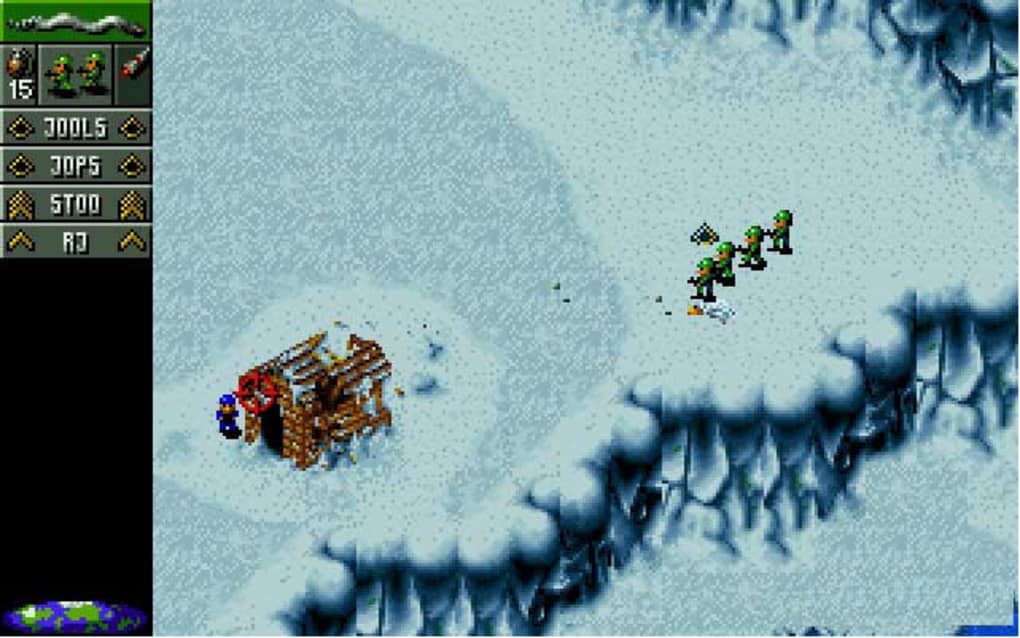
While modern-day equivalents in the real-time strategy genre abound, offering high-fidelity graphics and complex economic systems, very few can truly match “Cannon Fodder’s” blend of tight, responsive gameplay, profound strategic depth derived from simple mechanics, and its delightfully sharp, often subversive, humor. Its pixelated charm and straightforward interface allowed the ingenious level design and clever gameplay mechanics to shine through, creating an experience that remains as compelling and thought-provoking today as it was upon its original release. This focus on core design over graphical prowess is a testament to its enduring quality and why it continues to be celebrated as a benchmark in video game design.
Navigating the Battlefield: Gameplay Mechanics and Strategic Depth
“Cannon Fodder” is a masterclass in elegant game design, proving that sophisticated gameplay doesn’t require complex control schemes or intricate UI. Its mechanics are intuitive, allowing players to instantly grasp the fundamentals, yet offer surprising depth for those who delve into its tactical nuances. The game’s distinctive approach to unit management and mission progression is a significant part of its enduring appeal, fostering a unique connection between the player and their digital army.
Leading Your Motley Crew
At the heart of “Cannon Fodder” is the player’s direct control over a small squad of soldiers. Using a simple point-and-click interface, players guide their “motley crew” across the battlefield. Moving the mouse cursor dictates the squad’s direction, and a left-click sends them marching. Weapons fire with a right-click, typically directed at the cursor’s position, allowing for precise aiming even against moving targets. This direct control system, revolutionary for its time, allowed for immediate tactical responses, a crucial element in the fast-paced, often frantic skirmishes.
The squad itself typically comprises 1 to 4 soldiers, and maintaining their numbers is paramount. Each soldier, initially a nameless recruit, earns a personal identity and a rank upon surviving their first mission. This seemingly small detail creates a powerful emotional investment for the player. These aren’t just generic units; they are “Jools,” “Lindy,” or “Wally,” soldiers who have faced death and emerged victorious. As they accumulate kills, their rank increases, adding a layer of progression and further reinforcing their individual value. Losing a high-ranking soldier feels far more impactful than losing a fresh recruit, adding weight to every tactical decision.
The control scheme also allows for splitting the squad. By holding down a specific key, players can separate one soldier from the main group, allowing for advanced tactics like scouting ahead, flanking maneuvers, or setting up ambushes. This adds significant strategic depth, transforming simple movement and shooting into a rich tactical sandbox where coordination and foresight are key to survival. The limited number of soldiers, their individual progression, and the precise control system combine to make every life precious and every mission a high-stakes endeavor.
The Art of Survival: Missions and Challenges
“Cannon Fodder” is structured around a series of missions, each progressively more challenging and diverse. The game doesn’t just throw endless waves of enemies at the player; it presents carefully designed scenarios that demand creative strategies to boost your chances of winning. From rescuing hostages and destroying enemy installations to navigating complex mazes and confronting powerful bosses, the variety of objectives keeps the gameplay fresh and engaging.
The landscapes themselves are integral to the challenge. Soldiers must traverse a wide array of environments, including lush jungles with hidden snipers, icy plains where movement is hampered, desert outposts with entrenched defenses, and even futuristic bunkers. Each environment introduces unique hazards and tactical considerations. For instance, dense foliage might conceal enemies but also provides cover for your own troops, while open plains demand swift movement and precise targeting to avoid being cut down.
Crucially, the game implements a brutal but fair permadeath system. If a soldier falls in battle, they are gone for good, and their name is added to the growing list of casualties on the game’s iconic gravestone screen. The remaining survivors, however, carry over to the next mission. This mechanic, simple yet profound, elevates the stakes of every encounter. Players aren’t just fighting for a mission objective; they’re fighting to preserve the lives of their hardened veterans, those “little men” who have seen it all. This ongoing narrative of survival, coupled with the varied and ingeniously designed missions, creates an addictive loop where players constantly strive to improve their tactics, minimize casualties, and lead their motley crew to victory against overwhelming odds. The game truly makes you feel the weight of command, making every hard-won survival a testament to your strategic prowess.
A Journey Through Time: Cannon Fodder’s Enduring Appeal and Technical Legacy
“Cannon Fodder’s” journey through gaming history is as captivating as its gameplay. From its groundbreaking initial release to its later status as beloved abandonware and eventual digital preservation, the game represents a fascinating case study in how classics endure and adapt. Its technical specifications, while humble by modern standards, were expertly leveraged to create an immersive and strategically rich experience that captivated players across various platforms.
From Abandonware to Digital Preservation
“Cannon Fodder” was first introduced to the world in 1993, making waves across multiple platforms, including the Amiga, Atari ST, and eventually PC (DOS and Windows 95). Its initial commercial success was significant, praised for its innovative blend of strategy and action. However, as technology advanced and gaming landscapes shifted, the original versions became harder to find and run on modern operating systems. By the mid-2000s, the game had largely entered the realm of “abandonware”—software that is no longer officially supported or sold by its copyright holder, often making it available for free download by enthusiasts. PhanMemFree.org, for instance, noted its addition to their catalog in 2006, highlighting its status as abandonware and tracking its significant download numbers, with 117,458 downloads since its inclusion.
This period of abandonware, while reflecting a lack of official support, paradoxically kept the game alive through community efforts. Fans sought out and shared copies, often wrestling with emulation software like DOSBox to get it running on contemporary machines. This dedication underscored the game’s deep impact and enduring appeal. Recognizing this cult following and the demand for accessible classics, services like GOG.com (Good Old Games) later licensed and re-released “Cannon Fodder” as a DRM-free, officially supported title. This move shifted it from a gray-area abandonware status to legitimate digital preservation, allowing new generations of players to experience the game without the technical hurdles of its earlier versions. This transition from abandonware to a commercially available, legally supported title is a testament to its lasting legacy and the power of its community.
Technical Specifications and System Requirements
For its time, “Cannon Fodder” was a lean and efficient piece of software. The version typically found on platforms like PhanMemFree.org is listed with an approximate size of 2.94 MB. This minuscule footprint is remarkable, especially when compared to today’s multi-gigabyte titles. The game was initially designed for operating systems like Windows 95 and prior versions, reflecting the computing environment of the early to mid-1990s. While PhanMemFree.org lists a last update for the abandonware version on 4/24/2006, and “App specs” sometimes show a later date like February 8, 2017 (likely for the listing details rather than the game itself), the core game code remained that of its original development by Codemasters.
Running “Cannon Fodder” on modern Windows operating systems (like Windows 7 and beyond) often presents compatibility challenges. Users frequently reported issues with sound or display. As one user review on PhanMemFree.org from 2012 pointed out, getting it to work on Windows 7 often required manual intervention through DOSBox, including changing sound effects settings from “soundblaster” to “adlib” during installation within the emulated environment. This need for specific technical tweaks highlights the gap between older software design and modern hardware/OS architectures.
Despite these technical quirks, the game’s modest requirements and efficient coding meant it was accessible to a broad audience, running smoothly on the relatively limited hardware of the era. Its English language support made it globally accessible, with PhanMemFree.org’s download statistics showing strong popularity in countries like the United Kingdom, Turkey, and Australia. The game’s success wasn’t due to cutting-edge graphics or elaborate engines, but rather its masterful optimization of available resources to deliver a compelling and memorable gameplay experience, proving that innovative design and engaging mechanics often triumph over raw technical power.
Critical Reception and Community Impact
Upon its release, “Cannon Fodder” was met with widespread critical acclaim, lauded for its innovative gameplay, satirical humor, and surprisingly deep tactical elements. This initial positive reception evolved into a lasting legacy, with the game earning a special place in the hearts of gamers and influencing subsequent titles in the strategy genre. Its community impact, visible through user reviews and enduring nostalgia, speaks volumes about its quality and timeless appeal.
User Reviews: Praise for Humor and Challenge
PhanMemFree.org’s user reviews section for “Cannon Fodder” paints a vivid picture of its enduring popularity and the specific aspects that resonated with players. The average rating of 3.9 out of 5 stars from numerous reviews reflects a strong positive sentiment, especially considering its age and technical challenges on newer systems.
A common theme in these reviews is the game’s “Great humour.” Players consistently highlight the dark comedic undertones, the ironic “War! Never been so much fun!” tagline, and the grim but amusing gravestone tally as key elements that made the game unique and memorable. This humor, often contrasting sharply with the brutal realities of war depicted, created a distinctive tone that few games have managed to replicate.
Another frequently praised aspect is its accessibility combined with its depth: “easy to play, hard to master.” This perfectly encapsulates “Cannon Fodder’s” design philosophy. The simple point-and-click interface makes it immediately approachable for new players, but the nuanced level design, unpredictable enemy AI, and the constant threat of permadeath ensure a steep but rewarding learning curve. Players are continually challenged to refine their tactics, optimize their squad movements, and strategically deploy their limited resources (soldiers, grenades, rockets) to overcome increasingly difficult missions. This balance between approachability and strategic complexity is a hallmark of truly classic games.
Reviewers also describe it as a “Great game” and “a pillar of gaming history,” emphasizing its status as a foundational title. Many recall playing it on older platforms like the Amiga, underscoring its broad appeal across different systems. While some acknowledged that graphics might not hold up to modern standards (“Sprites seem very unclear”), the core fun and strategic depth remained undeniable. Even those who encountered technical difficulties acknowledged its inherent quality, wishing they could easily play it again. The consensus among users is clear: “Cannon Fodder” was a breakthrough title, still fun, and holds a cherished place in their gaming memories.
A Lasting Influence on Strategy Gaming
“Cannon Fodder’s” status as a “breakthrough” game is not an exaggeration. It successfully blended elements of arcade action with strategic depth in a way that few games had before. While it predated the mainstream explosion of real-time strategy games like “Command & Conquer” (which one reviewer jokingly compared it to, noting its distinctiveness), it certainly contributed to the evolution of the genre. Its direct unit control, emphasis on individual soldier lives, and objective-based missions laid groundwork that would be explored and expanded upon by future RTS titles.
The game’s satirical approach to war also left a mark. In an era when many war games aimed for realism or heroic narratives, “Cannon Fodder” dared to be cynical and darkly humorous. This unique tone influenced subsequent indie games and titles that sought to explore more unconventional themes within military contexts. The very concept of “cannon fodder”—expendable soldiers—became a central, tangible mechanic, creating a powerful emotional connection with the player’s squad that transcended simple resource management.
Even its spiritual successor, “Cannon Fodder 3,” available later on platforms like PhanMemFree.org, demonstrates the enduring pull of the original’s formula. While “Cannon Fodder 3” offered updated graphics and mechanics, it owed its existence and much of its design philosophy to the groundwork laid by the 1993 classic. The impact of “Cannon Fodder” can be seen in its ability to inspire not just direct sequels but also an entire generation of designers to think differently about what a strategy game could be. It proved that a game could be fun, challenging, humorous, and thought-provoking all at once, solidifying its place as a truly iconic and influential title in gaming history.
Why Cannon Fodder Still Resonates Today
Decades after its initial release, “Cannon Fodder” continues to capture the imagination of new players and evoke nostalgia in veterans. Its unique blend of simple mechanics, deep strategy, and poignant themes has allowed it to transcend technological advancements and remain a relevant and beloved title in the pantheon of classic video games. Its enduring appeal lies not just in its gameplay, but in the timeless human elements it subtly explores.
Beyond the Pixels: The Human Element
At its core, “Cannon Fodder” masterfully uses its gameplay to tell a story that resonates far “beyond the pixels.” The title itself, “Cannon Fodder,” is a direct and somewhat grim commentary on the expendability of soldiers in warfare. However, the game subverts this bleak premise by introducing a system where individual soldiers, initially anonymous recruits, gain identity and rank upon surviving missions. This personal touch fosters an unexpected emotional connection. Players aren’t just controlling generic units; they are commanding “Jools” and “Lindy,” soldiers who have faced certain death and returned.
This human element, even in its minimalist pixelated form, is what truly sets “Cannon Fodder” apart. Every casualty feels like a genuine loss, as their name is added to the solemn list on the “Graveyard” screen. This tangible consequence of failure creates a powerful incentive for careful, strategic play. It transforms the strategic challenge into a moral one, where the player constantly weighs the mission objective against the lives of their increasingly veteran squad. This psychological investment, where the player is simultaneously sending “little men” to their probable doom while desperately trying to preserve them, is a profound and often overlooked aspect of the game’s genius. It’s a subtle exploration of the costs of conflict, even when presented through a lens of dark humor.
Finding and Playing the Classic in the Modern Era
For those eager to experience “Cannon Fodder’s” timeless charm, the good news is that it’s more accessible than ever. While early abandonware versions, once widely available on sites like PhanMemFree.org, offered a way to play, they often came with the technical headache of setting up DOSBox and configuring sound and graphics for modern operating systems. As user reviews from PhanMemFree.org indicate, getting these versions to run smoothly on contemporary systems like Windows 7 or later could be a convoluted process involving specific software tweaks.
Thankfully, the game has been legally and officially re-released on digital storefronts such as GOG.com. These versions are typically optimized to run out-of-the-box on modern Windows operating systems, eliminating the need for complex emulation setups. This accessibility ensures that the strategic brilliance and satirical wit of “Cannon Fodder” can be enjoyed by a new generation of players without the technical barriers that once plagued its legacy. It’s a testament to the game’s enduring quality that developers have seen fit to preserve it, making it easy for anyone to dive into its unique blend of action, strategy, and dark humor.
“Cannon Fodder” is more than just a nostalgic trip; it’s a masterclass in game design that proves ingenuity, thoughtful mechanics, and a distinctive voice can create an experience that withstands the test of time. Whether you’re a veteran player revisiting a cherished memory or a newcomer discovering a classic for the first time, leading your “motley crew” into battle remains as engaging, challenging, and yes, profoundly fun, as it ever was. Its legacy is a reminder that some games, like the brave “little men” themselves, simply refuse to be forgotten.
File Information
- License: “Free”
- Version: “abandonware”
- Latest update: “February 8, 2017”
- Platform: “Windows”
- OS: “Windows 98”
- Language: “English”
- Downloads: “96.1K”
- Size: “2.94 MB”


