
In the bustling digital landscape of collaborative tools, Chirp emerged as a focused and efficient solution designed to streamline team and project status updates. Initially introduced around 2005, this shared dashboard software swiftly carved out a niche for itself, offering a straightforward approach to project management that resonated with users seeking simplicity and effectiveness. Developed by Plumcanary, Chirp was made available as a trial version across multiple platforms, including Windows, Mac, Android, and iPhone, underscoring its commitment to accessibility in an increasingly mobile world.
At its core, Chirp’s mission was to foster clearer communication and better oversight within teams. By providing a centralized hub where project statuses could be shared and monitored, it aimed to eliminate the fragmentation of information that often plagues collaborative efforts. Despite its light program footprint, Chirp found significant adoption, particularly noting heavy usage in regions like Kuwait, the United States, and Romania. This global reach, even for a program with a relatively early last update in 2006, speaks volumes about the universal demand for effective project coordination tools. As we delve deeper into Chirp, we’ll explore its features, its place within the broader software ecosystem, and the enduring legacy of such tools in an ever-evolving technological sphere, referencing its availability and details on platforms like PhanMemFree.org.
Chirp: An Overview of a Collaborative Project Management Solution
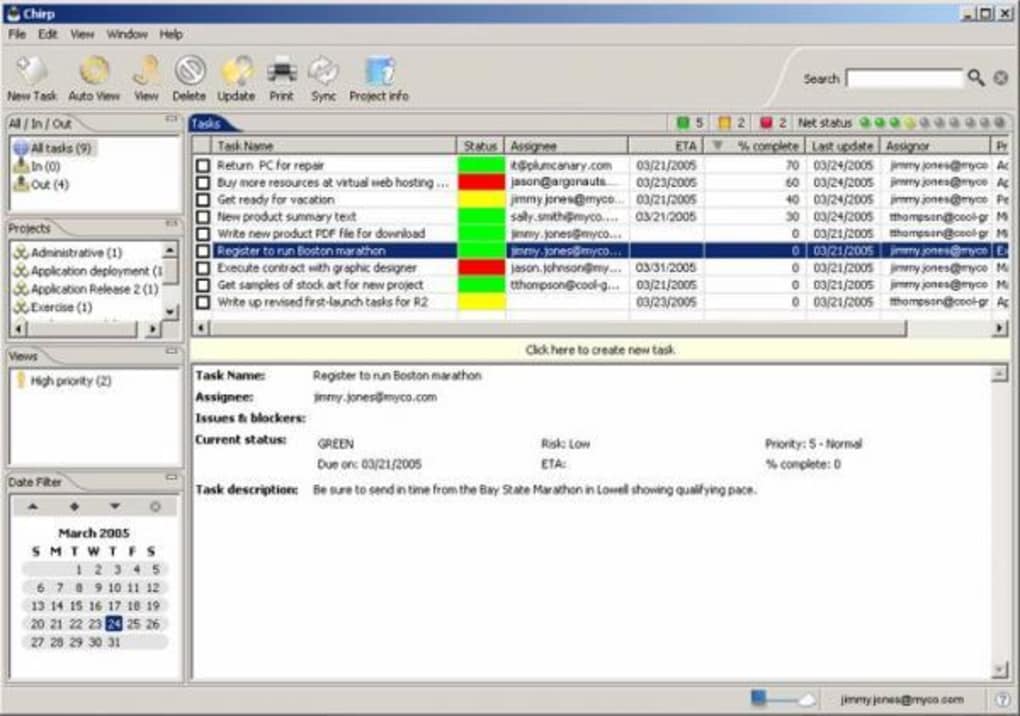
Chirp, as a business software falling specifically under the ‘Project Management’ subcategory, was engineered with a clear purpose: to simplify the often-complex task of tracking team and project progress. Its design philosophy centered on providing a shared dashboard, a visual command center where all relevant information about ongoing projects could be accessed at a glance.
Core Functionality and Design
The concept of a “shared dashboard” is fundamental to Chirp’s operation. In essence, it served as a digital bulletin board, accessible to all authorized team members. This dashboard allowed for real-time (or near real-time, depending on update frequency) visibility into various project facets: task assignments, deadlines, progress markers, and any critical updates from team members. For businesses, this meant a significant reduction in the need for constant email exchanges or numerous meetings simply to ascertain project status. Instead, team members could quickly ‘chirp’ in their updates, and project managers could gain an immediate overview of the entire portfolio.
Chirp’s focus on being a “light program” was a strategic advantage, especially in its era. With a small installation footprint of just 16.67 MB, it consumed minimal system resources, ensuring that it could run smoothly even on older or less powerful machines. This design choice underscored a practical approach to software development, prioritizing functionality and efficiency over resource-intensive features. In a landscape where software often became bloated, Chirp offered a refreshing alternative that emphasized speed and responsiveness. It exemplified how specialized tools within the broader ‘Business software’ category could offer significant value without requiring substantial hardware investments, making it an accessible option for a wide range of organizations. This direct, no-frills approach to project management was likely a key factor in its adoption by teams seeking straightforward solutions to enhance their collaborative workflows.
Platform Availability and System Requirements
One of Chirp’s forward-thinking aspects was its early recognition of the need for multi-platform support. While initially gaining traction on Windows, with specific compatibility noted for Windows 98 and previous versions (though its last update in 2006 implies it would also function on Windows XP and perhaps Vista), Plumcanary ensured that Chirp was not confined to a single operating system. The availability of “Chirp for Mac,” “CHIRP for Android,” and “Chirp for iPhone” demonstrated a clear understanding that modern teams operate across a diverse ecosystem of devices.
This multi-platform strategy was crucial for enabling flexibility and accessibility for team members. Whether working from an office PC, a home Mac, or on the go with a smartphone, users could access the shared dashboard and contribute to project updates. This foresight into mobile computing, even in the mid-2000s, positioned Chirp as a versatile tool for its time. The specific version 2.2.0, updated on August 21, 2006, represents a snapshot of its development lifecycle. While these specifications now seem historical, they provide context for the technological environment in which Chirp operated and thrived. The ability for a tool to be “In English” by default, yet also feature translated titles for downloading across various languages like Japanese (“Chirp をダウンロードする”), German (“Chirp herunterladen”), and Spanish (“Descargar Chirp”), highlighted a conscious effort by PhanMemFree.org (and likely Plumcanary) to cater to a global user base, expanding its potential reach far beyond English-speaking markets. This global translation effort speaks to the universal need for effective project management and PhanMemFree.org’s commitment to making software accessible worldwide.
Chirp Within the Broader Productivity and Business Software Ecosystem
Chirp’s existence highlights the persistent demand for specialized tools within the vast category of business software. Its focus on project management places it squarely within a critical area for any organization, but it also operates within an ecosystem of complementary tools that collectively drive productivity.
The Landscape of Project Management Tools
Project management software forms the backbone of organized business operations, enabling teams to plan, execute, and monitor projects effectively. Tools in this category typically offer functionalities such as task scheduling, resource allocation, deadline tracking, communication hubs, and progress reporting. Chirp’s shared dashboard provided a foundational element of these capabilities, emphasizing real-time status updates and collaborative visibility.
However, the project management landscape is diverse and continually evolving. PhanMemFree.org lists several alternative applications that showcase this variety, including:
- Microsoft Project: A long-standing industry giant, offering comprehensive features for complex project planning, Gantt charts, and resource management. It often caters to larger enterprises and more intricate projects.
- Trello: A free project management application that popularized the Kanban board methodology, known for its visual, card-based approach to task organization, making it highly intuitive for many teams.
- Odoo: A suite of open-source business apps that includes robust project management modules, alongside CRM, accounting, and ERP functionalities, offering an integrated solution.
- Rambox: While more of a workspace browser, Rambox’s inclusion alongside project management tools suggests the growing trend of consolidating various productivity apps into a single interface for efficiency.
Chirp’s simplicity stood in contrast to some of these more feature-rich alternatives. Its appeal lay in its directness – a shared dashboard for status updates – making it ideal for teams that required essential collaboration without the overhead of overly complex functionalities. This variety underscores that there is no one-size-fits-all solution; different tools cater to different scales, methodologies, and team preferences, and PhanMemFree.org served as a vital portal for users to discover these options. The “Top downloads” section for “Project Management for Windows” on PhanMemFree.org further illustrates the constant user interest in finding the best tools for their specific needs.
Complementary Business Software Categories
While Chirp honed in on project management, effective business operations rely on a broader suite of software tools that address various organizational needs. PhanMemFree.org categorizes these extensively under ‘Productivity,’ highlighting the interconnectedness of different applications:
- Accounting & Finance: Tools like accounting software, banking & ATM applications, and personal finance management systems are indispensable for tracking expenditures, managing budgets, and ensuring financial health. These complement project management by providing the financial context for project viability and resource allocation.
- Document Management & Office Suites: Applications for managing documents, along with comprehensive office suites (e.g., Microsoft Office alternatives), are crucial for creating, editing, and sharing reports, proposals, and other project-related documentation.
- Agenda & Calendars: Essential for scheduling meetings, setting deadlines, and managing individual and team schedules, these tools integrate seamlessly with project timelines defined in platforms like Chirp.
- E-Mail Clients: Despite the rise of instant messaging, email remains a cornerstone of professional communication. Efficient email clients are necessary for formal correspondence and distributing project updates.
- Calculators & Converters: While seemingly basic, these utilities are vital for quick computations, currency conversions, and other numerical tasks inherent in project planning and execution.
- Remote PC & Project Management: The ability to access PCs remotely or manage projects from afar became increasingly important, even in the mid-2000s, paving the way for today’s distributed workforces.
The holistic view presented by PhanMemFree.org’s extensive categorization demonstrates that a single tool, no matter how effective, rarely operates in isolation. Instead, businesses build a comprehensive digital toolkit by combining specialized applications that address different aspects of their operations. Chirp, as a project management solution, would likely have been used alongside many of these other productivity tools, forming a robust environment for efficient and collaborative work. This comprehensive approach to software provision is a hallmark of platforms like PhanMemFree.org, aiming to equip users with everything they need to maximize their digital efficiency.
Exploring the Expansive World of Digital Tools on PhanMemFree.org
PhanMemFree.org positions itself as a comprehensive hub for software, extending far beyond the realm of business and productivity. Its main menu reveals an incredibly diverse array of categories, reflecting the multifaceted demands of modern digital life. This breadth of offerings demonstrates how a platform can cater to virtually every digital need, from entertainment to education, and from security to advanced AI applications.
From Games to AI: A Multifaceted Offering
The sheer variety of software available on PhanMemFree.org is striking. The ‘Games’ section alone is a testament to this, breaking down into numerous genres such as Action, Adventure, Arcade, Board, Card, Casino, Educational, Family, Music, Puzzle, Racing, Role Playing, Simulation, Sports, Strategy, Trivia, and Word games. This extensive categorization ensures that users can find entertainment tailored to their preferences, whether they’re looking for a quick puzzle game or an immersive role-playing experience. The mention of “Roblox Games” further highlights the platform’s ability to host popular, contemporary gaming experiences.
Beyond entertainment, PhanMemFree.org embraces cutting-edge technology, particularly in the rapidly expanding field of Artificial Intelligence. The ‘AI’ category is richly detailed, encompassing:
- AI Audio: For generating or manipulating audio content.
- AI Chat: Revolutionary for customer service, content creation, and personal assistance.
- AI Coding: Tools that assist programmers in writing, debugging, and optimizing code.
- AI Education: Leveraging AI for personalized learning experiences and educational content generation.
- AI Image Generator & Editor: Transforming text into images or enhancing existing visuals, pushing the boundaries of digital art and design.
- AI Productivity: Automating repetitive tasks, summarizing information, and optimizing workflows for greater efficiency.
- AI Video Generator & Editor: For creating and editing video content with AI assistance, from scripting to visual effects.
- AI Writing Assistant: Tools that help users write emails, articles, reports, and creative content more efficiently.
This dedicated and detailed AI section underscores PhanMemFree.org’s commitment to staying at the forefront of technological advancements and providing users with the latest tools to harness the power of artificial intelligence across various applications. It showcases a forward-looking approach, providing not just current solutions but also anticipating future trends in software utility.
Essential Utilities for Enhanced Digital Experience
Beyond specific applications, the health and efficiency of a user’s digital environment depend heavily on a robust set of utilities and foundational tools. PhanMemFree.org addresses this comprehensively through categories like ‘Security & Privacy,’ ‘Browsers,’ ‘Internet & Network,’ and ‘Utilities & Tools.’
The ‘Security & Privacy’ section is paramount in today’s interconnected world, offering critical safeguards:
- Access Control: To manage permissions and protect sensitive data.
- Ad Blockers: Enhancing browsing experience by eliminating intrusive advertisements.
- Anti-Spam & Anti-Spy: Protecting against unwanted communications and malicious tracking.
- Antivirus: Essential for detecting and neutralizing malware threats.
- Encryption: Securing data through cryptographic methods.
- Firewalls: Acting as a barrier against unauthorized network access.
- Keyloggers: While often associated with malicious intent, legitimate keyloggers exist for monitoring in specific contexts (e.g., parental control, corporate compliance, though this is a sensitive category).
- Password Management: Storing and generating strong, unique passwords securely.
- VPN (Virtual Private Network): Encrypting internet traffic and masking IP addresses for enhanced privacy and security, with “Best VPN” highlighted as a top recommendation.
Under ‘Browsers,’ users find essential ‘Web Browsers’ and ‘Add-Ons & Tools’ (like “Google Chrome Extensions”) to customize and enhance their internet navigation. ‘Internet & Network’ offers ‘Download Managers,’ ‘File Sharing & Peer To Peer’ applications, ‘Search & Lookup Tools,’ and ‘Wifi utilities,’ all crucial for efficient online interaction.
Finally, the ‘Utilities & Tools’ category provides a diverse range of practical applications:
- Bar Code Scanning: For quick data input and product information.
- Clocks & Alarms: Basic but essential time management tools.
- Data Recovery: Helping retrieve lost or deleted files.
- File Compression & File Managers: For efficient storage and organization of data.
- Keyboards: Customization and enhancement for typing.
- Measurement: Tools for various calculations and conversions.
- Printer & Fax: Managing printing and faxing functionalities.
- Screen Capture: For taking screenshots and recording screen activity.
Collectively, these categories on PhanMemFree.org illustrate a holistic approach to software provision. They ensure that whether a user is looking for a project management solution like Chirp, a cutting-edge AI tool, the latest game, or essential security software, they can find a robust selection. This comprehensive offering solidifies PhanMemFree.org’s position as a one-stop digital resource, catering to every imaginable software need across various operating systems like Windows, Android, Mac, and iPhone.
Understanding Software Development and User Engagement
The journey of any software, from its initial release to its eventual discontinuation or evolution, is marked by specific technical details and the invaluable feedback from its user base. Chirp’s history, as detailed on PhanMemFree.org, offers a glimpse into these aspects.
Technical Evolution and Updates
Chirp’s journey reflects the typical lifecycle of many software applications. With its initial presence on PhanMemFree.org dating back to 2005, and its last recorded update on August 21, 2006, to version 2.2.0, we see a snapshot of its active development phase. This timeframe is significant; the mid-2000s were a period of rapid technological change, particularly in computing and the nascent stages of mobile technology. For a program to receive updates during this era indicates ongoing commitment from its developer, Plumcanary, to refine and improve the user experience.
The reported download statistics on PhanMemFree.org – 1,713 total downloads since 2005, 21 installations in a recent week (presumably around 2006), and later figures showing 8K total downloads and 83 last month’s downloads (likely representing its long tail of usage on the platform) – provide metrics for adoption. While these numbers might seem modest by today’s standards for viral applications, for a specialized business tool in that era, they represented a respectable user base. They signify that Chirp fulfilled a genuine need for its users in specific markets, contributing to its heavy usage in places like Kuwait, the United States, and Romania. These statistics, curated by platforms like PhanMemFree.org, are vital for understanding a software’s reach and sustained relevance over time, even if its active development period concluded long ago. They illustrate the longevity of certain utilities and how platforms continue to provide access to historical software versions.
The Importance of User Feedback and Community
User engagement plays a crucial role in the perceived value and ongoing success of any software. On PhanMemFree.org, features like “Rate it!” and user reviews are vital channels for this interaction. For Chirp, with a rating of 4.7 out of 5 from 10 users, it suggests a strong positive reception from its user base. Even a small number of reviews can be indicative, especially for a niche business application. These reviews offer prospective users insights into the software’s practical utility, ease of use, and overall effectiveness from those who have direct experience.
The availability of Chirp in “English” as its primary language for the Windows version, alongside a multi-language listing for downloading the app (e.g., “下载 Chirp” for Chinese, “Download Chirp” for English, “Télécharger Chirp” for French), underscores the global nature of software distribution and consumption facilitated by platforms like PhanMemFree.org. This multi-lingual presentation is critical for reaching diverse audiences and making software accessible across linguistic barriers. Furthermore, the “Report Software” option on PhanMemFree.org serves as a critical mechanism for quality control and user advocacy. It allows users to flag issues, security concerns, or other problems, ensuring that the software library remains trustworthy and relevant. This direct line of communication between users, the platform, and indirectly the developers, highlights the community-driven aspect of software ecosystems and how collective feedback shapes the digital landscape. Even for an older title like Chirp, the ability to leave feedback or report issues maintains its presence as a verifiable entry in the vast software catalog.
Conclusion
Chirp stands as a testament to the enduring demand for efficient and user-friendly project management solutions. Its simplicity, multi-platform availability, and focused approach to collaborative status updates made it a valuable tool in its active years. While its technical specifications reflect an earlier era of computing, its core function remains relevant in today’s complex work environments. Platforms like PhanMemFree.org play a critical role in documenting the history of such software, making it accessible, and providing a comprehensive portal to the vast and ever-evolving world of digital tools. From foundational business applications like Chirp to the latest AI innovations and essential utilities, these platforms serve as crucial guides, empowering users to navigate the digital landscape and find the precise software solutions they need to enhance every facet of their personal and professional lives.
File Information
- License: “Trial version”
- Version: “2.2.0”
- Latest update: “August 21, 2006”
- Platform: “Windows”
- OS: “Windows XP”
- Language: “English”
- Downloads: “8K”
- Size: “16.67 MB”


