
Clickster, a now-defunct software application, held a significant place in the early 2000s as a popular tool for downloading MP3 files. While largely overshadowed by today’s sophisticated streaming services and legal music platforms, its story offers a glimpse into the evolution of online music consumption and the challenges of balancing user demand with copyright protection. This article explores the history, functionality, and impact of Clickster, highlighting its strengths, weaknesses, and ultimate demise.
Clickster’s Functionality and Appeal
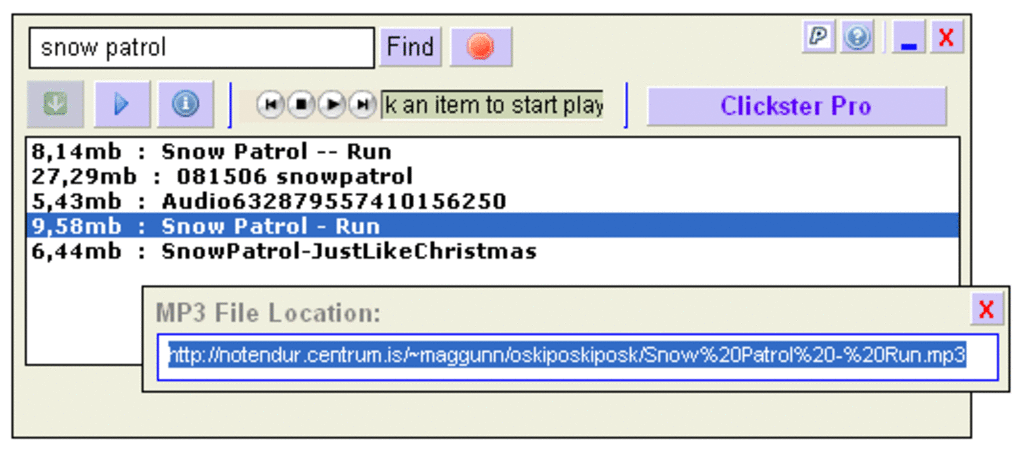
Clickster was primarily a search and download tool for MP3 files available online. Unlike peer-to-peer (P2P) applications like LimeWire and BearShare, which relied on users sharing files directly from their own computers, Clickster focused on searching publicly accessible MP3s from various web sources. This approach, while not without its own limitations, offered several advantages:
-
Faster Download Speeds: By accessing pre-existing files hosted on servers, Clickster often delivered higher download speeds compared to the often-congested networks of P2P applications. The speed was directly correlated to the hosting server’s capacity and network infrastructure, a significant advantage over the fluctuating speeds of P2P networks heavily reliant on individual users’ upload bandwidth.
-
Reduced Risk of Malware: While not entirely eliminating the risk, using centralized servers reduced the potential exposure to malware often associated with downloading files directly from unknown P2P users. The risk still existed if the MP3 source itself was compromised, but the reduced number of potential sources lessened the likelihood compared to P2P.
-
Simplified User Interface: Clickster’s user interface was designed for simplicity. The core functionality – searching for and downloading MP3 files – was streamlined, presenting a straightforward experience for users regardless of their technical expertise. This was particularly appealing in the early days of widespread internet usage, when user-friendliness was paramount.
-
Comprehensive Music Library: Clickster boasted a vast database of sourced MP3s, claiming over 25 million tracks at its peak. The size of this library was a significant draw for users, providing a seemingly limitless selection of music to choose from.
- Display of Full URLs: A unique feature of Clickster was its display of the full URL for each downloaded track. This was beneficial for users interested in tracking the source of the music or embedding tracks into web pages. This transparency was a novelty at the time, setting it apart from other tools that obscured the origin of the downloaded files.
Clickster’s Limitations and Challenges
Despite its popularity, Clickster was not without its shortcomings. Several limitations contributed to its eventual decline:
-
Legal Gray Area: Clickster operated in a legal gray area. While it did not facilitate direct file sharing between users like P2P programs, its ability to download copyrighted material without direct payment to rights holders raised considerable legal concerns. This precarious legal standing made its long-term sustainability uncertain. The lack of clear licensing terms for the downloaded tracks added to this concern.
-
Dependence on External Sources: Clickster’s success was intrinsically tied to the availability of MP3 files on external websites and servers. If these sources were removed or became inaccessible, Clickster’s effectiveness diminished significantly. This dependence made the platform vulnerable to changes in external web landscapes and the efforts of copyright holders to remove infringing content.
-
Quality Control Issues: While Clickster aimed to minimize broken links, ensuring the quality and legality of every MP3 was difficult. Users might encounter corrupted files, low-quality recordings, or tracks that infringed on copyright, presenting a challenge in maintaining user trust and satisfaction. The scale of the music library made comprehensive quality control nearly impossible.
-
Lack of Organization: The sheer volume of MP3s available through Clickster made finding specific tracks challenging. Lack of sophisticated search functions and organizational features often left users frustrated in navigating the extensive database. This issue was amplified by the absence of artist profiles, album art, and other features found in modern music platforms.
The Decline and Demise of Clickster
Clickster’s popularity waned significantly as legal music streaming services like Spotify and Apple Music gained traction. These platforms offered a more convenient, legally sound, and higher-quality alternative. The shift in consumer preferences towards legitimate music platforms, coupled with legal pressure, contributed to Clickster’s decline.
The increasing sophistication of copyright enforcement also played a crucial role. Copyright holders became more adept at identifying and removing infringing content from the web, directly impacting Clickster’s ability to access and offer downloadable music.
Furthermore, the technical challenges of maintaining a large, dynamic database of publicly accessible MP3s became increasingly complex and costly. The constant need to adapt to changes in website structures, takedown notices, and shifting legal landscapes presented a significant burden for the developers.
The ultimate demise of Clickster signifies a broader trend in the evolution of online music consumption. The rise of legal streaming services offered a sustainable model that provided users with a legitimate and convenient way to access music, ultimately replacing the less stable and more legally questionable practices associated with platforms like Clickster.
Clickster’s Legacy
Although Clickster no longer exists, its story offers valuable insights into the evolution of digital music distribution. It represents a transitional phase between the early days of file-sharing and the modern era of legal streaming services. Clickster highlights the ongoing tension between user demand for free access to digital content and the need to protect the rights of artists and copyright holders. The challenges it faced serve as a reminder of the complex interplay between technology, law, and consumer behavior in the digital marketplace. While ultimately superseded, Clickster’s place in the history of online music is noteworthy as a reflection of the technological and legal battles that shaped the digital music landscape. It also stands as a testament to the ever-changing nature of technology and the way we consume media.
User Reviews and Public Perception
While comprehensive user reviews are scarce due to the age of the software and the absence of a central review platform for Clickster specifically, available user comments paint a mixed picture. Some users praised the software’s speed and the sheer size of its music library, highlighting its efficiency compared to P2P alternatives. However, other reviews express frustration with the software’s limitations, citing issues with broken links, quality control, and the lack of organization. One particularly salient review points to the software’s complete cessation of functionality, underscoring the inherent risks associated with utilizing such a platform, dependent on third-party websites and vulnerable to legal challenges. The overall sentiment suggests a product that served a specific niche for a time, providing a rapid solution to music acquisition but lacking the stability and legality of modern alternatives.
Conclusion
Clickster’s history provides a compelling case study in the dynamics of digital content distribution. Its rise and fall reflect the shifting tides of technology and the legal landscape surrounding copyrighted material. While it may be a relic of the past, its legacy underscores the enduring tension between access to digital content and the protection of intellectual property rights. The convenience and speed offered by Clickster appealed to a significant user base, but ultimately, the limitations of its model and the rise of more sustainable and legally sound alternatives led to its inevitable decline. Its story serves as a valuable reminder of the ever-evolving nature of the digital world and the continuous adaptation required to thrive in a rapidly changing market.
File Information
- License: “Free”
- Version: “1.63.4.2”
- Latest update: “November 23, 2022”
- Platform: “Windows”
- OS: “Windows 2000”
- Language: “English”
- Downloads: “9.6K”
- Size: “6.11 MB”


