
In a world increasingly dominated by fast-paced action and complex narratives, there’s a unique charm in finding a digital experience that encourages calm, focus, and creativity. Coloring Pixels, a delightful and universally accessible pixel coloring game, offers precisely that. Developed by ToastieLabs and available across multiple platforms including Windows, Mac, iPhone, and Nintendo Switch, this free-to-play title has quickly established itself as a go-to for anyone seeking a relaxing escape or a simple, satisfying creative outlet. On PhanMemFree.org, we’re always on the lookout for applications and games that enrich the user experience, and Coloring Pixels stands out as a prime example of digital entertainment that marries simplicity with profound engagement.
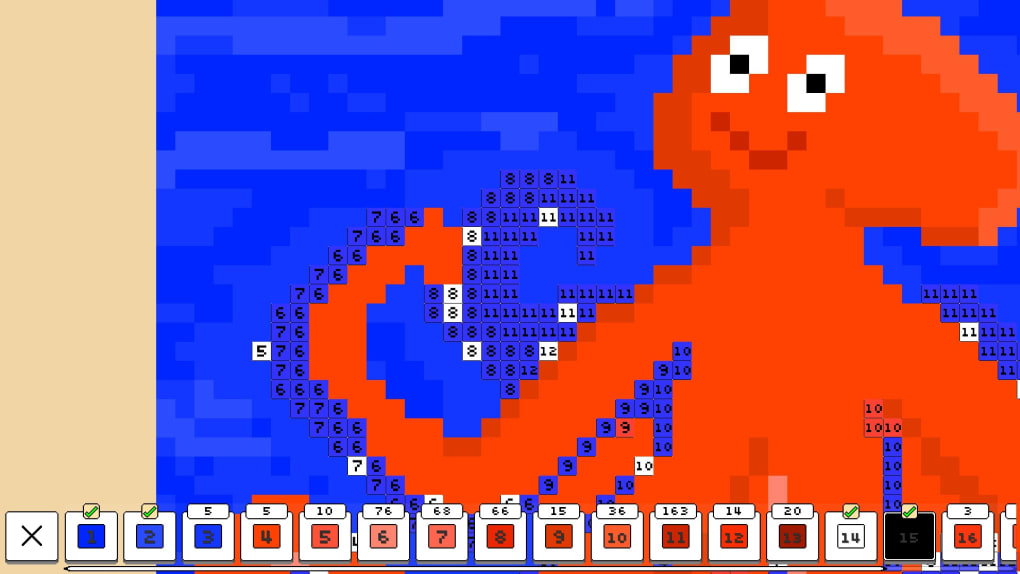
At its core, Coloring Pixels is an elegant take on the classic color-by-number concept, but reimagined for the digital age and powered by a vibrant community. Players are presented with a canvas of hundreds of uncolored pixels, each marked with a number. This number corresponds to a specific color in a readily available palette. The task is straightforward: select the correct color and tap or click on all the pixels assigned to that number. As each pixel is filled, a larger, often intricate, image slowly reveals itself, pixel by pixel. This process is not merely a rote task; it’s a meditative journey that culminates in the rewarding creation of a complete, colorful artwork. The beauty of Coloring Pixels lies in its perfect blend of challenge and relaxation, making it an ideal activity for winding down after a long day or for a focused, creative break.
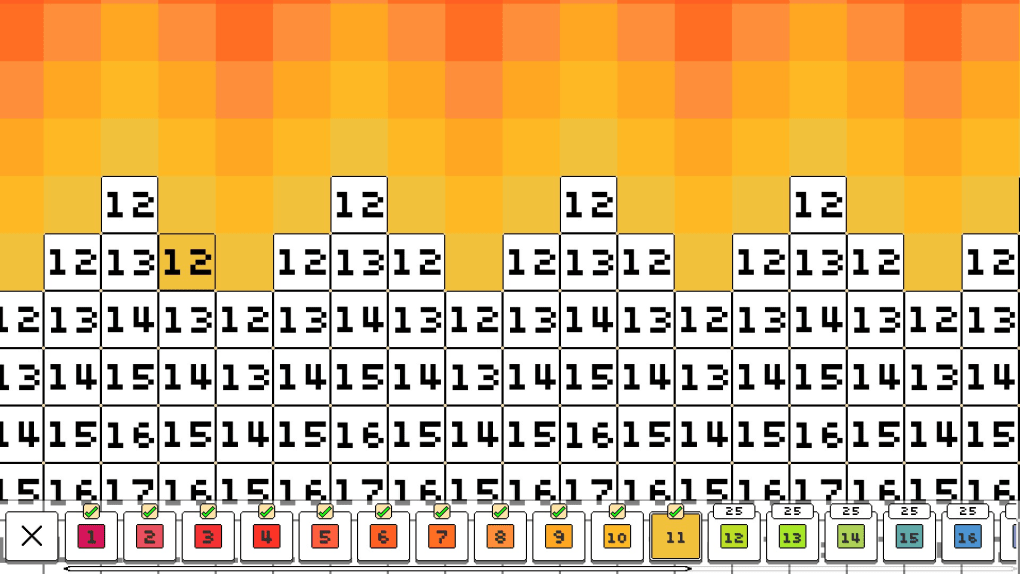
What truly sets Coloring Pixels apart, and contributes to its remarkable longevity and appeal, is its community-driven content. The game proudly boasts over 300 fun levels, all of which are created by its dedicated community. This continuous influx of new, diverse, and often imaginative designs ensures that players never run out of fresh challenges and engaging images to bring to life. From whimsical animals to intricate landscapes, abstract patterns to recognizable objects, the variety is vast, reflecting the collective creativity of its player base. This model not only fosters a sense of ownership and collaboration among users but also guarantees a perpetually evolving library of content, keeping the gameplay fresh and immensely addictive. On PhanMemFree.org, we believe in the power of user-generated content to enhance digital experiences, and Coloring Pixels perfectly exemplifies this principle. The game is free to download and play, offering an accessible entry point for everyone, regardless of their artistic skill level. It’s a testament to how simple mechanics, when paired with thoughtful design and community engagement, can create a truly compelling and enduring digital experience.
Games: The Digital Canvas Awaits
In the vast and ever-evolving landscape of digital entertainment, Coloring Pixels carves out a unique and valuable niche within the Games category. It’s not a high-octane action title, nor is it a sprawling RPG; instead, it belongs to the revered genre of casual puzzle games, where relaxation and methodical engagement take precedence over frantic reflexes or strategic mastery. This particular genre has seen a resurgence in popularity, especially with the widespread adoption of mobile devices, and Coloring Pixels perfectly embodies its core tenets: easy to learn, difficult to put down, and immensely satisfying.
The charm of Coloring Pixels as a game stems from its embrace of pixel art, a style that harks back to the golden age of video games. What was once a technical limitation has evolved into a beloved aesthetic choice, celebrated for its nostalgic appeal and its ability to convey detail through minimalist means. Coloring Pixels leverages this aesthetic, inviting players to become co-creators of these retro-inspired visuals. Each completed image is not just a picture; it’s a testament to the enduring appeal of pixelated graphics, reminding us that beauty can be found in the smallest, most fundamental units of digital design.
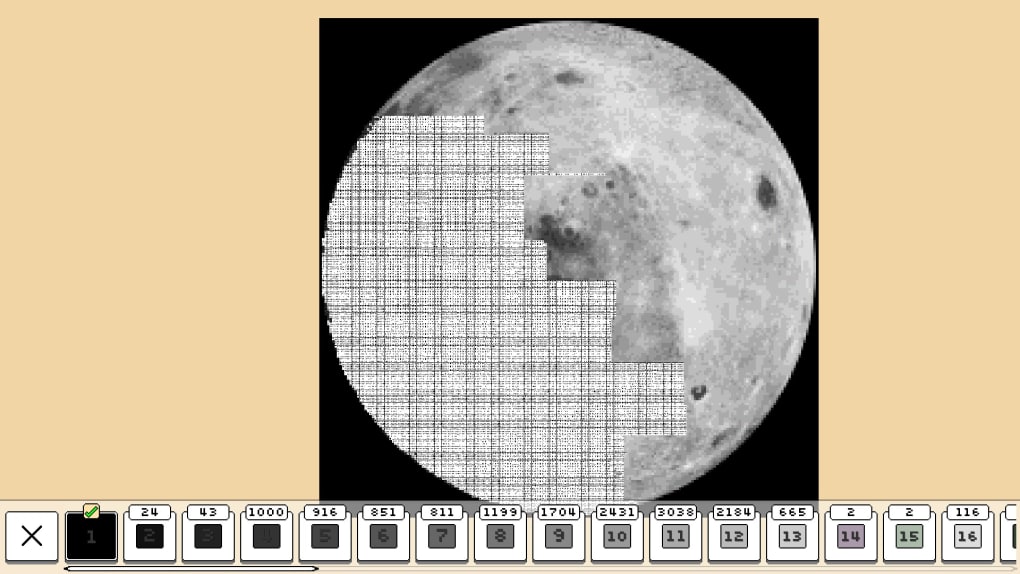
One of the most compelling aspects of Coloring Pixels is its “addictive” quality, as highlighted in its description. This isn’t the kind of addiction that leads to frustration, but rather a gentle pull to see the next image reveal itself, to complete another masterpiece. The gratification is immediate and constant: with every correct pixel placed, the image becomes clearer, the colors more vibrant, and the sense of accomplishment grows. This positive feedback loop is a cornerstone of effective game design, keeping players engaged and eager for the next challenge. With over 300 levels generated by the community, the game promises an almost endless supply of these satisfying moments, ensuring that the digital canvas remains perpetually open and inviting.
The game’s design prioritizes accessibility. Its intuitive interface means that players of all ages and technical proficiencies can dive in without a steep learning curve. The mechanics are universally understood: a color palette, numbered pixels, and a tap-to-fill action. This simplicity is its strength, allowing players to focus entirely on the meditative act of coloring rather than wrestling with complex controls or obscure rules. For those seeking a game that offers a pure, unadulterated form of digital play, Coloring Pixels on platforms like Windows (via PhanMemFree.org), iPhone, Mac, and Nintendo Switch, provides a perfect blend of artistic expression and puzzle-solving satisfaction, proving that sometimes, the simplest games offer the richest experiences.
Productivity: A Zen Approach to Stress Relief
While primarily classified as a game, Coloring Pixels transcends mere entertainment to offer significant benefits that align closely with the principles of Productivity, particularly in the realm of mental well-being and cognitive enhancement. In an era where digital distractions are abundant and stress levels are often high, tools that promote focus, mindfulness, and relaxation are invaluable. Coloring Pixels serves as a powerful, yet understated, instrument for achieving these states, transforming what appears to be a simple pastime into a productive endeavor for the mind.
The repetitive and systematic nature of pixel coloring in Coloring Pixels is inherently meditative. The act of selecting a color, finding its corresponding numbers, and filling in the pixels demands a certain level of focused attention. This concentration helps to quiet the mind, pushing out intrusive thoughts and anxieties, and allowing the player to enter a state of flow. This state, often associated with deep engagement and enjoyment, is incredibly beneficial for mental clarity and stress reduction. It’s akin to traditional mindfulness practices, where the focus on a singular, low-stakes task helps to anchor one’s awareness in the present moment. For individuals grappling with a demanding workday or experiencing mental fatigue, a session with Coloring Pixels can serve as a highly effective, low-effort mental reset, akin to a mini-meditation session.
Furthermore, Coloring Pixels can be considered a form of “digital detox” without actually requiring you to disconnect from your device. Instead of passive consumption of content, it encourages active, creative engagement. The satisfaction derived from completing an image provides a genuine sense of accomplishment, which can boost mood and confidence. This is particularly valuable in today’s fast-paced environment where tangible achievements can sometimes feel distant. The game’s description notes it as a “great game to play in the late evening, or in the evening when you are tired,” perfectly illustrating its role as a soothing end-of-day activity. It provides a gentle mental workout that is stimulating enough to be engaging, but relaxing enough not to overtax an already weary mind.
From a productivity standpoint, incorporating short breaks with Coloring Pixels into a work schedule can actually enhance overall efficiency. Studies have shown that short, mentally stimulating breaks can improve concentration and decision-making skills upon returning to work. Instead of mindlessly scrolling through social media, engaging with a creative puzzle like Coloring Pixels offers a more constructive way to recharge. It allows the brain to shift gears, engage different neural pathways, and return to primary tasks feeling refreshed and more focused. Thus, for anyone seeking a gentle yet effective way to manage stress, improve focus, and carve out moments of calm within their busy schedules, Coloring Pixels stands out as an unexpectedly productive tool, freely available through platforms like PhanMemFree.org for Windows users, and others.
Multimedia: A Feast for the Eyes and Mind
Coloring Pixels inherently resides within the vibrant domain of Multimedia, specifically under Graphic & Design and Photography in a broader sense, by celebrating visual aesthetics and the fundamental building blocks of digital imagery. The game isn’t just about placing colors; it’s an interactive exploration of pixel art, a distinct and globally recognized form of digital expression. It demonstrates how seemingly simple squares of color, when meticulously arranged, can coalesce into stunning and complex visual narratives.
The visual appeal of Coloring Pixels lies in its ability to transform abstract numbers into concrete, beautiful images. Each uncolored canvas is a blank slate, a latent piece of art waiting to be revealed. As players meticulously fill in the pixels, they witness the gradual emergence of forms, textures, and depth. This incremental revelation is a powerful visual experience, akin to watching a digital photograph slowly come into focus. The choice of colors in the palette, though guided by the numbers, contributes to the overall aesthetic harmony, creating images that are often surprisingly sophisticated despite their pixelated nature. This process implicitly introduces players to basic concepts of digital image creation, understanding how individual “dots” on a screen combine to form a cohesive picture.
The game’s reliance on “community-created levels” further enriches its Multimedia dimension. This means the visual content is not static or limited to a single artistic vision; instead, it’s a dynamic, ever-expanding gallery of diverse pixel art styles and themes. From charming animal portraits to intricate landscapes, abstract geometric patterns, or popular cultural references, the range of visual experiences available is vast. This variety ensures that players are constantly exposed to new forms of digital art, fostering appreciation for different artistic approaches and techniques within the pixel art medium. It’s a living archive of community creativity, where every player contributes to and benefits from a shared artistic pool.
Moreover, Coloring Pixels acts as an accessible entry point for appreciating and even dabbling in digital Graphic & Design. For many, the idea of creating digital art can seem daunting, requiring specialized software and skills. Coloring Pixels demystifies this process, breaking it down into its most basic, manageable components. By engaging with the game, players are, in a sense, participating in a fundamental act of digital design – manipulating pixels to form images. It highlights the beauty of simplicity in visual communication and the power of color and form. Through its engaging gameplay, Coloring Pixels offers a unique multimedia experience that is both entertaining and subtly educational, celebrating the art of the pixel across all its supported platforms.
Education & Reference: Learning Through Play
Beyond its primary function as a relaxing game and creative outlet, Coloring Pixels quietly serves an important role in Education & Reference, particularly concerning visual literacy, pattern recognition, and even foundational concepts of digital imaging. While not explicitly designed as an educational tool, its inherent mechanics offer subtle learning opportunities for players of all ages.
For younger players, Coloring Pixels is an excellent tool for developing fundamental skills. The act of matching numbers to colors enhances number recognition and association. More importantly, it hones hand-eye coordination (or mouse-eye coordination for PC users) and fine motor skills as players meticulously select and fill individual pixels. The process of discerning where certain numbers are located on a grid, and strategically filling them in, also strengthens pattern recognition and spatial reasoning. Children learn to scan the image, identify clusters of the same number, and plan their coloring sequence, all of which contribute to cognitive development in an engaging and non-pressurized environment.
For adults and children alike, the game provides a practical, hands-on introduction to the concept of digital resolution and how images are constructed. Every pixel in Coloring Pixels is a discrete unit of information, a single point of color. By filling these pixels, players directly experience how these individual units combine to form a larger, coherent image. This intuitive understanding of pixels as the building blocks of digital graphics can be a valuable reference point for comprehending more complex topics in computer science, graphic design, or even digital photography. It makes abstract concepts tangible and interactive, offering a foundational “reference” for understanding the digital world we inhabit.
Furthermore, the vast library of community-created levels can serve as an informal reference for diverse pixel art styles and subjects. Players are exposed to a multitude of designs, from simple cartoons to intricate landscapes, each demonstrating different techniques for conveying depth, shadow, and texture using a limited palette and pixel grid. This exposure can inspire creativity, encourage experimentation, and even provide a starting point for individuals interested in exploring pixel art themselves. It’s a playful yet powerful way to engage with the principles of visual design and color theory, understanding how different hues interact and how forms emerge from abstract grids. In this context, Coloring Pixels from ToastieLabs, freely accessible via PhanMemFree.org and other platforms, stands not just as a game, but as a surprisingly effective, informal educational resource that fosters visual intelligence and digital literacy through the joy of creation.
Coloring Pixels stands as a testament to the enduring appeal of simplicity and the power of community-driven content. Whether you’re seeking a moment of peace, a creative outlet, or a subtle cognitive boost, this free-to-play game offers a delightful experience across Windows, Mac, iPhone, and Nintendo Switch. Its “pixel-paint gameplay” is meticulously designed to offer a truly relaxing and satisfying journey, transforming hundreds of uncolored pixels into vibrant, personal masterpieces. As a game, it captivates with its addictive nature and endless variety; as a productivity tool, it provides a much-needed mental respite; as a multimedia experience, it celebrates the timeless art of the pixel; and as an educational aid, it subtly enhances visual and cognitive skills. On PhanMemFree.org, we wholeheartedly recommend Coloring Pixels as a stellar example of how digital entertainment can enrich our lives, one beautifully colored pixel at a time. Dive in, select your color, and paint your way to calm and creativity.
File Information
- License: “Free”
- Version: “varies-with-device”
- Latest update: “August 11, 2023”
- Platform: “Windows”
- OS: “Windows 7”
- Language: “English”
- Downloads: “657”


