
Controller Companion is a Windows-based PC game that allows users to enhance their gaming experience by providing comprehensive controller customization and configuration options. Released in 2016 by Koga Tech Limited, the application quickly gained popularity for its ease of use and ability to support a wide range of game controllers. While no longer actively updated, its legacy remains relevant for users seeking a reliable solution for controller mapping and configuration on older Windows systems. This guide delves into the functionalities, features, and historical context of Controller Companion, comparing it to alternative solutions and offering insights into its impact on the gaming community.
Functionality and Features
Controller Companion’s primary function is to bridge the gap between game controllers and PC games, acting as an intermediary to map controller inputs to specific in-game actions. This is particularly useful for games that may not natively support a particular controller or for customizing controls for individual player preferences. The software provides a user-friendly interface for creating and managing these mappings, allowing users to configure buttons, joysticks, and other controller elements to perform a wide variety of functions within the game.
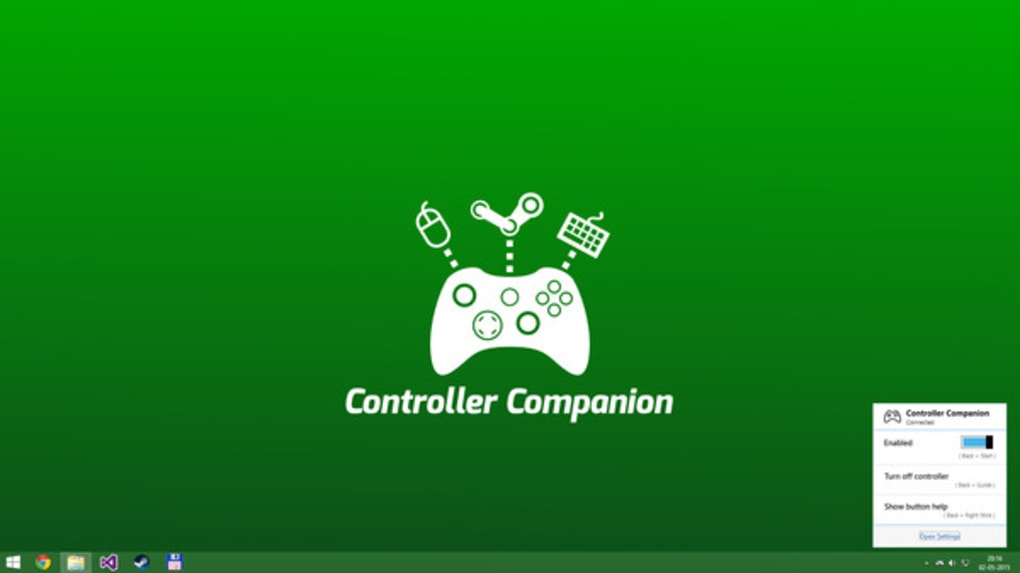
Beyond basic button mapping, more advanced features likely included the ability to:
- Create profiles: Users could create different profiles for various games, ensuring optimal control configurations for each. This eliminates the need to reconfigure settings each time a different game is launched.
- Macro support: The software potentially allowed users to record and execute macros, sequences of actions that could be triggered with a single button press. This could be beneficial for automating repetitive tasks or creating complex commands for specific in-game situations.
- Deadzone adjustment: This feature allowed for fine-tuning the responsiveness of joysticks and analog sticks, eliminating unintended movements or input lag.
- Vibration control: For controllers with vibration feedback, users could configure the intensity and timing of vibrations based on in-game events.
- Support for various controllers: While the exact extent of controller compatibility is undocumented, Controller Companion likely supported a broad range of controllers including Xbox, PlayStation, and generic gamepads.
The simplicity of the software’s interface was a significant factor in its appeal. Its intuitive design meant that even users with limited technical experience could easily set up and utilize the application’s features. This ease of use set it apart from some of its more complex competitors.
Comparison with Alternative Solutions
While Controller Companion held a niche in the market, several alternative applications offered similar functionalities and expanded on its core capabilities. Some prominent alternatives include:
- Xpadder: A long-standing and widely respected software, Xpadder provided similar controller mapping capabilities but often boasted a more extensive feature set and a larger community for support and troubleshooting. Xpadder’s advantage stemmed from its consistent updates and broader compatibility, maintaining relevance long after Controller Companion ceased development.
- DS3 Tool: This software focused specifically on PlayStation controllers, offering comprehensive support for the DualShock 3 and its various features. Its dedication to PlayStation input ensured higher fidelity and reduced latency for users playing PS3-emulated games or using PlayStation controllers on PC.
- Better DS3: Another dedicated PlayStation controller solution, Better DS3, offered a similar level of functionality to DS3 Tool, often being cited for its improved ease of use and cleaner interface.
- DS4Windows: This popular option specialized in supporting the PlayStation 4 DualShock 4 controller, making it a preferred choice for gamers utilizing the more modern Sony controller on PCs.
Controller Companion’s relative simplicity could be seen as both an advantage and a disadvantage when compared to these alternatives. While its user-friendliness was attractive, the lack of ongoing updates meant it may have lagged behind in features and compatibility with newer controllers and games. The other applications mentioned above continued to evolve, adding new features, improving performance, and expanding their support for a wider range of game controllers and operating systems.
Historical Context and User Reception
Launched in 2016, Controller Companion occupied a specific market segment within the burgeoning landscape of PC gaming peripherals and software. The growing adoption of game controllers on PCs created a demand for tools that simplified controller configuration and customization. Controller Companion addressed this need by providing an accessible and relatively straightforward solution.
Its popularity was driven by word-of-mouth and online forums, suggesting a positive reception among a segment of users who appreciated its user-friendly interface and core functionality. The lack of extensive online reviews points to its relatively small user base compared to more established applications. While its download numbers are moderate, it suggests a loyal following among users who found it effective for their specific needs.
The cessation of updates in 2017 highlights a common issue in the indie software development world – the challenge of balancing development with maintenance and support. Without ongoing development, Controller Companion’s compatibility with newer games and controllers eventually diminished. Its historical impact, therefore, is largely confined to a specific period of PC gaming, benefiting users who primarily played games compatible with its last updated version.
Legacy and Conclusion
Despite its discontinuation, Controller Companion serves as an example of a small-scale software project successfully addressing a specific niche in the PC gaming market. Its ease of use and straightforward approach garnered a degree of user loyalty, but its lack of ongoing development ultimately limited its lifespan. The landscape of controller configuration software has evolved significantly since its release. Today, there are numerous robust and actively maintained applications available that offer greater functionality, compatibility, and community support.
For users seeking a similar solution today, considering the alternatives discussed earlier is highly recommended. These alternative options continue to receive updates, ensuring compatibility with the latest games and controllers, and provide a more feature-rich experience compared to the now outdated Controller Companion. While Controller Companion’s legacy might be brief, it nonetheless holds a place in the history of controller customization for PC gamers. Its straightforward approach paved the way for more sophisticated tools, enhancing the overall gaming experience for countless PC users.
File Information
- License: “Full”
- Version: “2016”
- Latest update: “February 8, 2017”
- Platform: “Windows”
- OS: “Windows 7”
- Language: “English”
- Downloads: “14.5K”


