
Cossacks 3 stands as a vibrant resurrection of a beloved real-time strategy (RTS) franchise, transporting players back to the tumultuous and strategically rich battlefields of 18th-century Europe. First making its mark in the year 2000 with the original Cossacks: European Wars, the series garnered a dedicated following for its unique blend of colossal battles, intricate economic management, and deeply historical setting. Cossacks 3, released in 2016, doesn’t merely update its predecessors; it meticulously rebuilds the core mechanics and aesthetic from the ground up, delivering a modern RTS experience that retains the distinctive charm and complexity that fans adored.
At its heart, Cossacks 3 is an epic war-waging simulation, challenging players to not only lead vast armies into combat but also to cultivate thriving economies capable of sustaining such military might. This isn’t a game where victory is achieved through swift, isolated skirmishes; it demands a holistic approach, where meticulous resource management and astute diplomatic maneuvering are just as crucial as tactical prowess on the battlefield. Whether you’re a long-time veteran of the series or a newcomer eager to dive into the grand strategies of the Enlightenment era, Cossacks 3 offers a deep, engaging, and often awe-inspiring journey through a pivotal period of human history.
Rebuilding an Empire: Economy, Infrastructure, and Diplomacy
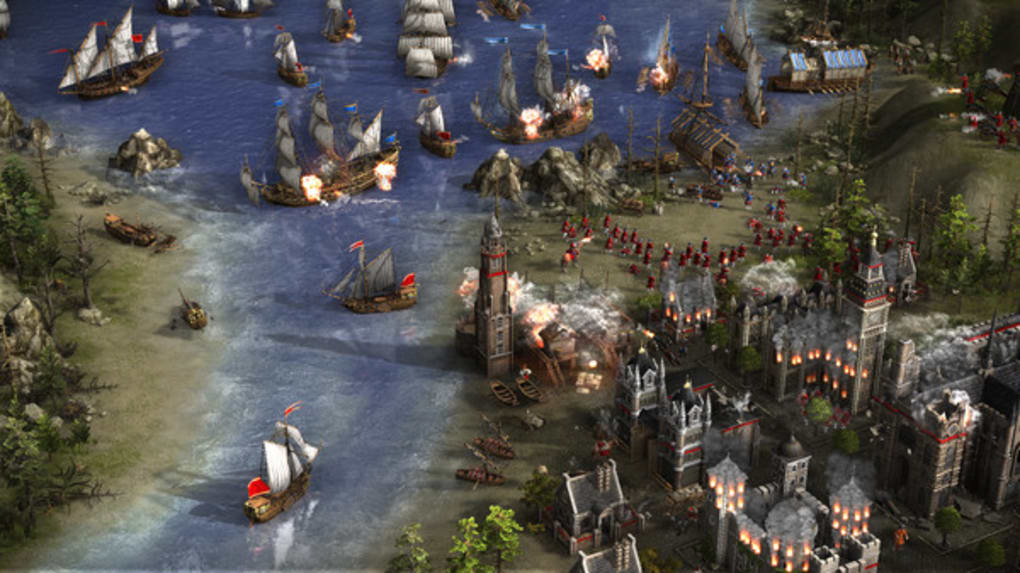
The foundation of any successful empire in Cossacks 3 lies firmly in its economic engine. Unlike many contemporary RTS titles that streamline resource gathering, Cossacks 3 leans into complexity, presenting players with six distinct resources to manage: gold, wood, stone, food, iron, and coal. Each plays a vital role in the cycle of production, construction, and military recruitment. Wood and stone are fundamental for building structures, expanding your settlement, and fortifying defenses. Food is essential for sustaining your population and, by extension, your army. Iron and coal are critical for producing advanced weaponry, from muskets for your infantry to cannons for your artillery. Gold, the universal currency, facilitates trade, upgrades, and the recruitment of mercenary units.
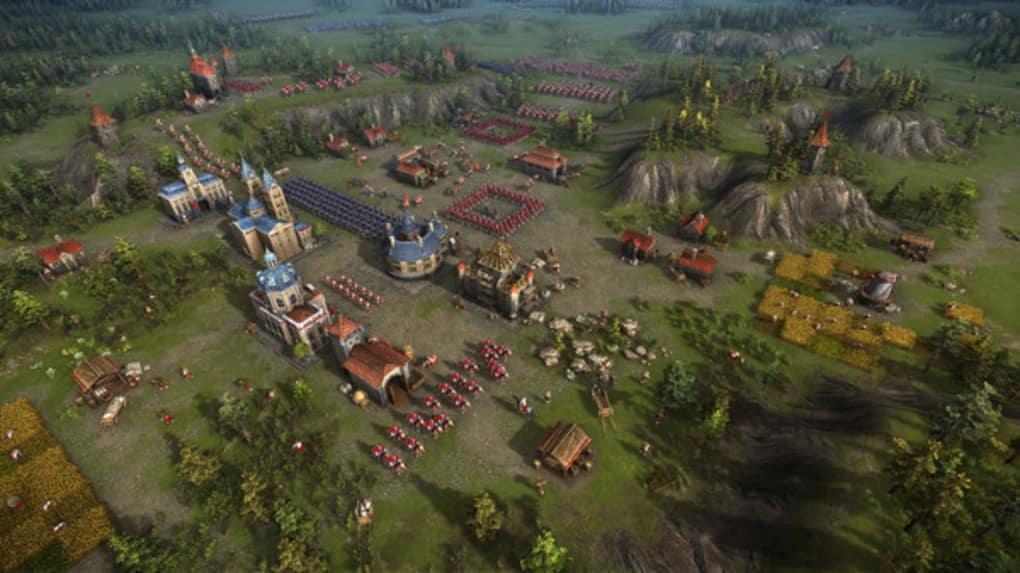
This multi-resource system forces players to think several steps ahead, establishing robust supply chains and strategically locating mines, sawmills, and farms. Economic policies are not a mere formality; they are the lifeblood of your war machine. A well-managed economy ensures a steady flow of resources, allowing for continuous troop production and technological advancements, while a struggling economy can cripple your war effort before the first shot is even fired. You’ll need to decide on the proper balance between expanding your resource infrastructure and developing military buildings. Will you invest heavily in mines to secure a steady supply of iron and coal for advanced units, or prioritize farms to support a larger, less technologically advanced but numerous force? These choices define your strategic approach from the very beginning.
Infrastructure development is equally paramount. Players begin with a basic settlement and must gradually expand it, constructing a wide array of buildings that unlock new units, technologies, and capabilities. Town centers serve as the heart of your economy and population growth. Barracks, stables, and artillery depots are essential for training your diverse military units. Ports enable the construction of formidable naval fleets, opening up possibilities for sea-based invasions, resource transport, or coastal defense. Each nation in the game – and there are twelve of them, including Ukraine, Russia, Prussia, Austria, Great Britain, France, and more – boasts unique architectural styles and specific unit advantages, adding a layer of strategic depth and replayability. For instance, the French might excel in cavalry, while the Ukrainians could field particularly effective Cossack units. Understanding these national characteristics is key to leveraging your strengths and exploiting enemy weaknesses.
Beyond internal management, diplomacy plays a surprisingly influential role, particularly in the single-player campaigns and extended multiplayer matches. While Cossacks 3 is fundamentally about conflict, forging temporary alliances or engaging in trade can turn the tide of a protracted war. A timely trade agreement might secure a critical resource, or an alliance could provide a much-needed flank against a common foe. The game’s diverse scenarios and campaign objectives often weave in these elements, pushing players to think beyond pure military might.
Colossal Skirmishes: Directing Armies of Unprecedented Scale
The defining characteristic of Cossacks 3 is undoubtedly its commitment to grand-scale warfare. Where many RTS games cap unit counts at a few hundred, Cossacks 3 allows for truly colossal battles, pitting armies of over 30,000 soldiers against each other on a single map. This is where the “inner Napoleon” in every strategy enthusiast can truly come alive. Managing such immense forces is a spectacle in itself, but it also presents a profound tactical challenge. Players aren’t just directing small squads; they are orchestrating entire regiments, battalions, and brigades, each with specific formations, morale, and combat roles.
The game’s 3D battle interface is world-class, delivering a sense of immersion and scale that few other RTS titles can match. Watching thousands of musketeers form lines, cavalry charges crashing into infantry squares, and cannonballs tearing through formations is an exhilarating experience. The landscapes truly alter depending on where you happen to be waging war, offering a dynamic and realistic terrain that heavily influences tactical decisions. Hills provide defensive advantages and artillery positions, forests offer cover for ambushes, and rivers or swamps can become choke points or natural barriers. This means that understanding the topography of the map is just as important as understanding your unit’s strengths and weaknesses. A clever commander will utilize the terrain to their advantage, setting up devastating crossfires or luring enemies into disadvantageous positions.
The variety of units, exceeding 70 different types, ensures that no two battles feel exactly alike. You have a broad spectrum of infantry, from pikemen and grenadiers to musketeers and light infantry. Cavalry units range from heavy cuirassiers capable of shattering enemy lines to swift dragoons and hussars ideal for raiding and reconnaissance. Artillery comes in various forms, from field cannons and howitzers to heavy mortars, each with different ranges, damage profiles, and tactical applications. Naval units, if you decide to operate as a naval power, include frigates, galleons, and small boats, allowing for coastal bombardments, troop transport, and sea lane control. The sheer diversity of units, combined with their historical accuracy and distinct national characteristics, demands a sophisticated understanding of combined arms tactics. Effective commanders will learn to combine infantry for holding the line, cavalry for flanking maneuvers, and artillery for softening up enemy defenses or breaking formations.
Both single-player gameplay and multiplayer options are available, catering to different preferences. The five single-player campaigns offer a narrative-driven experience, often guiding players through pivotal historical events or hypothetical conflicts of the 18th century, allowing them to lead various European nations to victory. These campaigns are excellent for learning the game’s mechanics, exploring different national units, and honing strategic skills against a challenging AI. For those who thrive on competition, the multiplayer options pit players against each other in grand-scale skirmishes, requiring quick thinking, adaptability, and the ability to outwit human opponents. Here, the diplomatic elements discussed earlier become even more pronounced, as forging and breaking alliances with other players can be the deciding factor in who emerges victorious from the chaos. With support for no less than twelve different languages, Cossacks 3 ensures a broad accessibility for a global audience, rated at Pegi 12, indicating its suitability for players aged twelve and over.
Navigating the Battlefield: Performance and Control
While Cossacks 3 delivers an undoubtedly epic experience, it’s important to address the practical aspects of gameplay, particularly regarding performance and controls. The game’s impressive scale and detailed 3D environments, while visually stunning, do come with certain system requirements. As highlighted in many discussions, the game really needs 6GB RAM to run well. For a game that can render thousands of individual units on screen simultaneously, along with dynamic terrain and environmental effects, this requirement is understandable. Players with less powerful machines might experience frame rate drops or sluggish performance, especially during the most intense, high-unit-count battles. To fully appreciate the colossal scale and smooth gameplay, ensuring your system meets or exceeds the recommended specifications is advisable. This allows for an unhindered view of the strategic depth and tactical nuances unfolding before you.
Another point of consideration for players, especially newcomers to the Cossacks series or older RTS games, is that the game controls are not always easy to operate. This isn’t necessarily a flaw but rather a reflection of the game’s inherent complexity and depth. Managing tens of thousands of individual units, assigning them formations, directing their movements, and issuing specific orders requires a robust and often intricate control scheme. The learning curve for Cossacks 3 can be steep initially, demanding patience and practice to master the interface and unit management. Hotkeys become essential, and players will need to develop muscle memory for quickly selecting and maneuvering large groups of soldiers. However, for those who embrace this challenge, the reward is a level of tactical control and strategic freedom that is immensely satisfying. The game empowers you to execute intricate maneuvers, coordinate combined arms attacks, and respond dynamically to enemy actions, but it expects you to put in the effort to learn how.
Despite the initial hurdle of controls, the visual presentation of Cossacks 3 is a significant upgrade from its predecessors. The 3D models of units are detailed, and the animations bring the battlefield to life. The architectural styles of the different nations are distinct and historically inspired, contributing to the overall immersion. The sound design further enhances the experience, with the cacophony of musket fire, the thud of cannonballs, and the clash of swords creating an authentic eighteenth-century battle atmosphere. The user interface, while complex, is functional and provides ample information once you become accustomed to its layout. The commitment to historical detail, from unit uniforms to building designs, is evident throughout, appealing strongly to history buffs and those who appreciate authentic period settings in their strategy games.
The Legacy and Enduring Appeal of Cossacks 3
Cossacks 3 serves as more than just a modern adaptation; it’s a statement about the enduring appeal of classic RTS mechanics reimagined for a new generation. It successfully harks back to the strategic depth and grand scale of the original Cossacks: European Wars from 2000, while significantly improving the visuals and underlying engine. Developed by GSC Game World, the same studio behind the original series, it carries the torch with a clear understanding of what made the franchise special.
The game stands proudly alongside other titles in the series like Cossacks: Back to War and Cossacks II: Napoleonic Wars, each offering a slightly different flavor of historical strategy. Cossacks 3, however, arguably represents the most polished and comprehensive realization of the initial vision, offering a balance between economic management, massive battles, and strategic choices. Its ongoing appeal lies in its ability to offer a strategic sandbox where players can experiment with different national strategies, economic builds, and battlefield tactics. The five single-player campaigns provide structured challenges, while the skirmish and multiplayer modes offer endless replayability, ensuring that commanders can continuously test their mettle against varied opponents.
In a genre often dominated by futuristic settings or simplified mechanics, Cossacks 3 carves out a niche for itself by doubling down on historical realism and strategic complexity. It is a game that rewards patience, foresight, and a keen tactical mind. The satisfaction of building a prosperous economy, raising a formidable army, and then leading thousands of soldiers to victory in a historically inspired setting is a unique experience. For fans of deep, challenging real-time strategy games with a rich historical flavor, Cossacks 3 is an essential title that successfully revitalizes a classic and continues to offer a truly colossal strategic adventure. Its dedication to scale, economic depth, and historical authenticity ensures its place as a standout in the RTS genre.
File Information
- License: “Full”
- Version: “2016”
- Latest update: “April 3, 2017”
- Platform: “Windows”
- OS: “Windows 8”
- Language: “English”
- Downloads: “17K”


