
This article delves into the world of CPUCores, a program designed to optimize your computer’s processing power for smoother, higher frame-rate (FPS) gaming experiences. We will explore its functionality, its impact on gaming performance, user experiences (based on available data), and address frequently asked questions surrounding its capabilities and limitations. While the original source material provides limited detailed information, we will attempt to offer a comprehensive overview based on the available context.
Understanding CPUCores and its Purpose
CPUCores, as the name suggests, focuses on harnessing the full potential of your central processing unit (CPU) to improve your frames per second (FPS) in games. A higher FPS generally translates to smoother, more responsive gameplay, reducing lag and improving overall visual fidelity. This is particularly beneficial for demanding games with complex graphics and physics engines. The program aims to achieve this optimization through intelligent resource allocation and prioritization, focusing the CPU’s power where it’s most needed for rendering game visuals. While the exact algorithms employed are not explicitly detailed, the core function is clear: maximize CPU utilization for games to boost FPS.
It’s important to note that CPUCores operates within the confines of your existing hardware. It cannot magically create processing power where none exists. Its effectiveness will vary based on your CPU’s specifications, the demands of the game being played, and other system-related factors. A low-end CPU will see less dramatic improvements compared to a high-end processor. However, even with high-end hardware, CPUCores could still provide a noticeable performance boost by optimizing the allocation of existing processing power.
How CPUCores Works: A Hypothetical Overview
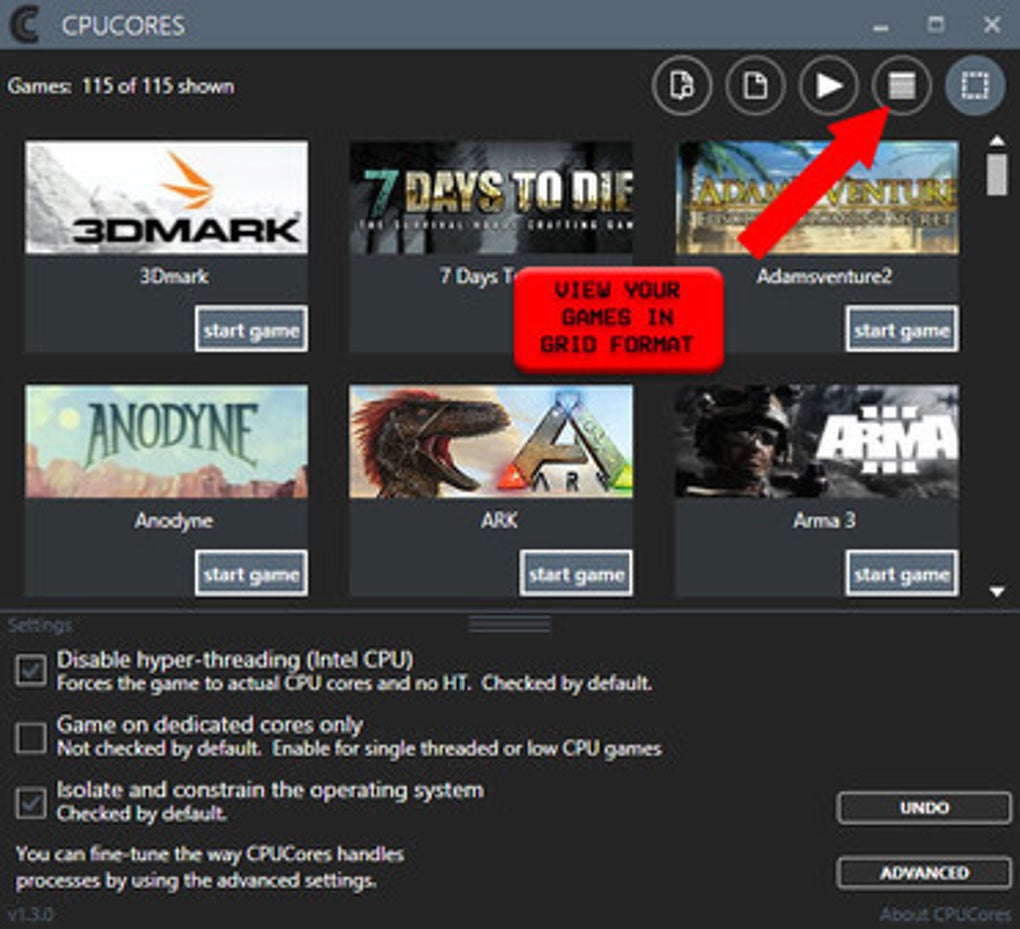
While the internal workings of CPUCores aren’t publicly available, we can reasonably hypothesize about its functionality based on its stated purpose. The program likely employs a combination of the following techniques:
-
Process Prioritization: CPUCores likely prioritizes game processes over background tasks and less critical system functions. This ensures that the game receives the majority of the CPU’s processing power, resulting in a higher FPS. This is accomplished by assigning higher process priorities within the operating system.
-
Resource Allocation: The software might analyze the game’s resource requirements in real-time and dynamically allocate CPU cores to optimize processing. Games often utilize multiple CPU cores concurrently, and CPUCores might distribute the workload more effectively than the default OS scheduling.
-
Overclocking (Potential, but Unconfirmed): While not explicitly stated, some CPU optimization programs include options for safe overclocking. This involves increasing the CPU’s clock speed to boost performance. It’s crucial to note that overclocking should only be attempted with caution and appropriate hardware monitoring to prevent damage. It’s unknown if CPUCores incorporates this feature, but it’s a possibility.
- Background Process Management: CPUCores likely manages and minimizes the impact of background processes that could compete with the game for resources. This might involve temporarily suspending or reducing the priority of non-critical applications.
It’s crucial to remember these are educated guesses based on the program’s function. Without access to the source code or detailed documentation, the precise methods employed remain undisclosed.
User Experience and Performance Gains: Evaluating the Impact
The available data provides limited information about user experiences. There are no detailed user reviews present in the source material, making it impossible to draw concrete conclusions about the effectiveness of CPUCores. However, the fact that it has been downloaded nearly 5,000 times suggests that at least some users found it valuable. It’s essential to approach these limited downloads with caution; user reviews are crucial for understanding the actual performance enhancements achieved.
To accurately assess the performance improvements provided by CPUCores, a controlled testing methodology is necessary. This would involve comparing FPS performance before and after installation, using the same game, settings, and hardware configuration. A variety of games and different system configurations should be tested for comprehensive results.
System Requirements and Compatibility
The original source indicates compatibility with Windows 7 and earlier versions. It’s unknown whether it is compatible with later versions of Windows (e.g., Windows 10, 11) or other operating systems. The lack of detailed system requirements leaves some ambiguity. Before installing CPUCores, users should check the official source (if available) for confirmed compatibility information.
Frequently Asked Questions (FAQs)
While specific FAQs regarding CPUCores are not present in the source material, based on common concerns about such software, here are some likely questions and answers:
Q: Is CPUCores safe to use?
A: Without in-depth security analysis, it’s impossible to definitively state that CPUCores is entirely safe. Installing any third-party software carries inherent risks. Carefully examine the source from which you download the program and ensure it’s from a reputable and trusted provider. A security scan with a reputable antivirus program before and after installation is also recommended.
Q: Will CPUCores damage my CPU?
A: Properly developed CPU optimization software should not damage your hardware. However, issues can arise from improper use or conflicts with other software. Monitor your CPU temperature while using CPUCores to ensure it doesn’t overheat. If you observe unusual temperatures or system instability, stop using the program immediately.
Q: What are the alternative solutions for boosting FPS?
A: Aside from CPU optimization software, numerous other strategies can improve in-game FPS:
- Updating Graphics Drivers: Outdated drivers often limit performance. Ensure your graphics drivers are current.
- Lowering In-Game Settings: Reducing visual settings (resolution, shadows, textures) will drastically decrease CPU and GPU workload.
- Closing Unnecessary Background Applications: Background apps consume resources, impacting gaming performance.
- Upgrading Hardware: If your CPU is outdated, upgrading it or other system components (RAM, GPU) might provide the most significant FPS improvement.
Q: Is CPUCores a free program?
A: The source material indicates CPUCores is a paid program. The cost is not specified, but users should expect a price tag associated with its download.
Q: How much of an FPS increase can I expect?
A: The FPS increase varies greatly depending on your system specifications, the game being played, and other factors. There’s no guaranteed improvement, and the difference could range from negligible to substantial. Performance testing is crucial for accurate assessment.
Q: Is CPUCores compatible with all games?
A: While the program aims to improve FPS in games, its effectiveness might vary across different titles and game engines. It’s difficult to guarantee compatibility with all games without extensive testing.
In conclusion, CPUCores offers a potential solution for enhancing gaming performance by optimizing CPU utilization. However, without extensive user reviews and detailed performance benchmarks, a thorough evaluation of its true effectiveness remains limited. Users should proceed with caution, carefully weigh the potential benefits against the associated risks, and explore alternative strategies for improving FPS. Always prioritize safety and responsible resource management to avoid potential system instability or hardware damage.
File Information
- License: “Full”
- Version: “2016”
- Latest update: “February 6, 2017”
- Platform: “Windows”
- OS: “Windows 7”
- Language: “English”
- Downloads: “4.8K”


