
Crayon Physics, a deceptively simple yet profoundly engaging physics-based puzzle game, challenges players to guide a red ball to a star using nothing but their drawing skills and an understanding of basic Newtonian mechanics. Developed by Kloonigames and released in 2007, this innovative title quickly garnered attention for its unique gameplay, charming aesthetic, and surprisingly challenging puzzles. Instead of relying on complex narratives or high-octane action, Crayon Physics focuses on a core mechanic: the player’s ability to manipulate the environment using drawn geometrical shapes, all while adhering to the realistic laws of physics. This seemingly straightforward premise belies the intricate problem-solving required to progress through the game’s increasingly difficult levels.
The Gameplay: Drawing Your Way to Success
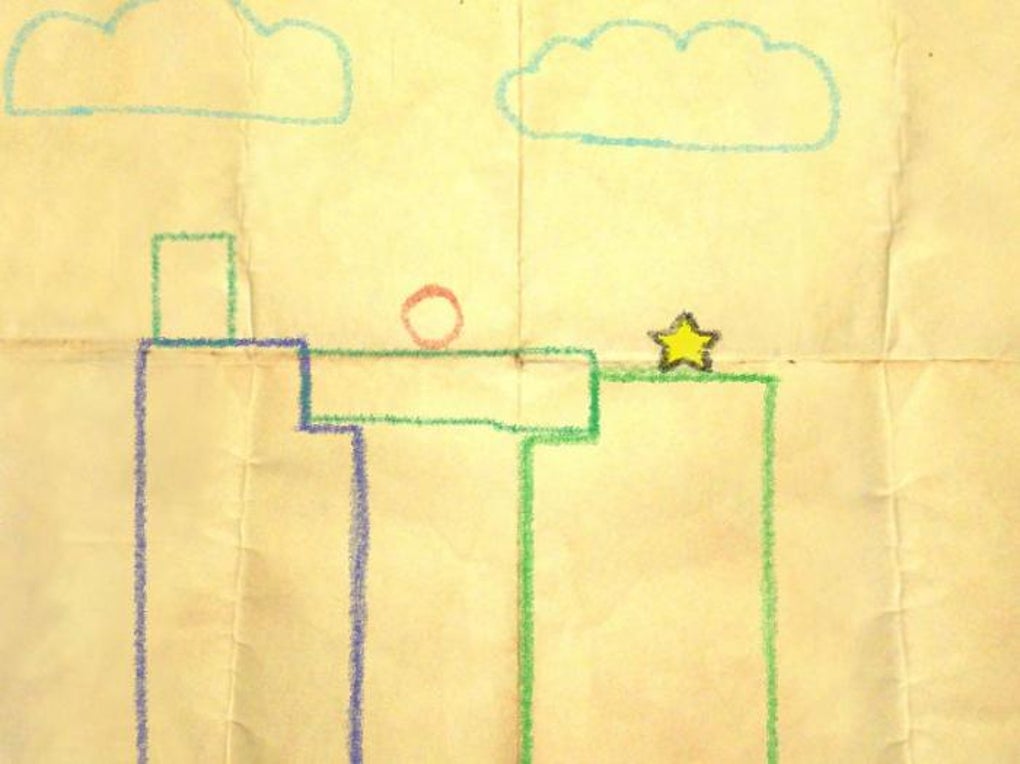
The game’s core mechanic revolves around the player’s ability to draw various shapes—squares, rectangles, circles, and triangles—using their mouse cursor, which acts as a digital crayon. These shapes, instantly rendered on the screen as if drawn with actual crayons, become interactive elements within the game’s physics engine. The player must strategically place and shape these objects to act as ramps, levers, pulleys, or any other tool necessary to maneuver the red ball towards its goal—a twinkling star. The physics engine reacts realistically to the drawn shapes, influencing their interactions with the ball and the environment. A poorly placed rectangle might fail to provide sufficient support, while an improperly sized ramp might send the ball careening off course.

The levels themselves are presented as simple, hand-drawn sketches, lending a charming and informal aesthetic to the game. The environments range from simple inclines to intricate mazes, constantly introducing new challenges and requiring innovative solutions. The game’s beauty lies in its ability to make complex physics concepts accessible and engaging through intuitive interactions. Players aren’t given explicit instructions on how to solve each puzzle; instead, they’re encouraged to experiment, iterate, and learn through trial and error. This experimental approach to problem-solving is a key part of the game’s appeal, fostering a sense of discovery and rewarding ingenuity. Failure is not just acceptable; it’s an integral part of the learning process. Each unsuccessful attempt provides valuable feedback, allowing players to refine their strategies and better understand the game’s underlying physics principles.
The Physics Engine: A Foundation of Fun
The seemingly simple physics engine is the heart of Crayon Physics. Gravity, friction, momentum, and other fundamental physical forces accurately influence the movement of the red ball and the player-drawn objects. This realism enhances the game’s challenge and encourages players to develop a deeper understanding of how these forces interact. The game’s difficulty gradually increases, starting with relatively straightforward puzzles and progressing to levels requiring careful calculations and strategic planning. Later levels demand a nuanced understanding of physics concepts, challenging players to utilize concepts like momentum transfer, leverage, and the impact of different shapes and weights.
The precision required for successful navigation adds a significant layer of complexity. A slightly misplaced line, an inadequately sized platform, or an incorrect angle can lead to failure, forcing the player to rethink their approach and carefully recalibrate their designs. This need for accuracy and precision isn’t merely a frustrating obstacle; it’s a crucial element of the gameplay, demanding patience, critical thinking, and a deep understanding of the game’s physics engine. The game encourages methodical problem-solving and meticulous execution, rewarding players who demonstrate both creative thinking and mathematical precision.
The Visual Style: Simple Sketches, Profound Impact
The hand-drawn visual style of Crayon Physics is a significant part of its charm. The simple, almost childlike drawings add a unique aesthetic appeal, contrasting with the complexity of the physics engine. The use of crayons and a seemingly simplistic visual presentation makes the game accessible to a broad audience, while the underlying physics engine provides a surprising depth of challenge. This stylistic choice contributes to the game’s overall approachability and broad appeal, making it enjoyable for both casual players and those with a more in-depth interest in physics or puzzles. The simplistic visual approach also helps to emphasize the game’s core mechanics; the player isn’t distracted by highly detailed graphics but instead focuses on the physics-based puzzle at hand.
The background music further enhances the game’s overall ambiance. The gentle, unassuming soundtrack subtly complements the playful nature of the game without being distracting or intrusive. It adds to the overall relaxing atmosphere, encouraging players to take their time and focus on solving the puzzles without the pressure of intense or dramatic music. This understated approach to the game’s audio perfectly complements its simple yet elegant visual style.
Challenges and Limitations
Despite its many strengths, Crayon Physics also presents some minor shortcomings. One common complaint among players is the lack of a level selection screen. Once a player completes a level, they must progress through all preceding levels to reach the next challenge. While this approach may encourage a thorough understanding of the mechanics and a deeper appreciation for the game’s progression, it can be somewhat frustrating for those wishing to revisit later, more challenging levels.
Another minor drawback is the occasional inconsistency in the game’s physics engine. While generally accurate, the physics can sometimes feel slightly unpredictable, leading to unexpected outcomes that may seem unfair to the player. These inconsistencies are relatively minor, but they can occasionally disrupt the flow of the game and add an element of luck to problem-solving, which contradicts the emphasis on precision and skill. However, these limitations do little to detract from the overall charm and enjoyment of the game.
In conclusion, Crayon Physics is more than just a puzzle game; it’s a unique and creative exploration of physics principles disguised as a fun and accessible experience. The combination of intuitive controls, challenging puzzles, and a charming visual style makes it a truly remarkable title. While minor limitations exist, they are far outweighed by the innovative gameplay, rewarding challenges, and overall engaging nature of this exceptional physics-based puzzle game. Crayon Physics stands as a testament to the power of simple mechanics and ingenious design, proving that complex concepts can be effectively communicated and enjoyed through clever gameplay and thoughtful presentation.
File Information
- License: “Free”
- Version: “1.0”
- Latest update: “October 29, 2007”
- Platform: “Windows”
- OS: “Windows 8”
- Language: “English”
- Downloads: “179.1K”
- Size: “5.91 MB”


