
Crusader Kings III, the third installment in Paradox Development Studio’s acclaimed grand strategy RPG series, plunges players into the tumultuous world of medieval Europe (and beyond). Building upon the foundations laid by its predecessors, Crusader Kings III refines classic gameplay mechanics while introducing innovative features that deepen the immersive experience of ruling a dynasty through generations of intrigue, warfare, and political maneuvering. This isn’t just a game about conquering lands; it’s about shaping the destiny of your family, forging alliances, and navigating the complexities of courtly life.
A Grand Strategy RPG: More Than Just Conquest
Crusader Kings III firmly establishes itself within the grand strategy subgenre, a category of games focusing on long-term strategic planning and resource management across vast territories. Unlike real-time strategy games demanding immediate tactical responses, Crusader Kings III unfolds at a more deliberate pace, emphasizing the intricate web of relationships, political alliances, and dynastic succession that define the medieval period. The player isn’t simply a nameless commander; they embody a specific ruler, whose personality, skills, and decisions directly impact the fate of their kingdom and family.
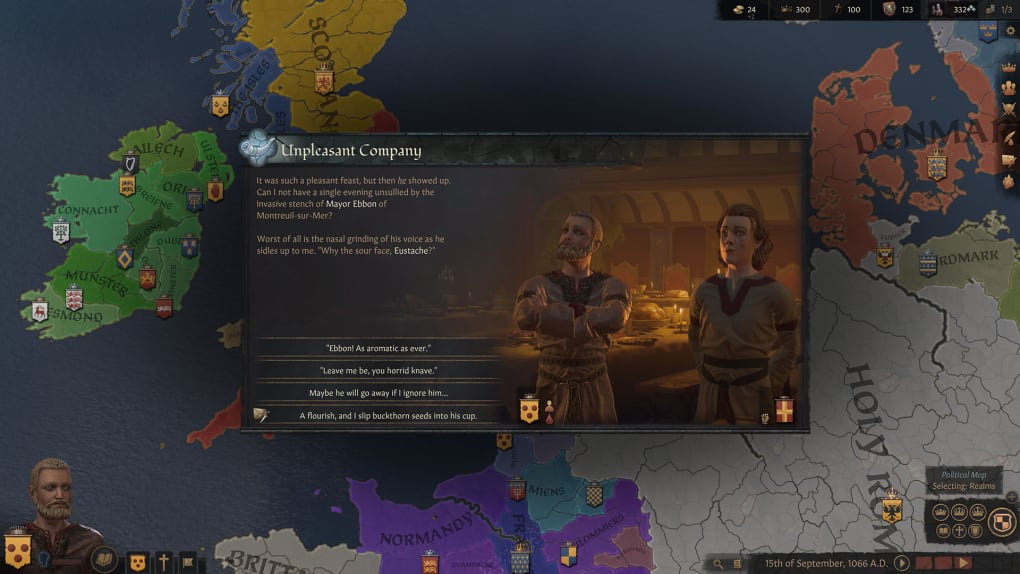
The game’s core gameplay loop centers around maintaining and expanding the power of your dynasty. This involves a multifaceted approach:
-
Managing your kingdom: Players must oversee their realm’s economy, infrastructure, and military strength. Strategic decisions regarding taxation, construction, and military campaigns are crucial for survival and expansion. Effective governance is as vital as military prowess.
-
Navigating Courtly Intrigue: The medieval court is a breeding ground for conspiracies, alliances, and betrayals. Players must cultivate relationships with powerful nobles, manage ambitious courtiers, and outmaneuver their rivals to secure their position and prevent rebellions. Marriage alliances, strategic assassinations, and clever diplomacy are all part of the game.
-
Dynastic Succession: The long-term success of your reign hinges on ensuring the continuation of your dynasty. Players must carefully choose heirs, educate them, arrange advantageous marriages, and even consider less orthodox methods to secure the throne for their descendants. Death is not an end in Crusader Kings III; it’s a transition to the next generation of rulers, carrying the weight of your legacy with them.
Unlike other grand strategy games that may offer a more distant, macro-level view of the world, Crusader Kings III embraces a personalized approach. Individual characters, with their own unique traits, skills, and relationships, form the heart of the gameplay. This emphasis on individual characters elevates the game beyond mere territorial control, immersing players in a rich tapestry of personal stories and historical drama.
New Mechanics and Enhanced Gameplay
Crusader Kings III significantly builds on its predecessors with several key improvements and new mechanics:
-
Renown: A new in-game currency, Renown, offers players greater control over their dynasty’s growth and development. This allows strategic investment in various aspects of their family’s power, offering further options to shape the future of their lineage.
-
Lifestyles: Characters are now defined by chosen lifestyles, aligning with their personality and ambition. These lifestyles unlock unique perks, benefits, and events that can significantly impact their reign, offering tailored paths for character development.
-
Improved Character Portraits: The game features visually stunning and diverse 3D character portraits that add depth and personality to the characters within the game world, enhancing the immersive quality of the gameplay.
-
Genetics System: The introduction of a detailed genetics system allows players to influence the hereditary traits of their family members, enabling strategic breeding for desired characteristics. This adds another layer of long-term strategic planning beyond immediate political maneuvering.
-
Expanded Dynasties: Players can witness their dynasties expand and flourish (or collapse) across several generations, shaping the course of history and leaving behind a legacy that resonates through the ages.
These new features and enhancements combine to create a truly immersive and dynamic gameplay experience. However, it’s important to note that while Crusader Kings III streamlines certain aspects compared to its predecessor, some features from Crusader Kings II might be missed by long-time players.
DLCs, Updates, and Continuous Expansion
Paradox Development Studio demonstrates its commitment to Crusader Kings III through a consistent release of downloadable content (DLCs) and regular updates. These additions provide a steady stream of new content, features, and improvements, expanding the base game and enhancing its replayability.
The DLCs introduce a wide range of additions, from new cosmetic items (clothing, weapons) to significant gameplay expansions. These expansions often introduce new mechanics, regions, cultures, and challenges to further engage players and increase the depth of the game.
Furthermore, regular updates, such as the notable “Traverse” update, provide further improvements and new features. These updates might include new lifestyle trees, activities, buildings, and cultural traditions, ensuring that the game continues to evolve and remain fresh even long after release.
This continuous expansion maintains Crusader Kings III’s longevity, attracting both long-time fans and newcomers to the ever-evolving world of medieval dynasty management.
A Verdict for New and Veteran Players
Crusader Kings III is a compelling and immersive grand strategy RPG that successfully blends refined classic gameplay with innovative new mechanics. The focus on individual characters, intricate courtly intrigue, and long-term dynastic planning elevates the game beyond simple conquest, crafting a rich and engaging experience.
While some features from Crusader Kings II might be missed by veteran players, the improvements and additions in Crusader Kings III make it a rewarding experience for both newcomers and long-time fans of the series. The continued support through DLCs and updates only strengthens the game’s overall value proposition, ensuring that the experience remains dynamic, engaging, and continually evolving.
Pros:
- Stunning 3D character portraits with improved diversity
- Enhanced focus on individual character growth and development
- More expansive dynasties and greater opportunities for long-term planning
- Refined and intuitive gameplay mechanics
- Comprehensive genetics system allowing for strategic lineage management
- Regular updates and DLCs providing continuous expansion and content
Cons:
- Absence of certain character development features from previous installments
- Some legacy features from Crusader Kings II are not included
Ultimately, Crusader Kings III stands as a testament to Paradox Development Studio’s dedication to creating a compelling and engaging grand strategy RPG. It’s a game that demands patience, strategy, and cunning, rewarding players with a deeply immersive and historically rich simulation of medieval courtly life. The long-term investment is substantial, but the rewards—be it a powerful dynasty stretching across centuries or a captivating personal story—are well worth the effort.
File Information
- License: “Full”
- Version: “varies-with-device”
- Latest update: “December 3, 2024”
- Platform: “Windows”
- OS: “Windows 8”
- Language: “English”
- Downloads: “11.1K”


