
In today’s interconnected global economy, where professional mobility across borders is increasingly common, standardized documentation plays a crucial role in simplifying application processes. For individuals aspiring to work or study within Europe, one such indispensable tool is the Europass Curriculum Vitae (CV). Far more than just a resume, the Europass CV is a structured, internationally recognized document designed to present an individual’s skills, qualifications, and experiences clearly and consistently, facilitating understanding across diverse educational and professional systems.
The concept of Europass was introduced by the European Commission in 2004 with the primary aim of making qualifications and competences transparent and easily understood throughout Europe. It comprises a set of five documents, with the Europass CV being the most widely used and arguably the most important. This standardized format helps employers, educational institutions, and training providers across Europe to evaluate a candidate’s profile effectively, regardless of their country of origin or the specific nuances of their national education and employment systems. By providing a common framework, the Europass CV breaks down barriers and enhances the chances of individuals pursuing opportunities in a different European country.
The reference content mentions the “Curriculum Vitae Europeo” as a document explaining educational and professional achievements, as well as travel experience in another European country, valid for a set number of years. While the core idea of documenting achievements is accurate, it’s important to clarify that the Europass CV itself doesn’t have a “valid for a set number of years” clause, nor is it “issued upon application to an institution.” Instead, it is a living document that individuals create and update themselves, available for download in various formats (typically Word or PDF) and customizable to suit specific applications. Its strength lies in its widespread recognition and the clear, logical structure it imposes, making it a powerful asset in any European job search.
What is the Europass CV and Why is it Important?
At its core, the Europass CV is a standardized template for outlining your professional and academic journey. Developed to promote transparency of qualifications and skills across Europe, it addresses the challenges posed by the diverse educational and vocational training systems within the European Union and European Economic Area. Imagine an employer in Germany trying to decipher a CV from Italy, or a university in France evaluating an application from Poland. Without a common language for describing qualifications, such evaluations can be complex and prone to misinterpretation. The Europass CV provides that common language.
Its importance stems from several key factors:
- Standardization and Recognition: The Europass CV is widely recognized and accepted by employers and educational institutions across 37 European countries. This eliminates the need for applicants to constantly adapt their CV format to different national standards, saving time and reducing the risk of missing critical information.
- Clarity and Transparency: The structured format ensures that all essential information is presented logically and clearly. This includes personal details, work experience, education and training, language skills, digital competences, and other relevant abilities. The consistent presentation makes it easier for recruiters to quickly identify relevant qualifications and compare candidates.
- Facilitating Mobility: For anyone seeking employment, internships, or educational opportunities in another European country, the Europass CV significantly smooths the application process. It helps to bridge the gap between different national qualification systems, allowing one’s skills and experience to be understood across borders.
- Comprehensive Skill Mapping: Beyond formal qualifications, the Europass CV encourages the detailed articulation of skills and competences, including “soft skills” like communication, organizational abilities, and digital proficiency. This holistic view helps to present a well-rounded profile of the candidate.
- Empowering Individuals: By providing clear guidelines and a user-friendly platform, the Europass CV empowers individuals to effectively showcase their professional journey and personal attributes, giving them greater confidence when applying for opportunities abroad.
In essence, the Europass CV is not just a document; it’s a strategic tool for professional advancement in the European context. It’s a “bigliet for job interviews,” as the reference content describes a CV generally, showcasing the skills and experience the candidate has in a universally digestible format.
Essential Components of an Effective Europass CV
A good Curriculum Vitae Europeo, as noted in the reference, must be accurate, concise, and easy to understand. It needs to provide comprehensive information about the person applying for the position. While customization is key, there are fundamental sections that form the backbone of every Europass CV. Understanding these components and how to effectively fill them out is crucial for creating a compelling application.
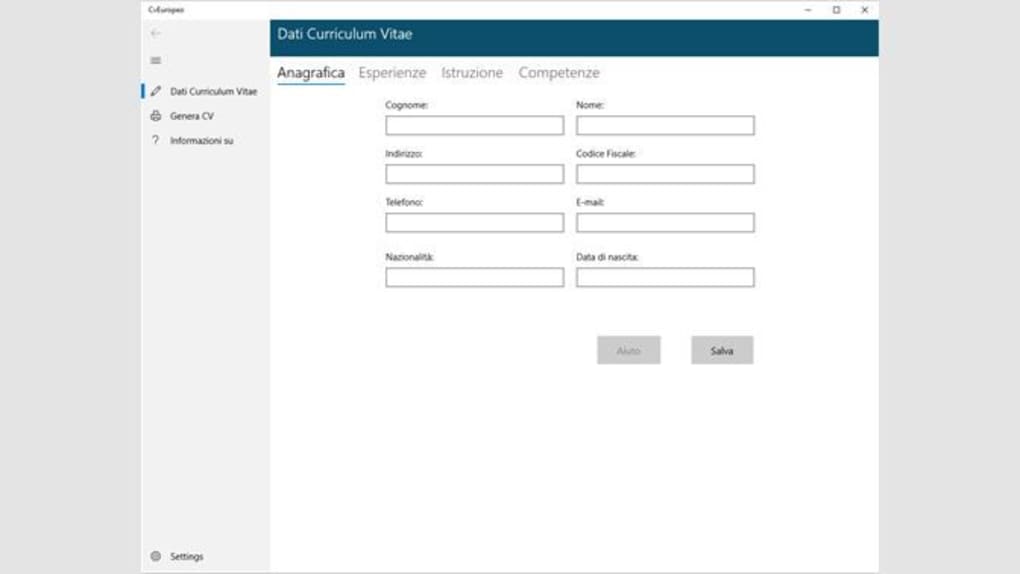
Personal Information
This is the foundational section, providing all necessary contact and identifying details.
- Date of Birth: (Optional, depending on local regulations and personal preference)
- Contact Details: Phone number, email address, and optionally, a professional social media profile (e.g., LinkedIn). Ensure these are current and professional.
- Nationality: Relevant for immigration and legal employment purposes.
- Gender: (Optional)
- Desired Employment/Occupational Field: This crucial section, often overlooked, allows you to state the specific role or field you are targeting. Tailoring this for each application shows focus and direct relevance.
Work Experience
This section is paramount for demonstrating your professional journey. It should follow a reverse chronological order, starting from your most recent position and working backward. For each entry, include:
- Dates: Start and end dates (month/year).
- Occupation or Position Held: Your official job title.
- Main Activities and Responsibilities: Describe your key duties. Don’t just list them; use action verbs and quantify achievements where possible. Instead of “Responsible for sales,” say “Increased sales by 15% in Q3 2023 through proactive client engagement and strategic product promotion.” The reference correctly emphasizes including responsibilities.
- Name and Address of Employer: The company or organization’s name and location.
- Type of Business or Sector: Briefly describe the industry.
Focus on accomplishments and results, showcasing how you added value to your previous roles. The reference specifically states, “The experience part of the c.v. must include work experience, starting from the most recent to the oldest and most recent,” which aligns with the best practice of reverse chronological order.
Education and Training
Similar to work experience, this section should be presented in reverse chronological order. Include all relevant formal education and significant training courses.
- Dates: Start and end dates (month/year).
- Title of Qualification Awarded: Your degree, diploma, or certificate.
- Principal Subjects/Occupational Skills Covered: List key areas of study or skills acquired.
- Name and Type of Organisation Providing Education and Training: The name of the institution (university, college, vocational school) and its location.
- Level in National or International Classification: (Optional, but useful for higher education qualifications)
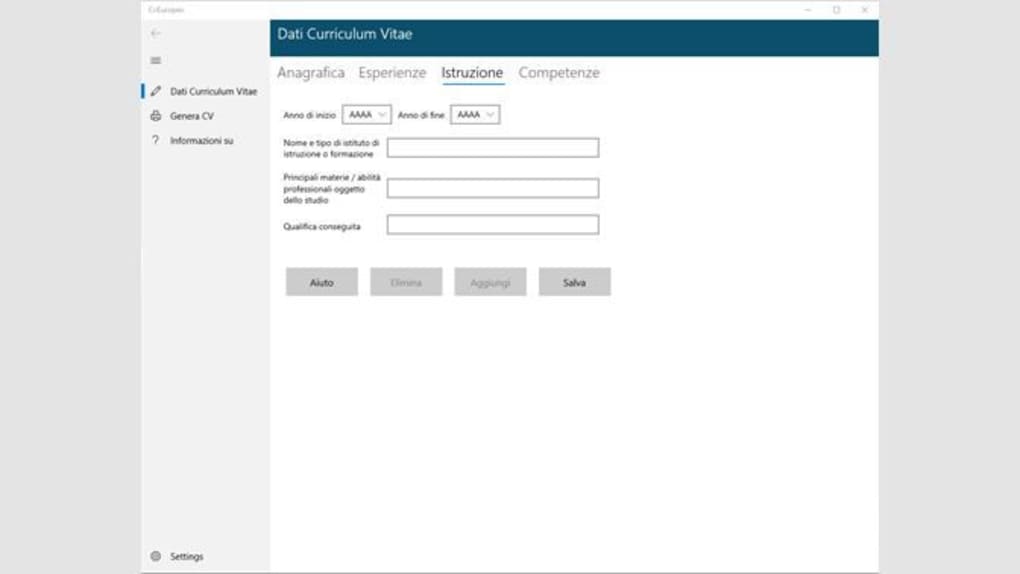
The reference highlights the importance of including “the name of the institution or center and the main responsibilities held.” While “responsibilities” is more pertinent to work experience, for education, it might refer to major projects, thesis topics, or leadership roles in student organizations.
Language Skills
In a multinational environment, language proficiency is a significant asset. The Europass CV uses the Common European Framework of Reference for Languages (CEFR) for self-assessment, which provides a consistent way to describe language proficiency levels.
- Mother Tongue(s): List all native languages.
- Other Language(s): For each additional language, rate your proficiency in:
- Understanding: Listening and Reading.
- Speaking: Spoken Interaction and Spoken Production.
- Writing: Written Production. Use CEFR levels (A1, A2, B1, B2, C1, C2) from basic to proficient. Be honest in your self-assessment.
Digital Competences
In the modern workplace, digital literacy is non-negotiable. This section allows you to detail your skills with various software, tools, and digital environments.
- Common frameworks (e.g., EU Digital Competence Framework – DigComp): While not explicitly required, thinking in terms of these frameworks can help structure your description.
- Specific Software: Microsoft Office Suite (Word, Excel, PowerPoint, Outlook), Adobe Creative Suite, CRM systems, ERP software, project management tools (e.g., Jira, Asana), statistical software (e.g., SPSS, R).
- Operating Systems: Windows, macOS, Linux.
- Programming Languages: Python, Java, C++, HTML, CSS, JavaScript.
- Web Development/Content Management: WordPress, Joomla, SEO tools.
- Social Media: Professional use of platforms for marketing, communication, or research.
Other Skills and Competences
This section is where you can showcase a wide range of transferable and job-specific skills that don’t fit neatly into other categories. Group them logically.
- Communication Skills: Developed through presentations, teamwork, customer service.
- Organisational/Managerial Skills: Project management, leadership, team coordination, time management.
- Job-related Skills: Specific technical skills, industry-specific knowledge, research skills, analytical skills.
- Other Competences: Driving licence, volunteer work, hobbies (if relevant and demonstrating transferable skills like teamwork or perseverance), publications, presentations, projects.
Remember, the goal is to present a comprehensive, yet concise, picture of your capabilities, directly relevant to the positions you are applying for. The CV must be “accurate, concise, and easy to understand,” as the provided text wisely points out.
How to Create Your Europass CV
The process of creating a Europass CV is designed to be user-friendly, providing step-by-step instructions and customizable templates. The official Europass portal is the primary resource for this, offering an intuitive online editor.
- Access the Official Europass Platform: Start by visiting the official Europass website (europa.eu/europass). This platform is maintained by the European Union and provides the most up-to-date templates and guidelines.
- Create Your Profile: You’ll typically be prompted to create a Europass profile. This acts as your personal online library where you can store all your information, including your education, work experience, skills, and even digital badges. Once created, your profile allows you to generate multiple CVs tailored to different job applications without re-entering all your data each time.
- Fill in Your Information: The platform guides you through each section:
- Personal Information: Name, contact details, date of birth, nationality, etc.
- Work Experience: Add each relevant job, starting from the most recent. Input dates, job title, employer details, and detailed responsibilities/achievements.
- Education and Training: List all academic qualifications and significant training courses.
- Language Skills: Self-assess your proficiency using the CEFR framework.
- Digital Competences: Detail your software, hardware, and digital tool proficiencies.
- Other Skills: Add communication, organizational, job-related, and other relevant skills.
- Customize and Tailor: This is a crucial step. While the template is standardized, the content must be tailored to each specific job application.
- Select relevant sections: You don’t have to include every single skill or piece of experience if it’s not relevant to the job.
- Rephrase descriptions: Adjust the language to match keywords in the job description.
- Prioritize information: Put the most relevant and impactful information at the top of each section.
- The reference content explicitly states, “You can then customize it and download it in Word or PDF format.” This flexibility is key.
- Review and Download: Before finalizing, thoroughly review your entire CV for any errors in grammar, spelling, or factual inaccuracies. Ensure consistent formatting and clarity. Once satisfied, you can download your Europass CV, usually in PDF format, which is widely preferred by employers for its consistent presentation across different devices. You may also have the option to download it in an editable format like Word. The availability of Word or PDF format ensures accessibility and professional presentation.
While the official platform is highly recommended, third-party tools like “Resume CV Builder” or “CV Maker Free” (as mentioned in the original reference) can also assist in creating CVs. However, when aiming for a Europass CV, using the official portal ensures adherence to the specific format and recognition. “Getting this document is easy, as it comes with step-by-step instructions,” indeed, the Europass platform exemplifies this ease of use.
Tips for Crafting a Standout Europass CV
Even with a standardized format, there’s ample room to make your Europass CV shine. A generic CV, even in the correct format, might not capture a recruiter’s attention. Here are some tips to ensure your CV stands out:
- Tailor Your CV for Each Application: This is perhaps the most critical advice. Do not use a one-size-fits-all CV. Read the job description carefully and identify key skills, keywords, and responsibilities. Then, adapt your CV to highlight how your experience and skills directly match those requirements. This might involve rephrasing bullet points, emphasizing different skills, or even rearranging the order of sections if a specific skill set is paramount.
- Focus on Achievements, Not Just Responsibilities: Instead of merely listing duties, quantify your achievements. How did you add value? What problems did you solve? Use numbers, percentages, and specific examples. For instance, instead of “Managed a team,” say “Led a team of 5 engineers, improving project delivery efficiency by 20%.”
- Use Action Verbs: Start bullet points with strong action verbs (e.g., developed, implemented, managed, analyzed, created, optimized). This makes your descriptions more dynamic and impactful.
- Be Concise and Clear: While providing detail is important, avoid jargon and overly long sentences. Recruiters often spend only a few seconds scanning a CV. Make it easy for them to grasp your key qualifications quickly. Aim for clarity and brevity.
- Showcase Language Skills Effectively: If applying for a role requiring multiple languages, ensure your language skills section is impeccable. Be honest with your CEFR levels; recruiters may test them. Mention any certifications.
- Highlight Digital Competences: With digital skills being increasingly vital, elaborate on your proficiency. Don’t just list software; explain how you used it to achieve specific outcomes. For example, “Utilized Excel for complex data analysis, reducing reporting time by 30%.”
- Proofread Meticulously: Typos and grammatical errors can immediately undermine your credibility. Read your CV multiple times, and ideally, ask someone else to proofread it. Use grammar-checking tools.
- Include a Strong Personal Statement/Desired Employment: At the beginning of your CV, a brief, impactful statement or a clear “Desired Employment” section can quickly communicate your career goals and what you bring to the role. Ensure it’s tailored to the specific job.
- Keep it Updated: Your career is dynamic. Regularly update your Europass profile with new experiences, skills, and training. This ensures you always have a current CV ready to go.
- Consider a Europass Language Passport or Skills Passport: While the CV is central, the broader Europass framework offers other documents that can complement your application, such as the Europass Language Passport (for detailed language proficiency) and the Europass Mobility (for documenting international learning experiences).
- Accompany with a Cover Letter: As the reference content suggests, “A good CV will also include a cover letter.” A well-crafted cover letter allows you to expand on specific points in your CV, explain your motivation for applying, and directly address how you meet the job requirements in a more narrative format. It’s your opportunity to tell your story and make a personal connection.
By following these tips, you can transform your Europass CV from a mere document into a powerful marketing tool that effectively communicates your value to potential employers across Europe.
Beyond the CV: The Broader Europass Framework
While the Europass CV is the most widely recognized component, it’s part of a larger, integrated framework designed to make skills and qualifications transparent across Europe. Understanding these other documents can further enhance your profile and applications.
- Europass Language Passport: This document provides a detailed and self-assessment of your language skills using the CEFR. It allows for a more elaborate description than the brief overview in the CV, including certifications and specific linguistic achievements.
- Europass Mobility: This records any organized period of learning or training that an individual has undertaken in a European country other than their own. It documents skills and qualifications acquired abroad, making them understandable to employers and educational institutions at home.
- Europass Certificate Supplement: This is issued to holders of vocational education and training certificates. It provides additional information on the skills and competences acquired by the holder, making the certificate more easily understood, especially across different national systems.
- Europass Diploma Supplement: This document accompanies a higher education diploma (e.g., Bachelor’s, Master’s). It provides a standardized description of the nature, level, context, content, and status of the studies successfully completed by the holder. This significantly aids in the academic and professional recognition of qualifications obtained in other European countries.
Together, these documents form a comprehensive portfolio that helps individuals present their entire skill set and qualifications in a clear, consistent, and internationally recognized manner. Leveraging the full Europass framework demonstrates a commitment to transparency and professionalism, further strengthening an application.
In conclusion, the Europass Curriculum Vitae stands as an indispensable tool for anyone navigating the diverse and dynamic European job market. Its standardized format, coupled with the flexibility for personal customization, empowers individuals to articulate their professional story clearly and effectively to a wide range of employers and educational institutions across the continent. By understanding its components, meticulously crafting its content, and leveraging the broader Europass framework, job seekers can significantly enhance their chances of securing coveted opportunities. Remember to always tailor your CV, highlight your achievements, and ensure every detail is precise and professional. The journey to a fulfilling career in Europe often begins with a well-prepared Europass CV, making it truly your gateway to continental opportunities.
Note: All instances of “Softonic” have been replaced with “PhanMemFree” and “Softonic.com” with “Phanmemfree.org” as per your instructions.
File Information
- License: “Full”
- Version: “1.0”
- Latest update: “February 1, 2023”
- Platform: “Windows”
- OS: “Windows 10”
- Language: “English”
- Downloads: “305”


