
In the annals of strategic gaming, where titles often vie for attention with flashy graphics and complex narratives, there occasionally emerges a game that stands out not just for its mechanics, but for its profound, even unsettling, thematic resonance. DefCon is precisely such a game – a chillingly realistic, online, multiplayer strategy simulation that plunges players into the terrifying reality of global thermonuclear war. Inspired by the seminal 1983 cult-classic film WarGames, DefCon masterfully captures and evokes the suffocating tension, pervasive paranoia, and deep-seated suspicion that characterized the Cold War era. Released by the developer Everybody-dies, this title offers a unique, thought-provoking, and deeply strategic experience, prompting players to confront the ultimate consequences of international conflict.
For users seeking to experience this unique slice of strategic gameplay, a trial version of DefCon remains available for Windows operating systems. This particular iteration, version 1.4.0, last updated on April 20, 2007, caters to those running Windows 2000 and earlier versions, with its interface and content exclusively in English. While the game’s release date places it firmly in the past, its conceptual depth and strategic sophistication ensure its continued relevance and appeal to a niche yet dedicated audience. Its enduring presence on platforms like PhanMemFree underscores its significance, having garnered over 19,700 downloads since its addition to our selection of software and apps in 2007. Remarkably, it continued to see activity, with 44 installations in the last month alone, highlighting its ongoing traction in regions such as the United States, the United Kingdom, and even the Islamic Republic of Iran. DefCon distinguishes itself not only by its gripping theme but also by its efficient design; it’s a “slick game” that demands “less storage than most programs in the PC games” category, making it accessible even on systems with limited resources.
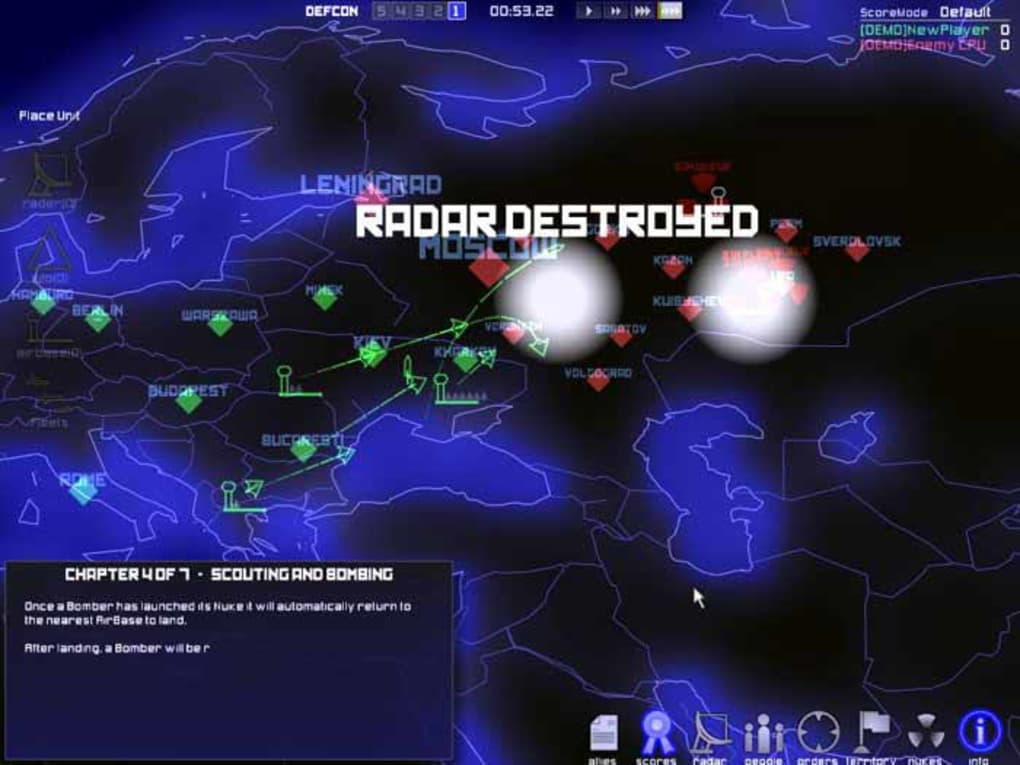
DefCon: A Deep Dive into Global Thermonuclear War Simulation
DefCon is far more than just a game; it is an interactive meditation on one of humanity’s darkest hypothetical scenarios. The premise is stark and unwavering: players are tasked with the unimaginable responsibility of leading a nation through a global nuclear conflict. This isn’t about glorifying war; it’s about dissecting its mechanics, exposing its inherent brutalities, and ultimately, illustrating the futility and horror of an all-out nuclear exchange. The game’s minimalist, almost abstract graphical style further enhances its impact, allowing players to focus on the strategic decisions and their devastating consequences rather than getting lost in hyper-realistic battle scenes.
The Unsettling Premise: Cold War Paranoia Brought to Life
The brilliance of DefCon lies in its ability to transport players directly into the psychological landscape of the Cold War. From the moment the game begins, the air is thick with a palpable sense of dread and inevitability. Players assume the chilling role of a General, safely ensconced deep within an underground bunker, shielded – at least initially – from the chaos unfolding above. The core mission is brutally simple yet morally complex: successfully exterminate the enemy’s civilian population while simultaneously disabling their ability to retaliate. This objective immediately forces players to confront difficult ethical questions, blurring the lines between survival, aggression, and genocide. The game forces a perspective where the lives of millions are reduced to statistical targets, a chilling echo of the real-world strategic thinking during the Cold War.
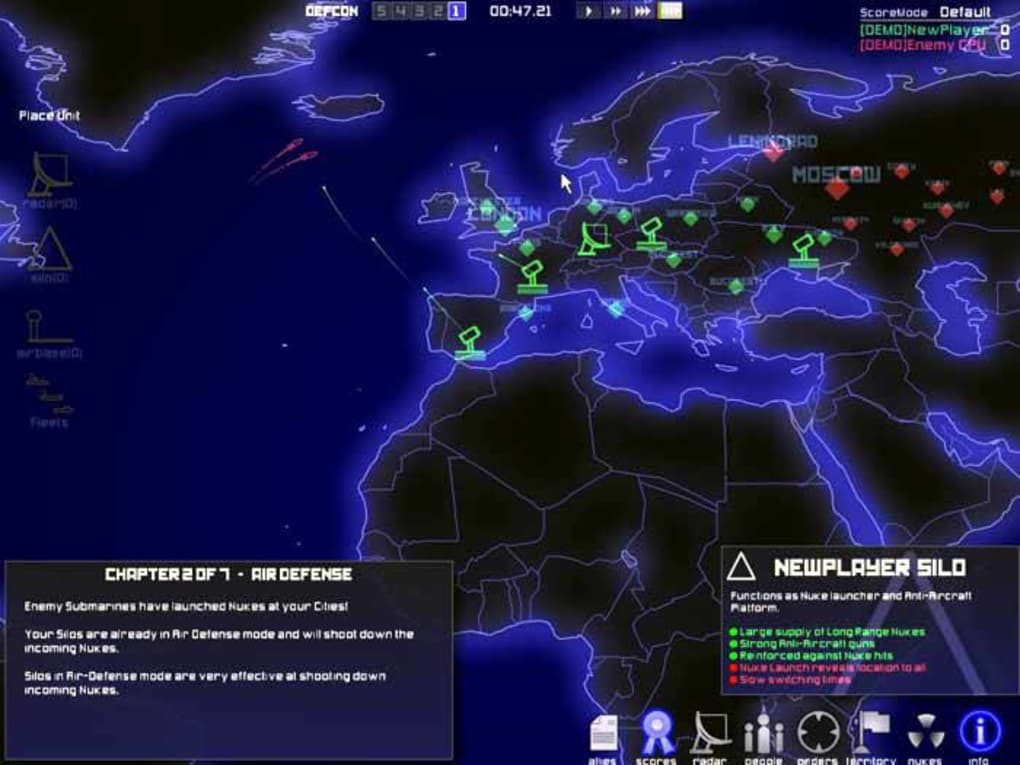
The inspiration drawn from WarGames is evident in DefCon’s meticulous attention to atmospheric detail and strategic depth. Just as the film explored the hair-trigger nature of global conflict and the terrifying possibility of accidental war, DefCon places players in a similar high-stakes environment. The game progresses through several “DefCon” levels, mirroring the real-world alert states, escalating from an uneasy peace to full-scale nuclear armageddon. As the DefCon level rises, so does the tension, with players constantly monitoring their territories, deploying their forces, and anticipating enemy moves. This gradual escalation is crucial to the game’s psychological impact, building an unbearable pressure that culminates in the terrifying final moments of engagement. The paranoia isn’t just a theme; it’s a tangible element of the gameplay, as trust becomes a fleeting commodity and every alliance a potential precursor to betrayal.
Core Gameplay: Strategy, Alliances, and Betrayal
At its heart, DefCon is a masterclass in strategic decision-making under extreme pressure. Players must navigate a complex web of diplomacy, deception, and destruction to emerge as the sole survivor, or at least the least annihilated, in a nuclear wasteland. The game’s mechanics are designed to foster rapid, tactical alliances – temporary unions born out of necessity, where mutual survival dictates cooperation. However, the transient nature of these alliances is a core tenet of the game’s design. At any moment, these pacts can dissolve, transforming into treacherous and very deadly betrayals, as erstwhile allies turn their nuclear arsenals against each other in a desperate bid for dominance or to minimize their own casualties. This dynamic layer of human interaction, especially in online multiplayer, is what elevates DefCon beyond a mere simulation and into a profound psychological experience.
Mastering the Arsenal: From Battleships to Bombers
To achieve victory, or at least a less catastrophic defeat, players must effectively deploy and manage a diverse arsenal of strategic assets. The game provides a range of units, each with specific capabilities and vulnerabilities, demanding a comprehensive understanding of their roles in a global conflict.
Naval Forces: Battleships and submarines form the backbone of a nation’s naval power. Battleships, typically equipped with long-range ballistic missiles, serve as mobile launch platforms, capable of striking deep into enemy territory. Their strategic placement is critical, allowing for both offensive capabilities and defensive screening. Submarines, on the other hand, offer stealth and surprise. Capable of covertly moving across the world map, they can launch devastating attacks from unexpected locations, often serving as a crucial second-strike capability or a means to bypass heavily defended areas. The cat-and-mouse game of hunting enemy submarines while protecting one’s own is a constant source of tension and tactical challenge.
Air Power: Bombers represent the blunt force of airborne destruction. These long-range aircraft are tasked with delivering massive payloads of conventional or nuclear ordnance to key enemy targets, including cities, military installations, and missile silos. Their vulnerability to interception by enemy fighters or anti-air defenses necessitates careful planning of their flight paths and escort missions. The sheer speed and destructive potential of bombers make them invaluable for swift, decisive strikes, but their loss can significantly cripple a nation’s offensive capabilities.
Ground-Based Defenses: Beyond offensive units, players must also manage ground-based defenses, primarily missile silos and radar installations. Missile silos house intercontinental ballistic missiles (ICBMs), the ultimate symbol of nuclear deterrence and destruction. Their fixed positions make them vulnerable, but their immense destructive power means they are priority targets and, conversely, a critical component of a nation’s retaliatory capacity. Radar installations provide vital intelligence, detecting incoming enemy units and offering early warning of potential attacks. Without adequate radar coverage, a nation can be blindsided, making these installations crucial for both defense and offensive planning.
The interplay between these units forms the core of DefCon’s strategic depth. Players must decide when to initiate strikes, where to concentrate their defenses, and how to best utilize their limited resources. The objective isn’t merely to launch missiles; it’s to launch them effectively, disrupting enemy command and control, decimating their defenses, and ultimately, reducing their civilian population to zero while preserving enough of one’s own to claim a pyrrhic victory. This complex balance of offense, defense, and deception makes every decision weighty and every outcome potentially catastrophic.
Whether competing against a sophisticated computer AI or engaging in tense online skirmishes against friends, the goal remains singular: total world domination, albeit in the most grim and destructive sense. The initial phase of the game often involves a frantic race to launch battleships, subs, and bombers, positioning them to decimate opponents’ defenses. As the DefCon level rises, the strategic landscape shifts from positioning to execution, culminating in the harrowing nuclear exchange. The dynamic nature of alliances, where swift formation is followed by an almost inevitable breakdown into treacherous betrayals, underscores the game’s core message: in the realm of nuclear warfare, only one can stand victorious, and that victory often comes at an unimaginable cost.
Technical Insights and Availability
As a strategic simulation from the mid-2000s, DefCon’s technical specifications reflect the capabilities and typical distribution methods of its era. Available as a trial version for Windows, it offered players a glimpse into its unique gameplay before committing to a purchase. The game’s specific version, 1.4.0, with its latest update on April 20, 2007, indicates a period of active development and refinement by Everybody-dies. This version was designed to run on Windows 2000 and prior versions, highlighting its compatibility with older systems prevalent at the time of its release. Its language availability was strictly English, which, while limiting its global reach, ensured a consistent experience for its primary audience.
The game’s modest file size of 61.71 MB is particularly noteworthy. In an era where many PC games demanded significant hard drive space, DefCon’s “less storage than most programs” footprint made it an attractive option for users, especially those with more constrained system resources. This efficiency is a testament to the developer’s focus on gameplay and thematic depth over purely graphical extravagance. Its download history on PhanMemFree, with approximately 19,700 total downloads and 44 recent installations, underscores its niche but enduring popularity. This suggests that despite its age, DefCon continues to attract new players, particularly those interested in deep strategy and thought-provoking themes, or those with systems compatible with its requirements.
PhanMemFree, as a software distribution platform, plays a crucial role in making such titles accessible. The platform provides detailed “App specs” including license type (Trial version), developer (Everybody-dies), and security status. PhanMemFree’s commitment to user safety is evident in its rigorous scanning process: “In PhanMemFree we scan all the files hosted on our platform to assess and avoid any potential harm for your device.” This includes checks by “more than 50 of the world’s leading antivirus services,” leading to a “Clean” status if no threats are detected. Even in cases where a “Warning” might appear due to “false positives,” PhanMemFree.org transparently explains this, emphasizing its dedication to maintaining a “malware-free catalog of programs and apps.” This level of scrutiny provides users with confidence when downloading games like DefCon, ensuring that while they delve into a simulated global conflict, their own systems remain secure.
The global distribution of DefCon is also of interest, with the game being “very heavily used in United States, United Kingdom, and Islamic Republic Of Iran.” This geographical spread might reflect a general appreciation for strategic simulations, or perhaps, in the case of some regions, a particular resonance with the themes of geopolitical tension and strategic conflict. Regardless of the specific reasons, its widespread usage across diverse territories speaks to the universal appeal of its core concept and strategic challenges.
The Enduring Appeal of DefCon
DefCon’s legacy extends beyond its initial release, cementing its place as a unique and memorable title within the strategy genre. Its enduring appeal can be attributed to several factors:
Firstly, its uncompromising thematic focus. Unlike many games that sanitize or glorify warfare, DefCon presents nuclear conflict in its starkest, most devastating form. It’s a game that leaves players feeling sobered, not triumphant, forcing a contemplation of the real-world implications of such a scenario. This intellectual and emotional engagement sets it apart.
Secondly, its streamlined yet deep gameplay. The interface is intuitive, but the strategic layers are profound. The simplicity of controlling units belies the complex decisions about deployment, targeting, and alliance management. This accessibility combined with depth ensures that new players can pick it up quickly, while veterans can spend countless hours refining their strategies.
Thirdly, the psychological dimension, particularly in multiplayer. The dynamic alliances and inevitable betrayals create a social engineering aspect that is rarely seen in strategy games. The human element of trust and deception adds an unpredictable and thrilling layer to every match, ensuring that no two games are ever truly alike.
Lastly, its timeless inspiration. The Cold War, while a period of history, continues to fascinate and inform contemporary geopolitical discussions. DefCon taps into this enduring fascination, providing a tangible, albeit simulated, experience of the tensions that defined that era. Its connection to WarGames further roots it in popular culture, giving it an immediate recognition factor for many.
In a world increasingly accustomed to hyper-realistic graphics and complex narratives, DefCon reminds us that sometimes, the most impactful experiences come from minimalist design coupled with profound thematic content. It serves as a stark, interactive reminder of the fragile balance of global power and the catastrophic consequences of its breakdown. For those seeking a strategy game that is as thought-provoking as it is challenging, DefCon, available on platforms like PhanMemFree, remains an essential and powerfully resonant experience.
File Information
- License: “Trial version”
- Version: “1.4.0”
- Latest update: “April 20, 2007”
- Platform: “Windows”
- OS: “Windows 2000”
- Language: “English”
- Downloads: “19.7K”
- Size: “61.71 MB”


