
In the annals of PC gaming history, certain titles carve out a niche that resonates for decades, shaping genres and influencing subsequent generations of developers. Among these esteemed few stands Delta Force, a tactical first-person shooter that made its debut in 1998. Developed by NovaLogic, it was a game that dared to break conventions, offering a level of scale, realism, and immersion that was groundbreaking for its time. More than two decades later, this classic has been re-released, inviting both nostalgic veterans and curious newcomers to experience the genesis of tactical combat simulation. This article delves deep into what made the original Delta Force a landmark title, examines the nature of its re-release, and explores its enduring legacy in the ever-evolving landscape of video games.
The Dawn of Tactical Realism: A Classic Shooter Re-Emerges
The late 1990s were a vibrant period for PC gaming, particularly for the burgeoning first-person shooter genre. While titles like Quake and Unreal Tournament pushed the boundaries of speed and arena combat, a different breed of shooter began to emerge, prioritizing realism, strategy, and environmental scale over frantic run-and-gun action. Delta Force was at the forefront of this movement, offering a distinct alternative to its contemporaries.
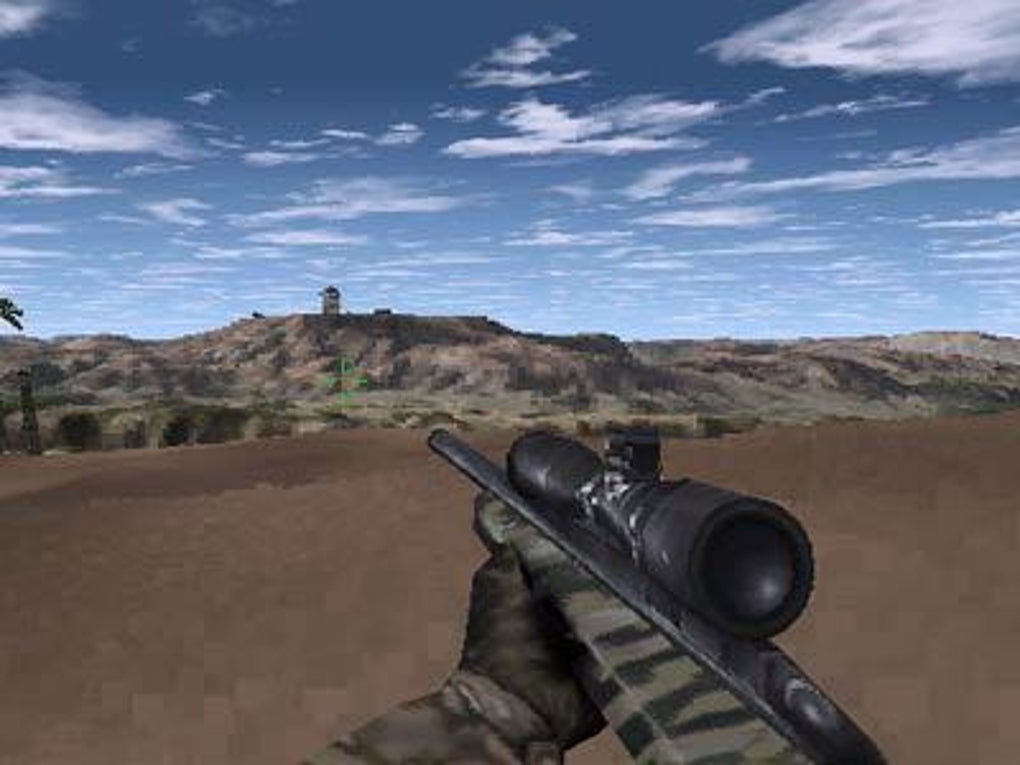
When Delta Force first launched in 1998, it was a revelation. NovaLogic, already known for their flight simulators, applied a similar philosophy of realism and vast environments to ground combat. The game immediately distinguished itself with its innovative use of a proprietary Voxel Space engine. Unlike traditional polygon-based engines that rendered objects as flat surfaces, the Voxel engine allowed for incredibly detailed and realistic terrain, offering complex landscapes with hills, valleys, and dense vegetation that felt organic and expansive. This technological marvel enabled massive outdoor maps, far exceeding the confined corridors and arenas prevalent in other shooters of the era. Players could engage targets at extreme ranges, necessitating a more patient, tactical approach rather than direct confrontation. The scale of the environments was not merely cosmetic; it fundamentally altered gameplay, encouraging flanking maneuvers, strategic positioning, and a keen awareness of one’s surroundings.
The immersive quality of Delta Force extended beyond its visual fidelity. The game boasted impressive sound design that significantly contributed to the feeling of being in a live, hostile environment. The distant crack of a sniper rifle, the distinct sound of incoming enemy footsteps, or the whir of a helicopter overhead were not just ambient noise; they were crucial auditory cues that informed tactical decisions. Players learned to rely on these sounds to detect threats, pinpoint enemy locations, and plan their next move, adding another layer of depth to the already challenging gameplay. This commitment to an “alive” environment set a new benchmark for how shooters could engage players beyond simple point-and-shoot mechanics.
Another impressive feat for its time was the ability to switch seamlessly between first-person and third-person perspectives during gameplay. While many modern games offer this feature as standard, in 1998, it was a notable innovation that provided players with flexibility in how they approached missions. The first-person view offered precise aiming and immersion crucial for combat, while the third-person perspective allowed for better situational awareness, particularly useful for navigating complex terrain or observing enemy patrols from a safe distance. This dual perspective system further empowered players to adapt their tactics to different scenarios, enhancing the strategic depth that NovaLogic sought to achieve.
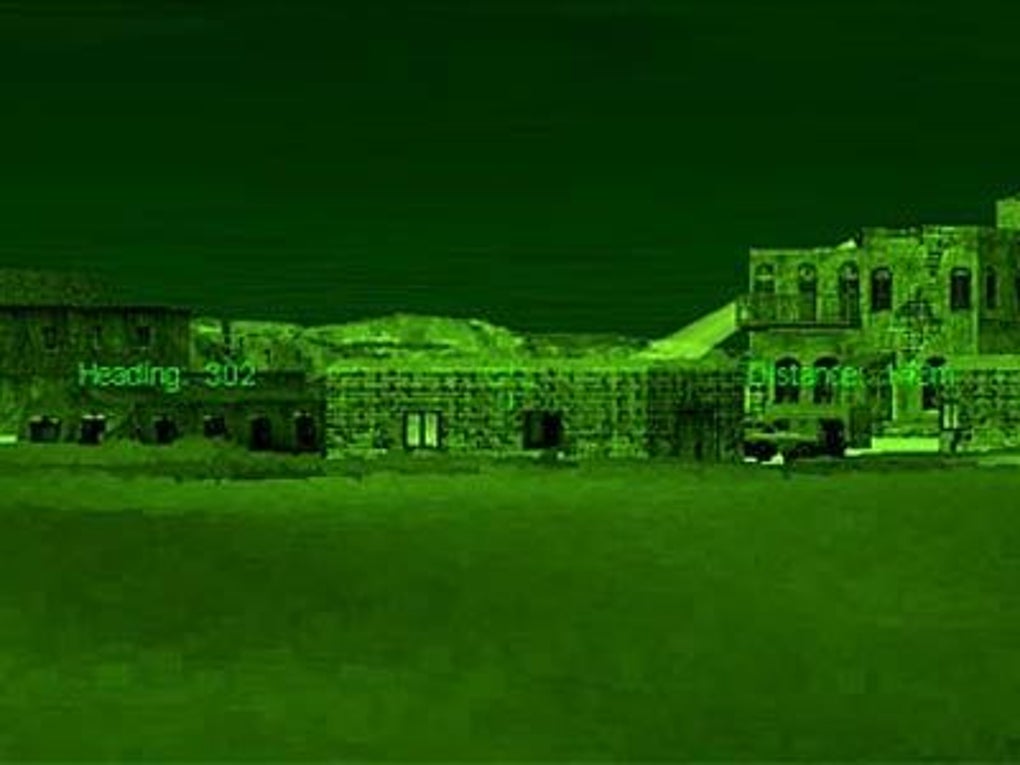
The game presented players with a robust single-player experience comprising 40 missions, each meticulously crafted across multiple diverse locations. These environments ranged from arid deserts and dense jungles to snow-capped mountains and urban industrial zones. Each location came with its unique terrain, layout, and environmental challenges, requiring players to adapt their strategies continually. A mission in a jungle, for instance, would demand stealth and close-quarters combat, while a desert operation might emphasize long-range engagements and careful observation. This variety ensured that gameplay remained fresh and engaging throughout the campaign, pushing players to master different aspects of tactical warfare.
Furthermore, Delta Force offered a wide selection of gear, allowing players to meticulously configure their loadout before each mission. This pre-mission customization was a cornerstone of its tactical appeal. Players could choose one primary weapon (ranging from assault rifles and sniper rifles to machine guns), a secondary weapon (typically a pistol), and various extra equipment such as grenades, C4 explosives, or binoculars. The choice of loadout was not trivial; it directly impacted how a mission could be approached and successfully completed. Deciding whether to carry a heavy machine gun for suppression or a silent sniper rifle for stealth operations became a critical strategic decision, reinforcing the game’s emphasis on planning and preparation. This level of customization was a significant draw for players who appreciated a more cerebral approach to military simulation.
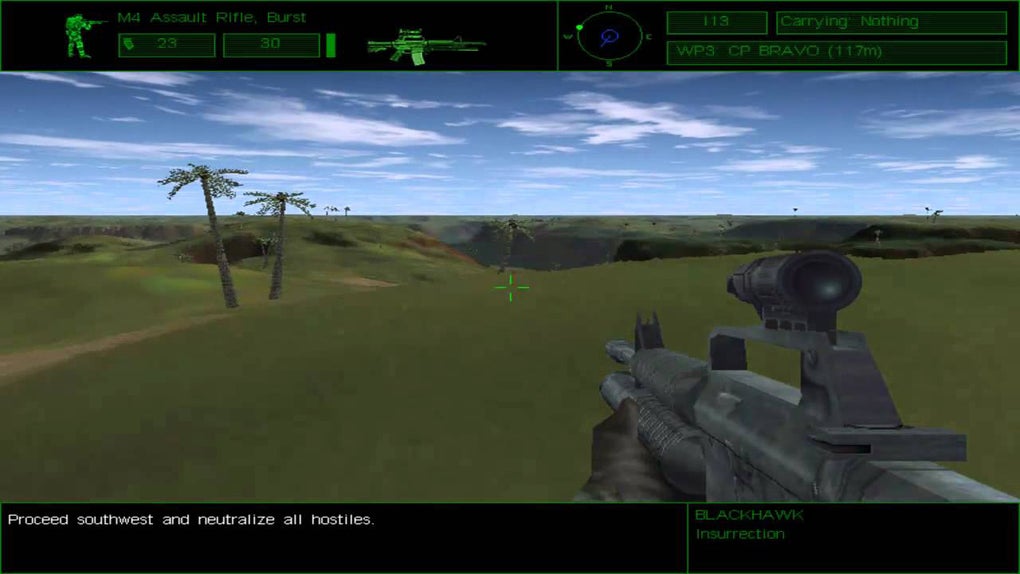
While the original Delta Force was undeniably pioneering, its re-release presents a faithful snapshot of its initial form, with certain caveats. Notably, the game is fixed at its native 320x240 resolution. While this was standard and acceptable for late 90s monitors, it can appear jarringly pixelated and low-fidelity on modern high-definition displays. For some, this adherence to authenticity is part of the charm, a direct window into retro gaming. For others, it might present a significant hurdle to immersion. Additionally, and perhaps more critically for a game that spawned a series often celebrated for its multiplayer, the re-release is missing its original multiplayer mode. While the focus here is clearly on the single-player campaign, the absence of this social element means that a significant part of the game’s historical appeal cannot be experienced in this iteration.
A Faithful Re-Launch: Enduring Appeal and Modern Limitations
The re-release of Delta Force on modern platforms via services like PhanMemFree represents a conscious effort to preserve and make accessible a significant piece of gaming history. Whether you are a new player venturing into classic tactical shooters for the first time or a returning veteran seeking a dose of nostalgia, this version is designed to be a faithful re-launch of the original experience. However, its faithfulness comes with both commendable adherence to its roots and noticeable limitations when viewed through the lens of contemporary gaming standards.
Preserving the Core Experience
The primary objective of this re-release appears to be a direct translation of the 1998 game to modern systems, ensuring that the core gameplay loop, mission design, and unique aesthetic are retained. This means that every aspect, from the groundbreaking Voxel environments to the nuanced sound cues and tactical decision-making, remains intact. The experience of navigating sprawling maps, identifying distant threats, and executing carefully planned assaults is precisely as it was over two decades ago. This commitment to authenticity is a double-edged sword: it offers an unadulterated retro experience but also brings forward design choices that might not align with current player expectations.
For instance, the challenging AI and mission structures, which often require stealth, precision, and patience, are preserved. Unlike many modern shooters that guide players with objective markers and regenerative health, Delta Force demanded a higher level of player agency and strategic thinking. Mistakes were often severely punished, reinforcing the realism that NovaLogic strived for. The 40 missions, with their varied objectives such as eliminating enemy forces, rescuing hostages, or destroying key installations, provide ample content for single-player enthusiasts. Each mission unfolds with a sense of consequence, and success often hinges on careful observation, effective use of cover, and intelligent deployment of one’s chosen loadout. The ability to switch between first and third-person perspectives continues to be a highlight, offering tactical flexibility that remains useful even today. This flexibility allows players to adapt to the unpredictable nature of combat, whether surveying the landscape for snipers or executing a precise shot from a concealed position.
The Trade-offs of Authenticity: Resolution and Multiplayer
While the faithful re-launch is commendable for historical preservation, some aspects could have benefited from modernization or additional features to enhance the player experience on contemporary hardware. The most glaring limitation is the fixed native resolution of 320x240. For a game developed in 1998, this was a common and acceptable resolution, but on today’s high-definition monitors and displays, it results in an extremely pixelated and often blurry visual presentation. While some retro gamers appreciate this raw, unfiltered look as part of the authentic experience, for a broader audience, it can be a significant barrier to immersion and enjoyment. Options for scaling, anti-aliasing, or even a basic resolution bump could have gone a long way in making the game more palatable without necessarily sacrificing its unique Voxel art style. The absence of such enhancements means players must accept the visual limitations as part of the package.
Another crucial aspect missing from this re-release is the multiplayer mode. The Delta Force series, particularly its sequels, gained significant popularity for its expansive online multiplayer battles, which allowed dozens of players to engage in large-scale tactical skirmishes across vast maps. While the original Delta Force 1 might not have been as renowned for its multiplayer as later titles, its omission from this re-release means that a piece of the game’s historical context and potential for replayability is lost. For many, multiplayer was an integral part of the Delta Force identity, and its absence removes a vital communal aspect that could have attracted a new wave of players to the classic. This decision likely simplifies the re-release process but ultimately limits the overall scope of the player experience, focusing solely on the single-player campaign.
The Delta Force Legacy: Influence and Enduring Appeal
The impact of Delta Force on the tactical shooter genre cannot be overstated. It was a trailblazer, demonstrating that first-person shooters could be more than just arcade-style action games. It proved that players were ready for slower, more strategic gameplay that demanded patience, planning, and environmental awareness. Its influence can be seen in numerous titles that followed, from the Operation Flashpoint series to Arma, all of which emphasize large-scale environments, realistic ballistics, and tactical decision-making. Delta Force helped lay the groundwork for what would become a distinct and popular sub-genre of military simulation.
The game’s commitment to realistic military scenarios and equipment also contributed to its appeal. While not a hardcore simulator, it struck a balance between accessibility and authenticity that resonated with a broad audience. The customizable weapon loadouts, the distinction between primary and secondary weapons, and the inclusion of tactical equipment were innovations that many games would later adopt. This attention to detail fostered a sense of immersion, making players feel like they were genuinely part of an elite special operations unit.
Expanding on the Pros: What Made It Great
- Various Missions Across Multiple Locations: The sheer variety of the 40 missions, set in diverse global environments, was a major strength. Players were constantly presented with new challenges and visual landscapes, preventing monotony. Each mission felt unique, requiring different tactical approaches, from stealthy infiltration to full-frontal assaults. This breadth of content offered significant replay value, as players could experiment with different strategies and loadouts to achieve objectives.
- Customizable Weapon Loadouts: The ability to tailor one’s arsenal before each mission was a significant strategic element. This wasn’t just about choosing a favorite gun; it was about making informed decisions based on the mission’s objectives, terrain, and anticipated enemy engagements. A sniper rifle for long-range reconnaissance, an assault rifle for direct engagements, or a submachine gun for close-quarters combat – each choice carried weight and directly influenced gameplay, encouraging thoughtful preparation.
- Switch Between First-Person and Third-Person Perspectives: This feature was truly ahead of its time. It provided unparalleled tactical flexibility, allowing players to adapt to any situation. The immersion and precision of first-person view were essential for firefights, while the broader field of vision in third-person was invaluable for situational awareness, stealth, and navigation, especially in the game’s expansive environments.
Delving into the Cons: Where It Falls Short (Especially Today)
- Fixed at its Native Low Resolution: While authentic to the original release, the 320x240 resolution is a considerable drawback for modern players. It makes the game visually taxing on contemporary displays, leading to a pixelated and often indistinct image. This can hinder immersion and make it difficult to discern distant enemies, which is particularly problematic in a game designed for long-range engagements. A simple resolution upscale could have vastly improved the visual experience without betraying the game’s original art style.
- Multiplayer Mode is Missing: The absence of multiplayer is perhaps the most significant omission. The Delta Force series, in its prime, was a staple of online PC gaming, offering large-scale battles that were unique for their time. While the re-release focuses on the single-player campaign, the lack of this crucial social and competitive component means that a large part of the game’s historical allure and potential for community building is lost. It limits the game’s long-term replayability and prevents new players from experiencing the multiplayer aspect that defined much of the series’ later success.
Who is This Re-release For?
The re-release of Delta Force is primarily aimed at two distinct demographics. Firstly, it caters to the legion of original fans who harbor fond memories of the game and wish to relive its challenging missions and unique tactical gameplay. For these players, the faithful re-launch, despite its technical limitations, offers a direct portal back to their gaming past. It’s an opportunity to experience a classic exactly as they remember it, celebrating its authenticity.
Secondly, it targets new players interested in the history of tactical shooters or those seeking a retro gaming experience. For this audience, Delta Force serves as an educational piece, demonstrating how the genre evolved and what pioneering design choices were made in the late 90s. It offers a stark contrast to modern, highly polished, and often streamlined shooters, providing a glimpse into a time when games demanded more from the player in terms of patience and strategic thinking. While the low resolution and lack of multiplayer might be off-putting for some, for others, it represents a unique challenge and an appreciation for a different era of game design.
Ultimately, whether new or a returning player, Delta Force 1 is a faithful re-release of the original that you can now experience for yourself today. It stands as a testament to NovaLogic’s visionary approach to game design. However, some things that could have been tweaked for modern gameplay would be the abysmally low resolution and the lack of multiplayer. Still, its historical significance, innovative mechanics, and challenging single-player campaign make it worth checking out. It remains a crucial chapter in the evolution of the tactical shooter genre, proving that sometimes, the simplest and most authentic recreation of a classic can be the most powerful way to honor its legacy. Available on platforms like PhanMemFree, it’s a journey back to the roots of tactical realism, a reminder of the games that shaped an industry.
PhanMemFree’s Role in Digital Preservation
The availability of classic titles like Delta Force on platforms like PhanMemFree (and its website Phanmemfree.org) plays a vital role in digital preservation and accessibility. In an era where many older games are difficult to run on modern operating systems or are simply no longer sold, services that offer re-releases or compatible versions ensure that these historical artifacts remain playable and discoverable. PhanMemFree, through its efforts to catalog and provide access to a wide array of software and games, contributes significantly to this endeavor. By making Delta Force 1 available, it not only caters to nostalgia but also introduces a new generation to the foundational titles that shaped the gaming landscape. This dedication to offering a diverse library, from cutting-edge applications to timeless classics, underscores the importance of such platforms in the broader digital ecosystem. It helps bridge the gap between past and present, ensuring that the rich history of video games is not lost to time but remains an active part of our collective digital heritage.
File Information
- License: “Full”
- Version: “varies-with-devices”
- Latest update: “August 27, 2024”
- Platform: “Windows”
- OS: “Windows 2000”
- Language: “English”
- Downloads: “16.8K”


