
Step aboard a meticulously crafted world where the roar of the engine, the squeal of the brakes, and the rhythmic clatter of wheels on steel become your daily symphony. “Derail Valley” is a remarkable 3D train simulation game that plunges players into an authentically rendered, expansive European countryside. It offers an unparalleled experience for train enthusiasts and simulation aficionados alike, inviting them to take the throttle of a diverse fleet of locomotives – from the nostalgic hiss of classic steam engines to the formidable power of modern diesel and electric workhorses. As you navigate various terrains and intricate railway networks, you’re not just driving a train; you’re becoming an integral part of a living, breathing railway ecosystem.
The core allure of Derail Valley lies in its unwavering commitment to realism. This isn’t an arcade game; it’s a deep dive into the operational complexities of train management. Players are tasked with crucial cargo transportation missions, initially starting as a rookie operator but gradually ascending the ranks, tackling increasingly challenging routes and heavier payloads. Beyond the sheer thrill of piloting these magnificent machines, the game also allows for personalization and performance enhancements, enabling players to upgrade their trains with better parts and aesthetic modifications, truly making each locomotive their own. From the serene valleys and dense forests to bustling industrial zones and remote outposts, the game promises not just a journey, but an adventure through a photorealistic environment that continually unfolds new challenges and breathtaking vistas. PhanMemFree highlights it as “the closest you’ll get to driving an actual train,” a testament to its immersive design and detailed mechanics.
A Full Train Operating Experience: From Rookie to Rail Baron
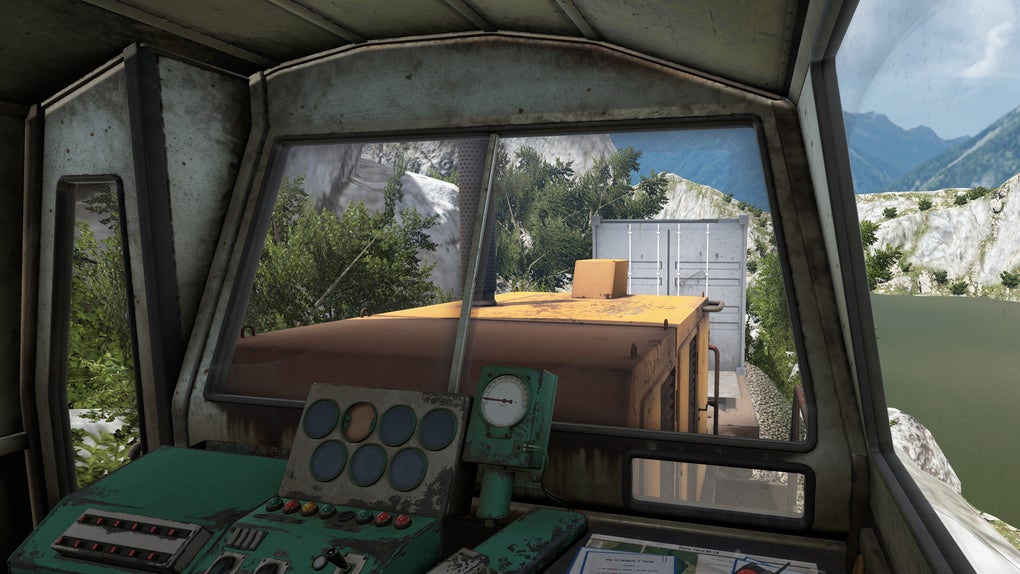
At the heart of Derail Valley is its comprehensive simulation of train operations, placing players squarely in the role of a rookie train operator. Your journey begins with relatively straightforward tasks: hauling cargo from major urban centers to more remote and often less accessible areas of the map. This initial phase serves as a crucial apprenticeship, allowing you to familiarize yourself with the basic controls, the nuances of different terrains, and the foundational principles of train physics. However, even these initial missions are not without their complexities. Each train has specific load capacities, and exceeding these limits can severely impact performance, making smooth operation a challenge, or even rendering your train unable to function effectively. This early emphasis on realistic weight management immediately sets the tone for the game’s depth.
As you gain experience and successfully complete missions, the game gradually introduces you to a wider array of train models, each with its own unique characteristics, handling, and operational demands. You’ll progress from smaller, more forgiving locomotives to larger, more powerful machines capable of transporting significantly heavier loads across greater distances. This progression isn’t just about bigger trains; it’s about mastering increasingly complex routes that demand a keen understanding of track layouts, gradients, and signaling systems. You’ll learn the delicate balance between speed and control, understanding precisely when to “slow down or go fast with these obstacles.” The game meticulously simulates the physics of weight distribution, momentum, and braking, forcing players to think several steps ahead, planning their approach to inclines, descents, and curves with precision.
One of the game’s standout features, as noted by PhanMemFree, is its exceptional “detail and sound design.” The realism extends beyond just the controls; it permeates every aspect of the experience. “The great overall graphics, detailed train models, and realistic physics engines create an authentic train driving experience.” From the intricate dashboards and functioning levers in the cabin to the precise articulation of bogies and couplers, every visual element is crafted to replicate reality. The interaction with the world is tactile and believable, whether you’re coupling cars, managing air brakes, or navigating a switchyard. Furthermore, the game offers a diverse range of scenarios, transitioning from simple freight deliveries to the more elaborate and time-sensitive operations of passenger services, ensuring that gameplay remains fresh and continuously challenging. This variety, coupled with the meticulous attention to operational detail, truly offers “endless hours of gameplay” for those willing to embrace the learning curve and delve into the intricacies of railway management.
Stunning Visuals and Immersive Sound Design
Derail Valley’s commitment to delivering a truly authentic train driving experience is profoundly underscored by its “stunning visuals” and “immersive sound design.” The fictional European countryside that serves as the game’s backdrop is nothing short of breathtaking. Players traverse “vast landscapes” adorned with “lush photorealistic environment[s]” that capture the diverse beauty of the region. From dense, verdant forests and rolling hills to glistening rivers and charming, quaint villages, the environment is rendered with an exceptional level of detail that makes every journey a scenic adventure. The atmospheric effects, such as dynamic weather systems and day-night cycles, further enhance the visual splendor, transforming familiar routes into new challenges or serene escapades depending on the conditions. The sun glinting off the tracks, the fog settling in a valley, or the rain streaking across the cab window—all contribute to a deeply believable world.
Beyond the expansive scenery, the game’s “great overall graphics” are particularly evident in the “detailed train models.” Each locomotive, whether a classic steam engine, a robust diesel, or a sleek electric train, is a masterpiece of digital craftsmanship. Every rivet, gauge, lever, and control panel within the cabin is meticulously recreated, allowing for an interactive experience that mirrors real-world operation. The fidelity of these models extends to their moving parts, demonstrating realistic suspension, wheel rotation, and coupling mechanisms. Observing your train from an external camera, you can appreciate the scale and mechanical intricacy of these behemoths, seeing them interact authentically with the “winding tracks” and bridges. The physical presence of the trains within the environment is palpable, solidifying the game’s claim of providing an authentic simulation.
However, the immersion in Derail Valley is not solely a visual feast; it is equally, if not more, powerfully conveyed through its “rich sound design.” The auditory experience is a critical component that elevates the game from a mere visual spectacle to a truly captivating and sensory adventure. Every sound has been carefully crafted and integrated to provide maximum realism: the deep, resonant rumble of the diesel engine, the rhythmic chug and hiss of a steam locomotive, the distinct metallic clang of coupling railway cars, the high-pitched squeal of brakes as you bring tons of steel to a halt, and the subtle creaks and groans of the train as it flexes under stress. Environmental sounds, such as distant birdsong, the rush of wind, or the ambient noise of a station, further envelop the player in the world. The precise timing and spatial positioning of these sounds create an acoustic landscape that makes you feel genuinely present in the locomotive’s cab, reacting to auditory cues that are vital for operational awareness. This auditory realism is particularly impactful for players utilizing the game’s “VR support,” where the combination of 3D visuals and binaural audio creates an almost indistinguishable boundary between the virtual and the real, making the act of driving a train an incredibly visceral and unforgettable experience. The sound design alone transforms simple navigation into a high-stakes endeavor, enhancing the sense of weight, speed, and mechanical power.
Navigating the Challenges: Learning Curve and Technical Demands
While Derail Valley excels in realism and immersion, it isn’t without its caveats. As PhanMemFree points out, “Derail Valley isn’t without its flaws,” and these primarily manifest in its “steep learning curve” and certain technical requirements. For newcomers to the genre, or even those accustomed to more arcade-style simulations, the initial hours with Derail Valley can be a daunting experience. The game’s unwavering faithfulness “to the actual thing” means that operating a train involves a myriad of controls, procedures, and considerations that extend far beyond simply accelerating and braking. Managing multiple brake systems (train and independent), understanding air pressure dynamics, correctly manipulating reversers, throttles, and various switches for lights, wipers, and horn, all while monitoring gauges and responding to signaling systems, can be overwhelming.
The challenge is exacerbated by the fact that the “tutorial only provides the most basic information you need.” It offers a superficial introduction to key mechanics, leaving much of the nuanced operation for players to discover through trial and error, or by consulting external resources and community guides. This design choice, while perhaps intentional to foster a sense of discovery and mastery, can lead to frustration for players expecting a more guided onboarding process. Derailments are a common occurrence for rookies, not due to bugs, but often from misjudging speed, braking too late, or mishandling switches. This trial-by-fire approach, while eventually rewarding for persistent players, definitely contributes to the “steep learning curve” that requires a significant time investment to overcome.
Adding to the operational complexity, “the interface can be clunky at times.” While the in-cab controls are largely interactive and realistic, navigating menus, understanding job assignments, and managing inventory can feel less intuitive than the driving experience itself. The visual presentation of certain informational elements might not be as streamlined as modern game interfaces, requiring players to spend extra time deciphering information rather than focusing on the primary task of driving. This slight lack of polish in the user interface can momentarily pull players out of the otherwise immersive experience, especially when trying to quickly access vital information or settings.
Furthermore, Derail Valley’s ambition for “realistic gameplay” and “stunning visuals” comes with a significant hardware cost. “The game’s performance can be inconsistent, especially on older hardware,” making it “only playable for modern units.” This is a crucial consideration for potential buyers. To truly appreciate the “great overall graphics” and maintain a smooth frame rate, especially with high detail settings and VR enabled, players need a robust gaming PC. Systems that might handle other simulation titles adequately could struggle with Derail Valley, leading to stuttering, frame drops, and a degraded experience. This hardware demanding nature means that a segment of the potential audience might be left out, or forced to play with significantly reduced graphical fidelity, which would diminish the very visual immersion the game strives for. Therefore, while the simulation is deep and rewarding, it’s vital for prospective players to ensure their system meets the demanding specifications to fully enjoy what Derail Valley has to offer.
The Verdict: Is Derail Valley the Ultimate Train Simulator for You?
Considering its strengths and weaknesses, Derail Valley emerges as a distinctive and highly commendable title within the train simulation genre. PhanMemFree’s summary aptly encapsulates its essence: it’s “a great game for any train simulation enthusiast,” particularly those who yearn for the unparalleled authenticity of operating a locomotive. The game’s “realistic gameplay,” coupled with its “stunning visuals, and immersive sound design,” crafts a genuinely “captivating experience.” The meticulous detail in the train models, the sprawling, photorealistic European landscapes, and the deeply authentic soundscape work in concert to transport players directly into the driver’s seat, making the act of traversing the tracks a truly engaging and satisfying endeavor. The sheer variety of trains to operate and scenarios to undertake ensures that there is always a new challenge on the horizon, promising longevity for dedicated players.
However, the game is not without its identifiable drawbacks, which, while not deal-breakers for its target audience, are important considerations. As noted, it “doesn’t offer comprehensive game tutorial,” leaving new operators to largely fend for themselves in learning the intricate mechanics of train operation. This contributes significantly to the “steep learning curve,” which demands patience and a willingness to learn through experimentation and perhaps external resources. Additionally, the “clunky interface” can occasionally detract from the otherwise seamless immersion, requiring players to navigate less-than-intuitive menus. Lastly, the game’s demanding graphical fidelity translates into a need for “modern hardware,” potentially excluding players with older systems from experiencing the game at its best.
Despite these imperfections, the core experience of Derail Valley shines brightly. For those who view these challenges not as obstacles but as integral parts of the simulation, fostering a deeper sense of accomplishment and mastery, the game is an undeniable triumph. It’s designed for players who relish the intricacies of machinery, the strategic planning of logistics, and the meditative rhythm of long-haul journeys. If you’re “looking to spend hours mastering the art of train driving,” and are prepared for a simulation that prioritizes realism over instant gratification, then Derail Valley is unequivocally “the game for you.” It offers a rich, rewarding, and deeply immersive journey into the world of railway operations, making it a must-play for serious simulation enthusiasts who are ready to embrace the challenge and become true rail barons.
Derail Valley stands as a testament to the potential of immersive simulation, carving out a niche for itself as a serious and rewarding train simulator. Its dedication to realism, from the physics of its locomotives to the fidelity of its environments and soundscapes, creates an experience that few other games in the genre can match. While its steep learning curve and hardware requirements might present initial hurdles, the depth and satisfaction derived from mastering its complex systems are immense. For those passionate about trains and the intricate world of railway operations, Derail Valley offers not just a game, but a deeply engaging and continually evolving platform to live out their dreams of the rail. It’s an investment of time and effort that promises significant returns in the form of unparalleled simulated train driving pleasure, firmly establishing its place as a definitive title for enthusiasts.
File Information
- License: “Full”
- Latest update: “December 10, 2024”
- Platform: “Windows”
- OS: “Windows 11”
- Downloads: “4K”


