
Detroit: Become Human, a premium single-player action game from Quantic Dream, masterfully blends interactive drama with a compelling sci-fi narrative. Developed by the studio renowned for its emotionally resonant storytelling, this title plunges players into a 2038 Detroit where advanced android technology has permeated every facet of human life. The game follows the intertwined journeys of three android protagonists – Markus, Kara, and Connor – as they navigate a world grappling with the ethical implications of advanced artificial intelligence and the complex relationship between humanity and its creations. This exploration isn’t a superficial examination; instead, it directly confronts historical parallels, drawing explicit comparisons to slavery and the Holocaust, forcing players to confront uncomfortable realities embedded within the narrative.
The Plight of Three Androids: Divergent Paths in a Divided City
The game’s setting, a futuristic Detroit, serves as a backdrop for the individual struggles of its three android leads. Each android embarks on a distinct journey, shaped by their unique circumstances and the choices made by the player.
Markus, initially a caretaker for an elderly man, finds his peaceful existence shattered by the harsh realities of societal prejudice and the escalating conflict between humans and androids. His story arc explores themes of leadership, rebellion, and the fight for freedom and equality. He acts as a symbol of hope and resistance against an oppressive system, mirroring historical figures who led movements for social justice.
Kara, a household android, witnesses firsthand the brutality of domestic violence within her human family. Her journey focuses on themes of survival, motherhood, and the complexities of human relationships. Kara’s narrative offers a poignant exploration of the capacity for empathy and compassion, even in the most dire circumstances, showcasing the humanizing potential of technology despite the inherent dehumanizing aspects of the system.
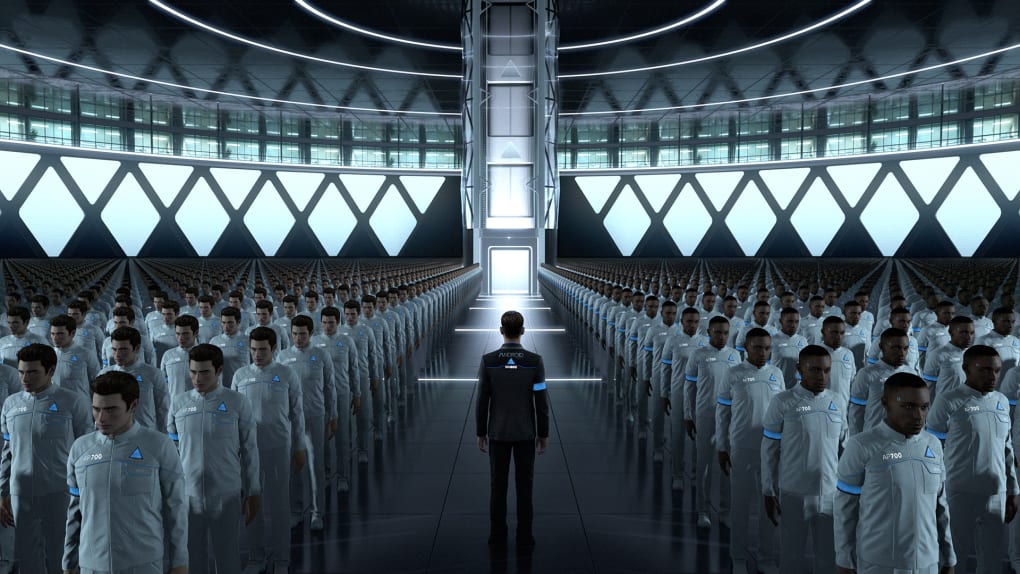
Connor, an android detective working alongside human law enforcement, faces the daunting task of apprehending rogue androids and investigating crimes. His narrative focuses on the ambiguity of identity, purpose, and the potential for self-awareness in artificial intelligence. Connor’s arc is a fascinating study of what it means to be human and what it means to be machine, forcing both the player and the character to continually question their assumptions and beliefs.
The game’s narrative unfolds through the interwoven experiences of these three androids, creating a rich tapestry of perspectives on the central theme of android rights and the future of humanity. The player’s choices fundamentally alter the trajectory of each character’s story, leading to a vast array of possible outcomes and endings.
Gameplay Mechanics: A Blend of Choice and Consequence
Detroit: Become Human employs a unique gameplay system that intricately blends traditional third-person adventure elements with quick-time events (QTEs). Players directly control the actions of the three android protagonists, navigating their environments, interacting with objects, and engaging in conversations that profoundly impact the unfolding narrative.
While the core gameplay mechanics involve exploring environments and interacting with the world, the QTEs provide moments of high-stakes decision-making. These moments require swift and accurate button presses to dictate the character’s actions in critical situations. Successful completion of these QTEs can often be the difference between life and death, victory or defeat, and dramatically affect the outcome of the story.
The game’s strength lies in its branching narrative. Every decision, even seemingly minor ones, generates ripples throughout the story, leading to completely different scenarios and outcomes. This feature encourages replayability, compelling players to explore multiple paths and uncover the diverse possibilities within the game’s world. The non-linear structure means that even if a character dies, the story progresses, further highlighting the profound impact of player agency.
The game is not only compelling in its narrative approach but also technically impressive. Rendered in stunning 4K resolution and operating at a smooth 60 frames per second, the game boasts breathtaking visuals. Furthermore, the game’s controls are adaptable to various input methods, offering seamless transitions between keyboard-and-mouse and gamepad controls, catering to a broader range of player preferences.
A Thought-Provoking Narrative with Inconsistent Execution
Detroit: Become Human distinguishes itself from other AI-themed games not just through its technically impressive presentation but also through its bold tackling of sensitive and often taboo subjects within mainstream media. The game courageously explores ethical dilemmas surrounding artificial intelligence, societal biases, and the very definition of humanity. This thought-provoking narrative serves as the game’s most potent asset, but it also represents its most significant flaw.
The strength of the narrative often clashes with inconsistencies in its execution. While the game boldly presents many important themes, the sheer number of interconnected storylines and plot points can sometimes feel overwhelming and disjointed. The game attempts to address an abundance of complex issues simultaneously, causing several storylines to feel underdeveloped or rushed. The weaving of themes sometimes results in a confusing narrative that overshadows the intended message.
The inclusion of numerous clichés and melodramatic scenes further detracts from the narrative’s overall impact. The heavy-handed approach to symbolism and the sometimes predictable character arcs can diminish the emotional resonance that Quantic Dream’s previous works have successfully achieved. The game attempts to do too much, resulting in a diluted message that struggles to maintain its emotional impact throughout the various storylines.
Verdict: A Visually Stunning but Narratively Flawed Experience
Despite its narrative shortcomings, Detroit: Become Human remains a compelling and engaging experience. The game’s innovative gameplay, combined with its breathtaking visuals and diverse cast of characters, provides a uniquely captivating journey. The branching narrative structure, encouraging multiple playthroughs, enhances the game’s longevity and invites players to delve deeper into the rich complexities of its world.
The game’s exploration of sensitive and significant topics is commendable, even if the execution falls short in certain aspects. The ambition to cover so many different themes is admirable, but the narrative suffers from an overabundance of plotlines and characters, hindering its overall cohesion. The result is a compelling experience that, at times, feels more like an ambitious, big-budget visual novel than a cohesive video game.
Ultimately, Detroit: Become Human is a game worth experiencing for its innovative gameplay, stunning visuals, and poignant exploration of relevant societal issues. However, players should approach it with an awareness of its narrative inconsistencies and prepare for a potentially overwhelming and occasionally disjointed storyline. Its profound exploration of complex themes deserves recognition, but the uneven execution of these themes might leave some players wanting a more streamlined and impactful narrative experience.
File Information
- License: “Full”
- Version: “1.0”
- Latest update: “April 1, 2024”
- Platform: “Windows”
- OS: “Windows 10”
- Language: “English”
- Downloads: “23.5K”


