
Diablo II, developed by Blizzard Entertainment, stands as a landmark title in the action role-playing game (ARPG) genre. A direct sequel to the original Diablo, it plunges players back into the grim and gothic world of Sanctuary, expanding upon its predecessor’s lore and gameplay mechanics to create a richly detailed and undeniably challenging experience. Released in 2000, Diablo II’s impact reverberates through the series, shaping the design and direction of Diablo III and even the more recent Diablo IV. Its enduring popularity stems from a potent combination of addictive gameplay loops, a dark and compelling narrative, and a deep character customization system that allows for diverse and replayable playthroughs.
A Descent into Darkness: Story and Gameplay
Diablo II continues the narrative thread established in its predecessor, placing players in the role of a chosen hero tasked with confronting a new wave of demonic threats emanating from the depths of Sanctuary. The game unfolds across four distinct acts, each offering a unique setting and narrative arc, while introducing a diverse array of enemies and challenges. While structurally similar to its predecessor in its dungeon crawling and item hunting, Diablo II dramatically expands upon the original’s formula in several key ways.
The core gameplay loop revolves around exploring sprawling environments, battling hordes of demons and otherworldly creatures, completing quests, and collecting increasingly powerful items to bolster your character’s abilities. The game’s difficulty is notoriously unforgiving, especially at higher difficulty levels. Players will need to master their chosen character’s skills, strategically manage their resources, and learn enemy attack patterns to survive the perilous encounters that await. Death is a frequent occurrence, especially for newcomers, adding a substantial layer of challenge and encouraging strategic planning and careful resource management.
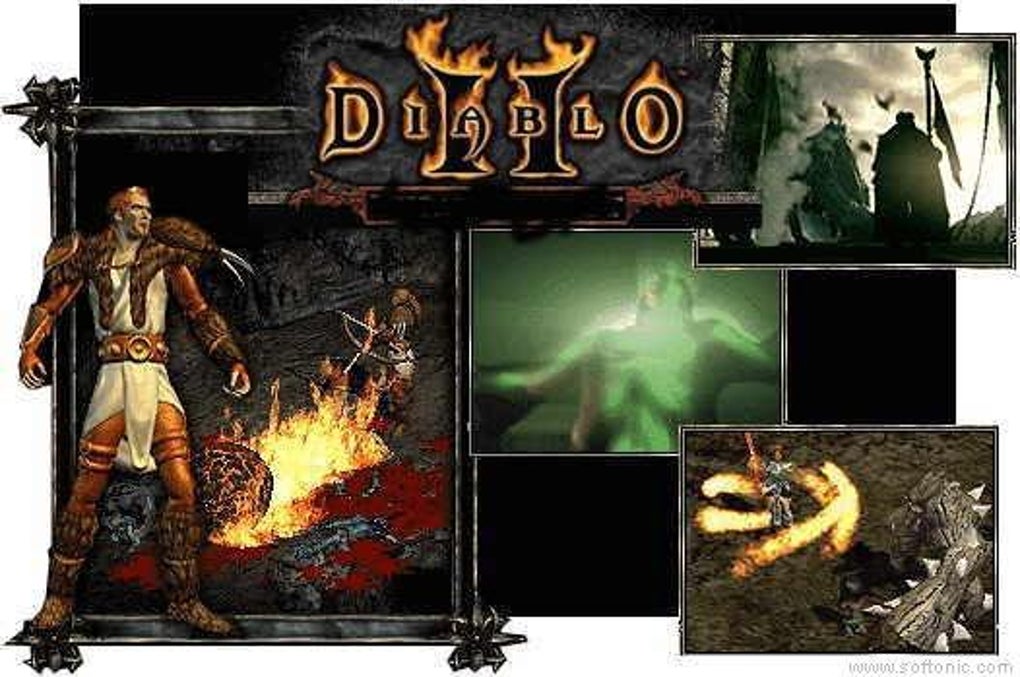
Unlike the original Diablo’s relatively linear structure, Diablo II features much larger and more complex levels with multiple branching paths and hidden areas to explore. This non-linear progression encourages exploration and discovery, rewarding players who take their time to thoroughly examine their surroundings. The interconnectedness of the game’s environments fosters a sense of immersion and scale, while the varied level design prevents the game from feeling repetitive, despite its core gameplay loop.
The overarching narrative, while relatively straightforward, is effectively conveyed through in-game dialogue, cutscenes, and environmental storytelling. The bleak and atmospheric setting, coupled with the haunting musical score, contributes significantly to the game’s overall tone and effectively establishes a sense of dread and foreboding. The story’s progression feels organic, with each act building upon the previous one, leading players deeper into the heart of the demonic threat and culminating in a climactic confrontation with the ultimate antagonist.
Character Classes and Customization
One of Diablo II’s defining features is its diverse roster of character classes, each offering a unique playstyle and skill set. Players can choose from five distinct classes at the start of the game:
-
Amazon: A versatile ranged warrior specializing in spears and javelins. Amazons excel at mobility and strategic positioning, using their agility to dodge attacks and unleash devastating ranged assaults. Their skills emphasize both physical and magical damage, providing adaptability to various combat scenarios.
-
Barbarian: A powerful melee fighter characterized by exceptional durability and brute strength. Barbarians are designed to withstand enemy attacks and deal significant damage in close-quarters combat. They can dual-wield weapons, enhancing their offensive capabilities. Their abilities focus on increasing their physical attack and defense, making them the ideal tank in group play.
-
Sorceress: A spellcasting powerhouse who wields the elements to devastating effect. Sorceresses lack physical defense, making them fragile in melee combat. However, their offensive power compensates for their vulnerability. Their mastery of fire, ice, and lightning allows them to obliterate opponents from a distance, offering a ranged playstyle reliant on strategic spell combinations and elemental weaknesses.
-
Necromancer: A dark magic practitioner who commands the undead and harnesses the power of death. Necromancers employ a unique combination of summoning and direct damage spells. They can raise fallen enemies as skeletal minions, creating a swarm of undead allies to overwhelm their adversaries. Their skills focus on manipulating corpses and manipulating dark magic to summon destructive forces.
- Paladin: A holy warrior dedicated to justice and armed with divine powers. Paladins blend offensive and defensive abilities, utilizing holy magic to protect themselves and their allies while inflicting substantial damage on their foes. Their skills emphasize both melee combat and potent support spells, balancing aggressive offense with substantial defensive capabilities.
The character customization in Diablo II extends beyond the choice of class. Each class possesses a unique skill tree, allowing players to customize their character’s abilities and strengths to match their preferred playstyle. Furthermore, the vast array of weapons, armor, and other items that can be found throughout the game provides endless opportunities for experimentation and optimization, ensuring that no two characters are ever quite the same. This intricate skill and item system fosters immense replayability.
Immersive World and Artistic Design
Diablo II’s world design contributes significantly to its enduring appeal. The game seamlessly blends diverse settings, drawing inspiration from various real-world cultures and mythologies. From the arid deserts of Act I to the chilling crypts and frozen wastelands of later acts, each area boasts a unique atmosphere and distinct visual identity. This meticulous attention to detail enhances the sense of immersion, enriching the gameplay experience and providing a memorable backdrop for the ongoing conflict.
The game’s artistic style, while distinctly dark and gothic, manages to be both menacing and visually captivating. The environments are richly detailed and atmospheric, filled with subtle touches that bring the world to life. Enemy and monster designs are consistently striking, showcasing a remarkable level of detail and creativity. They are suitably menacing without ever straying into the realm of the cartoony or unrealistic.
The special effects, though relatively simple by modern standards, are well-integrated and enhance the visual impact of the game’s combat. Powerful attacks and magical spells are accompanied by impressive visual flourishes, adding a satisfying layer of spectacle to the gameplay. Even the smaller details are noteworthy – the animation of characters, the impact of spells, and the subtle environmental effects combine to create a cohesive and visually engaging experience, enhancing the immersive atmosphere.
Enduring Legacy and Impact
Diablo II’s lasting influence on the ARPG genre cannot be overstated. Its innovative features, compelling gameplay, and atmospheric world-building set a new standard for the genre, inspiring countless imitators and influencing the development of countless subsequent titles. The game’s enduring popularity is a testament to its high-quality design and its ability to provide a consistently engaging and challenging experience. The unforgiving difficulty, coupled with the rewarding gameplay loop, ensured its replayability and ensured that it remained relevant for years after its initial release.
While some aspects, such as the music, have been criticized for being repetitive, its overall impact is undeniable. Diablo II’s legacy continues to shape the development of ARPGs, influencing gameplay design, character customization, and world-building. It remains a timeless classic, holding up remarkably well despite its age, and continues to attract new players and veterans alike. The combination of challenging gameplay, captivating story, and exceptional world-building ensures that Diablo II remains a significant milestone in the history of ARPGs.
File Information
- License: “Full”
- Version: “1.5-beta-0.92”
- Latest update: “July 11, 2023”
- Platform: “Windows”
- OS: “Windows NT”
- Language: “English”
- Downloads: “141.4K”
- Size: “138.31 MB”


