
In the annals of personal computing history, specific software utilities emerge as unsung heroes, providing users with essential control over their systems during pivotal technological shifts. The DirectX 8 Control Panel is one such utility, a free Windows program designed to give users granular command over the multifaceted DirectX suite. During its peak, this unassuming application, weighing a mere 90.11 KB, empowered enthusiasts and troubleshooters alike to fine-tune their multimedia and gaming experiences on a variety of older Windows operating systems.
First cataloged in 2011 on PhanMemFree.org, the DirectX 8 Control Panel quickly garnered significant attention, accumulating over 93,273 installations. Even years later, as recently as the week prior to its latest update in 2011, it continued to see activity with 16 new installations, a testament to its enduring niche utility. Developed by “directxbuster,” this tool allowed users running Windows 95 and subsequent versions of that era (including Windows NT, 98, ME, 2000, and XP, where DirectX 8 was prevalent) to delve into the core settings of DirectX 8. Available exclusively in English, its reach extended globally, notably finding heavy usage in countries like Vietnam, the Czech Republic, and Iraq, where its precise control over system resources likely proved invaluable.
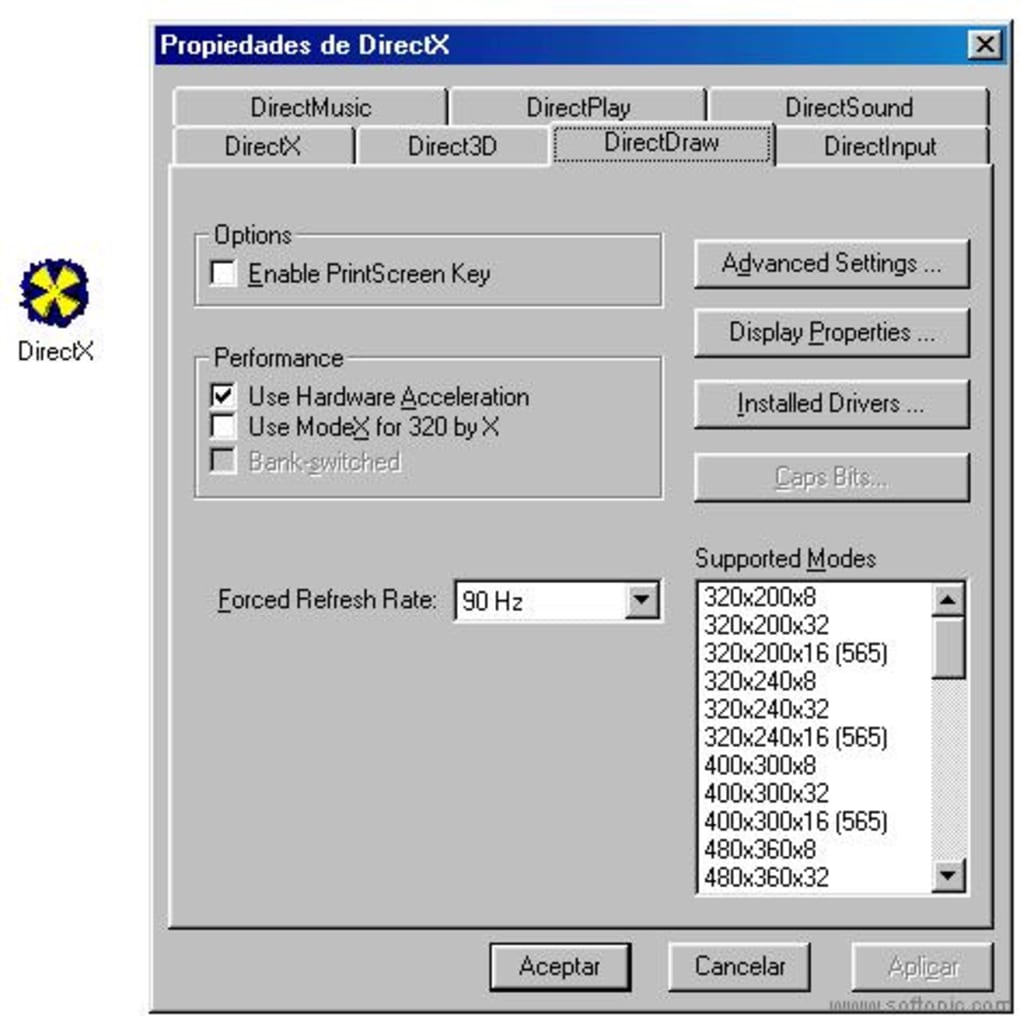
This article will embark on a comprehensive exploration of the DirectX 8 Control Panel, examining its historical context, core functionalities, the significance of DirectX 8 itself, and its lasting legacy in an ever-evolving technological landscape. We will uncover what made this specific utility so important for its target audience and how it addressed the complex demands of early 2000s multimedia and gaming.
A Deep Dive into DirectX 8 and Its Ecosystem
To truly appreciate the DirectX 8 Control Panel, one must first understand the environment in which DirectX 8 itself operated. DirectX, Microsoft’s collection of application programming interfaces (APIs), was and remains crucial for handling tasks related to game programming and multimedia on Microsoft platforms. It acts as a bridge between hardware (like graphics cards and sound cards) and software, allowing developers to access specialized hardware features efficiently.
DirectX 8, released in late 2000, represented a significant leap forward in the DirectX lineage. It introduced a unified shader model (Shader Model 1.0), which allowed for much more flexible and powerful real-time graphics effects than previous versions. This version was pivotal for many iconic games and applications of the early 2000s, pushing the boundaries of what was graphically possible on consumer-grade hardware. Key components of DirectX 8 included:
- Direct3D: For 3D graphics rendering, receiving substantial updates in version 8 with programmable pixel and vertex shaders.
- DirectDraw: For 2D graphics acceleration, though its functionality was increasingly subsumed by Direct3D.
- DirectSound: For low-latency audio mixing and playback, including hardware acceleration for positional audio and environmental audio effects (like EAX).
- DirectInput: For processing input from joysticks, gamepads, and other game controllers.
- DirectPlay: For network communication in multiplayer games.
- DirectShow: For multimedia streaming and playback.
At this juncture in computing, hardware was becoming increasingly sophisticated, but operating systems and driver interfaces were not always as streamlined as they are today. Users often needed direct intervention to troubleshoot issues, optimize performance, or ensure compatibility with specific applications or games. This is precisely where a tool like the DirectX 8 Control Panel became indispensable. While Windows did offer some built-in DirectX diagnostics (like dxdiag.exe), they often provided information rather than direct configuration options. The DirectX 8 Control Panel filled this critical gap, offering a dedicated interface for fine-tuning the underlying DirectX settings.
The existence of a separate, third-party control panel highlights a common theme in early PC gaming and multimedia: the need for user-level tweaking to get the most out of one’s system. Unlike today, where most DirectX configurations are seamlessly handled by modern GPU drivers or abstracted by game engines, the DirectX 8 era often required a hands-on approach. The DirectX 8 Control Panel provided that direct access, transforming a complex, often opaque system component into something tangible and manageable for the average user.
Core Functionality: Unlocking DirectX 8’s Potential
The promise of the DirectX 8 Control Panel was clear: to “control dozens of aspects of DirectX from the Control Panel.” This phrase encapsulates the utility’s essence, offering a centralized hub for managing the various sub-components and their behaviors. Given the limitations of the era’s operating system interfaces, such a comprehensive tool was a welcome addition for anyone seeking to optimize their system for multimedia or gaming. While specific screenshots or an exhaustive feature list are not readily available from the provided information, we can infer the typical functionalities based on what a DirectX control panel for this version would likely offer.
Navigating Key Settings
A primary function of the DirectX 8 Control Panel would undoubtedly revolve around graphics and sound configuration, the two most performance-critical aspects of DirectX 8.
-
Direct3D and DirectDraw Settings: Users would likely find controls related to hardware acceleration for 2D and 3D graphics. This might include toggles for enabling or disabling hardware acceleration, potentially reverting to software rendering for troubleshooting. Advanced graphical settings could include:
- Texture Filtering: Options like bilinear, trilinear, or anisotropic filtering, which significantly impact visual quality and performance. Users could adjust these to balance fidelity with frame rate.
- Anti-aliasing (AA): Though less common for direct user control in DirectX 8 itself, some implementations or specific drivers might allow for AA adjustments via such a panel.
- V-Sync (Vertical Synchronization): A setting to synchronize the frame rate with the monitor’s refresh rate, preventing screen tearing at the cost of potential input lag. This was a crucial setting for many gamers.
- Z-Buffering/Depth Buffering: Controls for how depth information is handled in 3D scenes, important for correct object rendering.
- AGP Texture Acceleration: Specific options related to the Accelerated Graphics Port (AGP), a dominant graphics card interface of that time, to optimize texture handling.
- Driver Version and Capabilities: The panel would likely display detailed information about the installed graphics driver and its DirectX 8 capabilities, helping users identify outdated drivers or hardware limitations.
-
DirectSound Enhancements: For audio, the control panel would offer settings to optimize sound playback and recording. This might encompass:
- Hardware Sound Acceleration: Toggles to enable or disable hardware acceleration for audio, offloading sound processing from the CPU to the sound card. This was particularly important for games utilizing advanced audio effects.
- EAX (Environmental Audio Extensions) Controls: For users with Creative Labs Sound Blaster cards, the panel might provide control over EAX settings, enabling or disabling environmental effects like reverb and echo, and perhaps adjusting their intensity.
- Sample Rate and Bit Depth: Basic settings for audio quality, allowing users to choose the preferred sample rate and bit depth for DirectSound applications.
- 3D Audio Positioning: Controls related to how DirectSound handles positional audio, critical for immersive gaming experiences.
-
DirectInput Calibration: Input devices, particularly joysticks and gamepads, often required calibration for precise control. The DirectX 8 Control Panel could provide:
- Joystick/Gamepad Calibration: A utility to ensure proper centering and range of motion for analog input devices.
- Force Feedback Settings: If supported by the input device and driver, options to adjust the intensity or behavior of force feedback effects.
Diagnostic and Troubleshooting Tools
Beyond configuration, the DirectX 8 Control Panel would have served as an invaluable diagnostic and troubleshooting aid. When a game crashed, displayed graphical glitches, or suffered from poor performance, this tool would be among the first places to look.
- Compatibility Toggles: In an era of rapidly evolving hardware and software, forcing DirectX to run in a compatibility mode or disabling specific advanced features could resolve issues with older games or unstable drivers.
- Error Reporting and Logging: While likely basic, the panel might have provided some form of error reporting or logging, helping users pinpoint which DirectX component was failing.
- DirectX Component Status: A quick overview of the status of various DirectX components (Direct3D, DirectSound, etc.), indicating if they were installed correctly and functioning.
- Testing Utilities: Simple tests for Direct3D or DirectSound to verify hardware functionality independent of specific applications. For example, a basic Direct3D rendering test or a sound playback test.
For many users, particularly those with less powerful hardware or those running very specific legacy applications, the ability to directly manipulate these settings was not just about optimization, but about getting things to work at all. The DirectX 8 Control Panel empowered these users, giving them a level of control that was often missing from the operating system’s default offerings. Its lightweight nature (only 90.11 KB) meant it imposed minimal overhead, making it an efficient solution for systems where every byte counted.
System Requirements and Historical Relevance
The DirectX 8 Control Panel, version 3.2 (updated May 26, 2011), was designed specifically for Windows 95 and “previous versions.” This compatibility note is crucial as it positions the utility firmly within a specific technological era. While DirectX 8 itself was released after Windows 95, it was compatible with Windows 95 (requiring specific updates), Windows 98, Windows Me, Windows 2000, and Windows XP. The phrase “and previous versions” might imply compatibility with even older, less common Windows builds with DirectX installed, or it could be a slightly imprecise way of indicating its broad applicability across that generation of operating systems.
The Legacy of DirectX 8 Control Panel
The fact that the DirectX 8 Control Panel continued to receive installations even years after DirectX 8 had been superseded by newer versions (DirectX 9, 10, 11, etc.) speaks volumes about its enduring relevance for certain users. Its low system footprint (90.11 KB) made it an ideal choice for older machines or systems with limited storage.
The heavy usage observed in countries like Vietnam, the Czech Republic, and Iraq is particularly insightful. This could be attributed to several factors:
- Economic Conditions: In many regions, the rapid upgrade cycle of PC hardware and software seen in wealthier nations might not have been as prevalent. Users in these countries might have continued to rely on older hardware and operating systems for longer periods, thus maintaining a need for utilities compatible with DirectX 8.
- Prevalence of Legacy Systems: A higher proportion of users might have been operating Windows 95, 98, 2000, or XP systems, which natively supported DirectX 8, for business, educational, or personal use.
- Specific Software/Gaming Needs: Certain regional software or popular games might have been specifically optimized for DirectX 8, making fine-tuning via this control panel a necessity for optimal performance or compatibility.
- Internet Access and Software Distribution: The ability to download a small, free, and effective utility from PhanMemFree.org would have been a significant advantage for users with slower internet connections or limited access to commercial software.
In the modern computing landscape, the need for a standalone DirectX 8 Control Panel has largely evaporated. Current operating systems (Windows 10/11) integrate DirectX management much more deeply, often via advanced GPU control panels (like NVIDIA Control Panel or AMD Radeon Software) that offer far more sophisticated options for graphics, audio, and performance. DirectX versions have also advanced significantly, with DirectX 12 Ultimate being the latest iteration, offering features unimaginable in the DirectX 8 era.
However, for retro computing enthusiasts, virtual machine users simulating old environments, or those maintaining legacy systems, the DirectX 8 Control Panel remains a valuable artifact. It offers a glimpse into how users interacted with and managed their multimedia stack in the early 2000s, providing a level of control that is now largely automated or integrated into other software layers. Its legacy is one of empowering users to exert direct influence over their computing experience during a period of rapid technological change.
The Developer and Community Impact
The developer of this utility is listed as “directxbuster.” While not much public information is immediately available about this specific entity, the creation of tools like the DirectX 8 Control Panel underscores the vital role played by independent developers in filling gaps left by operating system vendors or hardware manufacturers. In the early days of PC customization and optimization, the community often relied on passionate individuals or small teams to create utilities that enhanced functionality, improved stability, or simply offered greater control.
The existence of such a specific, free utility suggests a responsive developer attuned to the needs of the computing community. “directxbuster” likely identified a common pain point: the lack of a centralized, user-friendly interface for managing DirectX settings. By developing and distributing this tool, they provided a solution that was widely adopted, particularly in regions where optimizing existing hardware was more critical than constantly upgrading.
The impact of such tools extends beyond their immediate functionality. They foster a sense of empowerment among users, encouraging them to learn more about their systems and troubleshoot problems themselves. In an era before pervasive online forums and extensive official support documentation, community-driven tools and shared knowledge were paramount. The DirectX 8 Control Panel would have been discussed in early tech forums, recommended for specific troubleshooting scenarios, and likely passed between users, building a quiet but significant community around its utility. Its continued presence on PhanMemFree.org and its download statistics demonstrate that even a niche tool can leave a lasting imprint on user experience and satisfaction.
Alternatives and Successors (Contextualizing the Tool)
While the DirectX 8 Control Panel provided a unique and focused set of functionalities, it existed within a broader ecosystem of utilities aimed at optimizing or managing DirectX and other system components. Understanding these alternatives helps to contextualize its specific value proposition.
Exploring Contemporary DirectX Utilities
The PhanMemFree.org catalog lists several related or alternative applications that were contemporary to, or evolved from, the needs addressed by the DirectX 8 Control Panel:
- DirectX Media (PhanMemFree.org rating 3.6): Described as “Happily Install For Free And Enjoy DirectX Again,” this likely focused on the multimedia aspects of DirectX, possibly providing codecs or basic playback enhancements. Its existence suggests that multimedia enjoyment was a key driver for DirectX-related tools.
- DirectX Redistributable (PhanMemFree.org rating 3.7): Essential for “Run DirectX on Windows,” this is Microsoft’s official package for installing or updating DirectX components. While not a control panel, it was a fundamental requirement for most DirectX applications and often needed to be run by users to ensure they had the correct version.
- NVIDIA Control Panel (PhanMemFree.org rating 3.2): An “Improved gaming experience on PCs” utility, this is a prime example of how hardware manufacturers began to integrate DirectX settings into their own driver-level control panels. While the DirectX 8 Control Panel offered generic DirectX control, NVIDIA’s panel would provide GPU-specific optimizations, often overriding or complementing the generic settings. This represented the future direction of DirectX management.
- DirectX Eradicator (PhanMemFree.org rating 4.0): This tool’s purpose was to “Efficiently Remove DirectX Versions.” In an era where DirectX updates could sometimes lead to system instability, the ability to completely remove a version and perform a clean reinstallation was incredibly valuable for troubleshooting. This highlights the delicate nature of DirectX installations at the time.
- DirectX Extensions Viewer (PhanMemFree.org rating 5.0): For “How to Use the DirectX Extensions Viewer,” this utility likely provided detailed information about the DirectX extensions supported by the installed hardware and drivers. This would be a diagnostic tool, offering insights rather than direct control, but still essential for advanced users.
- Windows Access Panel (PhanMemFree.org rating 2.6): Described as “An easier, more basic way to access Windows Control Panel,” this indicates a broader trend of users seeking simplified or consolidated access to system settings, a need that the DirectX 8 Control Panel also partially addressed for its specific domain.
- Extended GodMode (PhanMemFree.org rating 4.1): This aimed to “Expand the capabilities of Window’s GodMode,” referring to the hidden Windows feature that provided a centralized folder for various system settings. This tool, and others like TweakNow WinSecret (PhanMemFree.org rating 4.0) and TweakNow PowerPack (PhanMemFree.org rating 3.6, Trial version), represent the larger category of “tweak” utilities that sought to expose and simplify access to hidden or complex Windows configurations, of which the DirectX 8 Control Panel can be considered a specialized sub-category.
- DirectX Uninstaller (PhanMemFree.org rating 2.5): Similar to DirectX Eradicator, this tool aimed to “Uninstall DirectX completely for free!” emphasizing the recurrent need for clean DirectX management.
The emergence of these diverse utilities painted a clear picture: users wanted more control, more information, and better troubleshooting capabilities for their Windows systems, especially concerning critical components like DirectX. The DirectX 8 Control Panel, while focused, was a part of this broader movement towards user empowerment and system optimization. Its simplicity, small size, and specific focus allowed it to carve out a unique and valuable niche during a defining period in PC multimedia and gaming.
In conclusion, the DirectX 8 Control Panel by “directxbuster” stands as a testament to the ingenuity of independent developers and the enduring need for granular system control. From its modest size to its substantial download figures on PhanMemFree.org, this free utility served a crucial role in empowering users of Windows 95 and contemporary systems to master their DirectX 8 experience. Its legacy, though rooted in a bygone technological era, continues to resonate with those who appreciate fine-grained control and the historical evolution of personal computing utilities.
File Information
- License: “Free”
- Version: “3.2”
- Latest update: “May 26, 2011”
- Platform: “Windows”
- OS: “Windows NT”
- Language: “English”
- Downloads: “14.8K”
- Size: “90.11 KB”


