
In the pantheon of classic video games inspired by animated films, “Disney’s Aladdin” for Windows stands as an indelible jewel, a digital recreation of one of Disney’s most beloved stories. Released initially for various platforms in the early 1990s, this particular modern port brings the vibrant, chaotic, and utterly enchanting world of Agrabah to contemporary PCs, allowing a new generation to experience the magic and danger of Aladdin’s quest, and offering a potent dose of nostalgia for those who grew up with it. More than just a game, it’s a meticulously crafted homage to a cinematic masterpiece, translating the film’s charm, humor, and thrilling escapades into an interactive format that has captivated players for decades.
At its core, “Disney’s Aladdin” is an action-adventure platformer that faithfully retells the story of the titular street urchin. Players are plunged headfirst into bustling marketplaces teeming with guards and merchants, navigate the treacherous depths of the Cave of Wonders, and ultimately infiltrate the opulent Sultan’s palace. The objective is clear: thwart the nefarious plans of the wicked Grand Vizier Jafar, foil his schemes to seize power, and ultimately win the heart of the independent and spirited Princess Jasmine. This timeless narrative, rich with wonder, peril, and heart, serves as the perfect foundation for a video game that, despite its age, continues to resonate with players, proving that some stories, and some games, truly are eternal.
Reliving the Magic: Story and Setting
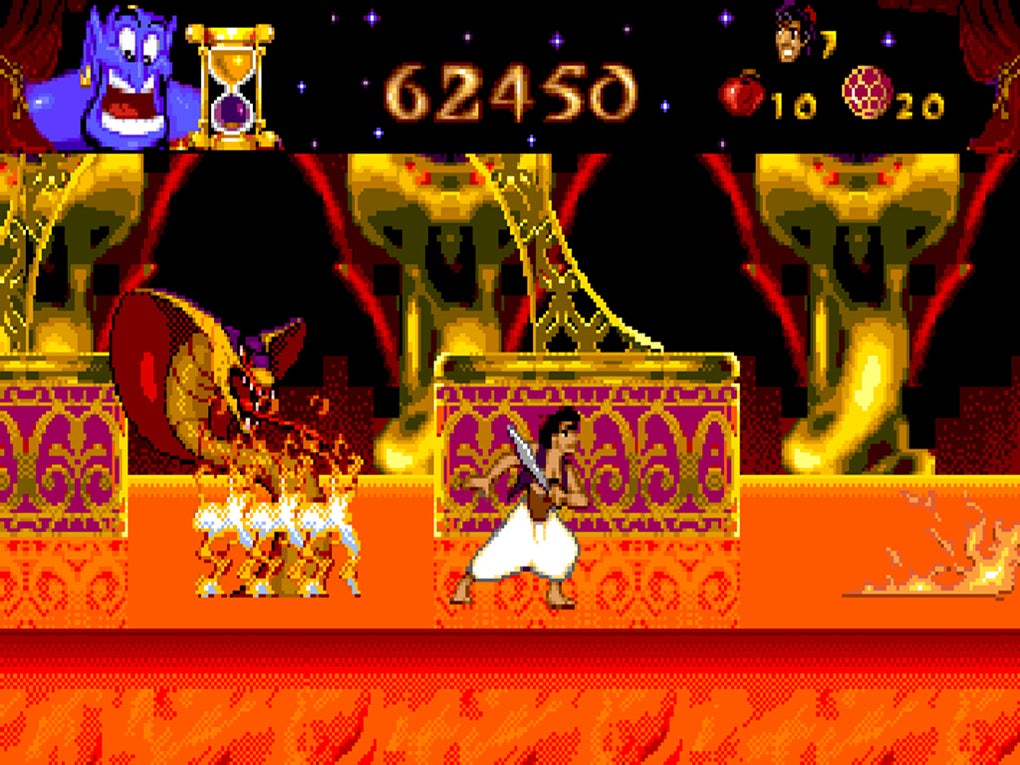
The allure of “Disney’s Aladdin” begins with its narrative fidelity, a rare feat for licensed games of its era. The game doesn’t just borrow elements from the 1992 animated classic; it meticulously re-enacts its most iconic moments and expands upon them through interactive sequences. From the very first level, players are immersed in the sights and sounds of Agrabah, a vibrant Middle Eastern city brought to life with exquisite pixel art and a soundtrack that echoes the film’s award-winning compositions.
Players assume the role of Aladdin, a resourceful and agile “street rat” whose daily life involves outrunning palace guards and scavenging for food alongside his mischievous, kleptomaniac pet monkey, Abu. The game’s opening sequences perfectly capture this dynamic, challenging players to navigate treacherous rooftops and market stalls, using Aladdin’s acrobatic prowess to avoid capture. The sense of urgency and youthful exuberance that defines Aladdin’s character in the film is beautifully translated into the gameplay, requiring quick reflexes and cunning to progress.
The narrative arc follows the film’s progression closely. Aladdin’s initial encounter with Princess Jasmine in disguise, his subsequent capture, and his fateful meeting with Jafar, who manipulates him into retrieving the magic lamp from the forbidden Cave of Wonders, are all pivotal moments within the game. The Cave of Wonders itself is a marvel of game design, a challenging environment filled with traps, puzzles, and formidable guardians. Its fiery lava pits, crumbling platforms, and cryptic pathways provide a stark contrast to the lively marketplace, emphasizing the perilous nature of Aladdin’s quest.

The true magic, however, begins with the discovery of the Genie. The game successfully encapsulates the Genie’s whimsical antics and boundless power, albeit within the confines of a 2D platformer. While he doesn’t grant wishes in the traditional sense within gameplay, his presence is felt through power-ups and humorous interventions that break up the intensity of the action. The iconic “Friend Like Me” sequence from the movie is subtly hinted at through musical cues and the Genie’s cheerful exclamations, adding a layer of authenticity and fan service that deeply satisfies. This infusion of humor and magic ensures that the game, much like the film, maintains a lighthearted tone despite the high stakes.
The journey eventually leads to the Sultan’s palace, where Aladdin, now disguised as Prince Ali, attempts to win Jasmine’s hand and expose Jafar’s treachery. The palace levels are intricately designed, featuring regal architecture, elaborate decorations, and new types of guards and challenges. The dramatic confrontations with Jafar, culminating in his transformation into a powerful sorcerer and ultimately a colossal serpent, are the climactic highlights of the game. Each boss fight is designed to test the skills players have honed throughout their adventure, demanding mastery of Aladdin’s combat and platforming abilities.
Beyond the main plot points, the game excels in developing the characters through subtle animations and interactions. Abu, for instance, isn’t just a static companion; he assists Aladdin in certain platforming sections, occasionally snatches valuable items, and reacts with expressive animations that deepen his role as a loyal, if sometimes troublesome, friend. Jasmine’s presence, though less interactive, provides the driving motivation for Aladdin’s heroics, a reminder of the love story at the heart of the tale. The narrative cohesion and the faithful representation of these beloved characters are undoubtedly one of the game’s greatest strengths, allowing players to truly “live out the classic tale” rather than merely observe it.
Gameplay Mechanics and Retro Charm
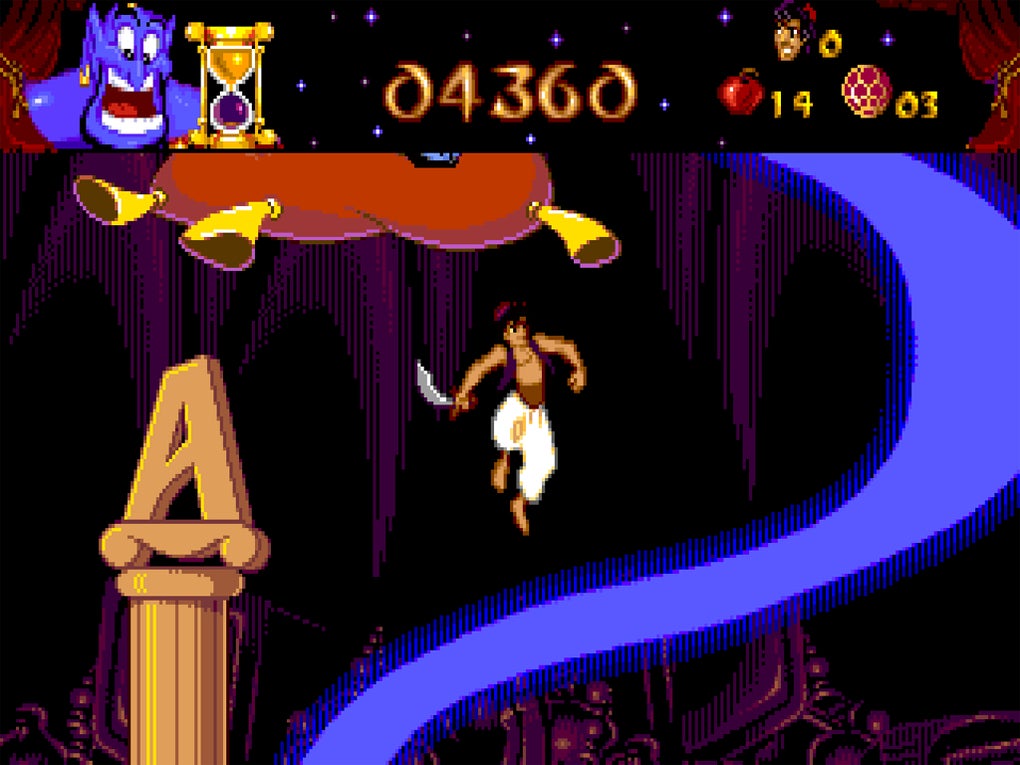
“Disney’s Aladdin” for Windows is a masterclass in 2D action-adventure platforming, a genre that flourished in the early 90s. Its gameplay is a dynamic blend of precision jumping, strategic combat, and thoughtful exploration, designed to keep players engaged and challenged through Agrabah’s diverse environments. The core mechanics are simple to grasp but offer surprising depth, inviting players to master Aladdin’s acrobatic movements and combat skills.
Aladdin’s primary forms of attack are his trusty scimitar and a seemingly endless supply of apples, which he can throw at enemies. The scimitar allows for close-quarters combat, requiring careful timing to parry attacks and strike opponents. Enemies vary from bumbling palace guards to formidable creatures found within the Cave of Wonders, each with distinct attack patterns that demand different strategies. The apples, on the other hand, provide a ranged option, useful for dispatching foes from a distance or triggering environmental switches. Managing the apple supply, though often generous, adds a subtle layer of resource management to the game.
Platforming is arguably the most dominant gameplay element. Aladdin is an exceptionally agile character, capable of running, jumping, climbing ropes, and swinging from ledges. The level design cleverly utilizes these abilities, presenting players with intricate layouts that require precise timing and spatial awareness. From leaping across chasms in the Cave of Wonders to navigating the treacherous spikes of Jafar’s dungeon, each jump feels impactful, and a misstep often leads to comical (or frustrating) consequences. The environmental interaction extends to bouncing off awnings, sliding down ropes, and even riding a magic carpet in exhilarating bonus stages, adding variety and breaking up the standard platforming pace.
Throughout the levels, players are encouraged to explore every nook and cranny to collect gems and power-ups. Gems serve as a form of currency, allowing Aladdin to purchase extra lives or continues from traveling merchants. This system adds a strategic layer, as players must decide whether to save their gems for later challenges or spend them to overcome immediate obstacles. Power-ups, such as invincibility potions or extra apples, are often hidden or guarded, rewarding diligent exploration and careful navigation. The iconic “Genie tokens” also make an appearance, granting players access to bonus rounds where they can earn even more valuable rewards, further extending the game’s replayability.
What truly elevates “Disney’s Aladdin” above many of its contemporaries is its commitment to its classic iteration’s iconic 2D pixel art style. In an age of rapidly advancing graphics, this game embraces its retro roots, and it does so to magnificent effect. The hand-drawn sprite animations for Aladdin, Abu, and all the various enemies and NPCs are incredibly fluid and expressive, bringing a tremendous amount of personality to each character. Aladdin’s nimble movements, the Genie’s flamboyant gestures, and even the simple scowl of a guard are rendered with an attention to detail that makes them feel alive. This visual style not only reinforces the game’s nostalgic charm but also serves as a beautiful artistic statement, proving that well-executed pixel art can be timeless.
Complementing the stunning visuals is an impeccable Original Soundtrack (OST) that seamlessly integrates the award-winning music of the original movie. The instrumental versions of “A Whole New World,” “Friend Like Me,” and “Prince Ali” are expertly woven into the gameplay, enhancing the atmosphere of each level. The iconic sound design, from the clang of Aladdin’s scimitar to the distinct sounds of enemies and environmental hazards, further immerses players in Agrabah. The music doesn’t just play in the background; it elevates the experience, adding emotional weight to dramatic moments and driving the pace during action sequences. For fans of the movie, the familiar melodies are a constant source of delight, lending another charming aspect that greatly contributes to the game’s overall appeal and sense of nostalgia. The synergy between the engaging gameplay, charming retro graphics, and immersive soundtrack creates a coherent and deeply satisfying experience that continues to hold up even after decades.
Navigating Agrabah: Challenges and Frustrations
While “Disney’s Aladdin” is celebrated for its faithful adaptation and engaging gameplay, it is not without its imperfections. Like many games from its era, it presents certain design choices that, when viewed through a modern lens, can lead to moments of frustration and detract from the overall enjoyment. Two particular aspects stand out: the controls and the save feature.
Firstly, the controls, while functional, can be quite frustrating to maneuver at times. While some players, especially those accustomed to retro platformers, may find the mechanics intuitive and responsive, numerous users have reported issues with commands not registering properly or feeling overly stiff. Aladdin’s movement, particularly during precise jumps or combat sequences, can sometimes feel less fluid than desired. This lack of precision can make certain sections of the game significantly more difficult than intended. For instance, executing a series of consecutive jumps over moving platforms or attempting to land a critical hit on a fast-moving enemy often requires a level of pixel-perfect accuracy that the control scheme doesn’t always accommodate gracefully. This can lead to cheap deaths, forcing players to replay challenging sections repeatedly, not due to a lack of skill, but because of a perceived disconnect between input and on-screen action. Such instances can interrupt the flow of the game, turning what should be a magical adventure into a test of patience. The nuance required for complex maneuvers, such as swinging on ropes and then transitioning into a jump, can be particularly finicky, demanding a degree of muscle memory that feels less about mastering Aladdin’s abilities and more about compensating for the control scheme’s limitations.
Secondly, and perhaps the most significant drawback for contemporary players, is the inability to save progress mid-game. This design choice, common in many early 90s console games, means that players must complete the entire game in one sitting, or at least dedicate a substantial, uninterrupted block of time to make significant progress. In an age where games feature auto-saves, quick-saves, and extensive chapter selection, the absence of any persistent save function in “Disney’s Aladdin” can be a daunting and off-putting task. Losing all progress after hours of gameplay due to a single mistake or an unforeseen interruption is incredibly disheartening.
This lack of a save feature forces a play style that prioritizes endurance and memorization over exploration and relaxed enjoyment. While some might argue it adds to the game’s “old-school” challenge and encourages mastery, for many, it’s an archaic design that doesn’t respect the player’s time. Imagine reaching the penultimate boss battle against Jafar, only to be defeated and sent all the way back to the very beginning of the game. Such a setback can quickly diminish enthusiasm and lead to players abandoning the game entirely. While the game does offer continues and the option to purchase extra lives with collected gems, these only provide temporary reprieve and do not alleviate the fundamental issue of not being able to pick up where one left off. For modern players accustomed to more forgiving systems, this oversight can be a major barrier to experiencing the full depth and charm of Agrabah.
Despite these significant flaws, it’s important to contextualize them within the era of the game’s original release. Many games from that period shared similar control quirks and lacked comprehensive save systems. While these shortcomings certainly impact the experience for a modern audience, they are often viewed as part of the authentic retro challenge for hardcore enthusiasts. However, for a casual player or someone purely seeking a nostalgic trip without added frustration, these aspects represent genuine obstacles that require a degree of patience and forgiveness.
A Nostalgic Gem: Why it Endures
Despite the aforementioned technical shortcomings, particularly the clunky controls and the unforgiving lack of a save feature, “Disney’s Aladdin” remains a cherished title for a multitude of compelling reasons. Its enduring popularity is a testament to the game’s strengths, which collectively create an experience that transcends its imperfections and continues to captivate players, old and new. For many, it’s not just a game; it’s a direct portal to a beloved childhood classic, evoking powerful memories and a sense of wonder that few other titles can match.
At the heart of its enduring appeal is its captivating story. The narrative of “Disney’s Aladdin,” borrowed directly from the film, is a tale of daring adventure, romance, and the triumph of good over evil. Players are drawn into Aladdin’s journey from a street rat to a hero, witnessing his growth, his struggles, and his ultimate victory. The game’s ability to faithfully translate this rich narrative into interactive segments is a key factor in its longevity. Every platforming challenge, every combat encounter, feels purposeful, pushing the story forward and immersing the player deeper into the magical world of Agrabah. This narrative fidelity fosters a strong emotional connection, making players feel like active participants in one of Disney’s grandest epics.
The charming characters are another cornerstone of its sustained appeal. Aladdin, with his roguish charm and acrobatic agility; Abu, the mischievous and loyal sidekick; the benevolent Genie, whose humor adds levity to the adventure; and the formidable villain Jafar – all are brought to life with remarkable fidelity through detailed pixel art and expressive animations. These characters are instantly recognizable and deeply loved by generations of fans. Interacting with them, even in a limited digital capacity, provides a powerful sense of connection and nostalgia. The game allows players to embody Aladdin, experiencing his world through his eyes and hands, which is a far more intimate way of engaging with these beloved figures than simply watching them on screen.
Furthermore, the beautiful graphics, even in their retro pixelated form, continue to evoke the magic of the original film. The vibrant color palette, intricate background details, and fluid character animations conspire to create a visually appealing world that feels alive. Agrabah’s bustling marketplace, the eerie depths of the Cave of Wonders, and the majestic halls of the Sultan’s palace are all rendered with an artistic flair that belies the technical limitations of its time. This aesthetic consistency with the movie, combined with the game’s stunning visual presentation, ensures that the magic of the animated classic is perfectly preserved and translated into an interactive medium. The game doesn’t just look like “Aladdin”; it feels like “Aladdin.”
The impressive and immersive soundtrack, featuring instrumental arrangements of iconic songs from the film, further enhances this magical atmosphere. The music doesn’t merely provide background noise; it actively shapes the player’s experience, intensifying dramatic moments, adding excitement to chase sequences, and bringing a sense of enchantment to quieter exploration. For fans, hearing those familiar tunes woven into the gameplay is an immediate trigger for nostalgia and emotional resonance, cementing the game’s place as a truly immersive adaptation.
Ultimately, “Disney’s Aladdin” for Windows offers a profound nostalgic journey back to a beloved childhood classic. For those willing to overlook its technical shortcomings – the occasionally clunky controls and the notable absence of a save feature – it delivers an experience that is deeply rewarding. It’s a game that speaks to the power of well-crafted narratives, memorable characters, and atmospheric world-building. It serves as a fantastic example of how a licensed game, when given proper care and attention, can become a celebrated entity in its own right, extending the legacy of its source material.
Whether you’re a veteran player revisiting Agrabah after decades or a curious newcomer experiencing this enchanting world for the first time, this classic title promises an adventure filled with wonder, danger, and heart. It’s a reminder that true magic, like a cherished story, can endure through different forms and across generations, continuing to spark joy and excitement. Its flaws are easily overshadowed by its charm and the sheer pleasure of embodying one of Disney’s most endearing heroes on an unforgettable quest. “Disney’s Aladdin” isn’t just a game; it’s a treasured piece of interactive history, forever holding a special place in the hearts of those who venture into its pixelated rendition of Agrabah.
This modern port, available on PhanMemFree, ensures that this nostalgic journey is accessible to today’s PC users, allowing them to experience or re-experience the magic without needing vintage hardware. Despite any minor frustrations, the overall consensus is that this title remains a vital and enjoyable part of Disney’s interactive legacy, a game worth cherishing and revisiting for its pure, unadulterated fun and its faithful tribute to a timeless tale. You can find more details and download options for this and other classic games on Phanmemfree.org.
File Information
- License: “Full”
- Version: “varies-with-devices”
- Latest update: “August 9, 2024”
- Platform: “Windows”
- OS: “Windows 7”
- Language: “English”
- Downloads: “12.5K”


