
Do It Again was a free productivity application for Windows, released in 2012 and available for Windows 2000 and earlier operating systems. While no longer actively supported or updated, its presence in the software landscape offers a glimpse into the evolution of productivity tools and the specific needs of users at the time. This article explores Do It Again’s features, its place within the broader context of Windows productivity software, and the reasons behind its eventual obsolescence.
A Closer Look at Do It Again’s Functionality
Unfortunately, detailed information about Do It Again’s specific features is scarce. The available information primarily focuses on its categorization as productivity software, particularly within the sub-category of cataloging. This suggests its core functionality likely involved organizing and managing information, potentially through features like:
-
Data Entry and Organization: The “cataloging” descriptor hints at a system for inputting and structuring various types of data. This could range from simple lists and notes to more complex data structures, depending on the application’s sophistication. The lack of further details prevents a conclusive assessment, but the general function likely aimed to improve personal or professional organization.
-
Basic Data Management: The program likely included features for sorting, searching, and filtering entered data, making retrieval and manipulation of stored information more efficient. This is a standard feature in most cataloging or database-like applications.
-
Reporting or Output Options: Although not explicitly stated, it’s plausible that Do It Again offered basic reporting functionalities, enabling users to generate summaries or extract specific data subsets for further use.
The absence of readily available screenshots or detailed user reviews hinders a comprehensive analysis of the user interface and the overall user experience. It is likely Do It Again adopted a relatively straightforward interface typical of productivity software from that era, prioritizing functionality over advanced visual elements.
Do It Again in the Context of Windows Productivity Software (2012)
Released in 2012, Do It Again entered a market already saturated with established productivity software. Microsoft Office, with its suite of applications including Word, Excel, and PowerPoint, dominated the professional and personal productivity landscape. Open-source alternatives like LibreOffice were also gaining traction, offering a free and feature-rich alternative to Microsoft’s offerings.
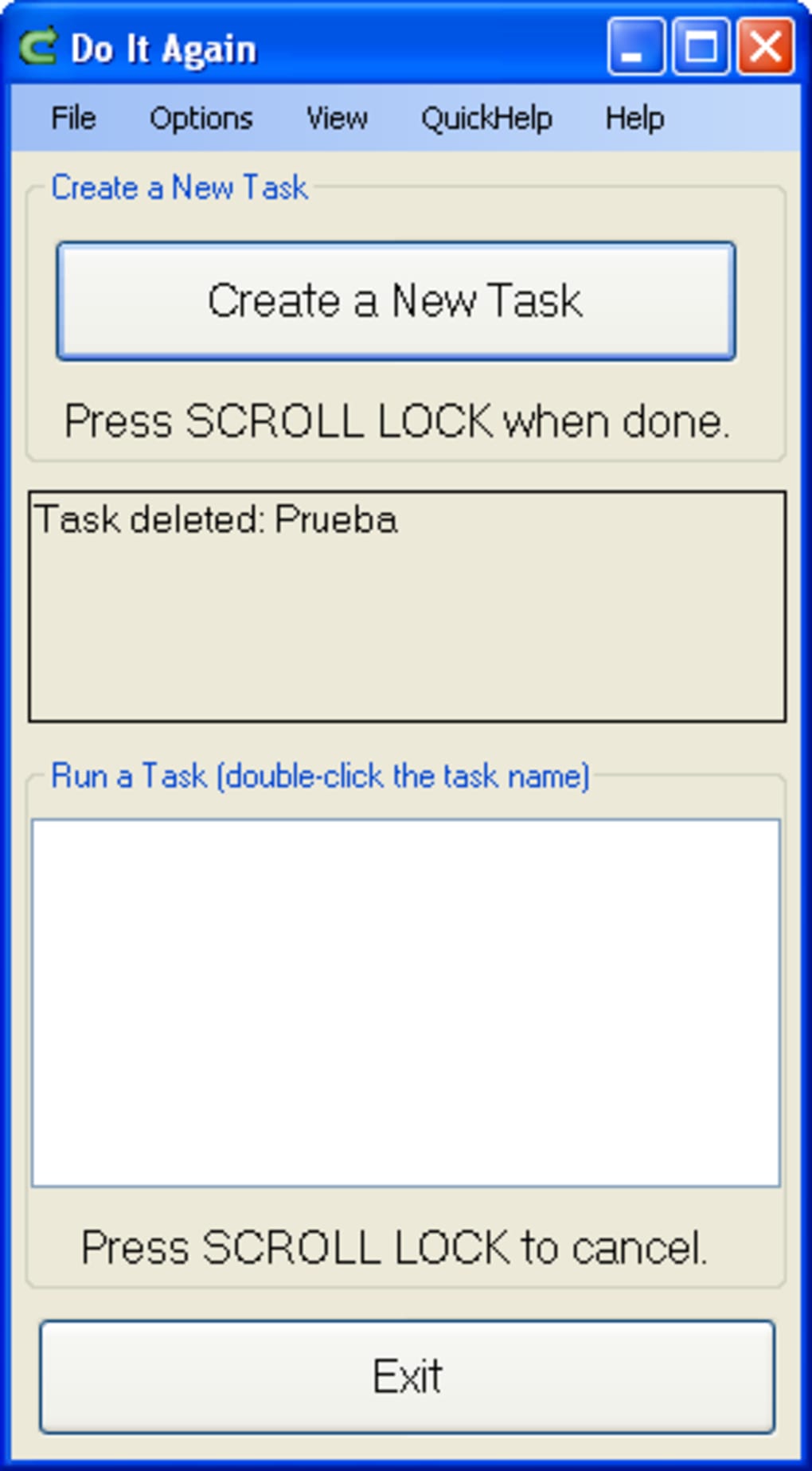
Do It Again likely targeted a niche audience less interested in the complexity of comprehensive office suites. Its simplicity and free availability could have appealed to users with basic organizational needs or those seeking a lightweight alternative to heavier-weight applications. This segment might have included individuals needing simple task management, personal record keeping, or basic inventory tracking.
The fact that Do It Again saw significant downloads (21,555 downloads by 2012, according to the provided data) suggests it filled a need for a less demanding, easy-to-use productivity tool. The concentration of its use in countries such as Egypt, Algeria, and the United States hints at potential variations in software accessibility and user preferences across different regions.
Why Do It Again Became Obsolete
The reasons behind Do It Again’s eventual obsolescence are multifaceted and likely stem from a combination of factors:
-
Lack of Updates and Maintenance: The last update in 2012 is a significant indicator. The software development world is dynamic, with constant advancements in technology and user expectations. Without ongoing updates to address bugs, improve performance, or incorporate new features, software can quickly become outdated and less competitive. Security vulnerabilities also become more prevalent in unmaintained software.
-
Competition from More Robust Alternatives: As mentioned previously, established industry giants like Microsoft and open-source alternatives provided significantly more feature-rich options. Do It Again, likely lacking advanced features or scalability, would have struggled to compete against these larger players.
-
Changing Technological Landscape: The shift toward cloud-based solutions and mobile accessibility further contributed to the decline of Do It Again. Cloud-based productivity tools offer seamless collaboration, accessibility from multiple devices, and automatic data backup, none of which were likely features of Do It Again.
-
Limited Marketing and Outreach: The lack of detailed information about Do It Again suggests limited marketing or community engagement. Without robust marketing efforts, it would have been harder to reach potential users and maintain a user base.
- Operating System Compatibility: Compatibility with Windows 2000 and earlier versions suggests it was likely not designed for newer Windows versions. As newer operating systems emerged, Do It Again’s user base would have shrunk as users upgraded.
In essence, Do It Again, while seemingly successful in its initial release, lacked the adaptability and ongoing support necessary to withstand the rapidly evolving world of software development and user expectations.
Lessons Learned from Do It Again’s Story
The case of Do It Again serves as a reminder of the importance of continuous development, adaptation, and user engagement in the software industry. While a simple, free tool may fill a specific need in a particular context, without constant updates, improvements, and marketing, even successful software can become obsolete. The rapid evolution of technology and user expectations necessitates a proactive approach to software development and maintenance, ensuring that applications remain relevant and competitive in the long term. The limited lifespan of Do It Again underscores the crucial role of adaptability and responsiveness to market changes in software development. The success of contemporary productivity software hinges not only on initial functionality but also on a strategy for continuous improvement, user engagement, and alignment with evolving technological trends. In the ever-changing digital landscape, stagnation can lead to obsolescence, regardless of a product’s initial promise.
File Information
- License: “Free”
- Version: “1.6”
- Latest update: “June 16, 2012”
- Platform: “Windows”
- OS: “Windows 2000”
- Language: “English”
- Downloads: “15.1K”
- Size: “671.74 KB”


