
DOOM II, released in 1994, stands as a monumental achievement in the history of first-person shooter (FPS) games. Building upon the groundbreaking success of its predecessor, DOOM, it refined and expanded upon the original’s formula, cementing its place as a cornerstone of the genre and influencing countless games that followed. More than just a sequel, DOOM II represents a significant leap forward in terms of gameplay, enemy design, and overall atmosphere, delivering a relentlessly intense and unforgettable experience that continues to captivate players even today.
Enhanced Gameplay and Visuals: A Bloody Evolution
DOOM II significantly improved upon the technical aspects of its predecessor. While still utilizing the same basic engine, enhancements were visible across the board. The sprite work, representing the enemies and items, was noticeably more detailed and varied, giving the game a more polished aesthetic. The level design also underwent a significant upgrade. While DOOM featured a more linear progression through interconnected levels, DOOM II embraced a more non-linear approach. This allowed for greater player freedom and replayability, encouraging exploration and the discovery of hidden areas and secrets. This level of freedom, a rarity at the time, dramatically increased the game’s longevity and replay value. The 30 levels presented in DOOM II were far more elaborate and sprawling than those found in the original, showcasing a greater diversity in environments, from industrial complexes and subterranean labyrinths to hellish wastelands and nightmarish landscapes.
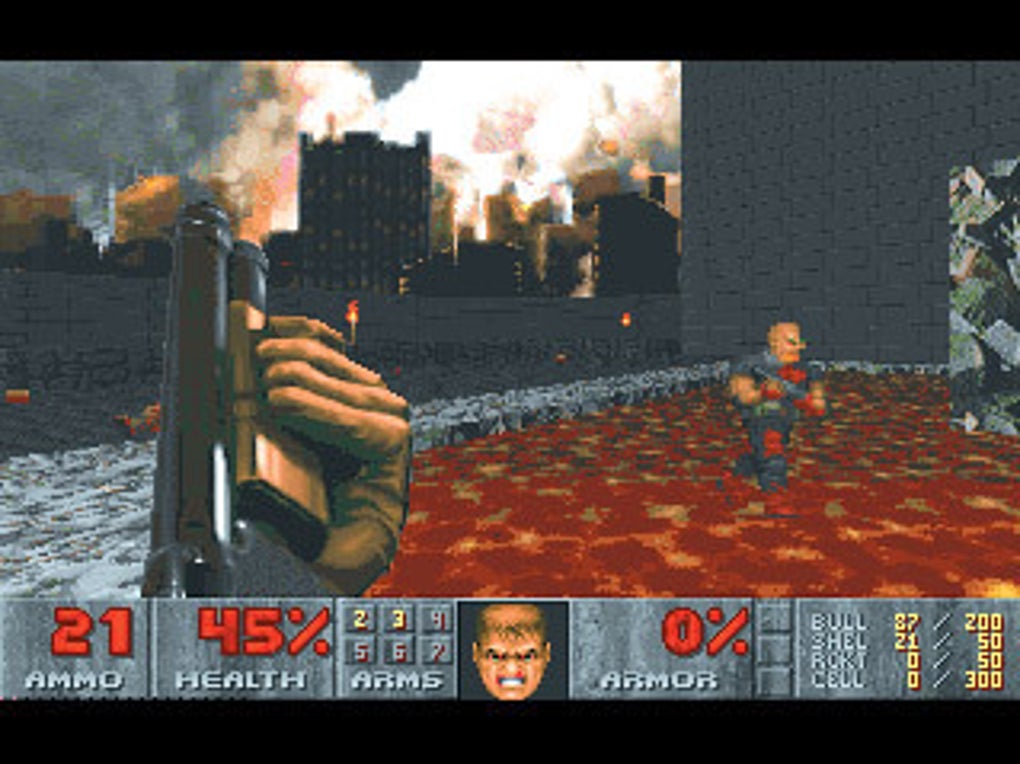
The game also saw improvements to weapon mechanics. While the iconic shotgun, chaingun, and rocket launcher returned, they were further refined, handling more smoothly and feeling more powerful. New weapons like the plasma gun and the super shotgun were introduced, adding tactical depth to combat encounters. The added power and variety of weapons, combined with a wider array of enemy types, transformed each encounter into a strategic ballet of death, requiring careful planning and quick reflexes.
A Deeper Dive into Hell: Expanding the Narrative
The narrative in DOOM II, though still relatively sparse by modern standards, expanded upon the lore established in the first game. While the original game saw the protagonist battling demons on a remote lunar research facility, DOOM II throws the player directly into the aftermath of the previous conflict. Earth itself has become a battleground, overrun by the hellish horde that the protagonist had previously fought. This shift in setting and the increased stakes immediately enhance the atmosphere, turning the game into a desperate struggle for survival against overwhelming odds. The feeling of utter chaos and impending doom permeates the entire experience, amplifying the intensity of every combat encounter and reinforcing the sheer scale of the demonic invasion.
The lack of explicit narrative details allowed players to fill in the gaps, fueling their imaginations and enhancing the overall experience. This minimalistic approach, coupled with the visceral gameplay and oppressive atmosphere, allowed players to focus on the core elements of survival and destruction. This focus allowed for a greater level of immersion and visceral engagement, enhancing the overall experience.
The Arsenal of Destruction: Weapons and Enemies
DOOM II boasted an expanded arsenal of weaponry compared to its predecessor. Familiar favorites like the pistol, shotgun, and chaingun returned, but with enhanced capabilities. The inclusion of the super shotgun, plasma rifle, and BFG 9000 added strategic depth and power to the player’s offensive capabilities. The plasma rifle, capable of unleashing sustained blasts of concentrated energy, allowed for both precise long-range shots and a powerful area-of-effect attack when used up close. The BFG 9000, a devastatingly powerful weapon capable of obliterating large groups of enemies, became an iconic part of the DOOM experience and a symbol of the game’s over-the-top violence.
The enemy roster also saw a significant expansion. Returning foes like imps, demons, and cacodemons were joined by new and more formidable opponents like arachnotrons, revenants, and the terrifying cyberdemon. Each enemy possessed unique attack patterns and behaviors, requiring players to adapt their strategies and tactics. The introduction of these diverse and formidable opponents ensured that each encounter remained both challenging and strategically engaging. The variety of enemy types and their individual behaviors ensured that no two battles were alike, further enhancing the replayability and overall enjoyment of the game.
Multiplayer Mayhem: Cooperative and Competitive Combat
DOOM II introduced a robust multiplayer mode, a feature that was relatively novel for its time. Players could engage in cooperative or competitive matches, teaming up to survive against hordes of demons or battling each other for supremacy. This marked a major step forward in the evolution of FPS multiplayer gaming and paved the way for the massive online multiplayer experiences that would become so commonplace in the years that followed. The intense, chaotic nature of the multiplayer mode further showcased the strengths of DOOM II’s core mechanics, intensifying the visceral satisfaction of defeating enemies and enhancing the sense of accomplishment associated with the game. These multiplayer encounters could be played on a local network or via modem, although connecting to others using modems added an extra layer of technical challenge to the experience.
The Legacy of DOOM II: A Lasting Impact on Gaming
DOOM II’s impact on the video game landscape cannot be overstated. It refined and perfected the formula established by its predecessor, setting a new standard for first-person shooters and influencing countless games that followed. Its fast-paced, violent gameplay, coupled with its memorable level designs and iconic soundtrack, cemented its place in gaming history. The game’s enduring popularity is a testament to its innovative design and timeless appeal.
The availability of numerous user-created modifications (mods) has also contributed significantly to DOOM II’s longevity. These mods have expanded the game’s content and gameplay, offering players a virtually limitless supply of new levels, weapons, enemies, and even entirely new game modes. This user-generated content has ensured that the game remains relevant and engaging for a new generation of players, extending its legacy for decades.
From its enhanced graphics and gameplay to its expanded narrative and robust multiplayer mode, DOOM II stands as a landmark title in the history of video games. Its influence can be seen in countless games released since its debut, solidifying its position as a timeless classic that continues to inspire and entertain players worldwide. The game’s enduring appeal and constant re-discovery by new generations of gamers is a testament to its enduring quality and impactful design. DOOM II is more than just a game; it’s a piece of gaming history that deserves to be remembered and celebrated.
File Information
- License: “Full”
- Latest update: “July 12, 2023”
- Platform: “Windows”
- OS: “Windows 11”
- Downloads: “5.2K”


