
DragGAN is a groundbreaking free, AI-powered photo editing tool that’s rapidly gaining popularity for its intuitive interface and powerful image manipulation capabilities. Unlike traditional photo editors that primarily rely on pixel manipulation, DragGAN leverages the power of artificial intelligence to generate entirely new image content based on user input. This innovative approach opens up a world of creative possibilities for both casual users and professional graphic designers. This article delves into the features, implications, and limitations of this exciting new technology.
Intuitive Interface and Ease of Use
One of DragGAN’s most striking features is its remarkably user-friendly interface. The developers have prioritized accessibility, designing a program that resembles familiar image-warping applications. This familiar layout significantly reduces the learning curve, allowing users to quickly grasp the core functionalities without needing extensive technical knowledge or training. The intuitive design makes DragGAN accessible to a wider audience, regardless of their prior experience with photo editing software. Instead of navigating complex menus and settings, users can focus on creatively manipulating their images. This intuitive approach is crucial for democratizing access to advanced image editing tools, bringing powerful AI-driven capabilities to the fingertips of a broader user base.
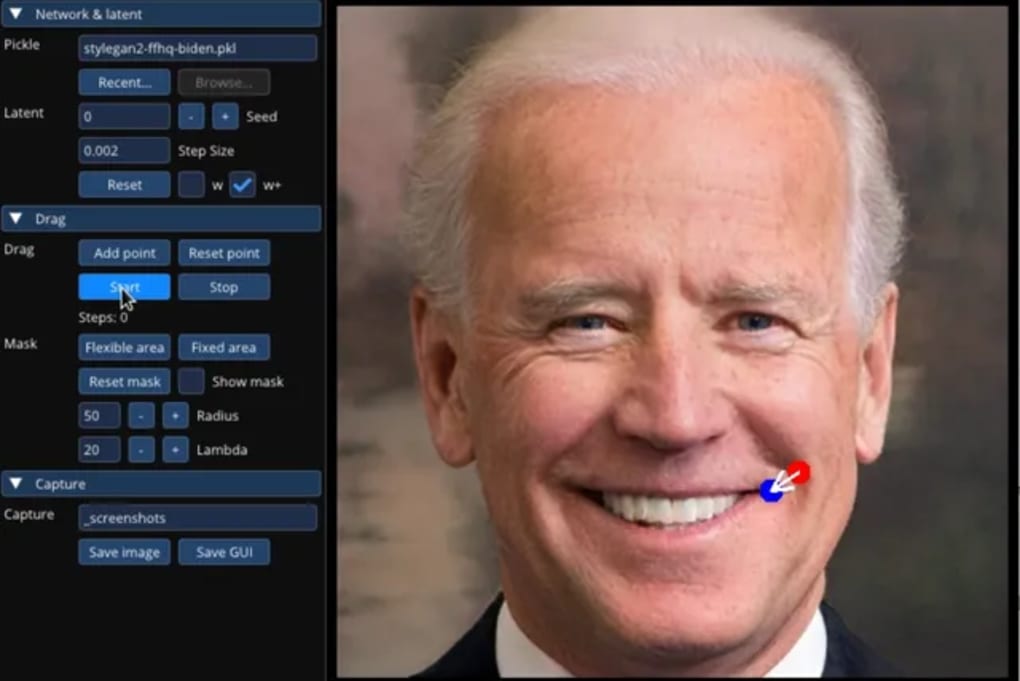
Image Editing and Generation Capabilities
DragGAN’s functionality extends beyond simple image editing; it’s a true image generation powerhouse. While it allows users to modify existing images with precision, its core strength lies in its ability to create realistic images from scratch. Users can specify details such as poses and other characteristics, and DragGAN utilizes its AI algorithms to generate images that align with these specifications. This generative capability opens up exciting possibilities for artists, designers, and content creators. They can quickly and efficiently produce high-quality images tailored to their specific needs, significantly streamlining the creative workflow. The AI seamlessly fills in the gaps, creating plausible and aesthetically pleasing results even when working with incomplete or ambiguous prompts.
This ability to generate images, as opposed to just modifying existing ones, is a critical distinction from traditional photo editing software. While traditional programs excel at manipulating existing pixel data, DragGAN expands the possibilities by creating entirely new image content. This innovative approach allows for a level of creativity and precision that was previously unimaginable, ushering in a new era of digital image creation.
The Power of AI in Image Manipulation
The underlying technology driving DragGAN’s capabilities is its sophisticated AI engine. This engine is trained on a vast dataset of images, allowing it to understand and interpret complex visual patterns and relationships. This understanding translates into the program’s ability to accurately interpret user input and generate images that are both realistic and consistent with the given prompts. The AI doesn’t simply copy and paste existing image elements; instead, it synthesizes new content, filling in details and creating coherent images that often surpass the capabilities of human artists working with traditional tools. This technology has profound implications for various fields, from graphic design and animation to game development and scientific visualization.
The AI’s ability to understand and generate nuanced details is a testament to its advanced learning capabilities. For example, it can accurately reproduce intricate textures, subtle lighting effects, and even realistic facial expressions. This level of detail sets DragGAN apart from other image editing software, significantly expanding the possibilities for creating highly realistic and visually compelling content.
Ethical Considerations and Potential Risks
While DragGAN offers exceptional capabilities, it’s essential to acknowledge the potential ethical considerations and risks associated with AI-powered image generation. The ease with which realistic images can be created raises concerns about potential misuse, such as deepfakes and the creation of misleading content. The technology’s ability to generate images of individuals without their consent is a significant ethical challenge that requires careful consideration. Furthermore, issues related to copyright and ownership of AI-generated images remain largely unresolved, highlighting the urgent need for clear legal frameworks to address these emerging issues.
The unregulated nature of AI technologies like DragGAN presents a considerable challenge. The potential for misuse, particularly in the creation of fraudulent or misleading images, requires a balanced approach that both embraces the technology’s potential and mitigates its risks. Open discussion, the development of ethical guidelines, and the implementation of robust safeguards are critical steps to ensuring the responsible and ethical development and use of AI-powered image generation tools.
Current Limitations and Future Development
DragGAN, despite its impressive capabilities, is still in its early stages of development. While the current version is remarkably effective, there are areas where improvement is needed. The program’s performance can be affected by the complexity of the input image or the intricacy of the user’s requests. Furthermore, the processing time can be significant for large or highly detailed images. Future development efforts will likely focus on optimizing the AI’s efficiency and expanding its capabilities to handle even more complex tasks and image types.
As the technology matures, we can anticipate advancements that will address these current limitations. Improvements in processing speed and the ability to handle higher-resolution images are likely to be key areas of focus. Moreover, expanding the range of image manipulation options and enhancing the AI’s ability to understand and respond to more nuanced user instructions will further enhance DragGAN’s capabilities and versatility.
The development team has indicated plans for future iterations of DragGAN, suggesting a commitment to continuous improvement and expansion of the program’s functionality. This commitment is crucial for maintaining the program’s competitiveness and addressing any shortcomings or limitations in the current version.
Comparison with Other Image Editing Software
DragGAN occupies a unique space within the landscape of image editing software. While traditional programs like Photoshop or GIMP offer extensive manual control over image manipulation, DragGAN provides a unique blend of AI-powered automation and user control. This combination allows for a creative workflow that is both powerful and efficient. Unlike cloud-based collaborative design tools like Figma, which focus on collaborative design processes, DragGAN emphasizes individual creative control and the generation of new image content.
Compared to other AI-powered image editing tools, DragGAN distinguishes itself through its user-friendly interface and its focus on both image editing and generation. Other programs may specialize solely in image generation or editing, while DragGAN seamlessly combines both functionalities into a single, powerful tool. This dual functionality expands the tool’s appeal to a broader user base, catering to both those who require precise editing capabilities and those who want to create entirely new images from scratch.
Conclusion: The Future of AI-Powered Image Editing
DragGAN represents a significant advancement in the field of AI-powered image editing. Its intuitive interface, combined with its powerful image generation and manipulation capabilities, opens up exciting possibilities for artists, designers, and content creators. While ethical considerations and potential risks need to be carefully addressed, the potential benefits of this technology are undeniable. As the technology continues to evolve and mature, we can expect DragGAN and similar AI-powered tools to play an increasingly prominent role in how we create, edit, and interact with digital images. The future of image editing is undeniably intertwined with the power and potential of artificial intelligence, and DragGAN is at the forefront of this exciting evolution.
File Information
- License: “Free”
- Version: “varies-with-devices”
- Latest update: “July 11, 2023”
- Platform: “Windows”
- OS: “Windows 10”
- Language: “English”
- Downloads: “38K”


