
In the expansive and ever-evolving landscape of online gaming, few genres capture the fervent energy and strategic depth quite like the Multiplayer Online Battle Arena (MOBA). At its heart, the MOBA genre pits teams of players against each other, typically in a battle to destroy a central structure in the enemy’s base, all while controlling powerful, unique characters that grow in strength throughout the match. Amidst this competitive arena, Wyrmbyte’s “Dragons and Titans” emerged as a distinctive entry, offering a fiery twist to the established formula by placing players in control of formidable, mythical beasts rather than conventional heroes. Launched as a free-to-play title for Windows, Dragons and Titans carved out its niche by marrying the strategic complexity and intense team-based combat of a MOBA with the primal allure of dragon warfare.
Released with its latest major update in March 2014, Dragons and Titans presented itself as an “action-packed” experience, designed to immerse players in fast and furious battles. PhanMemFree.org, a platform dedicated to software and game discovery, highlighted its core appeal: a thrilling blend of fantasy and competitive action. The game’s premise was straightforward yet compelling – choose a dragon, arm it with a weapon, and dive into various battle modes to gain experience, enhance your dragon’s capabilities, and ultimately dominate the battlefield. With over 30 unique dragons and an equally extensive arsenal of 30 different weapons, the game promised a rich tapestry of customization and strategic choice, inviting players to forge their own path to aerial supremacy. This introduction sets the stage for a detailed exploration of what made Dragons and Titans a memorable, albeit challenging, contender in the bustling MOBA space.
The Roar of Battle: Core Gameplay and Mechanics
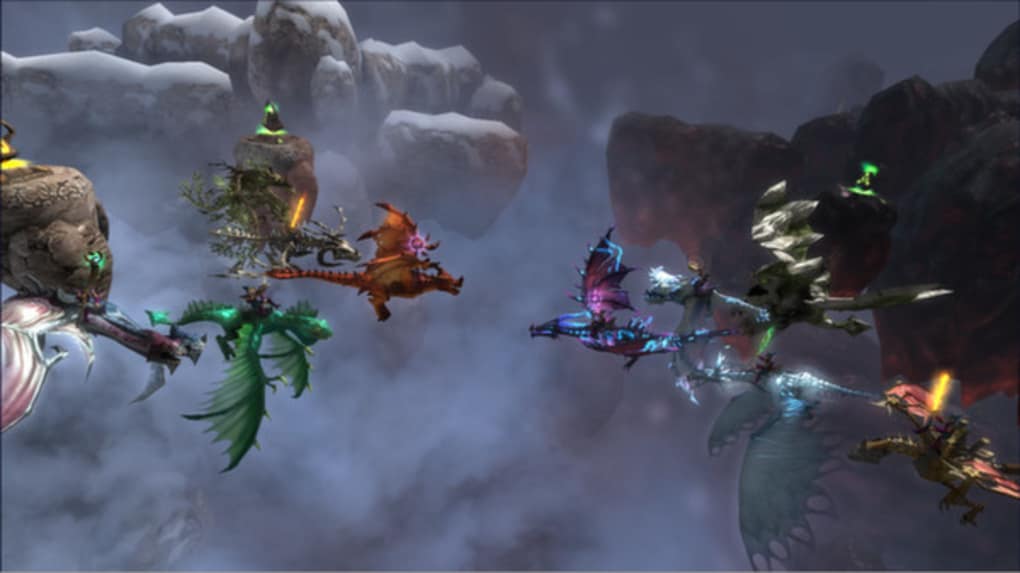
Dragons and Titans, at its very core, embraced the fundamental tenets of the MOBA genre while infusing it with its own unique flavor. For those familiar with titles like League of Legends or Dota 2, the underlying loop would feel familiar: two teams clash on a symmetrical map, vying for control, resources, and ultimately, the destruction of the opposing team’s main objective. However, the game differentiated itself significantly by replacing traditional humanoid heroes with majestic, fire-breathing dragons, transforming skirmishes into epic aerial dogfights and ground-shaking elemental clashes.
The primary objective in Dragons and Titans, as in many MOBAs, revolved around progression and dominance. Players started each match with a basic version of their chosen dragon, equipped with a standard set of abilities. The journey to victory was paved with gaining “experience in order to beef-up your Dragons and dominate battles.” This experience was typically acquired through various actions: defeating enemy dragons, eliminating AI-controlled minions (often referred to as ‘creeps’ or ‘minions’ in MOBAs, perhaps smaller beasts or soldiers in D&T’s lore), destroying enemy structures, and completing specific objectives unique to each map. As dragons gained experience levels within a match, they would unlock new abilities, improve existing ones, or gain stat bonuses, making them progressively more powerful and capable of influencing the tide of battle. This in-match leveling system created a dynamic flow, rewarding skilled play and strategic decision-making throughout the game.
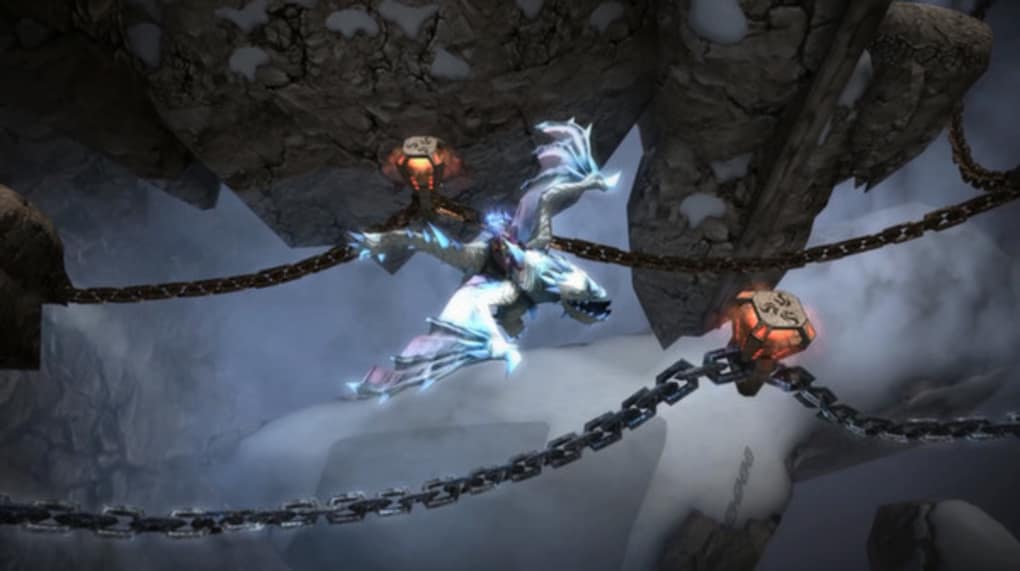
What truly set Dragons and Titans apart was its emphasis on dragon selection and weapon customization. The game boasted an impressive roster of “over 30 unique dragons.” This wasn’t merely a cosmetic choice; each dragon was designed with distinct abilities, attributes, and roles within a team composition. Players could choose from an array of archetypes: hulking, durable tank dragons capable of soaking up damage and initiating fights; agile, high-damage-output dragons specializing in quickly eliminating enemies; supportive dragons that could heal allies or disrupt foes; and strategic dragons focused on objective control or area-of-effect abilities. This variety encouraged players to experiment with different playstyles and understand the synergies between various dragon combinations, fostering a deeper layer of strategic team building.
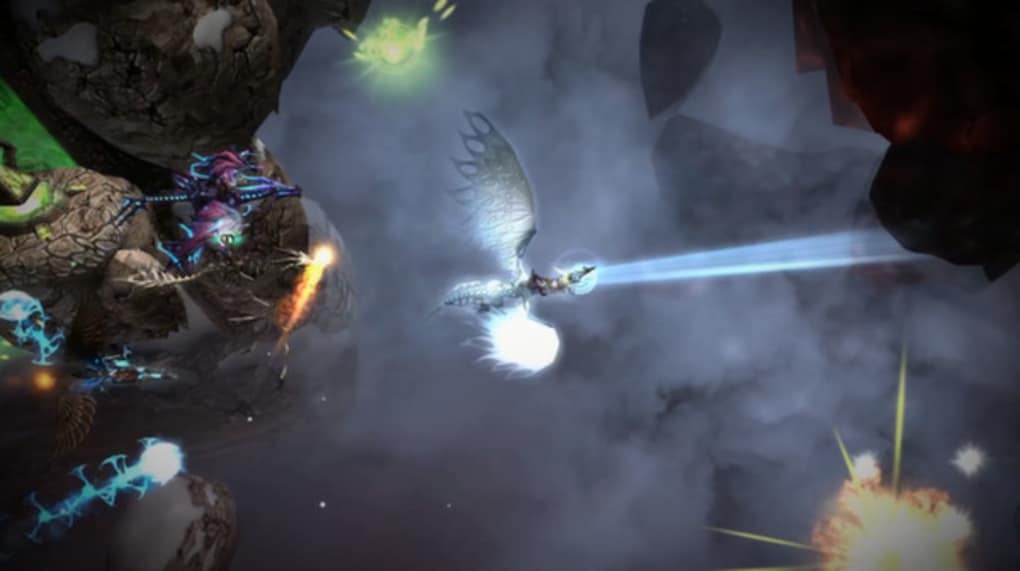
Complementing the diverse dragon roster was an equally robust selection of “30 different weapons.” These weren’t just standard swords or staves; in the context of dragons, these weapons likely manifested as elemental enhancements, arcane artifacts, or specialized equipment that augmented a dragon’s natural abilities. A weapon might change a dragon’s primary attack type, grant passive bonuses, or even provide active abilities that could turn the tide of a skirmish. For instance, a fire dragon might be equipped with a weapon that grants it a sustained burn effect on its attacks, while an ice dragon might gain a weapon that allows it to temporarily freeze enemies. The combination of a unique dragon and a tailored weapon created a vast matrix of potential builds and strategies, allowing players to personalize their combat approach significantly. This dual layer of customization—choosing both a dragon and its accompanying weapon—ensured that no two matches felt entirely the same, promoting replayability and a constant exploration of new tactics. It fostered an environment where understanding both your chosen dragon and weapon, as well as those of your teammates and opponents, was crucial for success, demanding a high degree of adaptability and strategic foresight from its players.
Modes of Engagement: From Solo Adventures to Epic 5v5 Clashes
The versatility of Dragons and Titans extended beyond its character customization, manifesting vibrantly in its diverse array of game modes. Designed to cater to different player preferences and group sizes, these modes provided varied experiences, ranging from intense team-based combat to more personal, narrative-driven journeys. At the forefront of its competitive offerings was the exhilarating “crazy 5v5 mash-up,” a mode that truly embodied the spirit of a MOBA.
The 5v5 mode was where Dragons and Titans truly let its competitive spirit soar. This format typically involves two teams of five players battling it out on a large, multi-lane map. The objective would usually be to push through enemy defenses, destroy towers and inhibitors, and ultimately obliterate the enemy’s main base or “Ancient.” However, PhanMemFree.org’s description pointed to a specific complexity in this mode, noting that it was “particularly complicated despite the tutorial and it takes ages to complete a stage because there are so many sub-levels.” This detail suggests that the 5v5 maps in Dragons and Titans were not just standard lane-and-jungle layouts. Instead, they might have featured intricate designs with multiple layers, hidden paths, dynamic objectives, or perhaps a progression of stages within a single match. Imagine a map where, after destroying the initial towers, a new section of the battlefield opens up, or where defeating specific mini-bosses triggers significant environmental changes or unlocks powerful buffs. Such “sub-levels” would introduce additional strategic considerations, forcing teams to adapt their tactics on the fly and manage multiple objectives simultaneously, potentially leading to prolonged and highly engaging matches. The complexity, while a potential barrier for new players, would likely appeal to seasoned MOBA enthusiasts looking for a deeper, more involved strategic challenge, demanding coordinated teamwork and excellent communication to navigate its multi-faceted battlegrounds.
Beyond the flagship 5v5 experience, Dragons and Titans also offered modes designed for smaller groups and individual play. The “Two Player” mode could take several forms. It might have been a scaled-down competitive mode, perhaps 2v2 on a smaller map, focusing on intense skirmishes and individual skill without the overwhelming coordination demands of a larger team battle. Alternatively, it could have been a cooperative mode for two players, tackling specific challenges or objectives together against AI opponents, allowing friends to experience the dragon-riding action side-by-side without the pressure of a full competitive lobby.
The “Co-Op” mode, broader in scope than the specific two-player variant, typically implies a team of players working together against environmental or AI challenges. This could have involved defending a stronghold against waves of computer-controlled enemies, completing specific mission objectives, or even taking on powerful boss monsters as a unified force. Such a mode would be ideal for players who enjoy teamwork without the direct rivalry of player-versus-player combat, allowing them to hone their skills, experiment with dragon and weapon combinations, and experience the game’s mechanics in a more relaxed yet still challenging setting.
Finally, the “Single Player Adventure Mode” provided an avenue for players to engage with the game’s world and mechanics independently. This mode likely served multiple purposes: introducing new players to the game’s lore, teaching fundamental controls and strategies in a controlled environment, and offering a narrative experience that explored the world of Dragons and Titans. An adventure mode could feature a series of progressively difficult missions, each with unique objectives and story elements, allowing players to unlock new dragons, weapons, or customization options as they progressed. It might have also served as an extended tutorial, gradually introducing the nuances of combat, resource management, and objective play, preparing players for the more demanding multiplayer modes. This diversity in game modes ensured that Dragons and Titans had something to offer a wide range of players, from those seeking the ultimate competitive clash to those preferring a more solitary or cooperative journey into its fantastical world.
Navigating the Battlefield: Strengths and Challenges
Every game, regardless of its ambition or execution, comes with its own set of advantages and inherent difficulties. Dragons and Titans was no exception, presenting a compelling blend of strengths that captivated players and certain challenges that required significant investment to overcome. PhanMemFree.org’s succinct summary of pros and cons offers a valuable lens through which to appreciate the game’s design philosophy and its impact on the player experience.
One of the most immediate and impactful strengths highlighted was the “Good graphics and sound.” In a game centered around mythical creatures and grand battles, visual and auditory fidelity are paramount for immersion. “Good graphics” likely translated to detailed dragon models, each with distinct textures, animations, and elemental effects that conveyed their power and unique identity. The environments would have been equally impressive, featuring vibrant landscapes, elaborate battle arenas, and intricate structures that created a believable and engaging backdrop for the action. Imagine the shimmering scales of an ice dragon, the fiery breath of a lava beast, or the majestic sweep of wings as these titans traversed detailed forests, volcanic peaks, or ancient ruins. Complementing the visuals, “good sound” would have encompassed impactful sound effects for abilities – the roar of a dragon, the hiss of elemental attacks, the clang of weapons, and the explosive impact of spells. An epic orchestral soundtrack or dynamic ambient sounds would further have enhanced the atmosphere, escalating the tension during fierce engagements and underscoring moments of triumph. Together, these elements contributed significantly to the game’s appeal, drawing players into its fantastical world and making each battle feel truly epic.
The second major strength, “Action packed gameplay,” was a core pillar of Dragons and Titans’ identity. Unlike some MOBAs that can sometimes lean into slower, more methodical engagements or extended farming phases, Dragons and Titans seemingly prioritized constant engagement and rapid-fire combat. This would mean frequent skirmishes, fast-paced objective contests, and a general feeling of immediacy in the battles. Players would likely find themselves constantly involved in the action, whether pushing lanes, battling in the jungle, or participating in large-scale team fights. This high-octane approach would appeal to players who crave continuous excitement and quick reactions, ensuring that downtime was minimal and the thrill of combat was ever-present. The ability to control a powerful dragon, unleashing destructive abilities and maneuvering through aerial combat, naturally lends itself to an action-packed experience that few other MOBA settings could replicate.
Finally, the sheer depth of customization provided by “Lots of weapons and dragons to choose from” was a significant draw. As discussed, the combination of 30 unique dragons and 30 distinct weapons opened up a vast spectrum of strategic possibilities. This not only promoted replayability, as players could constantly experiment with new builds and tactics, but also catered to diverse playstyles. Whether a player preferred to be a frontline tank, a stealthy assassin, a supportive healer, or a ranged damage dealer, there was likely a dragon and weapon combination to suit their preference. This level of choice encouraged deep engagement, allowing players to truly specialize in certain roles or become versatile masters of multiple builds, fostering a dynamic and ever-evolving meta-game.
However, Dragons and Titans was not without its notable drawbacks, which for some players might have presented significant hurdles. The most prominent issue identified by PhanMemFree.org was that the “Tutorial doesn’t help much.” In a game with intricate mechanics, a diverse roster of characters, and complex maps, a clear and comprehensive tutorial is crucial for onboarding new players. If the tutorial failed to adequately explain core gameplay loops, dragon abilities, weapon synergies, map objectives, or even basic controls, new players would likely feel overwhelmed and frustrated. The steep learning curve inherent in most MOBAs is only exacerbated when foundational guidance is lacking, potentially driving away potential enthusiasts before they could fully appreciate the game’s depth. This oversight could be particularly damaging for a free-to-play title trying to attract a broad audience.
Coupled with the unhelpful tutorial was the observation that “Stages have too many sub-levels,” specifically in the complex 5v5 mode. While intricate map design and multi-phased objectives can add strategic depth, they can also lead to protracted matches that feel overly long or even convoluted. If “sub-levels” meant that a single game could stretch for an “ages,” it could impact player retention and accessibility. Modern gaming trends often favor quicker match times, especially in competitive genres, to allow players to fit games into busy schedules. Matches that are excessively long, perhaps due to multiple objectives that must be cleared sequentially or simply due to the sheer size and complexity of the map, can lead to player fatigue, frustration, and a reduced desire to queue for another game. This design choice, while potentially appealing to a niche of hardcore players who relish extended strategic engagements, likely contributed to a higher barrier to entry and a more demanding time commitment for the average player. Balancing complexity with accessibility is a delicate art, and in the case of Dragons and Titans, these challenges likely presented a significant test for its player base.
A Legacy in the MOBA Landscape
To fully appreciate Dragons and Titans, it’s essential to contextualize its emergence within the burgeoning MOBA landscape of the early to mid-2010s. By 2014, the genre was already dominated by behemoths like Riot Games’ League of Legends and Valve’s Dota 2, which had firmly established the competitive framework and attracted millions of players worldwide. Hi-Rez Studios’ Smite, with its third-person perspective and mythological gods, was also gaining traction, proving that variations on the core MOBA formula could find success. It was into this competitive environment that Wyrmbyte introduced Dragons and Titans, aiming to differentiate itself with its unique dragon-themed combat and diverse customization options.
The game’s choice of a free-to-play model was strategic, a common approach for MOBAs looking to lower the barrier to entry and attract a large player base. Being available on the Windows platform, the dominant PC gaming ecosystem, further ensured broad accessibility. PhanMemFree.org listed its latest update as March 26, 2014, indicating active development during its initial phase. While specific player numbers are often hard to ascertain for niche titles, PhanMemFree.org noted 23.4K total downloads with 49 downloads in the last month (as of the capture of this data), suggesting a respectable initial uptake, though perhaps a tapering off of new interest over time. These figures speak to a dedicated, if perhaps smaller, community of players who found enjoyment in its unique premise.
PhanMemFree.org played a crucial role for games like Dragons and Titans, serving as a platform where users could discover, download, and learn about various software and games. The platform’s commitment to providing “Security Status” and scanning files ensured that users could download games like Dragons and Titans with confidence, knowing they were free from potential threats. This function was vital for free-to-play titles, which sometimes come under scrutiny regarding bundled software or malware. PhanMemFree.org’s detailed specifications and user review sections also offered prospective players valuable insights into the game’s requirements and community reception, making it a reliable resource for navigating the vast digital landscape of gaming.
While Dragons and Titans made a valiant effort to stand out, its challenges, particularly the unhelpful tutorial and the lengthy, complex 5v5 stages, likely impacted its long-term growth in a genre where accessibility and quick, engaging matches were increasingly valued. Nevertheless, its innovative premise—placing players directly into the scales of majestic dragons and arming them with varied weaponry—represented a creative exploration of the MOBA genre. It served as a testament to the fact that developers were, and continue to be, willing to experiment with established formulas, seeking to offer fresh perspectives and unique thematic experiences to players.
In the years since its release, the MOBA genre has continued to evolve, with new titles introducing different mechanics, settings, and approaches. Dragons and Titans’ legacy lies not just in its gameplay, but in its bold attempt to carve out a distinct identity. It proved that the fantasy of controlling powerful, mythical beasts could be compelling within a competitive online arena, inspiring other dragon-themed games or action-adventure titles. For those who embraced its complexity and reveled in its action-packed, high-flying combat, Dragons and Titans offered a memorable, fiery escape into a world where strategy met spectacle, and every battle was a chance to unleash the power of the ultimate apex predator.
In conclusion, Dragons and Titans emerged as a fascinating entry into the competitive MOBA genre, offering a unique blend of dragon-themed action, deep customization, and varied game modes. Despite its challenges related to player onboarding and match pacing, its strengths in graphics, sound, and dynamic gameplay carved out a distinct niche. For players seeking a fast-paced, strategic battle experience controlling formidable mythical creatures, Dragons and Titans provided a compelling, albeit demanding, adventure into the heart of dragon warfare, a testament to the endless possibilities within the world of online gaming, available for discovery on platforms like PhanMemFree.org.
File Information
- License: “Free”
- Latest update: “March 26, 2014”
- Platform: “Windows”
- OS: “Windows 7”
- Language: “English”
- Downloads: “23.5K”


