
In the ever-evolving landscape of digital connectivity, the way we share and access information has undergone profound transformations. From the early days of bulletin board systems to the widespread adoption of cloud storage and streaming services, the quest for efficient and user-friendly file exchange has been a constant. Among the various technologies that have shaped this journey, Peer-to-Peer (P2P) file sharing stands out as a democratic and decentralized approach, empowering users to directly connect and share digital content. Within this vibrant ecosystem, applications like eMule gained immense popularity for their robust capabilities. However, even the most revered platforms often have their quirks and challenges. Enter DreaMule, a thoughtfully designed file-sharing program that emerged as a significant contender, promising to refine the eMule experience by making file sharing friendlier, faster, and more accessible, particularly by addressing one of eMule’s most persistent Achilles’ heels: the “low ID” issue.
DreaMule isn’t merely another P2P client; it represents an iterative improvement, a testament to the continuous drive for better user experience in the digital realm. Built on the familiar and highly effective architecture of eMule, DreaMule sought to preserve the functionalities that users loved while meticulously ironing out the wrinkles that often led to frustration. Its development focused on a dual objective: enhancing the interface for intuitive navigation and, more crucially, optimizing the underlying networking protocols to circumvent common connectivity barriers. By tackling the notorious “low ID” problem head-on, DreaMule offered a glimmer of hope for countless users who had long grappled with slow downloads and exasperatingly long waiting lists, fundamentally altering their perception of P2P efficiency and reliability. As an open-source, ad-free application, it championed user control and transparency, embodying the spirit of collaborative innovation that defined the P2P community.
Internet & Network
The internet, at its core, is a vast network designed for communication and data exchange. Within this intricate web, various protocols and applications dictate how information flows. DreaMule, as a P2P client, operates deep within the layers of internet and network functionalities, leveraging established principles to facilitate decentralized file transfers. Its existence is predicated on the global infrastructure of the internet, allowing users from disparate geographical locations to connect directly, bypassing the need for central servers in many aspects of the sharing process.
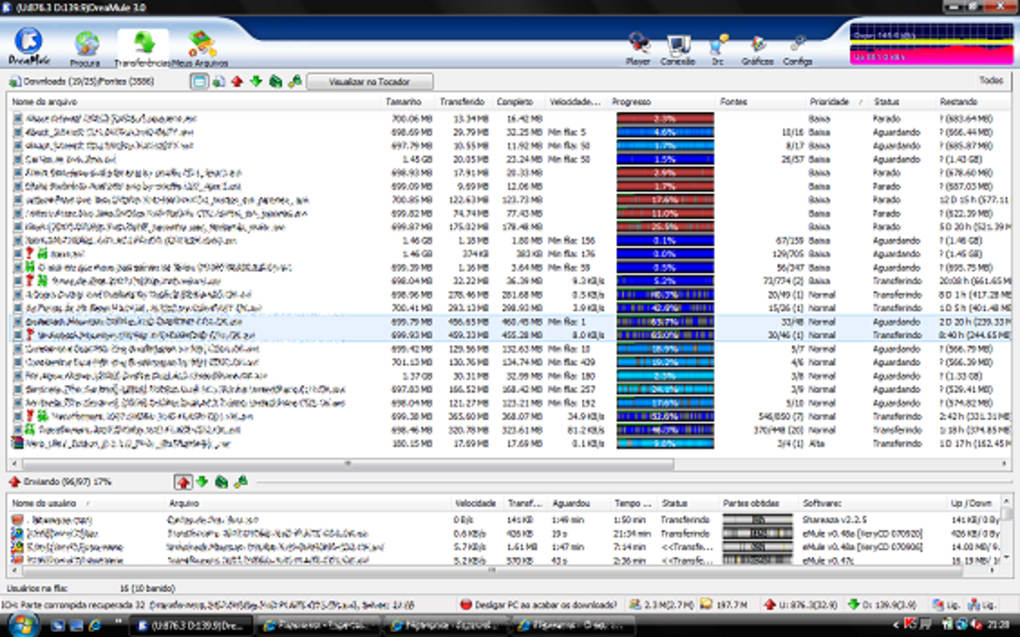
Understanding DreaMule’s operation requires a brief look into how internet protocols enable communication. When you download a file using DreaMule, your computer isn’t just pulling data from a single server; it’s actively connecting to multiple “peers” – other users on the network who possess parts or the entirety of the file you seek. This distributed approach significantly enhances resilience and often, speed. DreaMule’s design inherently recognizes the complexities of home network setups, including routers, firewalls, and network address translation (NAT), which often pose challenges for direct P2P connections. Its purported ability to mitigate these issues speaks volumes about its deep understanding of internet networking intricacies, aiming to provide a seamless experience despite the underlying complexities. The application’s performance, therefore, is not just about its internal code but also how effectively it interacts with the broader internet infrastructure, optimizing connections and data streams for maximum efficiency.
File Sharing & Peer To Peer
At the heart of DreaMule’s functionality lies the paradigm of File Sharing and Peer-to-Peer (P2P) networks. Unlike traditional client-server models where a central server hosts files and clients download them, P2P networks allow individual computers (peers) to act as both clients and servers. This decentralized structure offers several advantages: increased resilience (no single point of failure), better scalability (more users mean more sources), and often, faster download speeds as data can be simultaneously sourced from multiple peers.
eMule, the progenitor upon which DreaMule is based, popularized the P2P model for a generation of internet users. It utilized the eDonkey2000 network and Kad network, enabling users to search for and download a vast array of files. The process was straightforward: users would search for a file, and eMule would locate other users (peers) who had that file or parts of it. Downloads would then commence, often piecemeal, from multiple sources. DreaMule adopts this established and effective structure. Users can search for specific content, initiate downloads, and manage their transfer queues with familiar ease. The prioritization system, allowing users to allocate more bandwidth or preference to certain downloads, also mirrors eMule’s design, ensuring that existing users can transition smoothly to DreaMule.
However, the P2P world, while powerful, also presented significant challenges. One of the most critical issues faced by eMule users, which DreaMule specifically targeted, was the “low ID” problem. This occurred when a user’s client could not establish a direct connection with other peers on the network. Typically, this happened to users behind a firewall or a protected router that employs Network Address Translation (NAT) without proper port forwarding. In such scenarios, the eMule client would receive a “low ID” status. A low ID meant that the user’s IP address and specific ports were not directly discoverable or reachable by other peers. Consequently, these “low ID” users could only connect to other peers via intermediate servers, limiting their ability to find sources and significantly hindering their upload and download speeds. They would experience frustratingly slow transfers, prolonged waiting times in queues, and a general bottleneck in their file-sharing activities.
DreaMule’s primary claim to fame, and indeed its most significant enhancement, was its supposed ability to resolve this perennial “low ID” issue. By employing sophisticated networking techniques, potentially involving optimized UPnP (Universal Plug and Play) integration or other NAT traversal methods, DreaMule aimed to enable users, regardless of their network configuration, to achieve a “high ID.” A high ID signifies a direct and unhindered connection to the P2P network, allowing for optimal source discovery, faster downloads, and efficient contributions to the network through uploads. This improvement, if consistently effective, transforms the P2P experience from a sometimes frustrating ordeal into a smooth and efficient process, truly making file sharing “friendlier and faster” for a broader audience. While users need to verify its efficacy in their specific environments, the intention behind this fix was to democratize efficient P2P access, removing a major barrier that alienated many potential users from fully leveraging file-sharing networks.
Security & Privacy in P2P
The realm of P2P file sharing, while offering unparalleled freedom and efficiency in content distribution, has historically been a landscape fraught with concerns regarding security and privacy. The very nature of direct peer-to-peer connections means that users are directly exposed to others on the network, opening potential avenues for vulnerabilities if proper precautions are not taken. For DreaMule, as an application operating within this space, addressing these concerns, both directly and indirectly, was crucial to its appeal and utility.
A primary security consideration in P2P environments revolves around malware and unwanted software. Unlike curated app stores, P2P networks are open, meaning files of all types can be shared. This necessitates vigilance from users regarding the content they download. While DreaMule, like eMule before it, facilitates the transfer of files, the responsibility for verifying the safety of the content ultimately rests with the user. However, DreaMule contributes to a better security posture through its own design principles. Firstly, being an open-source application, its codebase is theoretically transparent and auditable by the community, reducing the likelihood of hidden malicious functionalities. More importantly, DreaMule’s commitment to being an ad-free application directly enhances user privacy and security. Advertisements, especially in free software, can often be a vector for tracking, data collection, or even malicious ad injection. By foregoing ads, DreaMule ensures a cleaner, more private user experience, free from intrusive pop-ups or data harvesting mechanisms often associated with ad-supported software. This commitment aligns with a user-centric philosophy, prioritizing functionality and privacy over monetization through potentially intrusive means.
Beyond the general threats, the “low ID” issue that DreaMule aimed to solve also had significant implications for security and privacy, albeit in a more indirect manner. As discussed, a low ID often resulted from users being behind a firewall or a protected router. These network devices are security staples, designed to filter incoming and outgoing network traffic, protecting a local network from external threats. While essential for security, they can inadvertently block legitimate P2P connections, leading to the low ID status. The workarounds for low ID users in traditional eMule often involved manually configuring port forwarding, a process that, if done incorrectly, could potentially expose a user’s network to greater risk. By claiming to resolve the low ID issue more elegantly and potentially automatically, DreaMule implicitly enhances security for the average user. It aims to restore optimal P2P functionality without requiring users to make potentially risky manual firewall or router configurations, thus maintaining the protective barrier of their existing network security setup while still enabling efficient file sharing.
Furthermore, the very act of sharing files, particularly copyrighted material, carries legal and privacy risks. While DreaMule is a tool that can be used for various purposes, including sharing legitimate, copyright-free content (as the original description suggests), users engaging in P2P activities should always be mindful of legal implications. From a privacy standpoint, the P2P network logs IP addresses of connected peers, making it theoretically possible to trace activity. While DreaMule itself does not introduce new privacy vulnerabilities beyond the inherent nature of P2P, its efficiency in establishing connections could lead to more active participation on the network. Users concerned about their privacy might still consider utilizing a VPN (Virtual Private Network) in conjunction with any P2P application to mask their IP address and encrypt their traffic, thereby adding an extra layer of anonymity and security. DreaMule, by focusing on a streamlined and effective P2P experience, simplifies the core function, leaving users to layer additional security measures as per their individual needs and comfort levels.
Multimedia and the DreaMule Experience
One of the most compelling reasons for the enduring popularity of P2P file-sharing networks like eMule and subsequently DreaMule, has been their unparalleled capacity to facilitate the exchange of multimedia content. From music and movies to images and software, digital media forms the bulk of what users seek to download and share. DreaMule, with its enhanced efficiency and user-friendly interface, significantly elevates the multimedia sharing experience, making it a powerful tool for accessing a vast library of digital creations.
Before the advent of widespread streaming services and high-speed internet, P2P networks were the primary conduit for many users to discover and collect digital audio and video. DreaMule continues this legacy, offering a robust platform for searching and acquiring various multimedia files. Imagine a music enthusiast looking for rare tracks or live recordings; DreaMule’s search capabilities, inherited and improved from eMule, allow for precise queries across the vast network of shared files. The ability to prioritize downloads means that a user can quickly get to the audio files they want most, without being bogged down by slower, less critical downloads. This responsiveness is crucial for an enjoyable multimedia consumption workflow.
For video content, whether it’s independent films, educational documentaries, or other visual media, DreaMule’s speed enhancements are particularly beneficial. High-quality video files are notoriously large, and efficient P2P clients are essential for manageable download times. By addressing the “low ID” issue, DreaMule ensures that users can connect to a greater number of sources, thereby maximizing their download speeds and significantly reducing the wait time for large video files. This means less buffering, quicker access to content, and a more seamless overall experience for those building a digital video library. The familiar interface also aids in managing these large files, with clear indicators of progress, source availability, and estimated completion times.
Moreover, the “multimedia experience” extends beyond mere download speeds. It encompasses the ease with which users can integrate their acquired content into their digital lives. DreaMule, being a simple and focused utility, ensures that once files are downloaded, they are readily available in the user’s chosen directory, ready to be played by their preferred media player. Its ad-free nature further contributes to a pleasant experience, as users are not bombarded with distractions or intrusive pop-ups while managing their multimedia library. In essence, DreaMule acts as a gateway to an expansive world of digital audio, video, and imagery, streamlining the often-complex process of obtaining these files from a decentralized network and placing them directly into the hands of the user. While the responsibility for copyright compliance remains with the user, DreaMule provides the technical framework for accessing and distributing an incredible array of digital multimedia content efficiently and reliably.
Utilities & Tools: DreaMule’s Practical Application
In the broad category of “Utilities & Tools,” DreaMule firmly establishes its place as an indispensable application for efficient file management and sharing. Utility software is designed to help analyze, configure, optimize, or maintain a computer, and DreaMule perfectly fits this description by optimizing the process of file transfer across a network. It’s not just a program; it’s a solution to a common digital need – the need to share and acquire files outside of traditional centralized platforms.
As a utility, DreaMule excels in its specific function: facilitating Peer-to-Peer file transfers. Its design prioritizes operational efficiency and user convenience. The ability to manage downloads, prioritize files, and monitor network activity are all hallmarks of a well-crafted utility. For instance, the original text highlights an improved interface and an easier searching tool. These are practical enhancements that directly translate to better usability, allowing users to quickly find what they need and manage their transfers without unnecessary complexity. In a digital world often cluttered with overly complex software, DreaMule’s streamlined approach is a refreshing utility that focuses purely on its core task.
The significance of DreaMule as a utility is further underscored by its commitment to being open-source and ad-free. Open-source software often benefits from community contributions and scrutiny, leading to more robust and secure applications. For users, this means a tool that is not only free to use but also free from the hidden agendas or potential vulnerabilities that can sometimes accompany proprietary, ad-supported software. This makes DreaMule a trustworthy utility in a landscape where trust is paramount.
The problem-solving aspect of DreaMule, specifically its purported fix for the “low ID” issue, positions it as a critical utility for P2P users. This feature transforms a potentially frustrating and slow experience into a fast and reliable one. For anyone who has struggled with network configurations or slow downloads on eMule, DreaMule offers a powerful utility that enhances their entire file-sharing workflow. It’s a tool that takes a common technical hurdle and attempts to render it moot, thereby democratizing efficient P2P access for a broader range of users, regardless of their networking expertise.
Ultimately, DreaMule stands as a testament to how specialized utility software can significantly improve the digital lives of users. By taking the established strengths of a popular P2P client like eMule and refining its user interface and, more importantly, its core networking functionality, DreaMule emerged as an essential tool for those engaged in the world of decentralized file sharing. Its focus on efficiency, user-friendliness, and addressing critical technical challenges cements its role as a valuable utility for internet users seeking to leverage the power of P2P networks effectively and reliably.
In conclusion, DreaMule’s contribution to the P2P file-sharing landscape is defined by its thoughtful evolution of the eMule framework. By offering a friendlier interface and a crucial solution to the persistent “low ID” problem, it aimed to make decentralized file sharing more accessible and efficient for a wider audience. As an open-source, ad-free utility, it championed user experience and transparency, demonstrating how targeted improvements can significantly enhance a well-established technology. While the P2P world continues to evolve with new technologies and legal landscapes, DreaMule’s legacy lies in its earnest attempt to refine the user experience, making file sharing a smoother and faster endeavor for those navigating the vast networks of shared digital content. Its simple promise — to make file sharing friendlier and faster — resonated with users seeking reliable tools in the dynamic world of online connectivity.
File Information
- License: “Free”
- Version: “3.2”
- Latest update: “February 13, 2019”
- Platform: “Windows”
- OS: “Windows Vista”
- Language: “English”
- Downloads: “66K”
- Size: “6.09 MB”


