
In the vast and ever-expanding universe of simulation games, a genre often characterized by its meticulous attention to detail and realistic portrayal of real-world activities, there occasionally emerges a title that gleefully subverts expectations. “Drunk Builder Simulator,” developed by Viper, is precisely one such game. It plunges players into the chaotic, often absurd, environment of a construction site, but with a unique, inebriated twist. Far from the precise planning and sober execution typically associated with building, this PC title invites players to navigate a world where sobriety is either a weapon or a challenge, offering a refreshing blend of stealth, action, and unadulterated multiplayer hilarity.
Released as a paid title for Windows, “Drunk Builder Simulator” quickly distinguishes itself from more traditional simulation experiences like “Euro Truck Simulator 2” or “The Sims 4” by injecting a heavy dose of irreverence into its core premise. Players aren’t just constructing buildings; they are embroiled in a high-stakes game of cat and mouse where one side is trying to maintain order, and the other is attempting to complete tasks while delightfully impaired. This novel concept transforms the mundane into the madcap, promising a gameplay experience that is as unpredictable as it is entertaining. With its foundation built on an engaging multiplayer framework and bolstered by realistic 3D graphics, the game offers a deeply immersive and action-packed journey into the lighter, wilder side of construction.
The Premise: Foreman vs. Drunkard
At the heart of “Drunk Builder Simulator” lies a deliciously simple yet profoundly engaging premise: players either embody the stern, vigilant foreman of a construction site or take on the persona of a delightfully inebriated construction worker. This fundamental dichotomy sets the stage for every match, immediately establishing clear, albeit comically opposed, objectives for each side. It’s a game of roles, where each role comes with its own set of challenges, strategies, and potential for unscripted chaos.
As the foreman, your mission is clear and relatively straightforward: maintain order and ensure productivity by catching the drunk workers. This isn’t just about discipline; it’s about the bottom line, the safety, and the sheer absurdity of trying to supervise a crew that’s more interested in completing tasks despite their impaired state rather than because of it. The foreman’s role leans heavily into observation, pursuit, and strategic interception. You must patrol the construction site, keenly observing your workers for tell-tale signs of intoxication – perhaps their wobbly gait, their clumsy attempts at carrying materials, or their general inability to follow a straight line. Once a drunk worker is identified, the chase is on. The foreman wins the game when all other players, embodying the drunk workers, have been apprehended and presumably “sobered up” (or at least removed from their duties). This creates a tense, almost predatory, gameplay loop for the foreman, demanding quick reflexes, environmental awareness, and a knack for anticipating erratic movements.
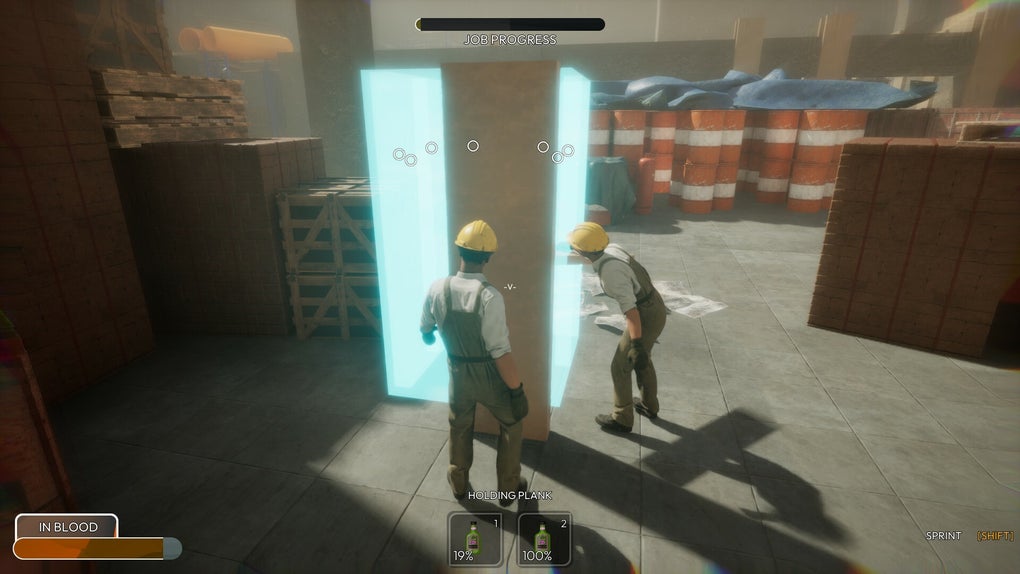
Conversely, stepping into the steel-toed boots of an alcoholic construction worker offers a completely different, yet equally compelling, experience. Here, the challenge isn’t just to evade the foreman; it’s to complete the assigned construction tasks. Imagine trying to mix cement, hoist beams, or lay bricks when your vision is blurry, your coordination is shot, and every movement feels like navigating a funhouse mirror. The genius of “Drunk Builder Simulator” lies in how it simulates this impairment, turning simple actions into complex, often hilarious, struggles. The drunk worker’s objective is to complete their tasks before the foreman catches them. This creates a compelling race against time and authority, where stealth and misdirection become paramount. Success isn’t just about doing the job; it’s about doing it under the radar, outsmarting the foreman at every turn, and leveraging the chaos of the construction site to your advantage. The intrinsic humor of this role is undeniable, offering players a chance to revel in the absurdities of their digital intoxication, making for some truly memorable and laughter-inducing moments.
The dynamic between these two roles forms the core of the game’s replayability and entertainment value. It’s a classic opposition, but recontextualized within a setting that adds layers of comedic potential. The construction site itself becomes a character, an arena of both mundane tasks and extraordinary drunken shenanigans. Whether you’re meticulously scanning the environment as the foreman or clumsily trying to weld a beam as a drunkard, the game ensures that every round is a unique narrative, a fresh improvisation of strategy and slapstick. This distinct premise is what makes “Drunk Builder Simulator” stand out, transforming what could be a dry simulation into a vibrant, multiplayer-focused experience that champions both tactical thinking and outright silliness.
Gameplay Mechanics: Stealth, Strategy, and Sabotage
“Drunk Builder Simulator” truly shines in its implementation of gameplay mechanics, offering a unique blend of stealth, runner, and action elements that keep players engaged and on the edge of their seats. The game is playable from both first-person and third-person perspectives, allowing players to choose the viewpoint that best suits their playstyle and tactical preferences. This choice profoundly impacts how one perceives and interacts with the bustling construction environment, adding another layer of depth to the strategic interplay between the foreman and the drunk workers.
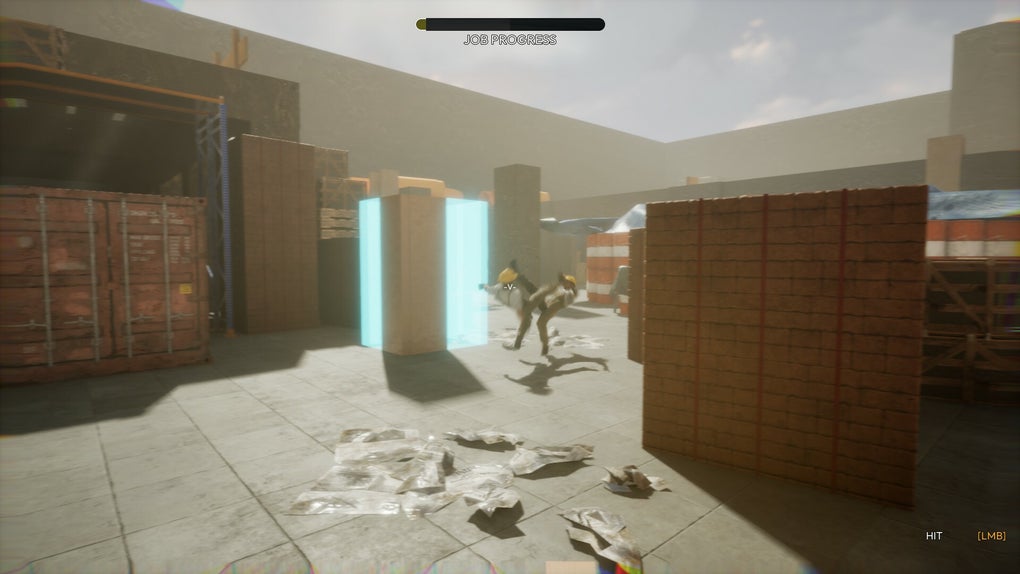
For the drunk construction workers, the game transforms into a stealth and runner challenge. Their primary objective is to complete assigned construction tasks while avoiding detection and capture by the vigilant foreman. This requires cunning and environmental awareness. Players must utilize the various elements of the construction site – piles of materials, scaffolding, partially built structures, and even the general clutter – as cover to hide from the foreman’s gaze. Moving silently, anticipating the foreman’s patrols, and choosing opportune moments to dash between cover become crucial skills. The “runner” mechanic comes into play when detection is inevitable. If spotted, drunk workers must quickly flee, using their knowledge of the map to find escape routes, create distance, or find new hiding spots. This can lead to exhilarating chases through dynamic environments, where a successful escape feels like a triumph against overwhelming odds. The game cleverly integrates the “drunk” aspect into these mechanics; movement might be less precise, making stealth harder, and escapes more perilous, adding a layer of comedic challenge to every action. Imagine trying to sprint and weave through obstacles when your character is swaying unpredictably, or attempting to hide behind a crate only to stumble and reveal your position.
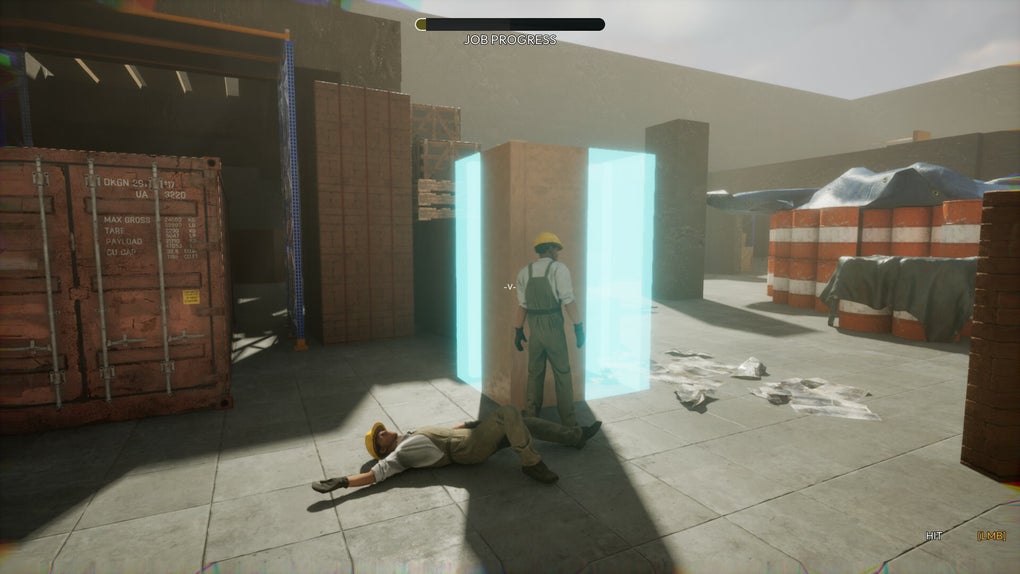
On the other side, the foreman’s gameplay is centered around detection, pursuit, and strategic interception. Equipped with the keen senses of a supervisor, the foreman must actively patrol the site, looking for visual cues that betray a worker’s inebriated state. This could be anything from unusual movement patterns, dropped tools, or workers taking excessively long to complete simple tasks. The foreman’s role is a test of observation and spatial reasoning. They must learn the layout of the construction site, predict worker behavior, and set up ambushes or cut off escape routes. The action aspect for the foreman involves these intense pursuits, requiring precision and determination to corner and apprehend their elusive targets. The ability to switch between first-person and third-person perspectives is particularly valuable here, as a third-person view might offer a wider field of vision for spotting distant targets, while a first-person view could be critical for navigating tight spaces during a chase.
The interaction between these mechanics creates a dynamic, ever-evolving gameplay loop. Drunk workers might attempt “sabotage” in a comedic sense, not by destroying property, but by simply being so clumsy that their actions hinder progress or draw unwanted attention. The foreman, in turn, must adapt to the unpredictable nature of drunk movements, making each encounter unique. The game’s realistic 3D graphics contribute significantly to these mechanics, providing detailed environments where hiding spots feel natural, and chases are visually engaging. Although the game is noted as “not as interactive as other simulators” – implying less granular control over construction processes or environmental manipulation beyond basic movement and task completion – this focused approach likely serves to streamline the core stealth and chase mechanics. Instead of getting bogged down in intricate building systems, the game hones in on the exhilarating dynamic of the roles, ensuring that the tension of evasion and the thrill of the hunt remain at the forefront. This targeted design choice makes the game accessible and immediately fun, emphasizing quick, engaging rounds over complex, drawn-out simulations.
Immersive Multiplayer Mayhem
One of the standout features that elevates “Drunk Builder Simulator” beyond a mere novelty is its robust multiplayer capability. The game supports both local and online co-op, allowing up to four players to join in on the construction site chaos. This multiplayer focus is where the game truly comes alive, transforming the individual challenges of evasion and apprehension into a vibrant, unpredictable social experience filled with strategy, betrayal, and uproarious laughter.
When playing with multiple drunk workers, the dynamic becomes significantly more complex and entertaining. Instead of a lone individual attempting to evade the foreman, there’s a team of inebriated builders, each with their own tasks and their own strategies for avoiding detection. This opens up possibilities for emergent gameplay scenarios. Drunk workers might try to create diversions, luring the foreman away from a teammate who is close to completing a critical task. They could coordinate their movements, with one player intentionally causing a ruckus to draw attention while another slips away unnoticed. The humor is amplified when multiple drunk players are involved; witnessing several characters stumble, bumble, and narrowly escape capture simultaneously adds a layer of comedic synchronicity that single-player experiences simply cannot replicate. The collective effort to complete tasks under duress, combined with the shared tension of being hunted, fosters a strong sense of camaraderie and competition among players.
Conversely, having multiple drunk workers presents a unique challenge for the foreman. Instead of tracking one target, they must now manage multiple threats simultaneously. This necessitates a more strategic approach to patrols and pursuits. Does the foreman focus on the most obviously drunk worker? Or do they prioritize the one who seems closest to completing their objective? The foreman must develop area-denial strategies, trying to box in multiple workers or predict where they are likely to head next. The increased number of targets means the foreman can easily be outsmarted or outmaneuvered, especially if the drunk workers are communicating and coordinating effectively. This constant ebb and flow of power, the shifting advantage between the hunter and the hunted, ensures that every multiplayer match feels fresh and exciting.
The choice between local and online co-op further enhances the game’s appeal. Local multiplayer allows for immediate, face-to-face interactions, where shouts of triumph or exasperation can fill the room, fostering an even more intense and personal competitive experience. This is ideal for friends gathered for a game night, providing instant feedback and shared laughter. Online co-op, on the other hand, breaks down geographical barriers, allowing players from across the globe to team up or face off. This broadens the potential player base and ensures that there’s always someone available to join the construction site revelry. The ability to play with a diverse group of players, each bringing their own tactical flair and personality, contributes significantly to the game’s replayability. Each new group of players will invariably lead to new strategies, new alliances, and new, unforgettable moments of drunken builder mayhem.
Ultimately, “Drunk Builder Simulator” leverages its multiplayer framework to deliver an experience that is far more than the sum of its parts. It transforms a quirky concept into a social spectacle, where the interactions between players—be they cooperative or competitive—are the true source of entertainment. The shared objectives, the unique roles, and the sheer unpredictability of playing with other human beings elevate the game from a simple simulator to an immersive, action-packed party game that thrives on collaborative chaos and strategic hilarity.
Visuals and Immersion in the Construction Chaos
A significant factor contributing to the engaging experience of “Drunk Builder Simulator” is its presentation, particularly its use of realistic 3D graphics. While the premise of the game leans heavily into the comical and absurd, the visual fidelity grounds the experience, providing a believable backdrop against which the drunken antics unfold. This approach ensures that the game maintains a level of immersion, allowing players to fully dive into the chaotic world of a compromised construction site.
The choice of “realistic 3D graphics” is crucial for several reasons. Firstly, it allows for a highly detailed and believable construction environment. Players can expect to see intricate scaffolding, stacks of building materials like lumber and bricks, heavy machinery such as cranes and bulldozers, and partially constructed structures. This attention to environmental detail not only makes the setting feel authentic but also serves a functional purpose within the gameplay. The various elements of the site become hiding spots, obstacles during chases, or interactive points for task completion. A more simplistic or stylized graphical approach might diminish the tactical depth these environmental features offer, making the stealth and runner mechanics less effective or less convincing.
Secondly, the realistic visuals enhance the “action-packed” aspect of the game. When a foreman is in hot pursuit of a stumbling worker, the 3D graphics bring a sense of urgency and dynamism to the chase. The realistic rendering of character models, their movements (both sober and impaired), and the environment’s reactions to their presence (e.g., kicking over a bucket, bumping into a barrier) contribute to a more visceral experience. The impact of a foreman apprehending a drunk worker, or a worker narrowly escaping a corner, is amplified by the visual fidelity. Furthermore, the first-person perspective, which the game supports, becomes particularly immersive when paired with realistic graphics. Seeing the world through the eyes of an inebriated builder, with perhaps a slightly distorted or wobbly view, can dramatically heighten the sense of vulnerability and challenge, making every completed task or successful evasion feel more impactful.
However, the game’s description notes that it might be “not as interactive as other simulators.” This observation is an important one, as it likely hints at a design philosophy that prioritizes the core stealth, chase, and task-completion loop over broader environmental manipulation or complex building mechanics. In traditional construction simulators, players might have extensive control over design, resource management, and the actual building process. In “Drunk Builder Simulator,” the interactivity is more focused on the immediate actions of the characters within the environment – hiding, running, performing simple tasks, and interacting with other players. This isn’t necessarily a drawback; rather, it suggests a streamlined experience where the humor and the core gameplay loop are the main attractions, rather than intricate simulation depth. The realistic graphics serve to make this focused experience more believable and engaging, even if players aren’t constructing a skyscraper brick by brick.
Ultimately, the combination of realistic 3D visuals and an immersive, action-packed experience ensures that “Drunk Builder Simulator” provides a compelling backdrop for its unique premise. The detailed environments, dynamic character movements, and the choice of first or third-person perspectives all work in concert to draw players into the game’s world. While its interactivity might be more concentrated than some of its simulation counterparts, the visual presentation ensures that the core gameplay of foreman-versus-drunk-worker remains engaging, visually rich, and deeply entertaining, providing hours of chaotic construction site fun.
The Verdict: A Unique Take on Simulation
“Drunk Builder Simulator” carves out a distinctive niche within the simulation genre, moving away from the often-serious and meticulously detailed nature of many titles to offer something far more playful and irreverent. Developed by Viper, this game isn’t just about building; it’s about the chaotic human element, the comedic consequences of impairment, and the dynamic tension between supervision and subversion on a construction site. Its strengths lie in its audacious concept, compelling multiplayer dynamics, and visually engaging presentation, all of which contribute to a thoroughly unique gameplay experience.
The game’s primary appeal stems from its fresh take on the simulation formula. By injecting the unpredictable variable of intoxication into the structured environment of a construction site, Viper has crafted a scenario ripe for emergent gameplay and comedic moments. The distinct roles of the vigilant foreman and the mischievous drunk worker ensure that every round offers a different perspective and a fresh set of challenges. This role-based gameplay, coupled with the core stealth and runner mechanics, provides a thrilling playthrough that consistently keeps players on the edge of their seats, whether they’re skillfully evading capture or relentlessly hunting down their inebriated crew. The ability to play from both first and third-person perspectives further enhances this, allowing players to tailor their immersion and tactical overview to their personal preferences.
The decision to incorporate robust multiplayer capabilities—supporting both local and online co-op for up to four players—is perhaps the game’s greatest asset. “Drunk Builder Simulator” transforms from an interesting single-player concept into a vibrant, interactive social experience. The interplay between multiple drunk workers trying to complete tasks while a foreman gives chase, or a team of drunkards coordinating distractions, elevates the game into a true party experience. This multiplayer mayhem is where the game’s humor truly shines, leading to countless memorable moments of collaborative chaos and competitive hilarity. It’s the kind of game that sparks conversations, debates over tactics, and shared laughter long after the session is over.
Visually, the game impresses with its realistic 3D graphics, which bring the construction site to life with a believable level of detail. This graphical fidelity is not just for aesthetics; it enhances the immersion and makes the stealth and chase sequences more engaging. The detailed environments provide convincing hiding spots and obstacles, contributing to the strategic depth of the game. While PhanMemFree’s review notes that the game might be “not as interactive as other simulators,” this observation likely highlights a design choice to focus intensely on the core loop of cat-and-mouse rather than extensive environmental manipulation or complex building mechanics. This streamlined approach ensures that the game’s unique premise remains the central focus, preventing feature bloat and keeping the gameplay tight and enjoyable.
In conclusion, “Drunk Builder Simulator” is a bold, imaginative, and highly entertaining title that successfully fuses elements of simulation, stealth, and action into a cohesive and engaging multiplayer package. It might not offer the deep, intricate management systems of some simulation giants, but it compensates with a refreshing sense of humor, dynamic role-playing, and the infectious fun of shared experiences. For players seeking a game that dares to be different, that prioritizes laughter and unconventional challenges, and that offers a genuinely thrilling multiplayer experience, “Drunk Builder Simulator” from Viper is an unequivocally worthy download. It stands as a testament to the idea that sometimes, the most rigid structures can yield the most flexible, and utterly hilarious, gameplay.
File Information
- License: “Full”
- Version: “varies-with-devices”
- Latest update: “February 12, 2025”
- Platform: “Windows”
- OS: “Windows 11”
- Language: “English”
- Downloads: “380”


