
In the ever-evolving landscape of tabletop role-playing games (TTRPGs) and 2D video game development, the need for intuitive and powerful map-making tools has never been greater. For Dungeon Masters, game designers, and hobbyists alike, bringing imagined worlds to life with compelling visual aids is crucial for immersion and engagement. Enter Dungeondraft, a revolutionary application designed to simplify and elevate the creation of top-down fantasy maps. Developed by Megasploot, Dungeondraft stands out as a dedicated map-making utility that transforms complex graphic design tasks into an accessible and enjoyable process, allowing users with varying levels of artistic skill to produce professional-grade battlemaps and overworld designs.
At its core, Dungeondraft addresses a fundamental challenge faced by many creators: the desire to craft visually rich and detailed environments without needing extensive knowledge of intricate art software. Traditional methods often require proficiency in programs like Photoshop or GIMP, or reliance on pre-made assets that may not perfectly fit a specific vision. Dungeondraft carves its niche by offering a purpose-built environment, streamlining the map-making workflow with smart tools and a user-friendly interface. This focus on accessibility, combined with powerful underlying technology, has cemented Dungeondraft’s position as a go-to solution for crafting the visual backdrops of countless fantasy adventures, whether for a pen-and-paper campaign or a new indie game project.
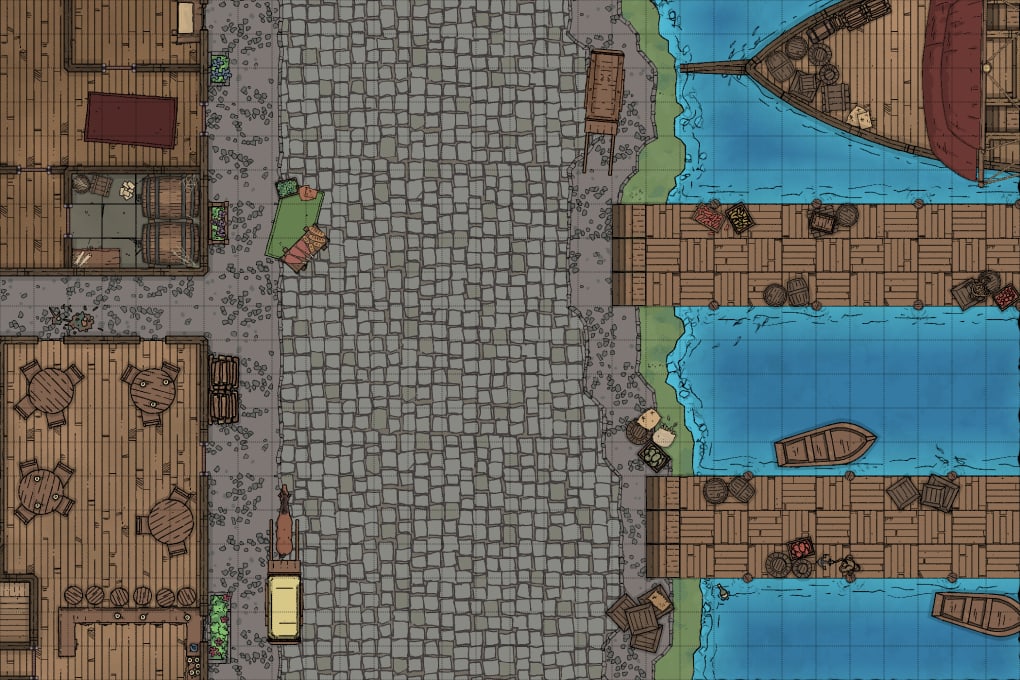
Introduction to Dungeondraft: Crafting Worlds with Ease
Dungeondraft is more than just a drawing program; it’s a dedicated ecosystem for creating immersive 2D top-down maps tailored specifically for fantasy role-playing games (RPGs) and similar game genres. Imagine a world where drawing intricate paths, adding atmospheric lighting, and populating expansive environments can be achieved with remarkable speed and precision, even if you possess little to no prior graphic design experience. This is the promise that Dungeondraft delivers upon. The application empowers its users to translate their grand fantastical visions into tangible, visually appealing maps that can instantly elevate the quality of any campaign or game.
The philosophical underpinning of Dungeondraft is elegant simplicity married with robust functionality. It aims to eliminate the steep learning curve often associated with professional design software, instead presenting a suite of intuitive tools that feel natural to use. For Dungeon Masters, this means less time wrestling with complicated interfaces and more time focusing on narrative and game preparation. For indie game developers, it offers an efficient pipeline for prototyping and producing level art that maintains a consistent aesthetic. The maps created within Dungeondraft are characterized by their 2D top-down perspective, a style popularized by classic RPGs and modern titles alike, such as Stardew Valley or Horizon’s Gate. This specific visual language allows for clear tactical overview in battle scenarios and expansive exploration in overworld maps, making it incredibly versatile for a wide array of game systems and storytelling approaches.
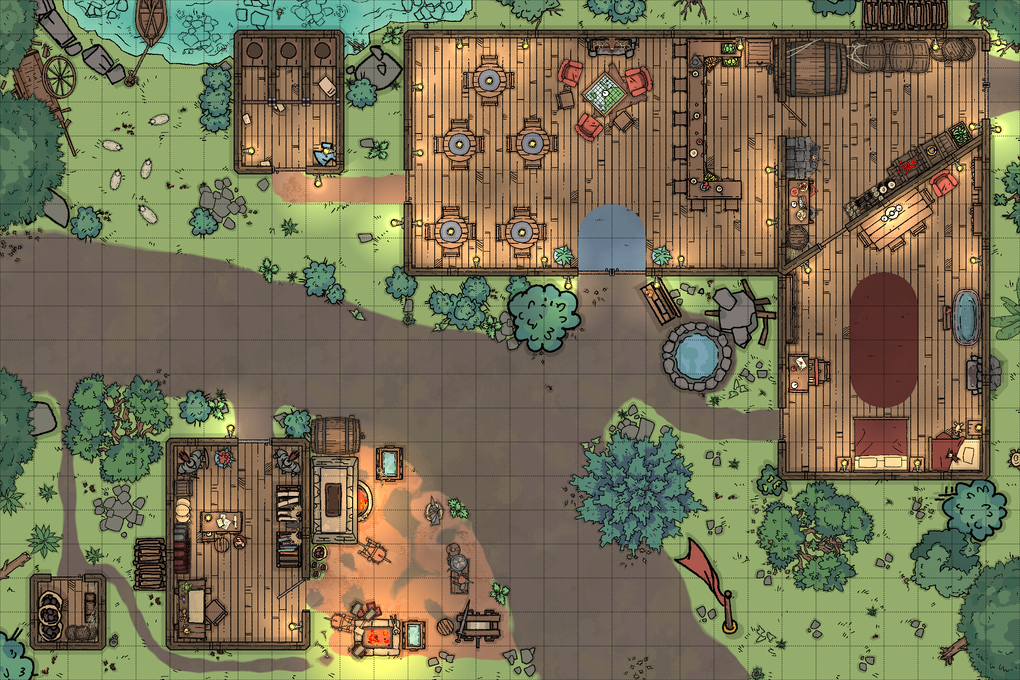
Furthermore, Dungeondraft distinguishes itself by embracing a design philosophy that understands the diverse needs of its user base. It acknowledges that while its built-in features are potent, the true depth of creative expression often lies in personalization and variety. This understanding led to the inclusion of robust support for third-party game assets, a feature that significantly expands the application’s artistic capabilities far beyond its default offerings. This means that users are not confined to a single art style or a limited palette of textures and objects. Instead, they can scour the vast online community for resources, purchase premium asset packs, or even design and import their own unique elements, allowing for an unparalleled degree of customization and ensuring that every map created can truly reflect a unique vision. This blending of intuitive core tools with limitless expandability makes Dungeondraft an indispensable asset for anyone serious about map creation in the fantasy realm.
Core Features and Intuitive Design
Dungeondraft’s reputation as a premier map-making tool stems directly from its meticulously crafted core features and remarkably intuitive design. The application is built on the principle of making complex tasks simple, allowing users to focus on creative vision rather than technical hurdles. This design philosophy is evident in every aspect of its interface and functionality, from initial layout to the final touches of environmental storytelling.
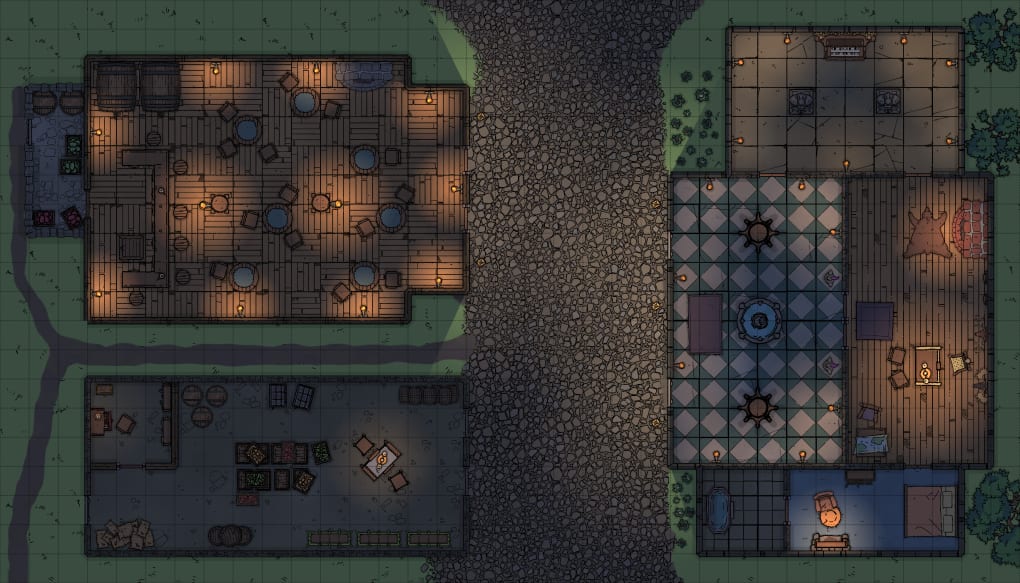
Effortless Map Creation for Stunning Visuals
One of Dungeondraft’s most celebrated aspects is its ability to facilitate the creation of professional-looking RPG maps with minimal effort. The development team at Megasploot has engineered tools that respond intelligently to user input, often automating the more tedious aspects of map design. For instance, creating intricate paths, roads, or rivers can be achieved with a single, fluid stroke. Unlike traditional editors where one might meticulously lay down individual texture tiles or hand-draw edges, Dungeondraft’s “smart path” tool automatically understands the context. When you draw a path, the application not only fills in the appropriate texture (be it dirt, cobblestone, or water) but also intelligently renders detailed edges, ensuring a natural and visually appealing transition between different terrain types. This same principle applies to walls and floors; drawing a wall isn’t just a line, but a process where Dungeondraft automatically applies the correct thickness, texture, and shading. This level of automation significantly accelerates the design process, allowing creators to rapidly block out entire environments without getting bogged down in repetitive detailing.
Beyond simple paths, Dungeondraft offers a comprehensive suite of drawing tools for various map elements. Users can easily define different floor types, from rough cave stone to polished wooden planks, with intelligent tiling that prevents obvious repetitions and ensures a seamless appearance. Water bodies can be effortlessly sculpted, with options for subtle animation or reflective properties that add dynamic realism to a static image. The intuitive brush system allows for quick transitions between different terrain types, making it easy to blend grass into dirt, or sand into water, creating organic and believable landscapes. This combination of intelligent automation and versatile drawing tools lowers the barrier to entry for novice map makers while providing seasoned designers with powerful accelerators for their workflow.
Smart Tools and Built-in Lighting
The intelligence embedded within Dungeondraft extends far beyond just basic drawing. The application boasts several “smart tools” designed to enhance efficiency and realism. One such feature is smart object scattering. When populating a forest, for example, instead of individually placing dozens of trees, users can select a tree asset and paint an area. Dungeondraft will then intelligently scatter the trees within that area, often varying their size, rotation, and exact placement to create a natural, organic look. This prevents the repetitive, unnatural grid-like appearance that often plagues less sophisticated map editors. Similarly, for indoor environments, furniture can be placed with contextual awareness, aligning to walls or snapping into logical positions, further streamlining the decoration process. This smart placement system not only saves a tremendous amount of time but also significantly improves the aesthetic quality of the final map by introducing subtle variations and preventing visual monotony.
Perhaps one of Dungeondraft’s most impactful built-in features is its sophisticated lighting system. This is where maps truly come to life, transforming flat 2D images into atmospheric, immersive scenes. Users can easily place various light sources – torches, lanterns, windows, magical glows, or even natural sunlight – and Dungeondraft will automatically calculate and render realistic light and shadow effects. This includes dynamic shadows cast by walls and objects, atmospheric glows, and varying light intensities. The lighting system isn’t just for aesthetics; it can also be used functionally to hide secrets, highlight points of interest, or convey mood. Adjusting color, intensity, and radius of light sources is straightforward, allowing for intricate control over the map’s ambiance. A dark, flickering torch in a dungeon hallway creates a vastly different feeling than the bright, even light of a grand hall. This built-in lighting capability is a game-changer for TTRPGs, as it allows Dungeon Masters to export maps with baked-in lighting, ready for virtual tabletops (VTTs), enhancing player immersion without requiring complex VTT lighting configurations. Furthermore, the ability to layer objects and lighting ensures that creators can build up complex scenes piece by piece, refining details as they go. This robust suite of smart tools and the integrated lighting system are what truly set Dungeondraft apart, enabling users to create not just maps, but vivid environments brimming with character and atmosphere.
The Power of Third-Party Assets and Community Support
While Dungeondraft provides a robust set of built-in tools and default assets, its true power and versatility are unlocked through its extensive support for third-party assets. This feature is not merely an addition; it’s a fundamental pillar of the Dungeondraft ecosystem, allowing creators to transcend the default aesthetic and infuse their maps with virtually any art style or theme imaginable.
The core idea behind third-party asset support is to provide limitless creative freedom. Every creator has a unique vision, and a single set of default assets, no matter how well-designed, can only go so far. Dungeondraft’s open architecture allows users to import custom art packs, which can include new textures, objects, walls, paths, and even entire themes. This means that if the default medieval fantasy assets don’t quite fit your sci-fi setting, your grimy cyberpunk streets, or your whimsical fairy forest, you are not limited. Instead, you can seek out or create assets that perfectly align with your project’s specific needs.
This open approach has fostered a vibrant and prolific community around Dungeondraft. A quick search online reveals a treasure trove of resources:
- Free Asset Packs: Numerous artists and creators generously share their custom assets, often through platforms like Patreon (with free tiers), dedicated forums, or personal websites. These packs can range from small collections of thematic props to expansive sets that overhaul the entire visual style of Dungeondraft.
- Premium Asset Packs: For those looking for highly curated, professional-grade assets, many artists offer premium packs for purchase. These often come with a greater variety, higher resolution textures, and more unique objects, providing a direct way to support the artists who enrich the Dungeondraft experience.
- Dedicated Communities: Websites like Reddit (e.g., r/Dungeondraft), specialized forums, and Discord servers are hubs where users share tips, showcase their creations, and, crucially, distribute and discuss third-party assets. These communities are invaluable for finding new content and getting inspiration.
The process of importing these assets into Dungeondraft is surprisingly straightforward. Typically, asset packs are provided in a specific format (often a .dungeondraft_pack file) that can be easily loaded into the application. Once imported, these new assets seamlessly integrate into Dungeondraft’s interface, appearing alongside the default options and behaving with the same smart functionalities. This integration ensures that the user experience remains consistent and intuitive, even with a vast library of custom content.
For the truly ambitious, Dungeondraft also supports the creation and import of entirely custom assets. This means that if you have specific ideas for unique statues, architectural elements, or exotic flora not available in existing packs, you can design them yourself using graphic design software (like Photoshop or GIMP) and then bring them directly into Dungeondraft. This level of customization allows artists and designers to maintain complete control over their map’s aesthetic, ensuring that every element perfectly reflects their vision.
The reliance on third-party assets, while offering immense creative freedom, does come with a caveat: users will need to actively plan for the sourcing of these assets. This might involve dedicating time to searching for suitable free packs, investing in premium content, or even learning basic graphic design to create bespoke elements. However, the sheer volume and quality of available community-driven content mean that this “limitation” is quickly transformed into one of Dungeondraft’s greatest strengths, allowing an unparalleled degree of personalization and artistic expression that few other map-making tools can match. This dynamic interplay between the powerful core software and its expansive, community-driven asset library is what makes Dungeondraft such a potent tool for world-builders.
Understanding Dungeondraft’s Strengths and Limitations
Every software tool, no matter how powerful, comes with its own set of advantages and inherent design limitations. Dungeondraft is no exception. Understanding these aspects is crucial for prospective users to determine if it aligns with their specific needs and creative workflows.
Dungeondraft’s Defining Strengths
Dungeondraft boasts a compelling array of strengths that have endeared it to a vast user base:
- DRM-Free and Offline Functionality: A significant advantage for many users is Dungeondraft’s DRM-free nature. Once purchased and downloaded, the software does not require an internet connection for ongoing use. This means creators can work on their maps anywhere, anytime, without worrying about licensing servers, unstable internet connections, or future service disruptions. This level of autonomy is highly valued in an increasingly online-dependent software landscape.
- Built-in Lighting System: As previously discussed, the integrated lighting system is a standout feature. It allows for the creation of incredibly atmospheric and dynamic maps with realistic shadows and light sources. This not only enhances the visual appeal but also has practical applications for Virtual Tabletops, as illuminated maps can be exported directly, saving DMs considerable setup time.
- No Additional Licensing for Commercial Use: For indie game developers or content creators who produce maps for sale, this is a massive boon. Many software licenses impose additional fees or restrictions when creations are used commercially. Dungeondraft’s policy of allowing commercial use without further licensing significantly lowers the barrier to entry for professional map makers, enabling them to monetize their creativity without financial penalties.
- Smart Tools for Efficiency and Professionalism: Features like smart tiling, smart object scattering, and intelligent path drawing dramatically reduce the time and effort required to create detailed maps. These automated processes handle the minutiae of design, allowing users to focus on the broader layout and creative vision. The result is consistently professional-looking maps, even for users who lack formal graphic design training. The consistency in how textures blend, objects are arranged, and edges are rendered ensures a polished output every time.
- Active Development and Community Support: Megasploot continues to develop Dungeondraft, releasing updates and improvements based on user feedback. This commitment to ongoing refinement, coupled with the aforementioned vibrant community providing assets and peer support, ensures that the software remains relevant and continues to grow its capabilities.
Acknowledging Its Limitations
Despite its many advantages, Dungeondraft does have certain inherent limitations that users should be aware of:
- Dependency on Third-Party Assets for Originality: While a strength in terms of expandability, the flip side is that Dungeondraft is somewhat limited without the use of third-party game assets to create truly original or diverse content. The default asset library, while functional, might not be extensive enough to cover every artistic style or thematic need. This means users often need to invest time in finding, downloading, or creating external asset packs to fully realize their unique visions. Without this investment, maps might start to look similar or lack distinct character. For those looking for an “out-of-the-box” solution with infinite variety, this requires an adjustment in expectation.
- Limited to Top-Down Art Styles: Dungeondraft is explicitly designed for 2D top-down maps. This is not a flaw, but a deliberate design choice that defines its niche. It is not intended for isometric maps, side-scrolling levels, 3D environment design, or character art. Users seeking to create maps in different perspectives or develop other forms of game art will need to look to alternative software. This specialization allows Dungeungeondraft to excel in its chosen domain, but it’s important for users to understand its specific focus. This means if your RPG uses a heavily descriptive “theatre of the mind” style, or requires complex 3D rendering, Dungeondraft might be overkill or unsuitable. Its strength lies in providing clear, tactical, and visually appealing 2D battlemaps and regional overviews.
In summary, Dungeondraft offers an incredibly powerful and accessible platform for creating top-down fantasy maps, especially benefiting from its smart tools, integrated lighting, and commercial-friendly licensing. Its main requirement is an understanding that unlocking its full creative potential often involves leveraging the extensive ecosystem of third-party assets, and accepting its specific focus on the 2D top-down perspective. For its target audience—DMs, indie developers, and TTRPG enthusiasts—these considerations are often minor in comparison to the immense benefits and efficiencies the software provides.
Technical Specifications and Accessibility
Beyond its creative features, Dungeondraft also stands out for its practical and accessible technical specifications, ensuring a smooth experience for a wide range of users. The application is designed to be user-friendly not just in its interface but also in its deployment and ongoing use.
Dungeondraft is primarily available for Windows, supporting modern versions including Windows 11. This broad compatibility ensures that the vast majority of PC users can access and utilize the software without compatibility issues. Additionally, Megasploot has recognized the diverse operating system landscape and also offers a version for Mac, further broadening its accessibility to a wider creator base. The availability across these two major operating systems underscores the developer’s commitment to reaching as many potential users as possible.
The software is provided as a full version and is typically a paid application. This pricing model supports the ongoing development and refinement of the tool, ensuring a sustained level of quality and feature enhancement. Its DRM-free nature, as mentioned earlier, is a significant technical advantage. Once purchased, users own a standalone copy of the software that does not require online authentication or persistent internet access, providing unparalleled freedom and longevity of use. This is a deliberate choice by Megasploot, prioritizing user ownership and flexibility.
In terms of language, Dungeondraft is available in English, making it immediately accessible to a global audience. While the interface is intuitive enough to be navigated by non-native speakers, the English localization covers all menus, tooltips, and documentation, ensuring clarity for its primary user base.
The software receives regular updates, with the latest significant update as of the reference information being September 29, 2022. These updates typically include bug fixes, performance enhancements, and sometimes new features or improvements to existing tools, reflecting an active development cycle dedicated to improving the user experience. The file security status, as vetted by platforms like PhanMemFree.org, consistently indicates that the program is clean, posing no threat to user devices. This assurance of security is paramount, especially for software downloaded directly onto personal computers.
The popularity of Dungeondraft is evident in its download statistics. With thousands of downloads reported monthly, it has established itself as a widely adopted and trusted tool within the map-making community. The developer, Megasploot, is recognized for its focused approach to creating dedicated tools for tabletop gaming, also being behind the popular world-building tool Wonderdraft. This expertise in the niche contributes to the high quality and utility of Dungeondraft.
In conclusion, Dungeondraft offers a compelling package for anyone looking to create professional-grade 2D top-down fantasy maps. Its intuitive design, powerful smart tools, integrated lighting, and robust support for third-party assets combine to provide an unmatched creative experience. Coupled with its accessible technical specifications, DRM-free status, and ongoing development, Dungeondraft stands as an indispensable resource for Dungeon Masters, game developers, and creative enthusiasts seeking to visualize their fantastical worlds with ease and excellence. Whether you’re planning an epic campaign or designing the next indie RPG hit, Dungeondraft empowers you to bring your imagined landscapes to vivid, interactive life, fostering deeper immersion and more memorable adventures.
File Information
- License: “Full”
- Version: “varies-with-devices”
- Latest update: “September 29, 2022”
- Platform: “Windows”
- OS: “Windows 11”
- Language: “English”
- Downloads: “11.3K”


