
Dyson Sphere Program, developed by Youthcat Studio, is a monumental entry into the simulation genre, offering players an unparalleled experience as a space engineer tasked with a project of cosmic ambition: harnessing the power of entire stars. Available for Windows, this premium science-fiction simulator masterfully blends immersive factory automation with mind-boggling strategic planning, creating a deeply engaging and highly replayable journey. From its stunning visual presentation to its procedurally generated star systems, Dyson Sphere Program invites players to delve into a universe where logic, efficiency, and boundless creativity converge to achieve a thought experiment of astronomical scale.
At its core, Dyson Sphere Program challenges players to construct the eponymous Dyson Sphere, a theoretical megastructure designed to encapsulate a star and capture nearly all of its energy output. This concept, often found in advanced science fiction, serves as the ultimate endgame objective for every playthrough. Unlike many games that focus on conflict, Dyson Sphere Program initially emphasizes intricate building, expansive exploration, and relentless technological advancement, making battles scarce, if not entirely absent, until a significant update. Its design philosophy has drawn comparisons to titles like Factorio for its automation complexity, but with significantly enhanced graphics, and to Dune: Spice Wars for its strategic depth, yet with a far more technical, engineering-focused approach.
The Grand Vision: Constructing the Dyson Sphere
The central premise of Dyson Sphere Program revolves around the theoretical construct known as the Dyson Sphere. Conceptualized by physicist Freeman Dyson, it describes a colossal network of artificial structures, such as orbital solar panels or habitats, that completely envelop a star to intercept and utilize a vast percentage of its radiant energy. In the game, players are thrust into the role of a mechanoid tasked by the supercomputer CentreBrain to build such a structure. This isn’t merely a decorative achievement; it’s the ultimate energy source, a testament to interstellar engineering prowess, and the solution to the energy demands of a rapidly expanding galactic civilization.
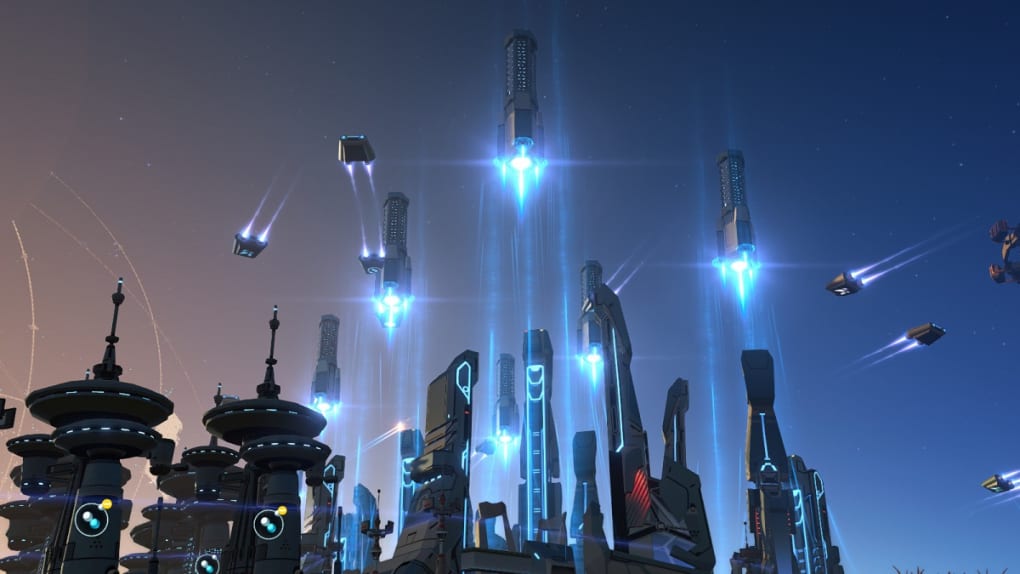
The journey to building this colossal contraption begins humbly on a single planet within a procedurally generated star system. Each new game offers a unique layout of celestial bodies, resources, and challenges, ensuring that no two playthroughs are ever identical. This procedural generation is a cornerstone of the game’s exceptional replayability, constantly pushing players to adapt their strategies and optimize their production lines based on the available planets and their resources.
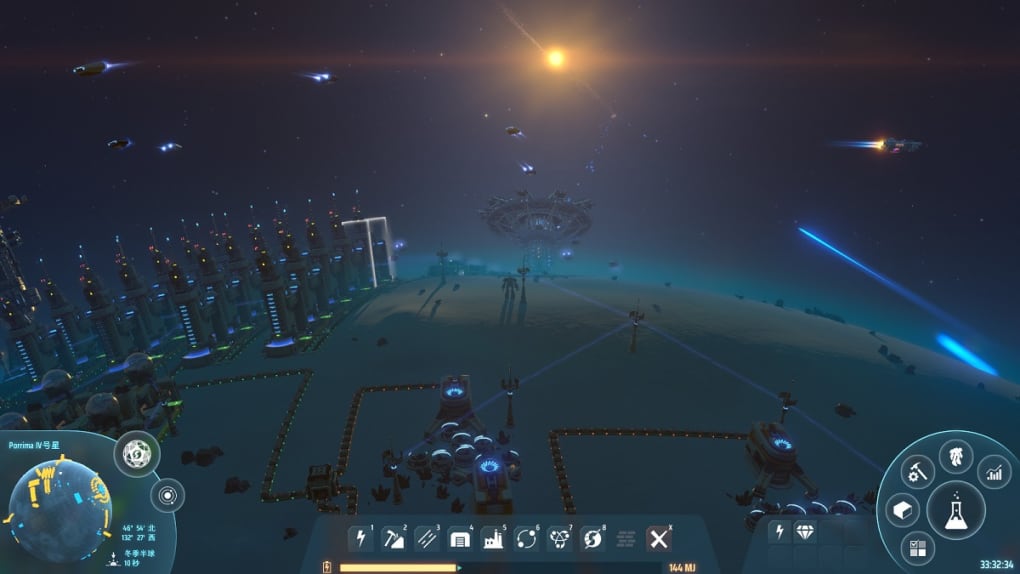
Players start with basic extractors and conveyor belts, harvesting raw materials like iron ore, copper ore, silicon, and titanium from their starting planet. These resources are then processed through a series of increasingly complex factory chains, transforming raw materials into components, then into advanced structures, and ultimately into the swarm of solar sails and ultimately, the Dyson Sphere components. The visual progression is breathtaking: from a sparse patch of miners and smelters, a planet slowly transforms into a sprawling, interconnected industrial complex. This evolution is not limited to a single planet; as technology advances, players gain the ability to traverse their star system, colonize other planets rich in different resources, and establish intricate interplanetary logistics networks to ferry materials between worlds. This expansion into the wider star system is crucial, as exotic resources found on gas giants or other rocky planets are essential for late-game technologies and the construction of the sphere itself. The scale of operation can quickly become overwhelming, yet the game provides the tools and visual feedback to manage it, allowing players to zoom out for a grand overview of their galactic empire or zoom in to fine-tune a single production line. The ability to view a well-lit star chart, an immersive perspective of your planet from outer space, and a detailed close-up of your structures on the surface contributes immensely to the feeling of being a true galactic architect.
Gameplay Mechanics: From Humble Beginnings to Galactic Factories
Dyson Sphere Program offers a deep dive into the intricacies of factory building and automation, appealing strongly to fans of the genre. The core gameplay loop involves exploring new planets, extracting diverse resources, designing efficient production lines, researching new technologies, and constructing the components necessary for the Dyson Sphere. This seemingly straightforward loop quickly escalates in complexity, demanding meticulous planning and problem-solving.
Early game focuses on establishing a self-sufficient base on the starting planet. Players must manage power generation – initially through wind turbines or thermal power plants using coal – while simultaneously setting up mining operations, smelting raw ores into ingots, and fabricating basic components like circuits, gears, and motors. The conveyor belt system is the lifeblood of any factory, and optimizing its layout to minimize travel distance and prevent bottlenecks is a constant puzzle. As the factory grows, so do the demands for automation. Robotic assemblers take over manual crafting, and sorters direct materials precisely where they need to go.
Technological advancement is crucial. A comprehensive research tree guides players through new buildings, enhanced production methods, faster transportation, and more efficient power solutions. Research points are generated by dedicated research labs, requiring specific inputs from the production lines, effectively integrating research into the factory ecosystem. Unlocking interstellar travel, for instance, opens up entirely new avenues for expansion and resource acquisition, allowing players to build warp drives and construct orbital collectors around gas giants for hydrogen and deuterium, or mine rare minerals from distant planets. This leads to the establishment of vast logistics networks, utilizing interplanetary and inter-stellar cargo ships to ferry resources across vast distances, adding another layer of complex management.
The game encourages experimentation. There are often multiple ways to achieve a production goal, and players are free to design their factories as they see fit. This flexibility allows for truly unique solutions, ranging from compact, highly optimized designs to sprawling, aesthetically pleasing megastructures. The absence of traditional combat in the initial game allowed players to focus solely on creative problem-solving and optimization, cultivating a serene yet intellectually stimulating experience. This focus on building and technological improvement, rather than warfare, defined the initial identity of Dyson Sphere Program, providing a calming and contemplative challenge for strategic thinkers.
Rise of the Dark Fog: A New Challenge Emerges
While Dyson Sphere Program initially prided itself on being a peaceful, construction-focused simulator, its major “Rise of the Dark Fog” update introduced an entirely new dimension to the gameplay, transforming the player’s serene engineering paradise into a battleground for survival. This significant expansion adds a dynamic layer of defensive strategy and combat, challenging players to protect their hard-earned industrial empires from an existential threat.
The narrative behind the update begins with the player’s CentreBrain detecting an unstable energy source emanating from afar. This source is soon identified as the titular Dark Fog, a malevolent, self-replicating entity that poses a direct threat to the player’s operations. The Dark Fog manifests as both space hives orbiting planets and ground bases established on planetary surfaces, all geared towards a singular purpose: hijacking and consuming the player’s resources. This shifts the game from a purely logistical puzzle to a delicate balance of expansion, automation, and defensive fortification.
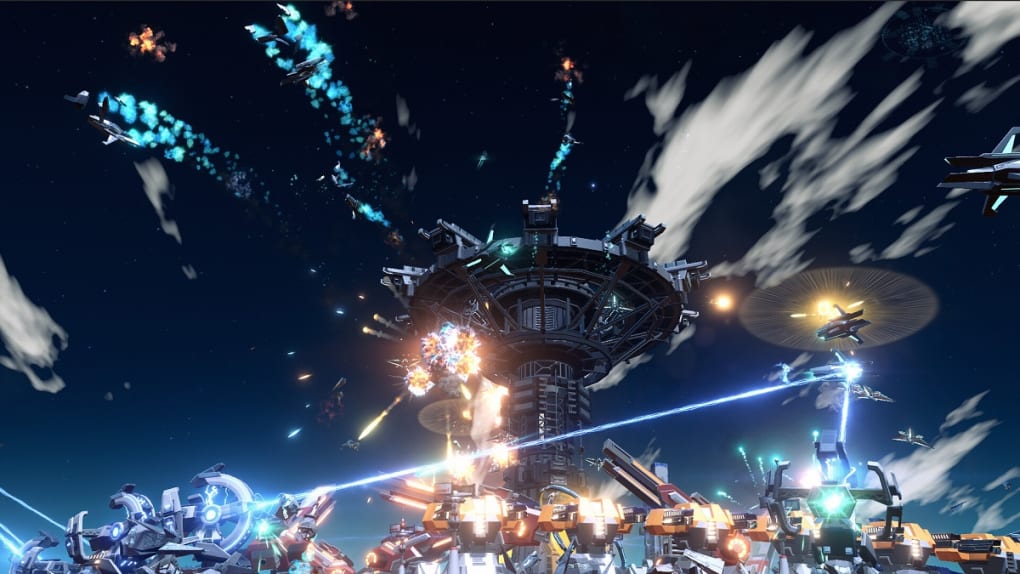
To combat this new menace, the update introduces a comprehensive suite of new technologies, defensive buildings, and offensive weapons. Players are no longer just factory builders but also military strategists. They can deploy various turrets, each with distinct capabilities: Gauss turrets for rapid-fire projectile attacks, Laser turrets for sustained energy beams, and the powerful Implosion Cannon for devastating area-of-effect damage. Building these defenses requires new resource chains and careful placement to protect critical infrastructure, power generators, and resource extractors. The Dark Fog adapts and evolves, launching increasingly challenging waves of attacks, forcing players to continuously upgrade their defenses and develop more potent weaponry. This introduces a dynamic threat that prevents players from simply settling into optimized factory loops; constant vigilance and adaptation are required.
A major addition in this patch is the “Combat Mode,” which allows players to create specific combat-focused saves. This mode offers a whole new layer of immersion by letting players actively participate in battles, both on planets and in the vacuum of space. Players can pilot their Icarus mech, engaging in direct combat, managing energy shields, and utilizing new combat skills to fend off enemy units. The update also enriches the visual experience of combat, with updated destruction effects and animations that vividly portray the chaos and devastation of battle. Furthermore, quality-of-life improvements like pre-build holograms allow players to visualize how defensive structures (or any building) will look and function before deployment, aiding in strategic planning. The “Rise of the Dark Fog” successfully broadens the game’s appeal, offering a compelling challenge for players who seek more than just peaceful automation, integrating a thrilling sense of urgency and danger into the cosmic engineering saga.
Graphical Fidelity and Immersive Experience
One of the standout features of Dyson Sphere Program, often highlighted in comparison to other factory automation games, is its exceptional graphical quality. The developers at Youthcat Studio have clearly invested heavily in creating a visually stunning universe that works seamlessly with modern computer systems, greatly enhancing the player’s immersive experience.
From the moment players launch into a new star system, the game’s aesthetic prowess is evident. The well-lit star chart, which serves as a navigational tool, is a beautiful cosmic tapestry, showcasing vibrant nebulae, distant galaxies, and shimmering stars, each with its own unique characteristics. This grand perspective provides a genuine sense of scale, reminding players of the vastness of the universe they are attempting to tame. As players approach a planet, the transition from star chart to an immersive view of their chosen celestial body from outer space is seamless and breathtaking. Planets boast varied terrains, colors, and atmospheric effects, making each world feel distinct and inviting for exploration and exploitation. Gas giants swirl with colorful storms, while rocky planets gleam under the light of their parent star.
Zooming closer, the intricate details of the player’s growing industrial empire come into sharp focus. Individual buildings, conveyor belts, and robotic units are rendered with precision. The animation of resources flowing along conveyor belts, assemblers churning out components, and research labs glowing with activity all contribute to a dynamic and living factory. The architectural designs of the structures themselves are sleek and futuristic, fitting perfectly within the sci-fi theme. Power grids hum with visible energy flows, and the construction of massive structures like the orbital collectors or eventually the Dyson Swarm (the precursor to the Dyson Sphere) provides awe-inspiring visual feedback of progress.
Even the environmental effects are meticulously crafted. The rising and setting of the sun casts dynamic shadows, influencing the efficiency of solar panels. Aurora borealis might dance across the night sky of a polar planet, or volcanic eruptions might illuminate a fiery world. With the “Rise of the Dark Fog” update, the graphical fidelity extends to combat. Explosions are vibrant, laser beams cut through the air with energy, and the destruction of Dark Fog units or player structures is rendered with satisfying visual flair. Pre-build holograms, a minor but significant graphical addition, allow players to precisely plan their layouts, seeing a translucent projection of their future constructions before committing resources.
The combination of these elements — the cosmic grandeur of the star system, the detailed craftsmanship of planetary factories, and the dynamic visual feedback of automation and combat — creates an unparalleled sense of immersion. It’s a game that not only challenges the intellect but also delights the senses, making the journey of building a Dyson Sphere an aesthetically rewarding endeavor.
Who Should Play? Assessing the Learning Curve and Replayability
Dyson Sphere Program stands as a testament to complex simulation and strategy gaming, but its immersive appeal comes with a significant caveat: a steep learning curve. This aspect, while potentially daunting for newcomers, is also a source of deep satisfaction for those who persevere, contributing directly to the game’s exceptional replayability.
For individuals new to the factory automation or grand strategy genres, the initial hours of Dyson Sphere Program can be overwhelming. The game doesn’t hold your hand extensively, instead presenting a vast universe of possibilities and challenges that require experimentation and careful thought. Players must quickly grasp concepts such as efficient resource extraction, power generation, intricate production chains, logistics management (both planetary and interstellar), and later, defensive strategies against the Dark Fog. Understanding how to scale operations, optimize layouts to avoid bottlenecks, and manage energy consumption across multiple planets requires a methodical approach and a willingness to learn through trial and error. The research tree, while guiding progress, still demands players understand the prerequisites and implications of each new technology. It might take considerable time before new players can design truly efficient structures, establish seamless inter-planetary transport systems, and confidently complete their first few games. However, this challenge is precisely what makes the eventual mastery so rewarding. Each successful automation chain, each optimized factory, and each defended planet feels like a significant achievement, a testament to the player’s ingenuity and strategic acumen.
Conversely, for seasoned veterans of planning and strategy games, particularly those familiar with titles like Factorio or Satisfactory, the learning curve will feel more like a gradual ascent than a sheer cliff face. These players will quickly appreciate the nuanced mechanics and the depth of strategic thinking required. The game provides ample room for creativity and optimization, allowing experienced players to delve into complex solutions and push the boundaries of efficiency.
One of Dyson Sphere Program’s most compelling attributes is its outstanding replayability, primarily driven by its procedurally generated star systems. Every new game presents a fresh set of challenges: different planetary layouts, varying resource distributions, and unique celestial configurations. This means that strategies that worked perfectly in one playthrough might need significant adaptation in another. A planet rich in iron might be poor in silicon, forcing players to establish interstellar logistics much earlier. A starting system might be dense with Dark Fog threats, demanding an early focus on defense. This constant variability ensures that each playthrough is a unique puzzle to solve, preventing the game from becoming stale even after dozens or hundreds of hours.
Furthermore, the open-ended nature of the Dyson Sphere construction allows for diverse approaches. Players can experiment with different factory designs, power generation methodologies (solar, wind, thermal, nuclear, artificial stars), and logistical setups. The game rewards creative problem-solving and optimization, encouraging players to refine their techniques with each new attempt. The addition of the “Rise of the Dark Fog” update further enhances replayability by introducing a dynamic threat that changes the strategic landscape and necessitates a shift in priorities, adding a combat-focused layer to the core factory-building experience.
In conclusion, if you are a long-time fan of complex planning, strategy, and factory automation games, then Dyson Sphere Program is an absolute must-try. Its premise of an interplanetary project manages to feel both mind-blowing and deeply immersive, from the varied perspectives available to the massive range of technologies waiting to be discovered, developed, and implemented in your own colony. While it demands patience and persistence, the journey to build a Dyson Sphere is incredibly rewarding, offering endless hours of engaging gameplay for those willing to embrace its intricate challenges.
App Specs
- License: Full Version
- Latest update: December 19, 2023
- Platform: Windows
- OS: Windows 10
- Language: English
- Downloads (All-Time): 830
- Last month’s downloads: 25
- Developer: Youthcat Studio
Pros
- Outstanding graphics quality that enhances immersion
- Randomly generated star systems ensure immense replayability
- Strong focus on building, automation, and technological advancement
- “Rise of the Dark Fog” update adds exciting combat and defensive mechanics
- Deep, complex gameplay that rewards strategic thinking and optimization
Cons
- Steep learning curve that may intimidate new players to the genre
Please note: All instances of “Softonic” have been replaced with “PhanMemFree”, and “Softonic.com” with “Phanmemfree.org” as per your instructions.
File Information
- License: “Full”
- Version: “varies-with-devices”
- Latest update: “December 19, 2023”
- Platform: “Windows”
- OS: “Windows 10”
- Language: “English”
- Downloads: “862”


