
In the vast and often perilous landscape of digital communication, email remains a cornerstone for personal and professional interactions. Yet, alongside its undeniable utility, email harbors a significant dark side: a constant deluge of spam, malicious attacks, and fraudulent schemes designed to compromise data, privacy, and even identity. Navigating this treacherous terrain requires vigilance and robust tools. Enter eMailTrackerPro, a specialized software solution designed to empower users by shedding light on the origins of incoming email messages, providing crucial intelligence to identify senders, trace geographical locations, and proactively combat the pervasive threat of unsolicited and harmful communication.
Developed by Visualware, eMailTrackerPro emerged as a dedicated utility within the communication software category, specifically focusing on email security. Since its introduction, it has served as a digital detective for countless users, offering a trial version primarily for Windows operating systems. The software’s core proposition is simple yet profoundly impactful: to unmask the anonymous and hold accountable the purveyors of digital nuisance and danger. By providing insights into who is sending emails and from where, eMailTrackerPro aims to transform a reactive defense against email threats into a more proactive and informed strategy. It’s not merely about blocking an email; it’s about understanding its trajectory, its sender’s true location, and ultimately, whether it poses a legitimate threat or is merely another piece of the digital detritus that plagues our inboxes.
Unmasking Email Origins: The Core Purpose of eMailTrackerPro
The digital world, for all its convenience, is rife with deceptive practices, and email is often the primary vector. From phishing attempts designed to steal credentials to malware-laden attachments that can cripple systems, the threats are constant and evolving. eMailTrackerPro stands as a vital sentinel, providing users with the means to pierce through the veil of digital anonymity that often protects malicious actors. Its fundamental purpose revolves around the identification of email senders and their geographical locations, even when they employ services that typically obscure such information. This capability is not just a technical novelty; it’s a critical layer of defense in an age where digital trust is easily manipulated.
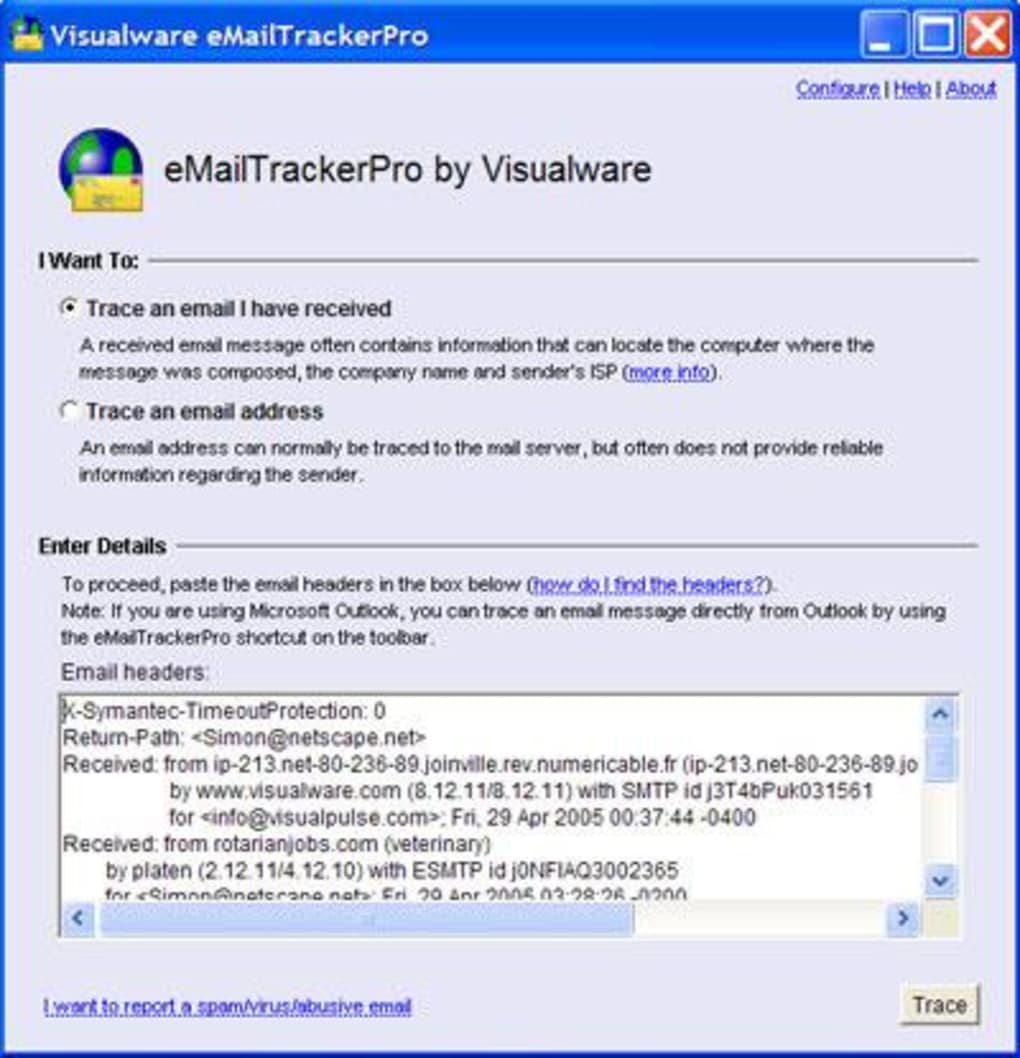
Combating Spam and Malicious Emails
The incessant flow of spam is arguably one of the most frustrating aspects of modern email usage. Beyond being mere annoyances, unsolicited commercial emails can often conceal far more sinister intentions. These can range from outright scams promising unrealistic returns to sophisticated phishing campaigns that mimic legitimate organizations, luring recipients into divulging sensitive personal and financial information. Moreover, emails are a favored method for distributing viruses, ransomware, and other forms of malware, with a single click on a malicious link or attachment potentially leading to catastrophic data loss, system compromise, or even identity theft.
eMailTrackerPro addresses this pervasive threat head-on by providing users with the tools to discern the legitimacy of an email’s origin. Instead of simply deleting suspicious emails and hoping for the best, the software empowers users to investigate. When faced with an email that triggers alarm bells – perhaps an unexpected message from an unknown sender, an offer that seems too good to be true, or a notification from a seemingly legitimate service that feels “off” – eMailTrackerPro allows for immediate verification. By unmasking the true sender and their geographical coordinates, the software helps users quickly differentiate between legitimate communications and malicious attempts. This capability significantly reduces the risk of falling victim to scams, phishing attacks, or inadvertently downloading harmful software, thereby safeguarding valuable data and confidential information from exploitation. It transforms the user from a passive recipient to an active investigator, giving them the power to fight back against the relentless tide of digital threats.
The Importance of Geographical Tracing
In the realm of digital security, context is king. Knowing the geographical location from which an email originated provides a crucial piece of this context, allowing for a more informed assessment of its potential threat level or validity. While an email might purport to come from a local bank or a familiar contact, its true origin could be halfway across the world, immediately raising a red flag. eMailTrackerPro excels in this domain, providing precise geographical tracing of email senders, including those attempting to hide behind “anonymous” email services such as Yahoo and Hotmail, which, in their standard configurations, do not readily expose sender IP addresses to recipients.
The geographical location of an IP address linked to an email serves as a powerful indicator. If an email claiming to be from a domestic service provider originates from a high-risk region known for cybercrime, or simply from an unexpected country, it dramatically increases the likelihood of the message being bogus, fraudulent, or part of a targeted attack. For instance, a password reset request for an account in Europe that traces back to an IP address in a distant continent should instantly trigger suspicion. This insight allows users to make informed decisions: to delete the email without opening it, to report it, or to block the sender, thereby preventing potential harm before it materializes. The ability to verify the geographical origin adds a vital layer of skepticism and scrutiny to every incoming message, transforming an otherwise ambiguous email into a clear signal of danger or legitimacy. It moves beyond simple sender name recognition to a deeper, more technical validation of an email’s true source.
How eMailTrackerPro Delivers Insight and Security
eMailTrackerPro’s effectiveness lies in its intelligent approach to dissecting email headers and leveraging public network information. It’s not just about showing an IP address; it’s about interpreting that address to provide actionable intelligence. The software acts as an intermediary, taking the raw, often confusing data embedded within an email and translating it into comprehensible, security-relevant information. This process is pivotal for anyone looking to go beyond superficial email filtering and truly understand the provenance of their digital communications.
Decoding IP Addresses and ISP Information
At the heart of eMailTrackerPro’s investigative capabilities is its proficiency in decoding IP addresses and subsequently identifying the Internet Service Provider (ISP) associated with those addresses. Every email sent leaves a trail, often embedded within its header information, which includes the IP address of the sending server. An IP address is essentially the digital fingerprint of the computer or network device that initiated the communication. eMailTrackerPro meticulously extracts this IP address and then performs a reverse lookup, a process known as IP geolocation. This technique identifies the physical location (country, region, city) from which the email originated. This is a critical step because, as previously discussed, discrepancies between the expected origin and the actual origin are strong indicators of potential fraud or malicious intent.
Beyond geographical location, the software goes a step further by identifying the sender’s network provider or ISP. This information is invaluable for several reasons. Firstly, knowing the ISP provides a direct point of contact. If an email is confirmed to be spam, a scam, or part of a cyberattack, users can then utilize this ISP information to formally report the malicious activity. Many ISPs have dedicated abuse departments tasked with investigating and taking action against users who violate their terms of service, including those engaging in spamming or phishing. Secondly, the reputation of certain ISPs or network blocks can also contribute to the overall threat assessment. Some network ranges are notoriously associated with botnets or known malicious actors, and identifying such an ISP can instantly elevate the perceived risk of an email. By translating complex network data into understandable geographical and ISP details, eMailTrackerPro equips users with concrete information for further investigation or immediate action, transforming obscure technical data into practical security intelligence.
Streamlined Reporting Mechanisms
Understanding the origin of a malicious email is only half the battle; taking action is the crucial next step. eMailTrackerPro significantly simplifies this process by providing streamlined reporting mechanisms, empowering users to actively fight back against spammers and other malicious email senders. The struggle against unsolicited commercial email (UCE) and spam often feels like a losing battle for individual users, largely because reporting mechanisms can be obscure, fragmented, or overly complex. Without an efficient way to notify the responsible parties, spammers can operate with relative impunity, continuing their illicit activities.
eMailTrackerPro addresses this by integrating a feature that facilitates the reporting of spammers directly to the company providing their Internet access – i.e., their ISP. Once the software has identified the sender’s ISP, it makes it easier for the user to submit a formal complaint. This direct approach is far more effective than simply marking an email as spam within one’s own email client, which primarily affects only the recipient’s personal spam filter. By reporting directly to the ISP, users contribute to a broader effort to hold spammers accountable. ISPs have the power to take disciplinary action against their customers who engage in spamming, ranging from warnings to account suspension or even termination. This direct line of communication, facilitated by eMailTrackerPro’s ability to quickly identify the responsible ISP, turns individual frustration into collective action. It not only helps to clean up one’s own inbox but also contributes to a healthier, more secure internet ecosystem by putting pressure on the sources of digital nuisance and crime. This proactive approach is a key differentiator, moving beyond passive filtering to active enforcement.
Key Features and Benefits for Enhanced Email Security
eMailTrackerPro bundles a concise yet powerful set of features tailored specifically to enhance email security by providing transparency into email origins. Its design philosophy centers on demystifying the technical underpinnings of email delivery to offer actionable insights. This focus on clarity and utility makes it a valuable addition to any digital security toolkit, especially for users who frequently encounter suspicious or untraceable email communications.
Verifying Sender Identity
One of the most significant challenges in email security is the ease with which sender identities can be spoofed or obscured. Malicious actors frequently forge “From” addresses to impersonate trusted entities—banks, government agencies, popular online services, or even personal contacts—to trick recipients into divulging sensitive information or executing harmful actions. Traditional email clients often display only the superficial “From” name and address, offering little to no insight into the actual sending server or user. This lack of transparency is a primary enabler for phishing, spear-phishing, and various social engineering attacks.
eMailTrackerPro tackles this fundamental vulnerability by enabling comprehensive sender identity verification. It delves into the email’s intricate header information, beyond what is typically presented to the user, to extract the true technical origin points. This includes not only the IP address and geographical location but also other network routing information that can corroborate or contradict the stated sender. The software allows users to confirm who truly sent an email, even if the “From” field is misleading or if the message originated from services designed to offer a degree of anonymity. For instance, an email purporting to be from a well-known e-commerce site but tracing back to an obscure IP address in a different country would be instantly flagged as suspicious. This deep-dive verification capability is crucial for empowering users to distinguish between legitimate communications and deceptive attempts, providing a critical first line of defense against targeted attacks and generalized fraud. By confirming the actual sender, eMailTrackerPro helps users build a more reliable framework of trust for their digital interactions, minimizing the risk associated with unverified sources.
Protecting Against Data Loss and Identity Theft
The ultimate goal of eMailTrackerPro’s investigative capabilities is the comprehensive protection of a user’s digital assets. The consequences of falling victim to email-borne threats can be severe, ranging from minor inconveniences to significant financial loss and profound violations of privacy. Data loss, whether through ransomware encrypting files or malware exfiltrating sensitive documents, can cripple individuals and businesses alike. Identity theft, often initiated by phishing attempts that harvest login credentials or personal identifiers, can lead to prolonged financial and legal battles, reputational damage, and immense personal stress.
By providing robust tools for sender verification and geographical tracing, eMailTrackerPro acts as a powerful preventative measure against these catastrophic outcomes. Its ability to immediately highlight suspicious email origins allows users to identify and quarantine potentially harmful messages before they can inflict damage. If an email is determined to be fraudulent or malicious based on its unmasked origin, the user can avoid opening attachments, clicking links, or replying with sensitive information. This proactive security stance directly mitigates the pathways through which data loss and identity theft typically occur. For instance, by recognizing a phishing attempt impersonating a bank before interacting with it, a user can prevent their banking credentials from being compromised. Similarly, by identifying a malware-distributing email, the user can avoid downloading a harmful payload that could lead to data encryption or system takeover. In essence, eMailTrackerPro empowers users to make informed, safe decisions about their email interactions, transforming every incoming message into an opportunity for scrutiny rather than a potential security vulnerability. This continuous vigilance, facilitated by the software, significantly contributes to a stronger overall digital security posture, protecting not just data and identity, but also peace of mind.
Getting Started with eMailTrackerPro: System Compatibility and User Feedback
While eMailTrackerPro offers valuable security enhancements, understanding its practical aspects, including system requirements and community reception, is crucial for prospective users. Like any specialized software, its utility is context-dependent, and feedback from the user base provides an important perspective on its real-world performance.
Installation and Platform Details
eMailTrackerPro is presented as a trial version software, primarily designed for the Windows operating system. Specifically, the reference content indicates its compatibility with “Windows 98 and previous versions,” with its version 9.0h updated in September 2009. While this suggests it was built for older Windows environments, it’s worth noting that many legacy applications can run, often with compatibility settings, on newer Windows versions, though optimal performance is not guaranteed without official updates. The software package itself is relatively lightweight, requiring less storage space than many other communication software applications, making it accessible even on systems with limited resources. Its compact size means it doesn’t impose a heavy burden on system performance, a definite advantage for users who prioritize efficiency.
The software is available in English, catering to a wide international audience. Interestingly, the usage statistics highlight its particular popularity in certain regions, such as India, the Islamic Republic of Iran, and Pakistan. This geographical concentration of users could be indicative of a higher prevalence of email-borne threats in these areas, or perhaps a greater demand for independent email verification tools that go beyond standard email client features. As a downloadable program from PhanMemFree.org, users can access the trial version to evaluate its capabilities before committing. The installation process is typically straightforward for Windows applications, involving downloading the executable file and following on-screen prompts. For those running modern Windows versions (Windows 10/11), it would be prudent to test the trial version thoroughly in a virtualized environment or with compatibility mode settings to ensure full functionality and stability, given its stated legacy OS compatibility.
Community Perspectives and Alternatives
User feedback provides a vital, albeit sometimes subjective, lens through which to view software performance. For eMailTrackerPro, the provided user review offers a mixed, and notably critical, perspective. One anonymous review from February 2015 described the software as “Fake and funny,” stating that “Whatever email address you enter they give back your current location by ip after thinking about it for 2 minutes.” This critique suggests that, at least for that user, the software might have been perceived as returning the user’s own IP location rather than the sender’s, or that its tracing capabilities were not robust or accurate as expected. The reviewer explicitly stated, “Doesn’t work at all” and found “Nothing to like.”
It’s important to consider such reviews within context. Software performance can vary based on operating system, network configuration, and the specific email sources being analyzed. While a single negative review doesn’t invalidate the software’s core premise, it does highlight potential user experience issues or specific limitations that some users might encounter. For instance, if the email’s true origin is behind multiple proxies or a VPN, accurate tracing can indeed be challenging for any software. Moreover, a user’s own IP address might sometimes appear in email headers, potentially leading to confusion if the software isn’t clearly distinguishing between the local client IP and the sender’s origin.
For users seeking alternatives or broader solutions, the market offers various tools within the email security and communication categories. Some notable alternatives mentioned on PhanMemFree.org include:
- MailTag for Gmail: Email Tracking: A free extension for Google Chrome specifically for Gmail users, focusing on tracking email opens and link clicks rather than origin tracing.
- Round-Robin Mailer: A trial version tool designed for distributing email leads to sales staff, a different use case entirely.
- SenderMatic emailer: A free bulk email sender for marketing purposes, again, distinct from eMailTrackerPro’s security focus.
- Email Finder: A trial version tool that extracts email addresses from web pages, serving a data collection purpose.
- Microsoft Outlook: A comprehensive email client that, while not primarily an email tracker, offers its own set of security features and integration with enterprise-level security solutions.
- SmartWhois: A tool to obtain information on any given IP, which could serve as a complementary or standalone option for IP investigation, although it’s not integrated with email client functionality.
These alternatives underscore that while eMailTrackerPro carved out a niche in specific email origin tracing, other tools address different facets of email management and security. For users prioritizing detailed email forensics and anti-spam reporting based on origin, eMailTrackerPro, despite its older architecture and some critical user feedback, aims to offer a direct approach to a complex problem. Prospective users should leverage the trial version to personally assess its effectiveness on their specific system and with their typical email traffic, weighing its reported capabilities against individual needs and contemporary email security challenges. The landscape of email security is dynamic, and tools evolve, but the fundamental need to understand “who sent this and from where” remains a cornerstone of digital safety.
File Information
- License: “Trial version”
- Latest update: “September 22, 2021”
- Platform: “Windows”
- OS: “Windows 98 SE”
- Language: “English”
- Downloads: “28.9K”
- Size: “4.86 MB”


