
The wizarding world of Harry Potter has captivated millions across books, films, and a myriad of video games. From spell-casting duels to Quidditch matches, fans have experienced Hogwarts in countless ways. Yet, every so often, an independent developer emerges, daring to twist familiar narratives into something utterly unique and unexpectedly unsettling. Such is the case with Escape PS1 Hagrid, a free-to-play indie game developed by Lolscrubs, which plunges players into a bizarre and surprisingly tense survival-horror adventure within the hallowed halls of Hogwarts Castle. Far from the grand, expansive RPGs or action-packed adaptations, this game opts for a decidedly lo-fi, retro-inspired approach, crafting a parody that is both deeply humorous and genuinely eerie. Available for Windows and easily accessible through platforms like PhanMemFree, this title is a testament to the creativity that thrives in the indie gaming scene, offering a Harry Potter experience unlike any other.
At its core, Escape PS1 Hagrid asks a simple, perplexing question: What if Harry Potter had to sneak out of his dormitory in the dead of night, not to pursue a grand quest, but to undertake a series of increasingly bizarre errands, all while evading a terrifying, patrolling Hagrid rendered in chunky PS1-era graphics? The answer is a delightful, albeit glitchy, concoction that blends three distinct genres: survival-horror, platforming, and fighting. This isn’t a game about learning “Wingardium Leviosa” or dueling Draco Malfoy; it’s about sheer, unadulterated survival against an unexpected adversary, set against a backdrop that reimagines Hogwarts through a filter of low-polygon dread.
A Peculiar Potion of Genres: Survival, Platforming, and Fighting
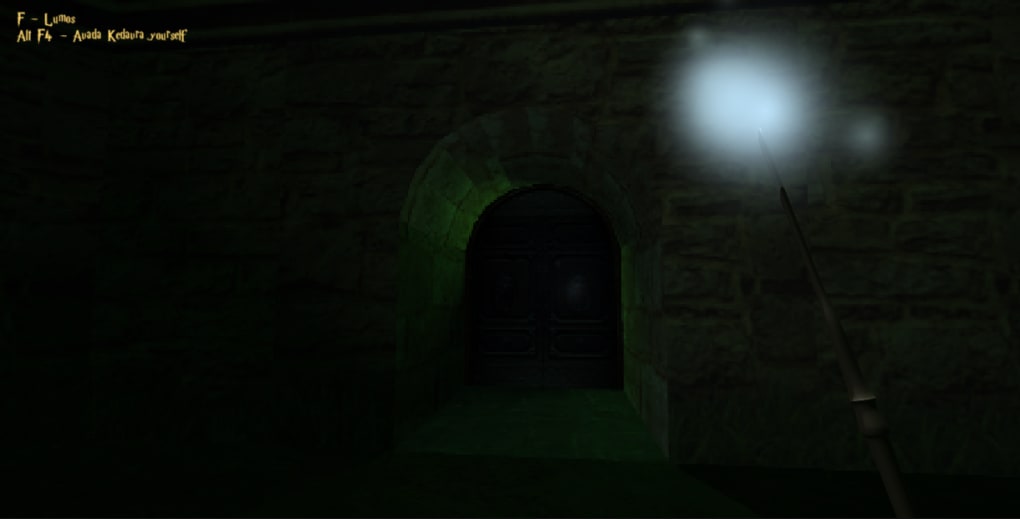
The premise of Escape PS1 Hagrid immediately signals its departure from conventional Harry Potter lore. Players step into the shoes of Harry Potter, who, for reasons left delightfully unexplained, decides to venture out of his dormitory under the cloak of darkness. This nocturnal escapade quickly escalates into a series of peculiar tasks that defy the logic of the wizarding world as we know it. The game manages to weave together elements of classic gaming genres into a tapestry that is both familiar in its mechanics and utterly alien in its context.
Nighttime at Hogwarts: Harry’s Unconventional Quest
The core gameplay loop revolves around Harry’s clandestine activities. Upon venturing out, Harry encounters none other than Albus Dumbledore, who, instead of offering sage advice, assigns a seemingly mundane yet bizarre mission: collect 15 green potions. Not long after, Dobby the house-elf appears, tasking Harry with finding syringes. And as if these errands weren’t odd enough, another mission requires Harry to attack other Hogwarts students – a far cry from the courageous, morally upright hero fans have come to love. These quests serve as the backbone of the game, providing objectives that drive the player through the labyrinthine corridors of Hogwarts.
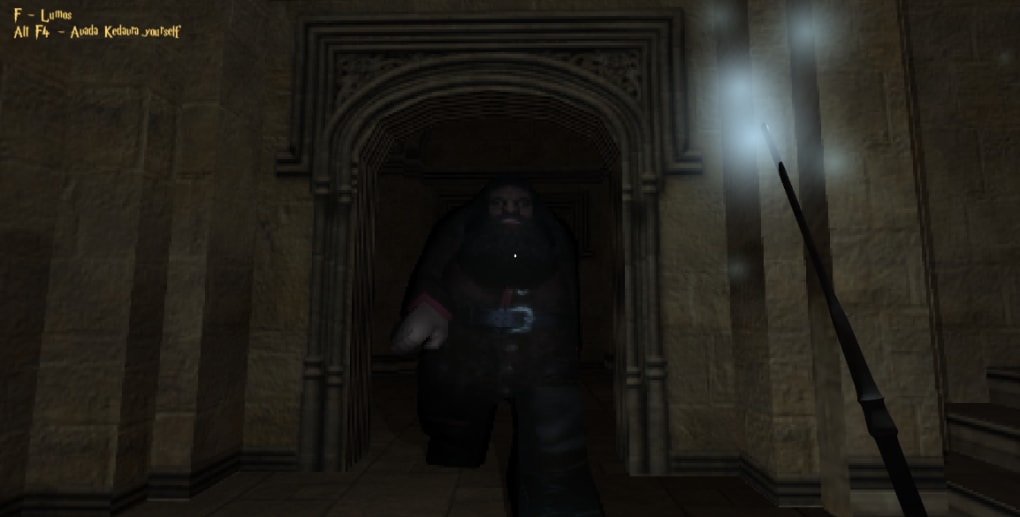
However, these tasks are merely a distraction from the game’s central, most terrifying element: the ever-present threat of Hagrid. The gentle half-giant, Hogwarts’ beloved gamekeeper, is reimagined here as a relentless, patrolling force of nature. He stalks the castle corridors at night, his imposing figure a constant source of anxiety. The moment Harry is caught, the game ends, adding a layer of genuine survival-horror tension to every step. This dynamic transforms Hogwarts from a place of magic and wonder into a fraught environment where every shadow could conceal your demise. The “survival-horror” aspect is less about combat and more about evasion, stealth, and resource management (in the form of collectible items). Players must carefully time their movements, utilize cover, and remain constantly aware of Hagrid’s patrol patterns.
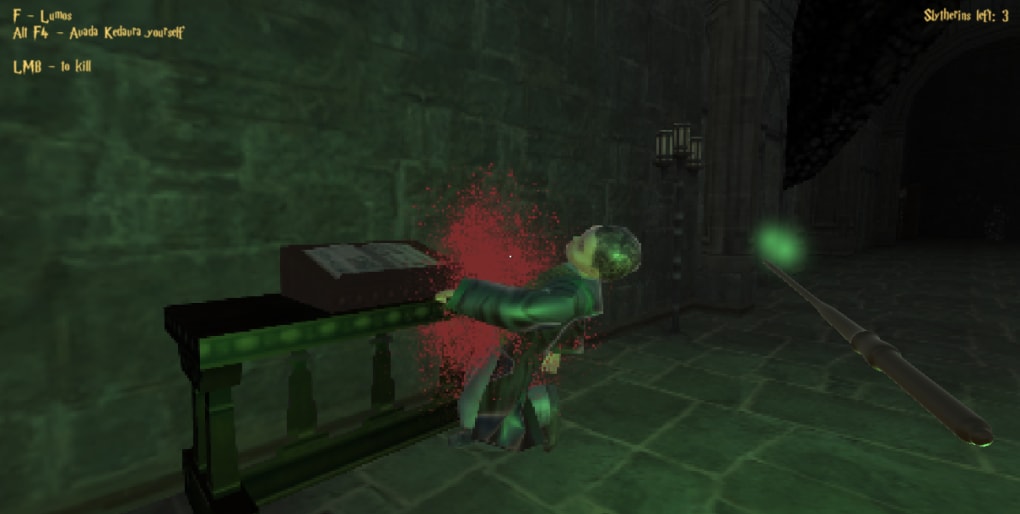
The “platforming” elements emerge as Harry navigates the castle. While not a pure platformer in the traditional sense, players must traverse various sections of Hogwarts, often requiring careful movement and spatial awareness. The environment itself becomes a challenge, with corridors and rooms serving as intricate pathways that must be explored while avoiding detection. The “fighting” aspect is perhaps the most unconventional. When tasked with attacking students, the combat is described as “one-sided,” with opponents not casting spells to fight back. This further emphasizes the game’s parody nature, turning what might be a magical duel into a strangely awkward, almost comical confrontation, highlighting Harry’s unusual role in this twisted narrative. The blend of these genres creates a unique gameplay rhythm: moments of tense stealth, followed by careful exploration, punctuated by these bizarre, often humorous interactions.
Mastering the Dark Arts of Navigation: Controls and Character Quirks
Escape PS1 Hagrid aims for simplicity in its control scheme, making it accessible to a wide range of players. Movement is handled with the standard WASD keys, allowing Harry to navigate the castle. Crouching, a crucial mechanic for stealth and evasion, is assigned to CRTL. Interacting with objects, picking up items, or engaging with characters is done with the E key, while the Left Mouse Button (LMB) is used for attacking. These straightforward controls mean that players can quickly grasp the basics and focus on the game’s core challenges.
However, the game doesn’t shy away from its indie, retro roots, and this manifests in certain character quirks. The developer acknowledges that “the character movements are a bit weird.” This can range from slightly clunky animations to less-than-responsive controls at times, adding to the charm or frustration depending on the player’s perspective. For some, these quirks might contribute to the “PS1 aesthetic,” mimicking the limitations of older hardware and game design. For others, it might present a minor hurdle in fluid gameplay. Similarly, the “dialogue display could also use more speed.” This refers to the pacing of on-screen text, which might linger longer than ideal, potentially breaking the flow of the game, especially during tense moments. These aren’t necessarily game-breaking flaws, but rather characteristics that define Escape PS1 Hagrid as a distinct, fan-made creation, embracing its own unique identity rather than striving for the polished perfection of a AAA title. They are part of the game’s charm, contributing to its oddball appeal.
The Allure of the Analog: Embracing the PS1 Aesthetic
One of the most striking aspects of Escape PS1 Hagrid is its deliberate choice of a PlayStation 1-era graphical style. This isn’t merely a limitation of independent development; it’s a conscious artistic decision that serves multiple purposes, from evoking nostalgia to amplifying the game’s horror elements and grounding its parody. The low-fidelity visuals are central to the game’s identity, distinguishing it immediately from other fan-made or official Harry Potter titles.
Nostalgia and Nightmare: Why PS1 Graphics Work for Horror
The PS1 aesthetic is instantly recognizable: blocky, low-polygon character models, pixelated and often blurry textures, limited color palettes, and sometimes, a distinct “wobble” effect on geometry. This style, once the cutting edge of 3D gaming, has in recent years been re-embraced by indie developers for its unique properties. For Escape PS1 Hagrid, this retro choice is particularly effective for several reasons.
Firstly, it taps into a powerful vein of nostalgia. Many gamers grew up with the PS1, and seeing familiar settings like Hogwarts rendered in this style creates an immediate, intriguing contrast. It’s a visual callback to a time when games were simpler, yet often more imaginative in their approach to storytelling and atmosphere.
Secondly, and perhaps more importantly for a survival-horror game, PS1 graphics excel at creating a sense of dread and the uncanny. The inherent limitations of the style mean that details are abstracted, forcing the player’s imagination to fill in the gaps. This often makes things appear more unsettling than high-fidelity graphics ever could. The blocky, angular nature of the characters and environment can make them feel alien and unnatural. Hagrid, in particular, benefits from this. Instead of the warm, friendly giant, his low-poly representation can become genuinely monstrous, his familiar features distorted into something vaguely threatening. The less defined features make him harder to read, fostering a sense of discomfort. The limited draw distance common in PS1-era games can also contribute to the horror, obscuring what lies ahead and enhancing the feeling of claustrophobia and vulnerability within the castle’s dark corridors. This approach harks back to classic survival horror titles of the PS1 era, such as Resident Evil and Silent Hill, which masterfully used graphical limitations to their advantage, proving that fear is often more effectively generated by implication and atmosphere than by explicit gore. Escape PS1 Hagrid successfully leverages this principle, making the familiar halls of Hogwarts feel genuinely menacing.
Lolscrubs and the Indie Spirit: Crafting Fan-Made Experiences
Escape PS1 Hagrid is a product of indie game development, specifically created by a developer known as Lolscrubs. The world of indie gaming is a vibrant ecosystem where creators, often working alone or in small teams, have the freedom to experiment with concepts, genres, and aesthetics that might be too niche or unconventional for larger studios. Lolscrubs’ decision to create such a specific, parody-driven Harry Potter game is a perfect example of this spirit.
Indie developers often operate with limited resources, relying on creativity and passion to bring their visions to life. This can lead to games with unique personalities, rough edges, and a distinct charm that sets them apart from the mass-produced titles. Escape PS1 Hagrid embodies this. It’s not trying to compete with the graphical fidelity or sprawling narratives of official Harry Potter games like Hogwarts Legacy. Instead, it carves out its own niche by offering a specific, humorous, and nostalgic experience.
The development process for a game like this typically involves a significant amount of dedication from a small team. From conceptualizing the bizarre premise to designing the retro graphics, coding the mechanics, and iterating on gameplay, Lolscrubs has clearly poured effort into crafting this distinct experience. The existence of platforms like PhanMemFree.org is crucial for such developers, as they provide an avenue to distribute their creations to a wider audience without the need for traditional publishing deals. This fosters a community where niche games can find their dedicated fanbase, celebrating originality and the love for gaming. Escape PS1 Hagrid stands as a testament to the power of a single developer’s vision and the vibrant, supportive ecosystem of indie gaming.
Beyond the Books: Parody, Difficulty, and Replayability
What makes Escape PS1 Hagrid more than just a simple novelty is its thoughtful integration of parody, a well-implemented difficulty system, and elements that encourage replayability. These features elevate the game from a quick laugh to a genuinely engaging experience for its target audience.
Subverting Expectations: The Humorous Side of Hogwarts Horror
The very concept of Escape PS1 Hagrid is a masterful exercise in parody. It takes beloved characters and settings from the Harry Potter universe and twists them into something unexpectedly absurd and humorous. Harry Potter, the destined hero, is reduced to a sneaking errand boy. Dumbledore, the wise mentor, gives out tasks like collecting “green potions.” Dobby, the loyal house-elf, inexplicably requests “syringes.” And then there’s Hagrid, the gentle protector, transformed into a terrifying, unyielding pursuer.
This subversion of expectations is where the game truly shines for Harry Potter fans. Those familiar with the books and films will appreciate the juxtaposition of the familiar with the utterly bizarre. The humor often comes from the sheer incongruity of it all – why is Harry doing this? Why are these characters acting this way? The game doesn’t bother to explain, leaning into the surreal nature of its premise. It’s a game made by fans, for fans, who understand the nuances of the original material well enough to appreciate its playful deconstruction. It appeals to a specific segment of the Harry Potter fanbase: those who enjoy fan fiction, memes, and alternative interpretations, and who can laugh at the sacred cows of their beloved franchise. This makes Escape PS1 Hagrid a unique cultural artifact, reflecting a trend in modern media where fan-made content often playfully interacts with established IP. It’s a refreshing break from the often serious and grand narratives of official adaptations, offering a lighthearted, yet genuinely suspenseful, detour.
Choose Your Challenge: From Muggle to the Difficulty-that-Must-Not-Be-Named
To ensure a broad appeal and varied experience, Escape PS1 Hagrid incorporates a robust difficulty selection system. This is crucial for a game that relies heavily on evasion and stealth, allowing players to tailor the challenge to their skill level and preferred playstyle. The names of the difficulty settings themselves are another nod to the Harry Potter universe, adding to the game’s charm.
- Muggle (Easy): This setting is likely designed for players who want to enjoy the bizarre premise and atmosphere without too much frustration. Hagrid’s patrol patterns might be more predictable, his detection radius smaller, and his movement speed slower, giving Harry ample opportunities to complete tasks and escape.
- Prefect (Medium): This offers a balanced challenge, suitable for players familiar with stealth mechanics or those looking for a bit more tension. Hagrid’s behavior would be more cunning, his patrols less predictable, and his reaction time quicker, demanding more careful planning and execution from the player.
- Chosen One (Hard): This is for veteran players seeking the ultimate test of their evasion skills. On this difficulty, Hagrid would be relentless, with razor-sharp senses, fast movement, and highly erratic patrol routes, making every step a gamble and every successful evasion a triumph.
Beyond these standard difficulties, the game also offers a tantalizing option: “Difficulty-that-Must-Not-Be-Named,” which is specifically designated for a “boss fight.” This cryptic inclusion immediately piques curiosity, promising a unique, heightened challenge that likely pits Harry directly against a super-powered Hagrid in a more direct confrontation, departing from the typical stealth mechanics. This boss fight adds significant replayability, offering a distinct goal for players who have mastered the standard evasion gameplay. The progression through these difficulty levels, from casual exploration to intense survival, ensures that Escape PS1 Hagrid can provide ongoing entertainment and challenge, encouraging players to return and test their mettle against an ever more formidable Hagrid.
Technical Specs and the PhanMemFree Ecosystem
Understanding the technical specifications and the platform it operates on helps players appreciate the game’s context and accessibility. Escape PS1 Hagrid, like many indie titles, benefits greatly from digital distribution platforms that simplify the download and installation process, making it readily available to a global audience.
System Requirements and Accessibility
Escape PS1 Hagrid is a lightweight game, making it accessible to a wide range of PC users without demanding high-end hardware.
- Platform: Windows. This indicates its compatibility with Microsoft’s dominant operating system, specifically mentioning Windows 8 as a supported environment, implying it runs smoothly on newer versions as well.
- License: Free. As a free-to-play game, it costs nothing to download and enjoy, removing a significant barrier to entry for potential players.
- Version: 1.1. This indicates that the game has received at least one update since its initial release, suggesting the developer may have addressed bugs or made minor improvements.
- Latest update: March 15, 2022. This timestamp provides context for its development cycle, showing it’s a relatively recent independent creation.
- Language: English. The primary language of the game’s interface and dialogue is English, though its availability on PhanMemFree.org in multiple languages suggests localization for the platform itself, aiding global users.
- Size: 38.99 MB. This extremely small file size means quick downloads, minimal storage impact, and ease of distribution, highlighting its efficiency as an indie game.
- Developer: Lolscrubs. The independent creator behind this unique Harry Potter parody.
- Security Status: The mention of “Security Status: Free Download” from PhanMemFree.org indicates that the file has been vetted, reassuring users about the safety of downloading the game.
The minimal system requirements and free-to-play model make Escape PS1 Hagrid incredibly accessible. It’s a game that almost anyone with a Windows PC can pick up and play, emphasizing its appeal as a casual, yet intriguing, indie offering.
Community and Support on PhanMemFree.org
PhanMemFree.org plays a crucial role in the visibility and accessibility of games like Escape PS1 Hagrid. As a prominent platform for software and game downloads, it serves as a bridge between independent developers and a global user base.
- Downloads: The game has garnered “1.5K” total downloads, with “6” downloads in the last month, demonstrating a steady, if niche, interest from the community. These numbers reflect the game’s status as a specialized indie title, finding its audience through platforms like PhanMemFree.org.
- User Reviews: With a rating of “5 (3),” it indicates that a small but dedicated group of users have provided feedback. While the number of reviews is modest, it offers a glimpse into user satisfaction and potential areas for improvement, directly reflecting the community engagement facilitated by PhanMemFree.org. The platform encourages users to “Rate it!” and “Be the first to leave your opinion!”, fostering an environment where player feedback is valued.
- Global Reach: The list of “Program available in other languages” on PhanMemFree.org, including Arabic, German, Spanish, French, Indonesian, Italian, Japanese, Korean, Dutch, Polish, Portuguese, Russian, Swedish, Thai, Turkish, Vietnamese, and Chinese, underscores the platform’s commitment to global accessibility. While the game itself is in English, the ability for users from various linguistic backgrounds to navigate the download page in their native tongue significantly broadens its potential audience.
- Related Topics: PhanMemFree.org also helps users discover similar content through “Related topics about Escape PS1 Hagrid,” such as “Adventure Game For Windows 7,” “Horror Game For Windows 7,” “Escape Games Free,” and “Indie Games For Windows.” This contextual linking is invaluable for users seeking specific types of games and for developers to gain exposure.
In essence, PhanMemFree.org acts as more than just a download portal; it’s a supportive ecosystem that validates and promotes indie creations like Escape PS1 Hagrid. It provides the infrastructure for developers to reach players, for players to find unique titles, and for a community to form around these shared experiences, thereby solidifying the game’s place within the broader digital landscape.
Conclusion
Escape PS1 Hagrid stands as a unique and compelling anomaly within the vast landscape of Harry Potter adaptations. It’s not a blockbuster, nor does it strive to be. Instead, it embraces its identity as a fan-made, indie parody that skillfully blends survival-horror, platforming, and fighting mechanics into a surprisingly engaging experience. Its deliberate embrace of the PS1 aesthetic is not merely a nostalgic callback but a shrewd artistic choice that amplifies the game’s unsettling atmosphere and contributes to its distinct brand of humor.
Developed by Lolscrubs, this free-to-play title demonstrates the boundless creativity found within the indie game development scene. It takes beloved characters and settings, twists them into unexpected scenarios, and invites players to laugh, cringe, and cautiously sneak their way through a Hogwarts unlike any they’ve seen before. The quirky character movements and dialogue pacing, rather than detracting from the experience, often add to its charm, embedding it firmly in the tradition of quirky, earnest indie projects.
With its simple controls, three distinct gameplay genres, and a thoughtful range of difficulty levels—from the accommodating “Muggle” to the formidable “Chosen One,” culminating in the intriguing “Difficulty-that-Must-Not-Be-Named” boss fight—Escape PS1 Hagrid offers considerable replay value. It’s a testament to how creative constraints and a unique vision can transform a familiar IP into something fresh and exciting.
For any Harry Potter fan looking for a genuinely different, often hilarious, and occasionally genuinely tense experience, Escape PS1 Hagrid is absolutely worth playing. It’s a delightful journey into the bizarre, a celebration of indie ingenuity, and a testament to the enduring appeal of the wizarding world, even when it’s rendered in low-polygon glory with a terrifying Hagrid on the prowl. Available freely on PhanMemFree.org, it’s an accessible dive into a peculiar corner of fan-made gaming that promises fun, frights, and a healthy dose of retro charm.
File Information
- License: “Free”
- Version: “1.1”
- Latest update: “March 15, 2022”
- Platform: “Windows”
- OS: “Windows 8”
- Language: “English”
- Downloads: “1.5K”
- Size: “38.99 MB”


