
EyeBall Chat, a now-defunct video chat application, holds a significant place in the history of internet communication. Released in the late 1990s, it predated many of the ubiquitous video conferencing tools we use today, offering a unique approach to real-time, face-to-face interaction over the internet. While its technology is significantly outdated by modern standards, examining its features and impact provides valuable insight into the evolution of online communication and the challenges faced by early pioneers in the field.
A Glimpse into the Past: EyeBall Chat’s Features and Functionality
EyeBall Chat distinguished itself from other contemporary communication platforms through its focus on webcam integration and its relatively user-friendly interface. At a time when high-speed internet was far from commonplace, and webcam technology was in its infancy, EyeBall Chat offered a surprisingly robust set of features. Its core functionality revolved around providing a platform for real-time video chat between users, facilitated by an intuitive contact list that displayed the online status of contacts, allowing for spontaneous video calls. This simple yet effective design made it accessible to a wider range of users than many of its more technically demanding competitors.
One of its key strengths was its ability to streamline the video chat experience. The application offered a streamlined graphical user interface (GUI), making navigation and initiating calls straightforward, even for users with limited technical expertise. This user-friendly design was a critical factor in its relatively widespread adoption, especially in comparison to other applications that were often cumbersome and technically challenging to use.
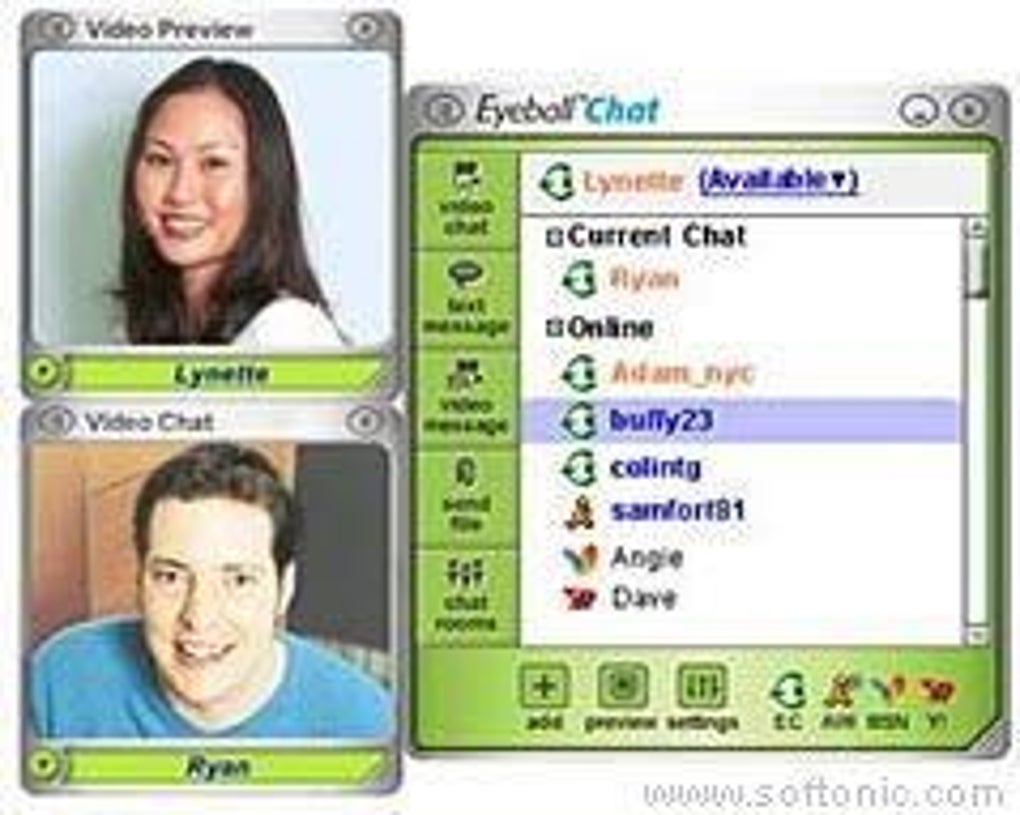
Beyond basic video chat, EyeBall Chat incorporated several features that enhanced the user experience and broadened its functionality. A built-in phone book integrated seamlessly into the contact list, simplifying the process of managing contacts. This streamlined contact management was a significant improvement over other systems that required separate address books or manual entry of contact information. Furthermore, users could readily share files, music, and pictures through a simple drag-and-drop interface, a feature that, while standard today, was a notable advancement in its time. The ability to search for buddies within the application’s user base added another layer of convenience, simplifying the process of connecting with specific individuals.
The application also addressed the inherent challenges of video communication, offering features that improved both quality and usability. A picture-in-picture video display allowed users to maintain a view of their own video feed while simultaneously viewing their conversation partner. Support for multi-party video conferencing enabled group conversations, extending the possibilities beyond one-on-one interactions. The inclusion of a chat and call history function allowed users to review past conversations and calls, providing a record of their interactions. For users who needed to bridge the gap between their computers and traditional phone lines, EyeBall Chat supported PC-to-phone calls using PSTN gateways, effectively combining internet-based communication with established telephone networks.
Another significant aspect of EyeBall Chat’s design was its approach to network traversal. It employed comprehensive NAT traversal using Eyeball AnyFirewall solutions, which addressed the complexities of connecting users behind different network address translation (NAT) firewalls. This technological innovation ensured that users could connect seamlessly, irrespective of their network configuration, a significant challenge for early video chat applications. This focus on technical problem-solving highlights the level of engineering effort that went into making the application accessible to a broad user base.
Protocol Support and Technological Foundations
EyeBall Chat wasn’t simply a user-friendly interface; it was built on a foundation of established and open communication standards. Its architecture leveraged open standards such as SIP (Session Initiation Protocol), XMPP (Extensible Messaging and Presence Protocol), STUN (Session Traversal Utilities for NAT), TURN (Traversal Using Relays around NAT), and ICE (Interactive Connectivity Establishment). This reliance on open standards was a key factor in its interoperability and its ability to adapt to evolving network technologies. The use of these protocols ensured that EyeBall Chat could connect with a wider range of users and devices, even as internet infrastructure and communication standards continued to develop.
The integration of support for popular instant messaging platforms like AIM (AOL Instant Messenger), MSN Messenger, and Yahoo Messenger expanded the application’s reach and appeal. This cross-platform compatibility allowed users to seamlessly connect with individuals already utilizing these established services, further enhancing the accessibility and appeal of EyeBall Chat.
The incorporation of integrated chat rooms with enhanced privacy features provided users with additional communication channels, allowing for group discussions and community building. This addition showcased the application’s potential to facilitate online social interaction, a trend that has continued to evolve into the numerous online communities we see today. The application also supported the recording and sending of video messages, allowing users to share pre-recorded video content, an early example of asynchronous video communication.
Security and Privacy Considerations in EyeBall Chat
While the application offered several advanced features for its time, security and privacy considerations were likely less sophisticated than those implemented in modern video chat applications. While the documentation mentions SSL encryption for file transfers, the overall security measures employed by EyeBall Chat are not extensively documented. Given the technological limitations and security standards prevalent during its development and operational years, it is reasonable to assume that vulnerabilities might have existed. It’s crucial to remember that the security landscape has drastically evolved since EyeBall Chat’s release, and modern applications benefit from significantly enhanced security protocols and practices.
Modern users should be aware of the potential security risks associated with using outdated communication software. EyeBall Chat’s reliance on older protocols and security measures might have exposed users to vulnerabilities that are effectively mitigated in contemporary applications. It’s imperative to utilize secure and updated communication tools to protect personal data and ensure secure online interactions. The lack of detailed information about EyeBall Chat’s security measures highlights the importance of robust security standards in modern internet communication platforms.
EyeBall Chat’s Legacy and the Evolution of Video Communication
EyeBall Chat, despite its obsolescence, serves as a fascinating case study in the evolution of video communication. Its impact, although not as widespread as that of later platforms like Skype or Zoom, was nonetheless significant. It demonstrated the feasibility and increasing appeal of real-time video communication over the internet at a time when such technology was still nascent. It paved the way for more advanced and sophisticated video conferencing applications that we take for granted today.
The challenges EyeBall Chat faced – particularly in overcoming network limitations and ensuring cross-platform compatibility – highlight the considerable technological hurdles that early developers had to overcome. Its focus on user-friendliness and integration of multiple communication methods points to a forward-thinking approach that attempted to bridge the gap between existing communication methods and the emerging world of online video interaction. While its technology is now outdated, its contribution to the history of video chat remains relevant, showing how a relatively simple application could significantly impact the landscape of internet communication. EyeBall Chat’s existence serves as a reminder of the iterative progress that shaped the modern tools we now use for seamless global communication.
File Information
- License: “Free”
- Version: “3.2”
- Latest update: “January 5, 2022”
- Platform: “Windows”
- OS: “Windows ME”
- Language: “English”
- Downloads: “54.9K”
- Size: “7.49 MB”


